In the high-octane world of Formula 1, where every decision on track and off reverberates globally, significant insights into the sport’s future direction can sometimes be overshadowed. Such was the case during the Qatar Grand Prix weekend when Formula 1 CEO, Stefano Domenicali, delivered a pivotal address at Liberty Media’s annual Investors Day. While the paddock was abuzz with discussions about a potential review of a previous race incident, Domenicali’s vision for F1’s evolution painted a comprehensive picture of growth, innovation, and enhanced fan engagement that warrants closer examination.
Having taken the helm at the start of the year, Domenicali’s inaugural address to Liberty Media – F1’s owners with a diverse portfolio including the Drone Racing League, a significant stake in the Meyer Shank IndyCar team, and even interests in TripAdvisor and Live Nation – underscored a strategic realignment. His presentation was a testament to F1’s robust health and ambitious plans, signaling a forward-thinking approach that aims to solidify its position as a global entertainment powerhouse.
A Year of Unprecedented Growth and Ambitious Calendars
Domenicali commenced by highlighting the considerable achievements of the preceding year. Despite the persistent challenges posed by a global pandemic, Formula 1 successfully staged a record-breaking 22 events in 2021. This monumental feat demonstrated the sport’s resilience, adaptability, and unwavering commitment to its global fanbase. Building on this success, plans were already in motion to surpass this record, with an ambitious 23-round calendar slated for the 2022 F1 season. This commitment to an expanded calendar not only promises more thrilling racing but also signifies F1’s growing global footprint, reaching new territories and solidifying its presence in established markets.
The continuous expansion of the race calendar is a strategic move to maximize exposure and revenue, catering to the ever-increasing demand for Formula 1 action. Each new race venue brings with it fresh narratives, diverse cultural experiences, and opportunities to attract new demographics to the sport. Domenicali’s emphasis on this growth trajectory reflected a confidence in F1’s product and its ability to captivate audiences worldwide, setting the stage for what promises to be its longest and potentially most exciting season yet.
Redefining the Racing Experience: The Transformative 2022 Regulations
Beyond simply increasing the quantity of races, Domenicali also delved into the qualitative improvements planned for the sport, particularly through the introduction of groundbreaking new technical regulations for the 2022 season. These rules, years in the making, were designed with a singular objective: to significantly enhance the on-track spectacle and promote closer, more competitive racing. The core issue tackled by these regulations was the detrimental effect of aerodynamic turbulence, or ‘dirty air’, on cars following closely behind another.
Domenicali elaborated on the dramatic impact of the existing rules: “With current rules the aerodynamic disruption felt as a car gets closer to another is dramatic. Once you are within three car lengths of the car in front, you have 75% of the downforce you want; at one car length downforce drops materially lower and only 55% is retained.” This significant loss of downforce makes it incredibly difficult for a pursuing car to maintain grip and follow closely through corners, severely limiting overtaking opportunities and often leading to processionary races.
However, the sophisticated modeling for the new generation of F1 cars presented a vastly improved scenario: “With the [2022] car, modelling shows that at three car lengths a car will retain 95% of the downforce and at one car length it will reduce to only 85%. That is a huge difference and we expect it will have a noticeable impact on the track.” This projected increase in downforce retention represents a seismic shift, promising vastly increased overtaking maneuvers and significantly more thrilling wheel-to-wheel action. For fans, this translates directly into a more captivating product, which in turn is expected to boost viewership, attendance, and overall engagement with the sport.
Navigating the Digital Frontier: Streaming and FAANG’s Influence
While the technical regulations have been a hot topic among F1 enthusiasts, Domenicali’s comments on future digital developments during the Q&A session truly captivated analysts. His carefully chosen words, designed to navigate the complexities of securities regulations, nonetheless hinted at tantalizing possibilities, particularly concerning the involvement of internet giants like Facebook, Apple, Amazon, Netflix, and Google (collectively known as FAANG). The prospect of F1 broadcasts being streamed ad-free on platforms like YouTube, potentially for a subscription fee, opens up a world of new distribution models.
When pressed on the potential for these digital behemoths to enter the F1 broadcasting landscape, Domenicali articulated a proactive, yet cautious, approach. “We have said before that we will continue to monitor the landscape and are open to discussions in this area,” he stated, adding, “I would add there is certainly interest from this market but at this stage I would say we are in a strong position and expect that to increase.” This suggests a strategic willingness to explore partnerships that align with F1’s growth objectives, leveraging the massive reach and technological capabilities of these platforms.
F1 has already demonstrated its readiness to experiment with diverse digital offerings. Domenicali cited examples such as the Sprint event in Brazil being streamed on Twitch and the live YouTube broadcast of the German Grand Prix in 2020. These initiatives underscore F1’s commitment to diversifying its broadcast portfolio and providing fans with a wider array of interactive platforms and viewing choices. The potential for ad-free, high-quality streaming services from FAANG companies could revolutionize how fans consume F1, offering unparalleled access and a tailored viewing experience.
Beyond the Race: The “Drive to Survive Live” Vision
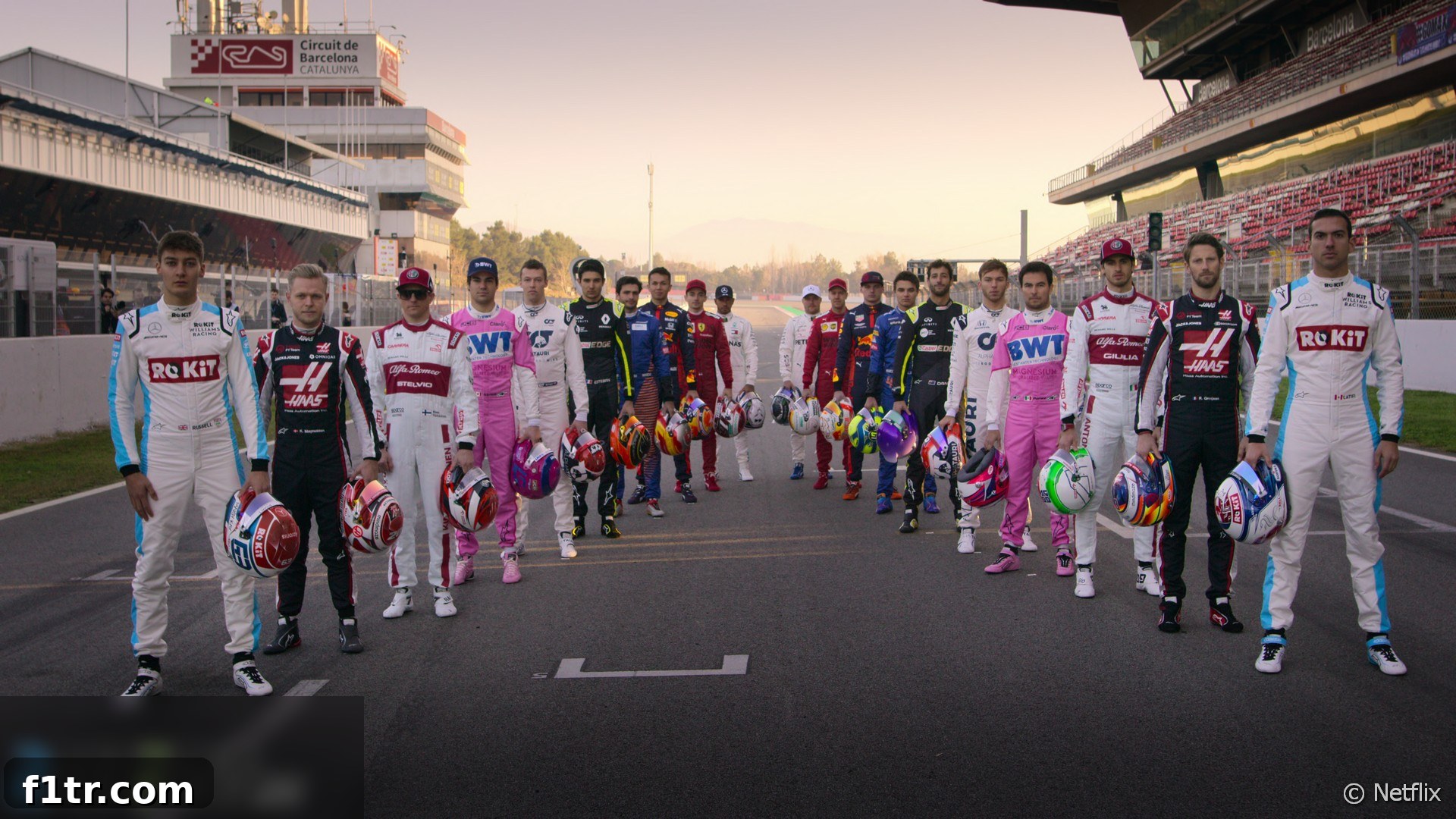
Perhaps the most intriguing revelation, and one that prompted significant attention, was the discussion around a “live” version of the phenomenally successful Netflix series, ‘Drive to Survive’. The docuseries has been instrumental in attracting a new, younger demographic to Formula 1, revealing the personalities, rivalries, and drama behind the scenes. The concept of “Drive to Survive Live” suggests an evolution towards real-time, immersive content, moving beyond pre-produced seasonal releases.
Imagine live streaming from the paddock immediately following a contentious incident, offering immediate reactions, unfiltered insights, and raw emotion. Such a format, particularly if fronted by an incisive moderator, could provide unprecedented levels of access and drama, capitalizing on the real-time nature of sports. Domenicali’s response indicated genuine interest: “It is something I will discuss with my colleagues.” He further emphasized the burgeoning success of F1’s existing digital ecosystem: “We have seen huge growth in all our digital platforms with follower growth year-on-year, engagement is high and F1 TV is continuing to perform well. We also have augmented the content on F1 TV with greater interaction and choice for the viewers.” The technology to bring “Drive to Survive Live” to fruition already exists, and its implementation could fundamentally change how fans engage with the human drama of Formula 1, moving from annual binge-watching to dynamic, immediate consumption.
Enhancing Fan Loyalty: The F1 Credit Card and CRM Strategy
Shifting focus from digital broadcasting, Domenicali was also probed about the potential introduction of an F1-branded credit card. Such a card would serve as a loyalty program, enabling users to accumulate points redeemable for exclusive merchandise, race tickets, early bird seating access, and invitations to unique promotions. This concept extends beyond mere payment, offering a tangible connection to the F1 lifestyle.
While Domenicali acknowledged that an F1 credit card hadn’t been specifically considered, he quickly recognized its merit, stating, “it is another topic that I think merits further discussions.” This openness reflects F1’s broader commitment to enhancing its Customer Relationship Management (CRM) strategy. By effectively utilizing first-party data, F1 aims to understand its fans better and tailor experiences to their preferences. A branded credit card could be a powerful tool in this effort, deepening fan loyalty, providing valuable data insights, and opening new revenue streams. Imagine the prestige of presenting a gold or platinum F1 card, potentially unlocking exclusive Paddock Club entry or unique fan experiences.
A Holistic Vision for Sustainable Growth
Stefano Domenicali’s address at the Liberty Media Investors Day painted a holistic picture of Formula 1’s future. It’s a vision rooted in enhancing the core product – the racing itself – through groundbreaking technical regulations, while simultaneously embracing digital transformation and exploring innovative fan engagement models. Whether it’s through new streaming partnerships with tech giants, the thrilling prospect of a live ‘Drive to Survive’ experience, or tangible loyalty programs like an F1 credit card, the overarching strategy is clear: F1 is listening to its diverse customer base, from institutional investors to passionate race-day attendees and merchandise collectors.
While some of these initiatives may take time to materialize, the immediate impact on F1’s market perception is undeniable. The F1 credit card, being relatively straightforward to implement, is likely to be an early adopter. However, the potential of FAANG-led streaming and a “Drive to Survive Live” platform are arguably the most exciting prospects. These initiatives have the power to attract entirely new demographics to the sport, further broadening its appeal and securing its long-term relevance. It’s no coincidence that, fueled by this forward-looking strategy and robust growth trajectory, F1’s stock (FWONK) has been trading at an all-time high, often exceeding $60. Domenicali’s leadership clearly signals a dynamic era for Formula 1, one where innovation and fan-centric approaches drive sustained success.