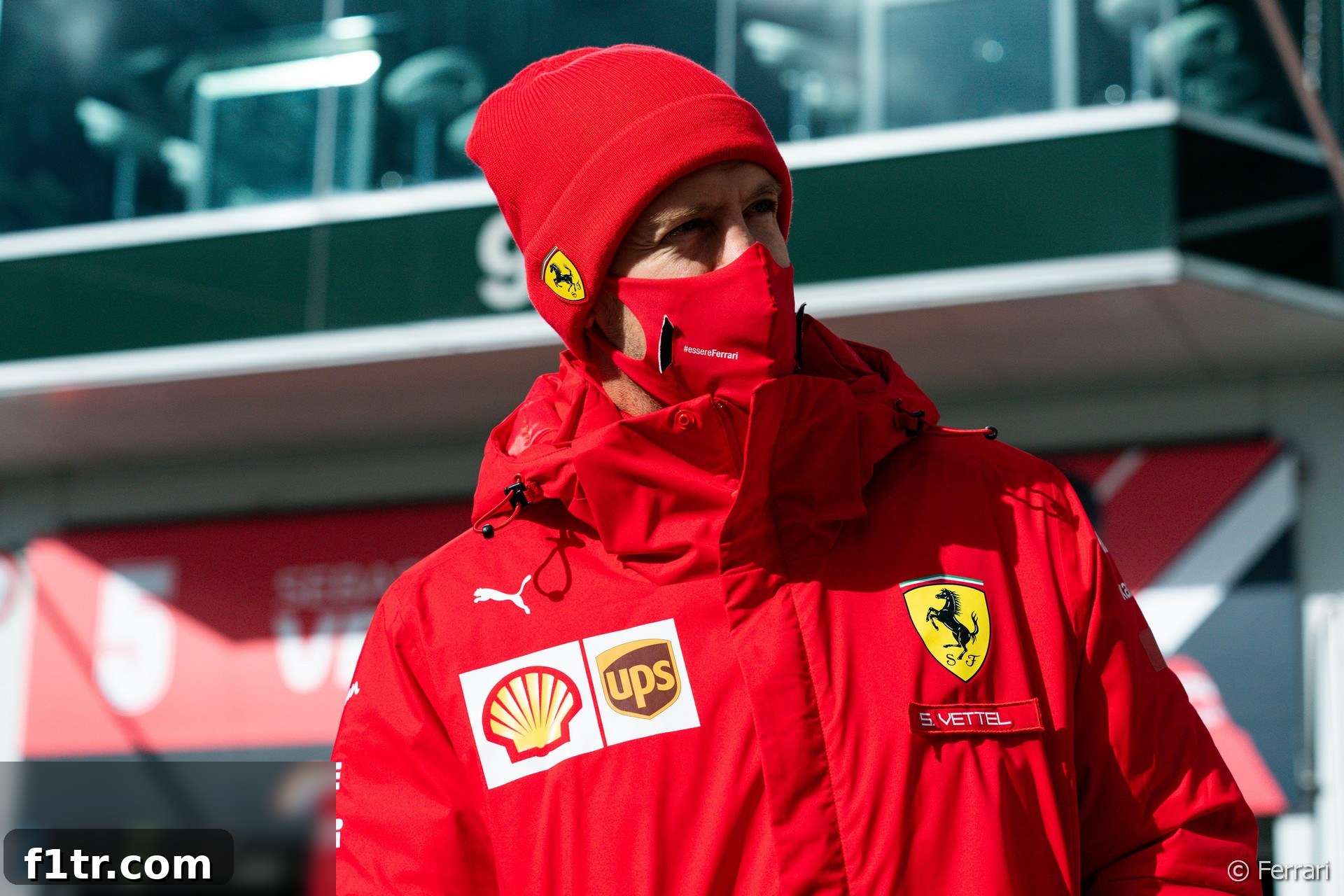
Sebastian Vettel Reflects on Lewis Hamilton Equalling Michael Schumacher’s F1 Win Record
The world of Formula 1 recently witnessed a monumental shift in its history books, as Sebastian Vettel, a four-time world champion himself, offered his reflections on Lewis Hamilton equalling Michael Schumacher’s long-standing record of 91 F1 Grand Prix wins. This incredible feat, achieved during the 2020 Eifel Grand Prix, sent ripples through the motorsport community, prompting discussions about legends, legacies, and the very nature of unbeatable records. Vettel’s candid comments provide a unique insight into the mindset of a champion contemplating the breaking of an era-defining record.
Vettel’s Perspective: A Record Once Thought Unbreakable
For many years, Michael Schumacher’s tally of 91 victories seemed an almost mythical number, a benchmark of dominance that no other driver appeared capable of reaching. Sebastian Vettel, who stands third on the all-time winners list with an impressive 53 victories, openly admitted his astonishment at Hamilton’s achievement. He articulated a sentiment shared by countless fans and pundits alike: “I never thought Michael Schumacher’s record of 91 F1 wins would be beaten.” This statement underscores the sheer scale of Schumacher’s previous accomplishment and the disbelief that such a high bar could ever be matched, let alone surpassed.
Vettel’s admiration for Hamilton’s unwavering dedication and extraordinary skill was palpable as he expressed profound respect for the efforts that culminated in this historic milestone. He described reaching “a number that in my head I always thought would never be beaten or equalled.” Such an admission from a driver of Vettel’s caliber, a fierce competitor and a highly decorated champion, lends significant weight to the magnitude of Hamilton’s achievement. It highlights not just a statistical triumph, but a testament to sustained excellence at the pinnacle of global motorsport. It is a moment that compels even rivals to acknowledge the truly exceptional.
The Inevitable Surpassing of a Legend
With Lewis Hamilton having drawn level with Schumacher, the discussion naturally turned to the next step: surpassing the record. Hamilton was poised to break the record if he secured a victory in any of the remaining six races of the 2020 season. Vettel, with characteristic candour, conceded the inevitability of this outcome. “I think it’s quite certain he will exceed this number,” Vettel stated, acknowledging the consistent performance and winning momentum that defined Hamilton’s era. This prediction was soon to be proven correct, solidifying Hamilton’s place as the most victorious driver in Formula 1 history.
This acceptance of the inevitable signifies a changing of the guard in the record books, a moment where the seemingly insurmountable becomes a new chapter in F1 history. While records are inherently designed to be challenged and broken, some possess a unique aura that makes their longevity feel almost eternal. Schumacher’s 91 Grand Prix wins was undoubtedly one such record, making Hamilton’s feat all the more remarkable. It is a testament to the continuous evolution of the sport and the emergence of new titans who push the boundaries of what is thought possible.
Michael Schumacher: An Enduring Hero
Despite acknowledging Hamilton’s incredible success and the impending record-breaking moment, Sebastian Vettel’s deep-seated admiration for Michael Schumacher remained unwavering. “Nevertheless, I have to say that Michael will always be my hero,” Vettel affirmed, echoing the sentiments of a generation of drivers and fans who grew up watching the German legend dominate the sport. Schumacher’s impact extends far beyond his statistics; he inspired countless individuals, including Vettel, to pursue their dreams in racing.
Vettel elaborated on what made Schumacher so unique, pointing to an intangible quality that set him apart. “I think Michael had something about him that I haven’t seen in other drivers so far.” This ‘something’ speaks to Schumacher’s unparalleled aura, his fierce competitiveness, his relentless drive, his innovative approach to race craft, and his almost mystical connection with the car. For many, including Vettel, Schumacher transcended mere statistics; he embodied the spirit of a true racing titan, an icon whose influence reshaped the sport.
A Different Kind of Admiration: Hero vs. Rival
Vettel’s relationship with Schumacher differs significantly from his relationship with Hamilton, a distinction he readily clarified. “It’s probably the fact that I looked up to him when I was a child and Lewis, I didn’t look up to him when I was a child because I was racing him. So it’s a different situation.” This personal perspective offers insight into how legends are perceived by those who follow in their footsteps, contrasting the distant admiration for an idol with the immediate respect for a direct competitor.
For Vettel, Schumacher was an idol, a figure of inspiration who shaped his own aspirations in motorsport, from karting to the pinnacle of Formula 1. Hamilton, conversely, has been a direct rival throughout much of Vettel’s illustrious career, a fellow warrior battling for supremacy on the same tracks and for the same championships. This proximity to competition naturally alters the dynamic of admiration. While respect for Hamilton’s achievements is immense, the emotional connection to Schumacher as a childhood hero remains distinct and powerful, rooted in formative years.
Vettel further speculated that with the passage of time, his admiration for Hamilton’s accomplishments would likely deepen. “Probably in another 10, 15, 20 years’ time, there will be more admiration for that.” This thoughtful remark highlights the immediate intensity of rivalry versus the retrospective appreciation that often comes with historical distance. “But obviously when you’re still active, you’re looking at yourself and not so much in others. But as I said I think you can’t credit him enough for what he has achieved.” It’s a candid admission of the focused mindset required to compete at the absolute highest level of Formula 1, where self-assessment and direct competition often overshadow purely retrospective hero-worship.
The Unmistakable Genius of Michael Schumacher
Delving deeper into what made Schumacher truly exceptional, Vettel reflected on the German’s raw talent, particularly evident in less sophisticated machinery. “He was just better than anybody else I’ve ever seen so far. I think he had a natural talent that is very difficult to explain.” This assertion points to an inherent, almost inexplicable gift that Schumacher possessed, a heightened sense of control, awareness, and speed that few others could replicate. It was a talent that allowed him to extract performance from any machine, under any conditions.
Vettel drew upon his personal experiences with Schumacher, notably in karting and the Race of Champions. “If you saw him in go-karting – obviously I didn’t see him at a young age, but at an older age. and I was happy to join him in the Race of Champions a couple of times. You see there a little bit more the skills and the control, the car control, both the karting experience and the Race of Champions experience.” These events, often featuring simpler, more equal machinery, strip away the complexities of F1 cars and highlight a driver’s fundamental abilities. It was in these purer forms of racing that Schumacher’s innate brilliance shone most brightly, leaving a lasting impression on those who witnessed it, including Vettel, who himself is renowned for his car control.
Vettel concluded his assessment by emphasizing the dual pillars of Schumacher’s greatness: “I think he had a natural ability that, as I said, I haven’t seen in anyone else so far. On top of that, he had an incredible work ethic. But I think it’s the combination of the two that for me stands out. I haven’t seen a match yet.” This insight provides a compelling framework for understanding true sporting legends – it’s rarely just one attribute, but rather a synergistic blend of innate talent honed by relentless dedication and hard work. Schumacher’s unique combination of these qualities set him apart as an unparalleled force in Formula 1, inspiring a generation of drivers and defining an era of racing.
The Evolving Landscape of Formula 1 Records
The breaking of Schumacher’s 91-win record by Lewis Hamilton is more than just a statistical update; it signifies the ongoing evolution of Formula 1 itself. Modern F1 seasons are longer, with more races per year, which naturally provides more opportunities for drivers to accumulate wins. Furthermore, the reliability of contemporary F1 cars is remarkably high, allowing top drivers in dominant machinery to finish races consistently and convert poles into victories with greater frequency. These changes in the sport’s structure undeniably play a role in the accumulation of records.
While these factors contribute to the higher win tallies seen today, they do not diminish the immense talent and unwavering commitment required to achieve such records. Hamilton’s consistency over many seasons, his exceptional ability to adapt to changing regulations and machinery, his flawless execution under pressure, and his relentless pursuit of perfection are what truly define his era of dominance. The discussion between Vettel, Schumacher, and Hamilton transcends mere numbers; it encapsulates different eras, different challenges, and different definitions of greatness, all unified by the pursuit of speed and victory, pushing the boundaries of human and mechanical performance.
This monumental achievement by Hamilton also sparks wider conversations about other records in Formula 1, such as championship titles, pole positions, and podium finishes. As the sport continues to push technological boundaries and attract extraordinary talent, it is likely that more records once deemed untouchable will eventually be challenged and broken. Each time this happens, it adds another rich layer to the narrative of Formula 1, reminding us of the transient nature of even the most enduring milestones and the perpetual quest for unparalleled excellence that defines this thrilling sport. Future generations of drivers will look to Hamilton’s records just as he and Vettel looked to Schumacher’s.
The Legacy Continues: Respect Among Champions
The dialogue surrounding Lewis Hamilton’s record-equalling achievement, especially through the lens of Sebastian Vettel’s reflections, underscores the deep respect that exists among the sport’s elite. While competition is fierce on track, there is an underlying current of admiration for the sheer skill, dedication, and mental fortitude required to reach the pinnacle of Formula 1. Vettel’s words are a testament to this camaraderie, acknowledging the greatness of both his childhood hero, Michael Schumacher, and his contemporary rival, Lewis Hamilton. This mutual respect is a hallmark of true sporting legends.
As Hamilton moves forward, undoubtedly set to claim the outright record for Grand Prix victories, the legacies of all three drivers – Schumacher, Hamilton, and Vettel – will continue to inspire future generations. They represent different epochs of the sport, each leaving an indelible mark with their unique talents and triumphs. The Eifel Grand Prix of 2020 will forever be remembered as the race where one legend drew level with another, heralding a new chapter in the illustrious history of Formula 1 and reinforcing the timeless appeal of record-breaking moments in motorsport.
Explore More from the 2020 Eifel Grand Prix
To delve deeper into the events and insights surrounding this historic race and the broader 2020 Formula 1 season, consider exploring these related articles:
- Renault “not scared of anywhere” in remaining races: A look into team strategies post-Eifel Grand Prix and their approach to the season’s close.
- Bottas “needs a miracle” to overturn Hamilton’s 69-point lead: Analyzing the championship battle implications and the widening points gap.
- 2020 Eifel Grand Prix Star Performers: Highlighting exceptional drives, strategic masterstrokes, and standout moments from the Nürburgring race weekend.
- Leclerc sees ‘quite a few positives’ in Ferrari’s Nurburgring weekend: An assessment of Ferrari’s performance improvements and future outlook after a challenging season.
- Mercedes relied on DAS “more than ever” at cold Nurburgring: Technical insights into how the Dual-Axis Steering system was crucial under challenging, chilly conditions.
Browse all 2020 Eifel Grand Prix articles for comprehensive coverage and further insights into the historic event.