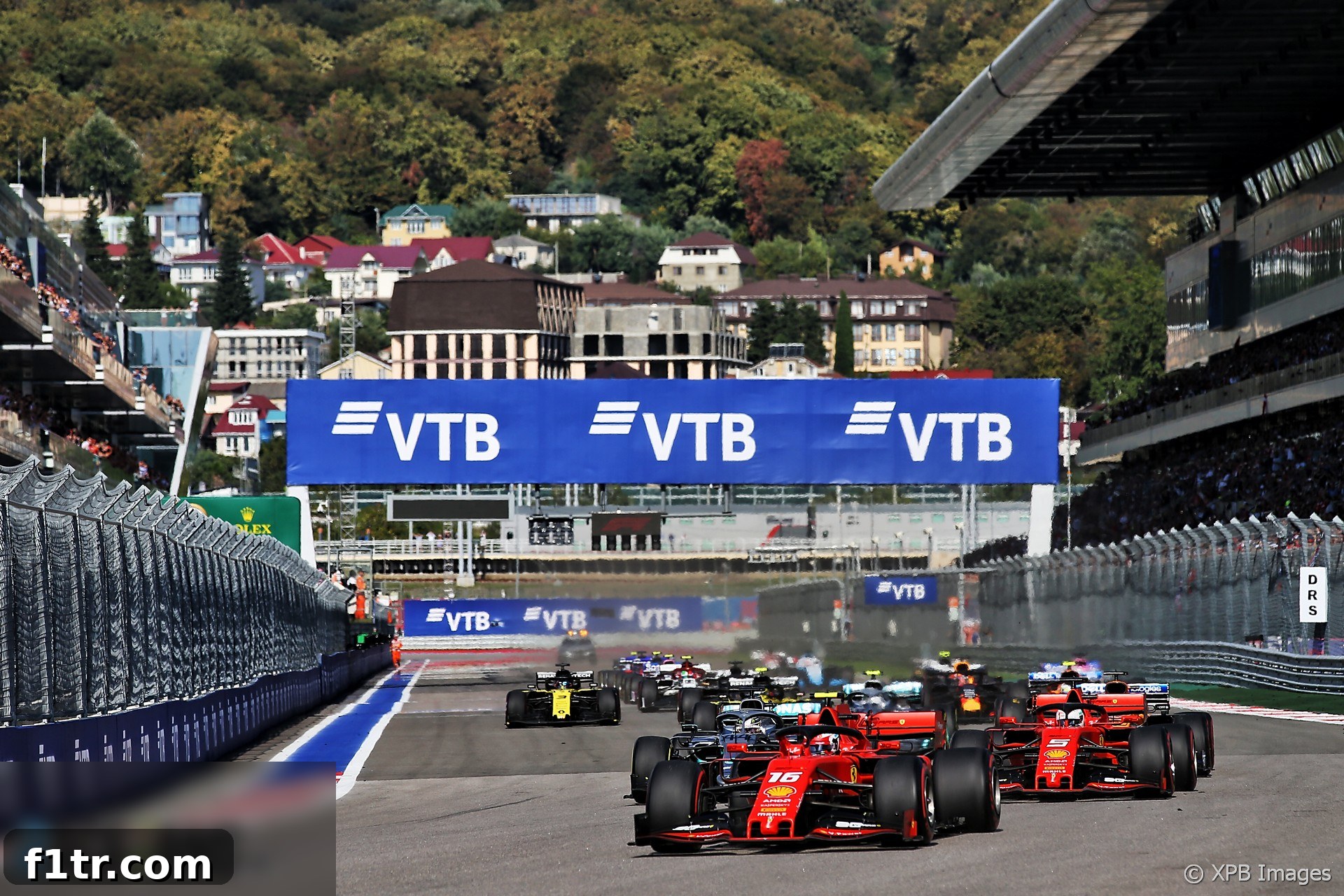
The 2019 Russian Grand Prix at the iconic Sochi Autodrom delivered a captivating spectacle of strategic brilliance, internal team drama, and championship-defining moments. Ultimately, it was Lewis Hamilton who masterfully navigated the chaos to secure his ninth victory of the 2019 Formula 1 season, further solidifying Mercedes-AMG Petronas Motorsport’s command over the Constructors’ Championship. The win, however, came amidst significant drama for Scuderia Ferrari, who initially held a commanding one-two position but saw their race unravel through a combination of strategic missteps and mechanical misfortune.
Following a resurgent run in recent races, Ferrari arrived in Sochi with palpable momentum. Their SF90 cars had shown impressive pace, and expectations were high for a strong performance. The qualifying session had indeed placed them in a formidable position, locking out the front row with Charles Leclerc on pole, flanked by Sebastian Vettel. This strong starting advantage set the stage for what many anticipated would be a dominant display from the Italian team, especially after their strategic triumph in Singapore just weeks prior. The tension was palpable even before the lights went out, as the dynamic between Ferrari’s two star drivers had been a talking point all weekend.
Advert | Become a Supporter & go ad-free
The race start itself was nothing short of dramatic. Vettel, from second on the grid, launched his Ferrari with incredible force, immediately challenging Leclerc for the lead. Demonstrating superior traction and aggressive intent, Vettel powered past his teammate on the run down to Turn 1, an overtake facilitated by Leclerc giving up the inside line, seemingly as part of a pre-race agreement designed to help Vettel slipstream past Hamilton and then return the position. This initial move also saw Vettel expertly split the Mercedes cars, leaving Hamilton to fend off a charging Bottas as the Ferraris rocketed into a commanding 1-2.
What followed ignited a firestorm of discussion across the Formula 1 world. Soon after taking the lead, Ferrari’s pit wall issued a radio message to Leclerc, indicating that Vettel was expected to let him re-pass for the lead, ostensibly honouring a pre-agreed strategy where Vettel would provide a slipstream benefit before ceding the position. However, Vettel, who had established a comfortable lead and was demonstrating strong pace, controversially refused to immediately comply with the order. His defiance highlighted the simmering internal tensions within the Ferrari garage, a recurring theme throughout the 2019 season. This early race dynamic became a focal point, setting a precedent for the strategic complexities that would ultimately define Ferrari’s day and contribute to their eventual downfall.
As the race progressed, Ferrari’s management of the situation became increasingly intricate. With Vettel holding strong at the front and Leclerc pressing from behind, the team communicated to Leclerc that the positions would eventually be swapped later in the race, presumably during the pit stop window. This strategy, ironically, mirrored a move seen in Singapore where an early stop for Leclerc had paid dividends. In Sochi, Ferrari opted to bring Charles Leclerc in first for his pit stop, hoping his fresher tyres would allow him to build an advantage and effectively ‘undercut’ Sebastian Vettel, who was still out on track extending his stint. This plan worked as intended, and when Vettel eventually pitted, he emerged from the pits just behind his teammate, effectively completing the position swap as promised by the team. This seemed to finally resolve the contentious team order situation, albeit after much public debate and internal friction.
However, the carefully orchestrated Ferrari strategy, fraught with internal friction and intricate timing, was almost immediately rendered moot by a cruel twist of fate. Less than half a lap after his pit stop, disaster struck for Sebastian Vettel. His SF90 suffered a suspected power unit failure, forcing him to pull over to the side of the track and retire from the race. The frustration was palpable as Vettel, visibly disheartened, climbed out of his car, famously cursing, “Bring back the fucking V12s!” This dramatic retirement triggered a Virtual Safety Car (VSC) period, an incident that would irrevocably alter the complexion of the race and play directly into the hands of Mercedes.
Mercedes, ever vigilant and opportunistic, seized the moment with surgical precision. With the VSC deployed, Lewis Hamilton and Valtteri Bottas were able to make their scheduled pit stops under significantly reduced speed limits. This allowed them to complete their tyre changes with minimal time loss compared to a full-speed pit stop, granting them a substantial advantage over Leclerc, who had already pitted under green flag conditions. When the VSC period ended, Hamilton emerged in the lead, a position he would not relinquish for the remainder of the race. Bottas also benefited immensely, slotting into second place, completing a stunning and decisive turnaround for Mercedes after what had initially looked like a Ferrari masterclass.
The drama wasn’t over. Shortly after the VSC period, another incident—George Russell’s crash—triggered a full Safety Car deployment, bunching up the field once more. This presented Ferrari with another critical strategic dilemma. Already behind Hamilton and Bottas, and with Leclerc on older tyres compared to the Mercedes duo, they opted to bring Charles Leclerc in for a second pit stop, fitting him with fresh soft tyres in a desperate attempt to regain lost ground and challenge the Mercedes cars. While this move theoretically offered a pace advantage in the final stint, it came at the cost of crucial track position, dropping Leclerc behind Valtteri Bottas. Despite Leclerc’s best efforts, equipped with the softer compound tyres and pushing hard, he was unable to find a way past the Mercedes of Bottas, who expertly defended his position, denying Ferrari any further hopes of a podium comeback. Leclerc ultimately crossed the finish line in third, a result that felt like a significant underachievement given Ferrari’s initial dominance and pole position.
Beyond the enthralling front-running battle, the midfield provided its own share of excitement and notable performances. Max Verstappen, in his Red Bull Racing Honda, delivered a typically solid performance, securing fourth place. While never truly in contention for the podium after the early stages, Verstappen’s consistent pace ensured a strong points haul for his team, underscoring Red Bull’s status as the third force in Formula 1 and highlighting their ability to extract maximum performance even when not in outright contention for victory. His teammate, Alexander Albon, was the architect of an absolutely stellar recovery drive. Starting from the pit lane due to a crash in qualifying and subsequent power unit changes, Albon systematically worked his way through the field, showcasing impressive race craft and determination to finish an outstanding fifth. This remarkable performance further cemented his place in the Red Bull lineup and demonstrated his immense potential under pressure.
The battle for the final points positions was also fiercely contested and highly entertaining. Both McLaren drivers once again demonstrated the team’s resurgence, securing valuable points and continuing their impressive season. Carlos Sainz Jnr drove a strong and controlled race to finish sixth, consistently performing at a high level. Lando Norris, after inheriting a place from Kevin Magnussen who received a five-second time penalty for exceeding track limits and gaining an advantage, secured eighth position, adding to McLaren’s impressive tally. Splitting the McLarens was Sergio Perez in his Racing Point, who drove a commendable race to finish seventh, showcasing the team’s ability to maximize opportunities and convert strong race pace into solid points. The final point on offer went to Nico Hulkenberg of Renault, who rounded out the top ten after a tenacious drive, bringing a hard-earned point back for the French constructor.
Advert | Become a RaceFans supporter andgo ad-free
2019 Russian Grand Prix: A Masterclass in Strategy and Resilience
The 2019 Russian Grand Prix will be remembered as a race where Mercedes, particularly Lewis Hamilton, exemplified strategic perfection and clinical execution, contrasting sharply with Ferrari’s self-inflicted wounds and strategic misfires. Ferrari’s initial dominance, fuelled by a powerful engine and strong qualifying performance, was ultimately undone by complex internal dynamics and a series of questionable decisions on the pit wall. The controversial team order at the start, followed by Vettel’s defiance and subsequent retirement, created a chaotic environment that Mercedes was perfectly poised to exploit with their characteristic efficiency.
Hamilton’s victory was not merely handed to him; it was earned through a combination of consistent pace, expert tyre management, and the flawless strategic calls made by his team. The timing of the Virtual Safety Car, while a stroke of luck, was capitalized on with precision, turning a potential third-place finish into a dominant win. This race underscored Mercedes’ unwavering ability to perform under pressure and adapt to rapidly changing circumstances, further cementing their status as the benchmark in modern Formula 1 and highlighting their relentless pursuit of perfection.
For Ferrari, the Russian Grand Prix was a bitter pill to swallow. Despite showing immense raw speed and a clear advantage in the early stages, their inability to convert a clear one-two advantage into a victory highlighted persistent weaknesses in their race management and internal cohesion. The saga involving Vettel and Leclerc regarding team orders, coupled with the second pit stop for Leclerc under the Safety Car that ultimately failed to yield better results, painted a picture of a team struggling to optimize its formidable machinery and coordinate its drivers effectively. The unfortunate retirement of Vettel, while a mechanical issue, compounded the team’s woes and further derailed their strategic plans, costing them crucial championship points.
Looking back at the 2019 Russian Grand Prix, it stands as a testament to the unpredictable nature of Formula 1. It showcased how quickly fortunes can change, how critical strategic decisions are, and how driver-team dynamics can either propel a squad to victory or lead to its downfall. While Lewis Hamilton celebrated another dominant win on his path to a sixth world championship, the events at Sochi provided ample fodder for discussion and analysis, particularly concerning Ferrari’s ongoing quest to harness its immense potential and challenge Mercedes consistently for top honours.
- For more in-depth analysis and reactions from the 2019 Russian Grand Prix, check back shortly.