The Formula 1 paddock reconvened in the scorching embrace of Bahrain for the inaugural pre-season test of what promised to be another compelling, and uniquely challenging, Formula 1 season. With the specter of a global pandemic still looming large, this gathering wasn’t just about lap times and car performance; it was a testament to the sport’s resilience, its intricate logistical dance, and a cautious step towards a semblance of normalcy. As the championship embarked on its second season navigating unprecedented global health crises, the focus was as much on protocols and adaptation as it was on the roar of new engines and the pursuit of precious tenths. This diary chronicles the critical observations, exclusive insights, and personal experiences from the heart of the action, revealing the hidden dynamics that shape the world’s most technologically advanced sport in a truly extraordinary era.
Thursday 11th March 9am: Arrival and Immersion into F1’s New Reality
My journey to Bahrain began with the familiar anticipation of a new Formula 1 season, yet it was immediately punctuated by the strict realities of pandemic-era travel. Upon arrival at the dedicated airport facility, a mandatory PCR test was the first order of business, a routine now synonymous with international sporting events. After collecting my rental car, the destination was the hotel, where self-isolation was strictly enforced until the test results were confirmed. By 2 PM, the welcome news of an “all-clear” arrived, granting me access to the circuit and broader activities. My schedule then included a significant step in personal safety: the first of two Pfizer-BioNTech vaccinations. The second dose was strategically planned for 21 days later, post-Grand Prix, highlighting the meticulous planning behind ensuring the health and safety of the entire F1 community.
Noon: Unpacking F1 TV’s Evolution and Digital Ambitions
Following the initial logistical hurdles, my afternoon began with a remote interview with Ian Holmes, Formula 1’s esteemed director of media rights. The primary topic of discussion was the highly anticipated revamp of the F1 TV platform, alongside recent media contracts that underscored the sport’s evolving digital strategy. Holmes articulated a clear vision for the upgraded service, promising significantly improved stability and an array of new features designed to enhance the fan experience globally. This commitment to a more robust and feature-rich F1 TV is crucial, especially as the sport continues to expand its digital footprint and cater to a diverse international audience. Fans, journalists, and teams alike rely heavily on comprehensive, reliable access to live feeds and archived content, making the platform’s performance paramount.
While I, like other accredited media members, benefited from the comprehensive global television feed with its various add-ons in the media centre, allowing for real-time analysis and reporting, it meant I couldn’t personally put the new F1 TV to the test on-site. The feed we received provided an unparalleled view of the on-track action, complete with telemetry and multiple camera angles, essential for dissecting performance during testing. However, the true litmus test for the revamped F1 TV platform lies with its subscribers. Their direct feedback in the comments section will be invaluable in assessing whether the promised enhancements translate into a genuinely improved user experience. So far, the anecdotal evidence has been positive, with no significant complaints reaching my ears, a promising sign for the platform’s future.
Friday 12th March 9am: The Paddock’s Evolving Landscape and Limited Access
The journey to the accreditation centre is always a ritual imbued with a sense of privilege and excitement. Having collected 21 annual passes over the years, the simple act of receiving the credential for another Formula 1 season consistently brings a unique buzz, a confirmation that one is ready to immerse themselves in the pinnacle of motorsport. This year, however, the process carried an added layer of significance. Due to the ongoing pandemic, media accreditation had been rigorously restricted, creating an atmosphere of anticipation and curiosity regarding the actual number of media personnel who would be present at races throughout the season. The limitations were a stark reminder of the extraordinary circumstances under which Formula 1 was operating.
What immediately struck me upon entering the paddock was the noticeably reduced presence of my peers. It was genuinely surprising to see how few journalists had made the trip to Bahrain. Notably absent were representatives from prominent Fleet Street newspapers and many of the major English motorsport outlets. In total, only around 20 scribes were present, a significant reduction from pre-pandemic numbers. This limited turnout raised questions about the evolving dynamics of media coverage in Formula 1, including the impact of travel restrictions, increased costs, and the growing reliance on remote reporting. It will be particularly interesting to observe whether this trend persists, or if a larger contingent of media professionals will converge for the actual Grand Prix weekend, as the season progresses and conditions potentially ease.
Noon: The Return of Human Connection: The Vital Role of the ‘Mix Zone’
A most welcome development amidst the rigid restrictions that have characterized media access in recent times was the introduction of a socially-distanced ‘mix zone.’ Strategically positioned adjacent to the traditional TV ‘pen,’ this innovative setup offered a crucial opportunity for face-to-face interactions with team members. For journalists, this space became an invaluable hub, facilitating formal interviews, fostering off-record conversations that provide crucial context, and allowing for casual catch-up chats with personnel whom many of us had not physically seen since the pre-season test sessions of the previous year—the last time an ‘open’ paddock was a reality. The ability to engage directly, even with physical distancing, fundamentally enriches reporting and offers perspectives impossible to glean from purely remote interactions.
Despite being a colossal global sport with an immense following, Formula 1, at its core, functions as a remarkably close-knit community. Whether one is a high-profile driver, an ingenious engineer, a meticulous PR professional, a sharp-eyed photographer, a seasoned broadcaster, or any other individual contributing to the vibrant ecosystem of the paddock, there’s a shared, deep-seated passion for the sport. We are all united by common goals and an unwavering dedication to the spectacle and challenges of Formula 1. The enforced separation between ‘them’ (the teams and drivers) and ‘us’ (the media and support staff) during the height of the pandemic had been a palpable source of pain and disconnection, underscoring the intrinsic human element that underpins this high-octane world. The mix zone, therefore, represents a vital step towards restoring those essential personal connections.
2pm: The Unpredictable Hand of Nature: Wind, Sand, and F1’s Climatic Challenges
The FIA press conference provided a platform for teams and officials to discuss the day’s events, and a significant talking point revolved around the challenging weather conditions. The opening day of testing was heavily blighted by relentless wind and an incessant deluge of fine sand, creating an extremely tricky environment for both drivers and engineers. This scenario prompted a familiar observation: Formula 1, it seems, often acts as a magnet for extreme climatic phenomena. Over the years, the sport has encountered everything from torrential rain and icy cold temperatures to even snow during various test sessions and Grand Prix weekends. Today, however, it was the turn of gusty winds and a pervasive sandy haze to dominate the conversation, forcing teams to contend with unforeseen aerodynamic and mechanical challenges.
The impact of such conditions on car performance and setup cannot be overstated. Fine sand can quickly infiltrate delicate components, causing wear and potential reliability issues, while strong winds make aerodynamic balance incredibly difficult to achieve, affecting downforce and stability. Teams spent valuable track time trying to mitigate these external factors, diverting focus from pure performance development. This constant battle against the elements serves as a reminder of the raw, unpredictable nature of motorsport, where even the most advanced machinery can be humbled by the sheer force of nature. It also highlights the engineering prowess required to design and operate cars that can perform under such variable and demanding conditions, adding another layer of intrigue to the testing process.
7pm: Twilight Glow and the Quest for Sand-Proof Performance
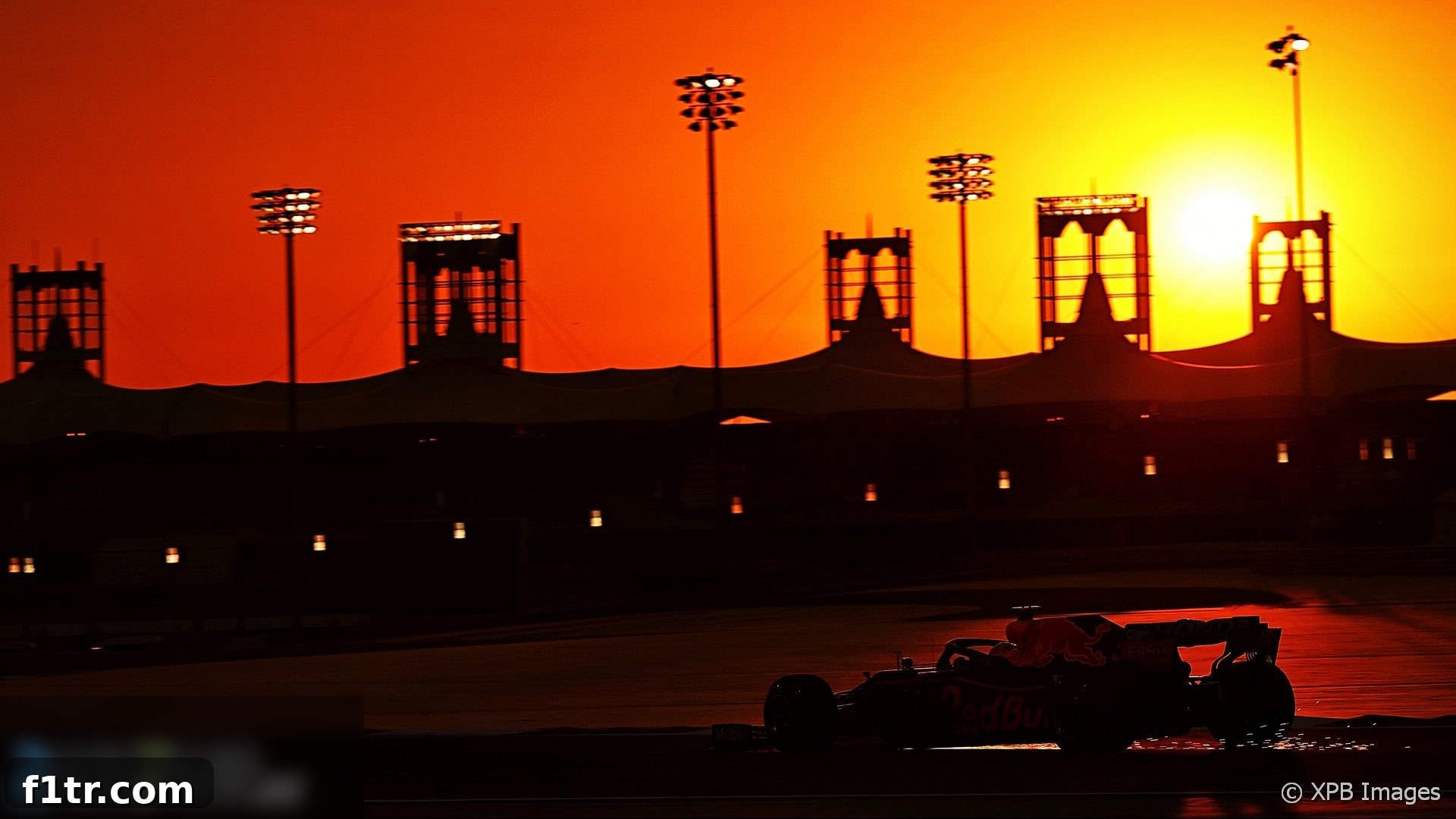
As the sun dipped below the horizon, casting long shadows across the Sakhir circuit, the floodlit track was bathed in an ethereal, eerie yellow glow. This atmospheric transformation added a dramatic backdrop to the ongoing testing, but it also intensified a practical concern: the integrity of the cars against the persistent sand. The question inevitably arose about the specific precautions taken by teams to sand-proof their meticulously engineered machines. Sand, particularly the fine desert variety, is a formidable adversary for any complex mechanical system, capable of clogging filters, abrading surfaces, and compromising sensitive electronics.
Observing the various cars on track, it became apparent that some appeared remarkably resilient, almost “bullet-proof” in their ability to continue running without noticeable issues, suggesting superior design or more robust protective measures. Others, however, seemed to struggle more visibly, with reports of mechanical glitches or a noticeable drop in performance potentially attributable to the harsh environment. This disparity underscored the varied approaches to engineering and protection across the grid. It highlighted the critical importance of designing components that can withstand abrasive conditions, especially at a venue like Bahrain, where the threat of sand ingestion is ever-present. The ability to maintain performance and reliability in such conditions can be a significant differentiator, even in pre-season testing.
8pm: A Future Star? Franz Tost’s High Praise for Yuki Tsunoda
An evening conversation with Franz Tost, the highly respected team principal of AlphaTauri, offered a fascinating glimpse into the future of Formula 1 talent. It became unequivocally clear that Tost holds his young Japanese signing, Yuki Tsunoda, in exceptionally high regard. This endorsement carries significant weight, given Tost’s remarkable track record in nurturing and guiding some of Formula 1’s most successful drivers during their formative years. His previous protégés include Sebastian Vettel, Daniel Ricciardo, Max Verstappen, and Pierre Gasly – an illustrious list of Grand Prix winners who all honed their skills under his watchful eye at the junior Red Bull teams.
Tost’s effusive praise for Tsunoda suggested a belief in the young driver’s innate talent, raw speed, and rapid adaptability—qualities that are essential for success at the pinnacle of motorsport. Little did either of us know during our chat that a mere 48 hours later, Tsunoda would cap off his impressive debut F1 tests by recording the second-fastest time overall, surpassed only by the formidable Max Verstappen. This stunning performance immediately cemented Tsunoda’s status as one of the most exciting prospects on the grid and a potential future star. His ability to adapt quickly to F1 machinery and demonstrate such competitive pace so early in his career speaks volumes about his potential and the accuracy of Tost’s assessment, setting the stage for an intriguing rookie season.
9pm: A Race Against Nature: The Impending Sandstorm
As the final interviews of the day concluded and the media centre began to pack up, a sense of urgency permeated the air. Staff members from the media centre actively urged journalists and other personnel to depart the circuit as swiftly as possible. The reason for this sudden haste was a dire warning: a massive sandstorm was rapidly approaching, threatening to engulf the entire region. This announcement quickly shifted the focus from the day’s track action to the immediate practicalities of safe travel, underscoring the unpredictable environmental challenges inherent in desert locations.
My commute back to the hotel, typically a straightforward 30-minute drive, transformed into a harrowing experience. As I merged onto the motorway, the wind speed seemed to triple almost instantly, whipping up colossal clouds of fine sand. Visibility plummeted to levels comparable to a heavy mist, making navigation incredibly hazardous. Traffic instinctively slowed, then came to a complete halt, before gingerly resuming at a crawling pace. The journey, usually quick and uneventful, stretched out to almost twice its normal duration, a stark reminder of the raw power of nature and the sudden disruptions it can inflict, even on the highly organized world of Formula 1. It was a visceral experience that underscored the unique environmental challenges of testing in Bahrain.
Saturday 13th March 9am: Clearing the Aftermath and Resuming the On-Track Battle
The dawn of Saturday brought a welcome abatement of the ferocious winds. The immediate aftermath of the previous night’s sandstorm was evident across the landscape: streets were littered with debris, and every car bore a thick coating of fine, reddish dust. However, the efficiency and professionalism of the circuit’s operational staff were truly commendable. Media personnel informed me that specialized sweeper and vacuum trucks, resembling those used in airport operations, had been deployed early in the morning. These heavy-duty machines, complemented by ground staff wielding hand brooms, meticulously cleared away the last granules of sand from the track and surrounding areas. By 10 AM sharp, the circuit was deemed pristine and safe, and the day’s eagerly anticipated running commenced without delay, a testament to Bahrain’s readiness to host world-class motorsport despite environmental challenges.
11:00: A Blast from the Past with Williams CEO Jost Capito
My schedule for the late morning included an exclusive interview with Jost Capito, the newly appointed CEO of Williams Racing. I initially believed I had known Jost for approximately 15 years, a relatively long acquaintance within the F1 paddock. However, as our conversation unfolded, a delightful revelation emerged. We recounted our very first meeting, which dated back much further, to 1988, during the Porsche 944 Turbo World Cup finale at the iconic Kyalami circuit. At that time, Jost was serving as Porsche’s delegate, diligently overseeing the event, while I had entered a car for a promising local hotshot. This shared memory sparked a moment of genuine camaraderie and reflection on our respective journeys within motorsport.
Reminiscing about that particular event proved to be even more enjoyable and entertaining than the official interview itself. We shared hearty laughs as we recalled being stranded in the centre of the circuit well after midnight. A massive Highveld storm had unexpectedly flooded all access tunnels, effectively trapping many participants and even causing some international drivers to miss their flights. This anecdote highlighted the unpredictable nature of motorsport events and the enduring bonds forged through shared experiences, however challenging. It underscored the unique “small world” aspect of Formula 1, where paths cross and re-cross over decades, building a rich tapestry of personal and professional connections that transcend team rivalries and corporate structures.
13:00: F1’s Green Revolution: Pat Symonds on Synthetic Fuels
The afternoon brought a remote interview with Pat Symonds, Formula 1’s Chief Technical Officer, a discussion that delved into one of the most exciting and forward-looking initiatives in the sport: F1’s plans for synthetic fuels from 2025 onwards. I must confess, I am massively excited by the prospects that a fossil-free Formula 1 presents, particularly one that will continue to utilize hybridised internal combustion engines. This vision represents a groundbreaking commitment to sustainability without sacrificing the core essence of motorsport – the thrill of high-performance engineering and fierce competition. F1’s move towards 100% sustainable fuels demonstrates its potential to serve as a vital testbed for future automotive technologies, pushing the boundaries of what is possible in decarbonization.
Symonds elaborated on the ambitious targets and the intricate technical challenges involved in developing these advanced fuels. The aim is to create a drop-in fuel that performs comparably to current fossil fuels but with a significantly reduced carbon footprint, leveraging F1’s unique position for rapid research and development. This initiative is not merely a public relations exercise; it’s a genuine strategic pivot that aligns the sport with global environmental goals and ensures its long-term relevance in an increasingly eco-conscious world. While the full details of this revolutionary plan will be unveiled later, I can assure you that the wait will be absolutely worth it. The implications for both motorsport and the wider automotive industry are profound, offering a tangible pathway to sustainable high-performance mobility.
14:00: The Vaccine Debate: F1’s Response to Bahrain’s Offer
The FIA media conference provided a platform for significant revelations, particularly regarding the Formula 1 community’s response to a highly relevant health initiative. Franz Tost, once again, was a key figure, revealing that his AlphaTauri team had collectively accepted the vaccination offer extended by the Bahraini authorities to all F1 travelling personnel. This offer, a generous gesture aimed at enhancing safety and facilitating smooth operations, was, however, politely declined by Formula 1 as a collective group, representing the broader organization. Other teams, in contrast, opted to leave the decision regarding vaccination entirely up to individual team members, highlighting a varied approach to health policies within the paddock.
Despite F1’s collective stance, the Bahraini offer proved to be highly attractive to a significant portion of the personnel present. An estimated 600 pass-holders, accounting for over 50% of all F1 personnel in Bahrain, including members from various teams, suppliers, partners, and media, took advantage of the opportunity. This high uptake underscored the individual desire for protection and the pragmatic approach many adopted to ensure their safety and continued participation in the sport. During my own appointment window at the hospital, I certainly noticed more than a few familiar faces from the paddock. However, out of respect for their privacy and personal health decisions, no names will be mentioned. This episode highlighted the complex individual and collective choices made by the F1 community in navigating a global health crisis.
Following the conference, my attention turned back to the vital ‘mixed zone.’ This innovative, socially-distanced space proved its worth repeatedly throughout the weekend. In total, I managed to conduct 14 face-to-face interviews with various subjects – a stark and welcome contrast to the previous year, where I conducted precisely zero such interactions across 10 separate events due to the stringent restrictions. The ability to engage directly, to read body language, and to have spontaneous follow-up questions makes an immeasurable difference to the depth and quality of journalistic output. Here’s hoping that this invaluable ‘mixed zone’ concept only ceases to exist when a true sense of relative normality finally returns to the sport, allowing for the complete freedom of interaction that once characterized the vibrant Formula 1 paddock.
19:30: Sprint Qualifying: The Financial Sticking Point for F1’s New Format
As the day drew to a close, team principals gathered for a critical Zoom call with F1 CEO Stefano Domenicali. The agenda focused on the latest developments concerning Formula 1’s highly debated plan for sprint races, a concept now officially rebranded as “Sprint Qualifying.” The details of this proposed new format, which had been revealed ahead of the meeting, indicated a significant shift in the Grand Prix weekend structure, aiming to enhance fan engagement and provide more on-track action. The core idea is to introduce a shorter Saturday race that would determine the grid for Sunday’s main Grand Prix, offering an additional competitive element.
It appeared that the concept, despite its controversial nature among some purists, was set to proceed on a trial basis, provided that the final sticking points could be successfully resolved. In Formula 1, obstacles, particularly those concerning significant changes, almost invariably begin with a ‘$’ symbol, and this instance was no exception, involving millions of them. Liberty Media, the commercial rights holder, had reportedly offered each team $100,000 per sprint race to cover potential damage and additional operational costs. However, the teams, keenly aware of the risks involved in an extra competitive session, were pushing for double that amount. This financial disagreement underscored the delicate balance between innovation, commercial viability, and the economic realities faced by teams, especially under the new budget cap regulations. The negotiations highlighted the high stakes involved in introducing such a fundamental change to the sport’s traditional format.
Sunday 14th March 9am: Reflections on Testing and the Road Ahead
The final day of pre-season testing dawned, and as I drove to the circuit, a mix of complex feelings washed over me. The preceding three days had been incredibly revealing, yet they also prompted a series of critical questions. Given the severe wind and persistent sand challenges, would a venue like Spain, with its more stable climate, have been a better choice for pre-season running? More fundamentally, are three days of collective testing truly sufficient in an era of ever-increasing complexity and evolving regulations? This question becomes particularly poignant when considering the radical technological changes slated for the 2022 F1 season. With entirely new, undeveloped cars poised to hit the track next year, where will teams find the crucial development time necessary to optimize these machines with such limited testing opportunities? These considerations underscore the strategic dilemmas faced by both the sport’s governing bodies and the teams themselves, constantly balancing cost-efficiency with the imperative of performance and safety.
While I undoubtedly enjoy my visits to Bahrain and appreciate the hospitality and facilities it offers, the recent challenges, particularly the sandstorm, cast a shadow of doubt over its suitability as a primary testing venue for the long term. Much as I value the circuit, I personally doubt we will see Formula 1 pre-season testing return here again any time soon. The unpredictability of the desert environment, combined with the sport’s increasing need for consistent and representative testing conditions, suggests that alternative venues might be explored in the future. The logistical headaches and potential for lost track time due to adverse weather could easily outweigh the benefits of its location or facilities, pushing the sport to seek more predictable environments for its critical pre-season development work.
13:00: The 2022 Conundrum: Balancing Present Performance with Future Development
The afternoon was dedicated to crucial one-on-one interviews with various technical directors from across the paddock. A unanimous theme emerged from these conversations: their common and formidable conundrum regarding the optimal timing for fully committing their resources to the development of their new cars for the radically overhauled 2022 F1 season. This decision represents a strategic tightrope walk with severe implications. Committing too early to the 2022 project risks sacrificing performance and, crucially, prize money in the current 2021 season. Conversely, delaying the switch could lead to being significantly behind the curve for the 2022 regulations, equally jeopardizing performance and financial returns in the following year. This delicate balance highlights the intense pressure on technical leadership to make decisions that will shape their team’s competitive fortunes for years to come.
Adding layers of complexity to this strategic dilemma are the recently introduced budget caps and the stringent aerodynamic test regulations. These restrictions significantly limit the total resources, both financial and technical, that even the major teams can allocate to run two parallel development projects – one for the current 2021 car and another for the entirely new 2022 challenger. In previous eras, top teams could pour virtually unlimited resources into simultaneous development, but the new regulations force a far more disciplined and strategic approach. It will be absolutely fascinating to observe how each team navigates this unprecedented challenge, how they prioritize their efforts, and ultimately, which strategies prove most successful in balancing immediate competitiveness with long-term ambition within the confines of these new regulatory frameworks.
21:00: Pirelli’s Confidence and the Emerging Powerhouses of 2021
The final interview of the testing period was conducted with Pirelli’s motorsport director, Mario Isola. His insights provided crucial information regarding the performance and characteristics of the new tyre range for the upcoming season. Isola expressed considerable confidence that the redesigned tyres are sufficiently robust and durable to cope with the immense energy demands of high-energy circuits, specifically mentioning challenging tracks like Silverstone and Zandvoort. These circuits are notorious for placing extreme lateral and longitudinal loads on tyres, making durability and consistency paramount for competitive racing. Pirelli’s assurance suggests that the tyre compounds and constructions have been carefully engineered to withstand these stresses, promising reliable performance without excessive degradation, which is crucial for dynamic and strategic racing.
Based on the entirety of the three days’ running in Bahrain, a clear picture of the competitive landscape began to emerge. It appears we can anticipate some truly serious and exhilarating racing at the front of the field, with Red Bull and Mercedes standing out as the unequivocal favourites. The data collected under incredibly harsh and variable conditions – from high winds and sand to cooler evening temperatures – strongly suggested that Red Bull held a slight edge, placing them marginally ahead of Mercedes in the pecking order. This early assessment points towards a potentially thrilling championship battle between the two powerhouses, setting the stage for an intense season. We will receive our first definitive answers regarding the true balance of power in Formula 1 this year at the Bahrain Grand Prix, just a fortnight away. I look forward to reporting to you next from there. Until then, take care and stay safe.
2021 F1 Season Insights
Browse all 2021 F1 season articles