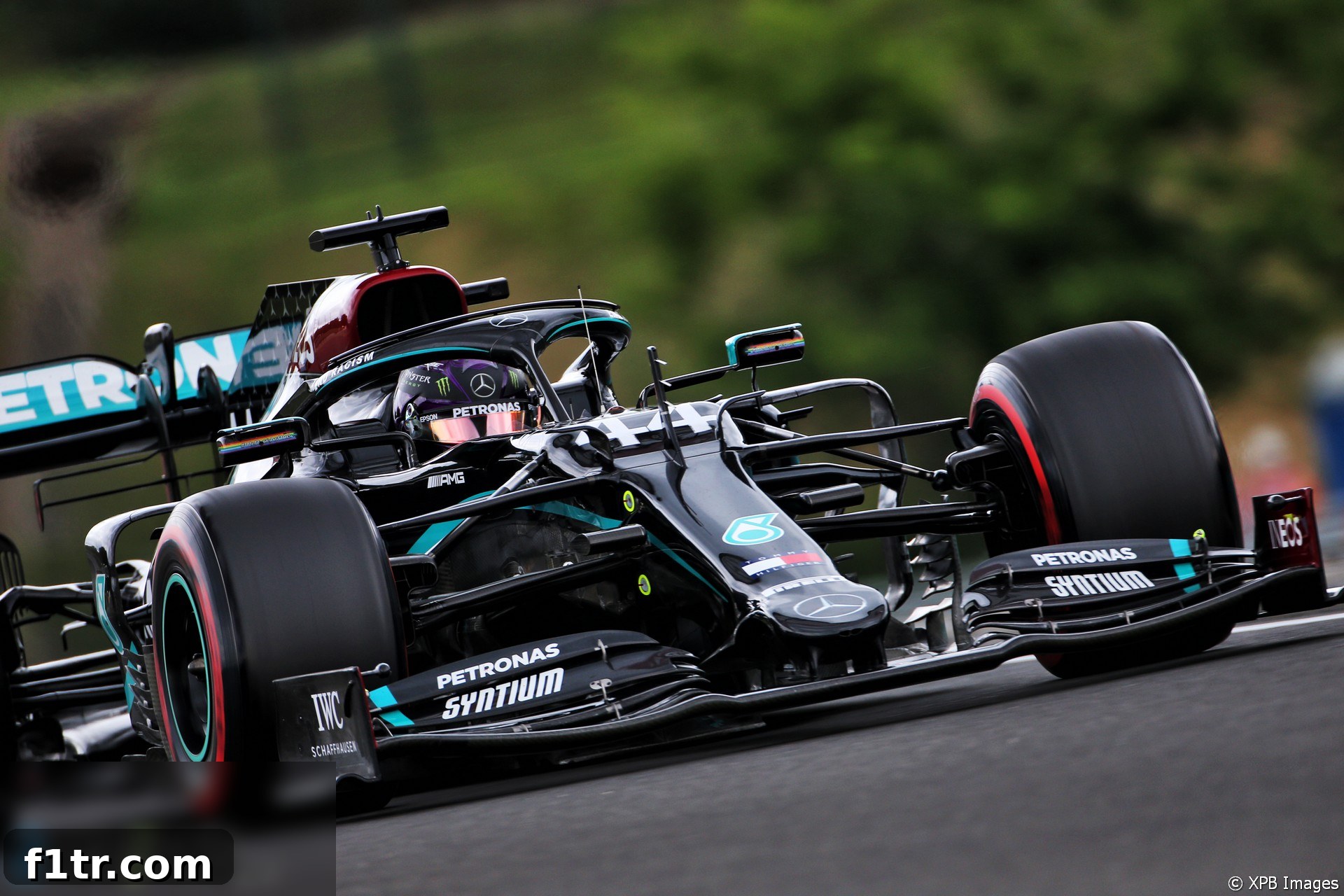
Lewis Hamilton’s Historic 90th Pole Position at the Hungarian Grand Prix
In a display of sheer dominance and precision, Lewis Hamilton secured his astonishing 90th career pole position during qualifying for the Hungarian Grand Prix. The achievement, a testament to his enduring skill and the unparalleled performance of his Mercedes W11, left even the seven-time world champion in a state of humble disbelief.
“I have to pinch myself, it just doesn’t register,” Hamilton remarked after leading a Mercedes one-two in the qualifying session, firmly establishing his car as the benchmark on the challenging Hungaroring circuit. His reaction underscored the magnitude of the milestone, placing him further into the annals of Formula 1’s most legendary figures.
A Milestone Moment: Hamilton’s Unprecedented Achievement
Reaching 90 pole positions is a feat almost beyond comprehension in the demanding world of Formula 1. This remarkable accomplishment not only extends Hamilton’s record as the most prolific pole-sitter in the sport’s history but also highlights his relentless pursuit of excellence. For context, the next closest competitor, Michael Schumacher, holds 68 pole positions, demonstrating the extraordinary gap Hamilton has forged over his illustrious career. Each pole represents a perfect symphony of car and driver, a lap executed with minimal error at the absolute limit.
The Hungarian Grand Prix qualifying session saw Hamilton deliver a masterclass, extracting every ounce of performance from his W11. This consistent ability to perform under pressure, lap after lap, season after season, is what truly sets him apart. It’s a reflection not just of natural talent, but of an unwavering work ethic, meticulous preparation, and an innate understanding of his machinery and the track.
The Mercedes Dominance: A Class Apart in Hungary
The 2020 season, while unique due to global circumstances, showcased Mercedes’ continued supremacy, and the Hungarian Grand Prix was no exception. The Mercedes-AMG F1 W11 EQ Performance car proved to be an engineering marvel, its balance, power unit, and aerodynamic efficiency giving it a significant edge over the competition. This was clearly evident as Hamilton and his teammate Valtteri Bottas locked out the front row, with a staggering gap of almost a second to the nearest non-Mercedes competitor.
This level of dominance isn’t merely about raw speed; it’s a testament to years of dedicated development, strategic brilliance, and seamless teamwork within the Mercedes garage. From the engine designers in Brixworth to the aerodynamicists in Brackley, every individual plays a crucial role in delivering a car capable of such commanding performances. Hamilton’s heartfelt appreciation for his team reflects this symbiotic relationship.
The Battle Within: Hamilton vs. Bottas
While Hamilton celebrated his 90th pole, the internal battle within Mercedes remained intense. Valtteri Bottas, a formidable competitor in his own right, pushed Hamilton to his limits, finishing just one-tenth of a second adrift. This close internal rivalry often brings out the best in both drivers, demanding absolute perfection from each qualifying lap.
“Valtteri doesn’t make it easy for me at all,” Hamilton acknowledged, highlighting the competitive tension that fuels his drive. This dynamic ensures that complacency never sets in, as both drivers continuously strive to outdo the other. It’s this constant pressure from within that often propels Mercedes to even greater heights, solidifying their position at the top of the constructors’ standings and pushing both drivers towards championship glory.
The Hungaroring Challenge: A Technical Masterpiece
The Hungaroring is renowned as a tight, twisty circuit often described as “Monaco without walls.” Its technical layout demands immense precision, excellent car balance, and supreme driver confidence. Overtaking opportunities are notoriously scarce, making qualifying performance paramount. Hamilton’s ability to extract such a dominant pole position here speaks volumes about his expertise on complex tracks.
The circuit features a series of challenging corners, requiring precise throttle control and exceptional downforce. Mastering the Hungaroring requires a driver to be in perfect harmony with their car, understanding its limits through every apex and exit. Hamilton’s performance demonstrated an unparalleled understanding of how to string together a flawless lap on this demanding European venue.
Weather Watch: An Unpredictable Race Day Ahead
Qualifying for the Hungarian Grand Prix remained largely dry, a stark contrast to the previous day’s wet practice sessions. However, the ever-present threat of rain loomed large over the circuit, adding an element of unpredictability to what was anticipated to be an already thrilling race day. The potential for changing weather conditions always adds another layer of strategic complexity for teams and drivers.
Hamilton remained acutely aware of the weather forecast, understanding that rain could significantly alter race strategies, tire choices, and potentially open up opportunities for competitors. The shift from dry to wet, or vice-versa, demands quick thinking and adaptable driving, skills Hamilton has repeatedly demonstrated throughout his career. His cautious optimism about the race day weather reflects the need for preparedness and flexibility.
Setting Sights on Race Day: Delivering Under Pressure
Despite securing a dominant pole, Hamilton’s focus immediately shifted to the race. The Hungaroring’s long run down to Turn 1 poses its own unique challenges, with slipstream and aggressive starts often leading to dramatic changes in position. “It’s a long run down to turn one so nothing’s a given here,” he stated, emphasizing the importance of a clean start.
His commitment to delivering a strong performance for his team was clear: “We’ve just got to do the work this evening and ultimately I’ve got to deliver on myself tomorrow. It is quite a long race and we don’t know what this weather’s going to do for us tomorrow. For sure I’m going to have my head down and be focusing as hard as I can to try to bring a one-two home for the team.” This mindset embodies the relentless drive that has defined Hamilton’s career, always pushing for maximum points and team success.
Beyond the Track: Hamilton’s Humble Reflections
Away from the glare of competition, Hamilton consistently demonstrates a deep sense of gratitude and humility. Crediting his success to the collective efforts of the Mercedes team, he articulated a perspective that many champions share: individual achievements are built upon the foundation of a dedicated collective. “It’s quite humbling to be honest because I get to work with an incredible group of people, who without I wouldn’t get the opportunity to do so. So I’m massively thankful to everyone back home and the guys here who do such an amazing job.”
This sentiment highlights a key aspect of Hamilton’s character, demonstrating his appreciation for every member of the Mercedes family. It’s a reminder that even in an individual-focused sport, teamwork remains paramount, fostering an environment where drivers and engineers push the boundaries of what’s possible, together.
Implications for the 2020 Championship
This 90th pole position at the Hungarian Grand Prix was not just a personal milestone but also a significant statement in the context of the 2020 Formula 1 season. In a shortened and intense championship, every point and every advantage gained is crucial. Starting from pole position on a track where overtaking is notoriously difficult provided Hamilton with the best possible platform to secure a race victory and further solidify his early championship lead. It set the tone for Mercedes’ intention to dominate the season and for Hamilton’s pursuit of yet another World Championship title, etching his name even deeper into motorsport legend.
Related F1 Season Articles
- The Evolution of Mercedes Dominance in Formula 1
- Understanding the Hungaroring: A Driver’s Perspective
- Team Dynamics: The Hamilton-Bottas Rivalry Analyzed
- Formula 1 Records: A Deep Dive into Pole Position Statistics
- Race Strategy and Weather: How Changing Conditions Impact F1
Browse all F1 season analysis articles