Welcome to our comprehensive F1 Race Weekend Round-up, where we delve into the most crucial discussions, captivating social media moments, and essential news from the world of Formula 1. This edition focuses on the recent German Grand Prix weekend, highlighting critical safety protocols, team strategies, and the vibrant fan engagement that defines the sport. From discussions with the sport’s highest authorities on track safety to the heartfelt messages from drivers and team personnel, we cover all angles to provide an in-depth look at the action and its aftermath.
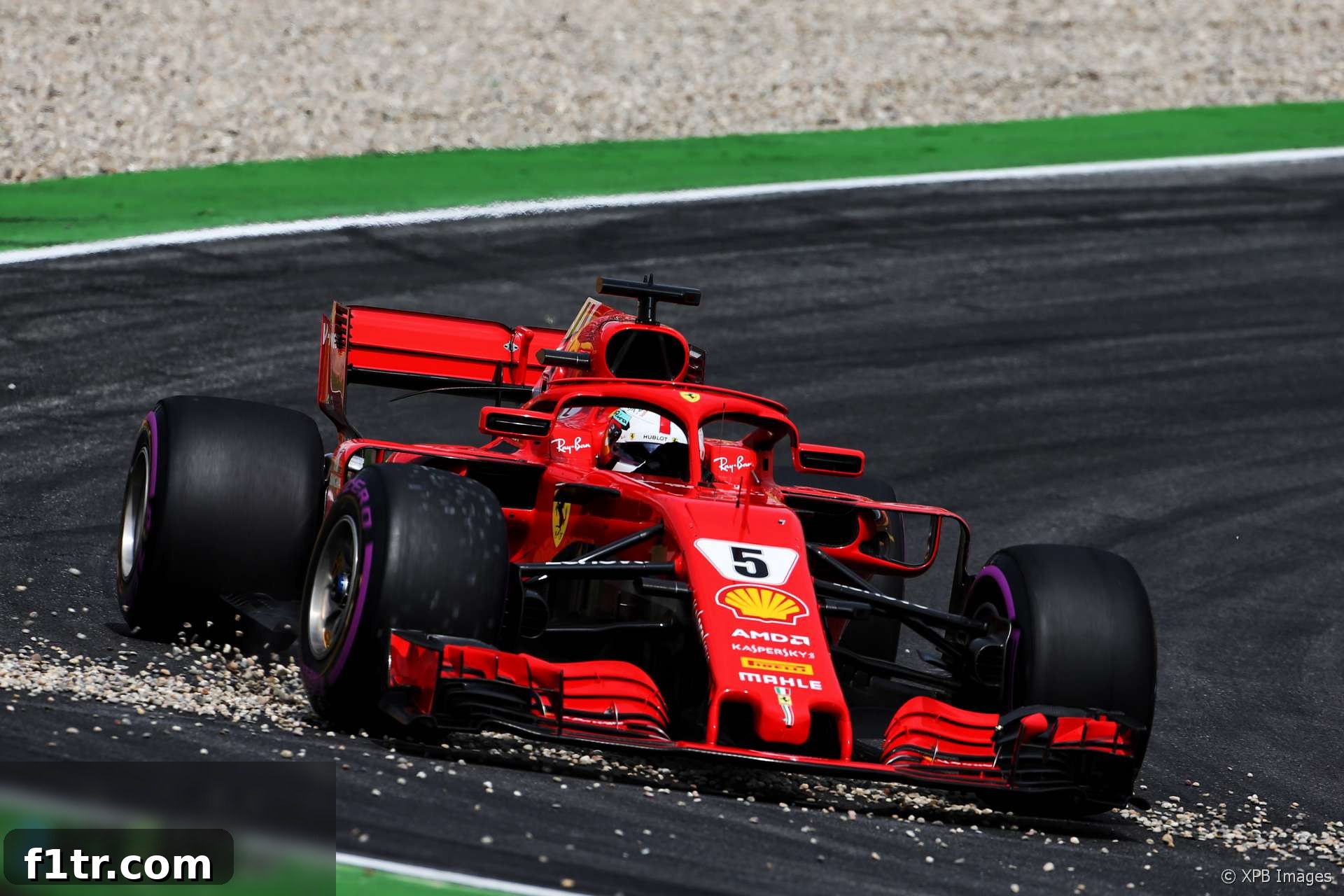
One of the key topics arising from the weekend concerned track safety and incident management. During qualifying, a red flag was deployed due to gravel scattered across the track. FIA race director Charlie Whiting addressed how such an incident would be handled if it occurred during the race itself, shedding light on the robust safety measures in place to ensure fair and safe competition. Understanding these protocols is vital for both fans and participants, as they directly impact race dynamics and outcomes.
FIA Race Director on Safety Car Protocols
During the German Grand Prix weekend, a significant discussion emerged regarding track safety after a qualifying session was temporarily halted by a red flag due to gravel on the circuit. This incident sparked questions about how such a scenario would be managed during a live race, where the stakes are significantly higher and the impact on competition far greater. FIA Race Director Charlie Whiting, a central figure in Formula 1’s operational and safety framework, provided crucial insights into these protocols.
RaceFans, a leading motorsport publication, specifically queried Whiting on his approach should a similar gravel-related red flag situation arise during the Grand Prix. His response underscored the layered safety mechanisms employed in Formula 1, distinguishing between qualifying and race day procedures.
I think we could have done that with a Safety Car in the race.
Whiting’s statement clarifies that while a red flag is a necessary measure in qualifying to allow for complete track clearance without time pressures, a race scenario involving track debris would typically prompt the deployment of the Safety Car. The Safety Car plays a pivotal role in F1, designed to neutralise a race safely and efficiently, allowing marshals to attend to hazards without unduly compromising the competitive flow or, more importantly, driver safety. When the Safety Car is deployed, it paces the field, grouping the cars together, and drivers are prohibited from overtaking. This controlled environment enables track marshals to safely remove debris, repair barriers, or attend to incidents, thereby restoring safe racing conditions. The decision to use a Safety Car instead of a red flag during a race is critical; a red flag completely stops the race, leading to a restart, which can drastically alter strategies and outcomes. A Safety Car, by contrast, aims to minimise disruption while ensuring safety, often leading to exciting restarts and strategic gambles from teams. This nuanced approach highlights the FIA’s commitment to both safety and maintaining the spectacle of F1 racing.
Quotes: Dieter Rencken
Advert | Become a RaceFans supporter andgo ad-free
Social Media Pulse: German GP Insights and Beyond
The German Grand Prix weekend resonated not only on the track but also across social media platforms, providing a candid glimpse into the thoughts, feelings, and experiences of drivers, teams, journalists, and fans alike. From inspiring moments to poignant tributes and light-hearted observations, the digital chatter captured the essence of a vibrant F1 community. Here’s a curated look at some of the most notable posts from Twitter, Instagram, and other channels that shaped the narrative of the weekend.
Well @BillyMonger sees your shoey @danielricciardo and he raises you…this is a ‘leggy’?!
Let’s make this go around the world people!! #nevergiveup #lifeiswhatyoumakeit #BRDCBritishF3 pic.twitter.com/y94NINIA4j
— Rodin Motorsport (@RodinMotorsport) July 22, 2018
One particularly inspiring moment came from Rodin Motorsport, highlighting Billy Monger. Known for his incredible resilience after a life-altering racing accident, Monger was seen humorously one-upping Daniel Ricciardo’s famous “shoey” celebration with his own unique “leggy.” This post, championed with hashtags like #nevergiveup and #lifeiswhatyoumakeit, quickly became a symbol of determination and the indomitable spirit within motorsport, transcending mere competition to deliver a powerful message of human perseverance. It resonated deeply with fans, reminding everyone of the courage and positive outlook that defines many athletes facing adversity.
Very sad to hear the news about Sergio Marchionne. All my thoughts go out to him and his family in the hope of his recovery
— Jean Todt (@JeanTodt) July 22, 2018
The F1 community also came together in a moment of solemn reflection. Jean Todt, then the President of the FIA, shared a heartfelt message of sadness regarding the news about Sergio Marchionne. Marchionne, a towering figure as the CEO of Ferrari and Fiat Chrysler Automobiles, was facing serious health issues at the time, which tragically led to his passing shortly after these posts. His influence on Ferrari’s Formula 1 efforts and the broader automotive industry was immense, and Todt’s tweet reflected the widespread concern and hope for his recovery that permeated the paddock and beyond. It was a stark reminder that even amidst the high-octane drama of racing, the human element and personal well-being remain paramount.
Those last laps were fun 🤙🏎🇩🇪
— Romain Grosjean (@RGrosjean) July 22, 2018
Romain Grosjean, known for his candid social media presence, simply tweeted: “Those last laps were fun 🤙🏎🇩🇪.” This concise message perfectly encapsulated the thrilling conclusion of the German Grand Prix, which saw unpredictable weather and dramatic shifts in fortune. For drivers like Grosjean, who often battle fiercely in the midfield, these challenging conditions can present unique opportunities for exciting wheel-to-wheel racing. His comment speaks volumes about the pure enjoyment and adrenaline rush that even the most seasoned F1 drivers experience during a chaotic and memorable race finish.
Trapped at the #GermanGP because the tunnels out of the track are flooded. Send help, and boats! ⛵️⛵️⛵️
— Kate Walker (@thekatewrites) July 22, 2018
The weather at Hockenheim was a major talking point, not just on track but off it too. Motorsport journalist Kate Walker offered a humorous, yet relatable, perspective on the logistical challenges posed by the heavy rain. Her tweet, “Trapped at the #GermanGP because the tunnels out of the track are flooded. Send help, and boats! ⛵️⛵️⛵️,” highlighted the chaotic scenes as fans and media tried to leave the circuit amidst unexpected downpours. It served as a reminder that Grand Prix weekends are complex operations, and adverse weather can impact everyone, from the drivers to the spectators and the press.
Postscript to earlier post! Queue at reception of hotel we are staying in tonight due to us missing our flight! pic.twitter.com/wd2SOduEy1
— Ann Bradshaw (@AnnieBWansford) July 22, 2018
Following the theme of post-race challenges, Ann Bradshaw, a long-time figure in F1 media relations, shared a snapshot of the travel woes that often accompany the intense F1 schedule. Her tweet, featuring a queue at a hotel reception, humorously chronicled the cascading effects of a missed flight. This provides a glimpse into the often-unseen side of the F1 circus – the constant travel, tight schedules, and occasional mishaps that are part and parcel of life on the road for those working within the sport. It’s a testament to their dedication that they manage to navigate these challenges week after week.
This is the Master Control Room for @F1 – the immense effort it takes to get the beautiful pictures around the world is mind blowing #Sportsbiz pic.twitter.com/dpNmOjWBYD
— Murray Barnett (@MurrayBarnett) July 22, 2018
Beyond the racing, the technological marvel behind broadcasting F1 was highlighted by Murray Barnett. He shared a fascinating insight into the “Master Control Room” for F1, emphasizing the “immense effort” and sophisticated technology required to deliver stunning visuals to a global audience. This tweet underscored the often-unseen complexity of F1 operations, reminding viewers that the seamless television coverage they enjoy is the result of a monumental technical and logistical undertaking, involving countless dedicated professionals working behind the scenes. It’s a critical aspect of how F1 maintains its global appeal and delivers a premium viewing experience.
“That was the drive of my life. It was a trying day. The greatest day…”
An emotional @LewisHamilton signs off after a roller-coaster #GermanGP 🇩🇪 weekend! pic.twitter.com/cbz5Ftn5G8
— Mercedes-AMG PETRONAS F1 Team (@MercedesAMGF1) July 22, 2018
The official Mercedes-AMG Petronas F1 Team account captured the raw emotion of Lewis Hamilton after his sensational victory at the German Grand Prix. Quoting Hamilton saying, ““That was the drive of my life. It was a trying day. The greatest day…”,” the post perfectly conveyed the significance of his triumph, which came from a challenging starting position amid variable conditions. This victory was a defining moment in his career, showcasing his extraordinary skill and mental fortitude, and the tweet served as a powerful echo of the jubilation and relief felt by Hamilton and his team.
‘Pit window open’ is a new #F1 TV graphic that assumes a lot of knowledge. Makes it sound like there are specific times in the race you have to make a stop – something other series have but not F1
— Glenn Freeman (@glennfreeman39) July 22, 2018
Glenn Freeman, a well-respected voice in motorsport journalism, offered a critical yet constructive observation on a new F1 TV graphic: “‘Pit window open’ is a new #F1 TV graphic that assumes a lot of knowledge. Makes it sound like there are specific times in the race you have to make a stop – something other series have but not F1.” His point highlighted the potential for confusion among newer fans, as F1 doesn’t have a mandatory “pit window” in the same way some other racing series do. This comment sparked a discussion about how F1 broadcasts can be made more accessible and intuitive for a global audience, balancing the need for technical detail with clarity for casual viewers.
Absolutely belting @RenaultSport Eurocup race at @redbullracing this morning. Close wheel-to-wheel action, superbly disciplined driving from a field of teenagers and not a Safety Car, DRS zone or high-degradation tyre in sight…
— Keith Collantine (@keithcollantine) July 22, 2018
Veteran F1 journalist Keith Collantine provided an interesting comparison, praising a Renault Sport Eurocup race at Red Bull Ring. He remarked on the “Absolutely belting… Close wheel-to-wheel action, superbly disciplined driving from a field of teenagers and not a Safety Car, DRS zone or high-degradation tyre in sight…” This tweet subtly raised questions about the elements that truly make racing exciting. By contrasting the pure, unassisted racing in a junior series with the complex regulations and technological aids in F1, Collantine sparked a debate about the essence of motorsport and what aspects truly foster exhilarating competition for drivers and fans alike.
So long Hockenheim. Hopefully see you again #F1 #GermanGP #Hockenheim #quickpackup #backtoback pic.twitter.com/DmnQku5iwa
— Bec Clancy (@becclancy) July 22, 2018
Finally, Bec Clancy, an F1 professional, offered a poignant farewell to the Hockenheimring with her tweet: “So long Hockenheim. Hopefully see you again #F1 #GermanGP #Hockenheim #quickpackup #backtoback.” This sentiment resonated with many fans who cherish the historic German circuit, which has faced an uncertain future on the F1 calendar. Her use of “hopefully see you again” captured the longing for the circuit’s continued presence, while hashtags like “quickpackup” and “backtoback” highlighted the relentless pace of the F1 season, moving swiftly from one race to the next without much respite. These social media snippets collectively painted a vivid picture of the German GP weekend, reflecting both the grandeur of the sport and the human experiences within it.
- Find more official F1 accounts to follow in the F1 Twitter Directory
Essential Motorsport Links and Race Weekend Analysis
Beyond the immediate headlines, the German Grand Prix weekend generated a wealth of detailed reports, strategic analyses, and insightful commentary from across the motorsport world. These links offer a deeper dive into the technical decisions, on-track drama, and broader implications for the sport, providing valuable context to the thrilling events at Hockenheim.
Advert | Become a Supporter & go ad-free
Lewis and Valtteri score sensational 1-2 (Mercedes)
Mercedes’ official race report provides an insider’s perspective on their triumphant 1-2 finish at Hockenheim. Andrew Shovlin, the team’s Trackside Engineering Director, sheds light on the critical strategic decisions that underpinned their success. He explicitly mentions the pivotal call on lap 42: “We decided to fit new (ultra-softs) on lap 42 as we could see the rain coming but wanted to be on new tyres when it came as we felt we could ride out the first shower on dries.” This statement highlights the precarious balance between anticipating changing weather conditions and committing to a tyre strategy. The team’s foresight, combined with precise execution, allowed them to maintain a competitive edge as the rain began to fall, ultimately leading to their impressive dual podium finish. Such insights are invaluable for understanding the complex interplay of meteorology, engineering, and tactical racing.
German GP (Williams)
The Williams team’s report from the German Grand Prix painted a stark picture of a challenging weekend marred by technical issues. Their detailed summary explained the reasons behind both Sergey Sirotkin’s and Lance Stroll’s early retirements. As the report states: “Sergey had an oil fire due to an oil leak somewhere in the engine circuit, but we are still investigating this, and in Lance’s case he had a failure in the rear brake circuit, losing all control of the rear brakes. In both cases it was clearly necessary to stop the car straightaway.” This candid account reveals the severe mechanical problems faced by the team, underscoring the relentless technical demands of Formula 1 and the critical importance of component reliability. Such failures, particularly brake system issues, highlight the inherent dangers of the sport and the constant need for engineering excellence.
Race – Sunday (Sauber)
Sauber’s race day summary offers a perspective on the strategic dilemmas faced during the unpredictable German Grand Prix. Their report describes a crucial, yet ultimately ill-fated, tyre call: “As the rain started to appear, I was called in for a change to intermediate tyres. As the track was only wet in a few of the corners, the tyres were destroyed after just a few laps.” This illustrates the extreme difficulty in making accurate tyre choices when weather conditions are localised and inconsistent around the circuit. The decision to switch to intermediates, which quickly degraded on the still-dry sections of the track, cost the team valuable time and performance, emphasising the fine margins and high risks involved in F1 strategy when rain looms.
Reacting to Lewis win and Vettel crash (Nico Rosberg via YouTube)
Former Formula 1 world champion Nico Rosberg offered his insightful and unfiltered reactions to the dramatic German Grand Prix in a YouTube video titled “REACTING TO LEWIS WIN AND VETTEL CRASH (GERMAN F1 GP) | NICO ROSBERG | UNCUT.” As a driver who competed directly against Lewis Hamilton and Sebastian Vettel, Rosberg’s analysis provides a unique, expert perspective on the key moments of the race – Hamilton’s masterful victory and Vettel’s crucial error. His commentary delves into the psychological and strategic aspects of top-tier F1 racing, offering fans an unparalleled breakdown from someone who has experienced those pressures firsthand. Such post-race analyses from former champions are invaluable for deepening understanding of race craft and mental fortitude.
Ailing auto CEO Marchionne had multiple roles, no script (AP)
The Associated Press delivered a poignant piece reflecting on the multifaceted career of Sergio Marchionne, the ailing auto CEO at the time. The article, “Ailing auto CEO Marchionne had multiple roles, no script,” delves into his profound impact across Fiat Chrysler and, crucially, Ferrari. It notes: “As part of his efforts to revamp Ferrari, Marchionne focused heavily on Formula One, arguing that more prestige for the racing side would increase the carmaker’s value.” This quote highlights his strategic vision for F1, not just as a sporting endeavour, but as a critical brand-building and value-generating asset for Ferrari. His leadership was instrumental in shaping the Scuderia’s direction, both commercially and competitively, and his health news sent ripples through the entire F1 paddock, underscoring his immense influence.
Comment: Time for Formula 1’s owners to man-up and lay down the law (New Zealand Herald)
A thought-provoking commentary from the New Zealand Herald titled “Comment: Time for Formula 1’s owners to man-up and lay down the law” tackled the complex governance dynamics within Formula 1. The article directly challenges the prevailing power structures, arguing: “The competitors, as in any sport, ought not be dictating to the sport’s owners and rule makers about what they will and will not accept.” This piece critically examines the delicate balance of power between Liberty Media (the sport’s owners), the FIA (the rule-makers), and the teams (the competitors). It advocates for stronger leadership from the sport’s governing bodies to ensure that decisions are made in the best long-term interest of F1, rather than being swayed by the immediate commercial or competitive demands of individual teams. This ongoing debate about F1’s future direction and governance remains a crucial topic for its sustainability and growth.
We always endeavour to credit original sources. If you have a tip for a link to feature in the next RaceFans round-up please send it in here:
- Contact RaceFans
Advert | Become a RaceFans supporter andgo ad-free
Debating Ferrari’s Power Unit Advantage: A Fan’s Perspective
The intense rivalry between Mercedes and Ferrari often manifests in strategic mind games and public statements, particularly concerning performance advantages. Following the German Grand Prix, a significant point of contention arose around Mercedes’ claims regarding Ferrari’s power unit superiority. Mercedes team principal Toto Wolff suggested that Ferrari held a ‘half a second’ advantage on the straights, fueling speculation about engine development and competitive balance. This claim sparked considerable debate among fans and analysts alike, questioning the veracity and strategic intent behind such statements.
Our “Comment of the Day” captures a compelling counter-argument, offering a fan’s insightful perspective on this hot topic:
Wolff is bluffing! If that Ferrari’s “half a second on straights advantage” he mentioned was anything real, Seb and Kimi would have easily snatched 1-2 in qualifying, which wasn’t the case.
Truth is, Mercedes lost the massive advantage they had over their main competitors in the last 3 or 4 seasons and their car is now pretty matched with the Ferrari one. What is making the difference now, is the man behind the wheel and unfortunately for Mercedes, is Ferrari that has the upper hand in that department.
@Elio
The commenter, @Elio, articulates a widely held sentiment among sections of the F1 fanbase: that such pronounced claims of advantage might be a tactical “bluff” from Mercedes. @Elio logically points to the qualifying results – where a clear 1-2 for Ferrari did not materialise – as evidence against a dominant half-second straight-line speed advantage. This highlights the complexity of F1 performance, where raw engine power is just one variable among many, including aerodynamic efficiency, tyre management, and driver skill. The comment suggests that the competitive landscape has shifted dramatically. Mercedes, having enjoyed a period of significant dominance, now finds itself on a more level playing field with Ferrari.
Furthermore, @Elio’s observation that “What is making the difference now, is the man behind the wheel and unfortunately for Mercedes, is Ferrari that has the upper hand in that department” shifts the focus from purely technical superiority to the crucial role of driver performance. This perspective resonates with many who believe that in closely matched eras, the skill, consistency, and mental strength of the drivers become the ultimate differentiators. It underscores the ongoing debate in F1: is it the car or the driver that truly makes the champion? This comment offers a fresh and well-reasoned take on a central point of rivalry and discussion, reflecting the passionate engagement of the F1 community.
Engage with the Community: Your German GP Experience
The roar of the engines, the electric atmosphere, and the thrill of witnessing world-class motorsport live are experiences that stay with fans long after the checkered flag. Our dedicated forum provides a vibrant platform for enthusiasts to connect, share their stories, and discuss every aspect of the Grand Prix weekend. Whether you were trackside, watching from home, or following every update, your insights contribute to a richer understanding of the sport.
- Did you go to today’s race? Tell us what you thought of F1 at the Hockenheimring here
If you were among the passionate fans who attended the German Grand Prix at the iconic Hockenheimring, we invite you to share your unique perspective. What were the highlights of your experience? How did the atmosphere compare to other races you’ve attended? Did the unpredictable weather add to the excitement or create logistical challenges for you? Your personal anecdotes and observations are invaluable in capturing the true essence of an F1 race weekend. Join the discussion, connect with fellow fans, and relive the excitement through shared memories and opinions on our forum.
Celebrating Our Community: Happy Birthday!
The Formula 1 community is a global family, and we love to celebrate the individuals who make it so vibrant and passionate. Today, we extend our warmest wishes to two cherished members of our community, Matt and Lalit Palaparthy, on their birthdays! We hope you both have a fantastic day filled with joy, perhaps even some F1-themed celebrations, and that the year ahead brings you many more thrilling race weekends to enjoy.
We believe that every fan’s journey with F1 is unique and worth celebrating. If you would like to receive a special birthday shout-out in a future round-up, or simply want to share your special day with the RaceFans community, we encourage you to get in touch.
You can easily tell us when your birthday is via the contact form on our website, or by adding your name to our growing birthday list here. It’s a wonderful way to connect with fellow F1 enthusiasts and feel a part of this incredible global community that shares a common passion for speed, strategy, and spectacular racing. We look forward to celebrating with you!
On This Day in F1 History: Senna’s Hockenheim Pole
Formula 1 is a sport rich in history, and every day brings a reminder of iconic moments and legendary figures who have shaped its legacy. Looking back exactly three decades ago, on this very day, the German Grand Prix at Hockenheim witnessed a defining moment in the career of one of motorsport’s greatest heroes.
- 30 years ago today Ayrton Senna took pole position for the German Grand Prix with Nigel Mansell’s Williams a surprise second
It was a remarkable Saturday in Formula 1 on July 22, 1988, when the legendary Ayrton Senna, behind the wheel of his dominant McLaren-Honda MP4/4, showcased his unparalleled qualifying prowess. Senna, already building his reputation as a master of the single-lap qualifying run, secured pole position for the German Grand Prix. His performance that day at the high-speed Hockenheimring, with its long straights and challenging chicanes, was a testament to his sheer talent and the exceptional engineering of his machine.
Adding another layer of intrigue to the qualifying session was the performance of Nigel Mansell. Piloting his Williams-Judd, Mansell delivered a truly surprising second-place grid slot. This achievement was particularly noteworthy given the strong competition and the established pecking order of the era. For Mansell and Williams, securing a front-row start ahead of many formidable rivals was a significant statement and set the stage for what promised to be an exciting race. This historical snapshot reminds us of the golden age of Formula 1, where legendary drivers pushed the boundaries of speed and skill, creating moments that continue to inspire generations of motorsport fans.