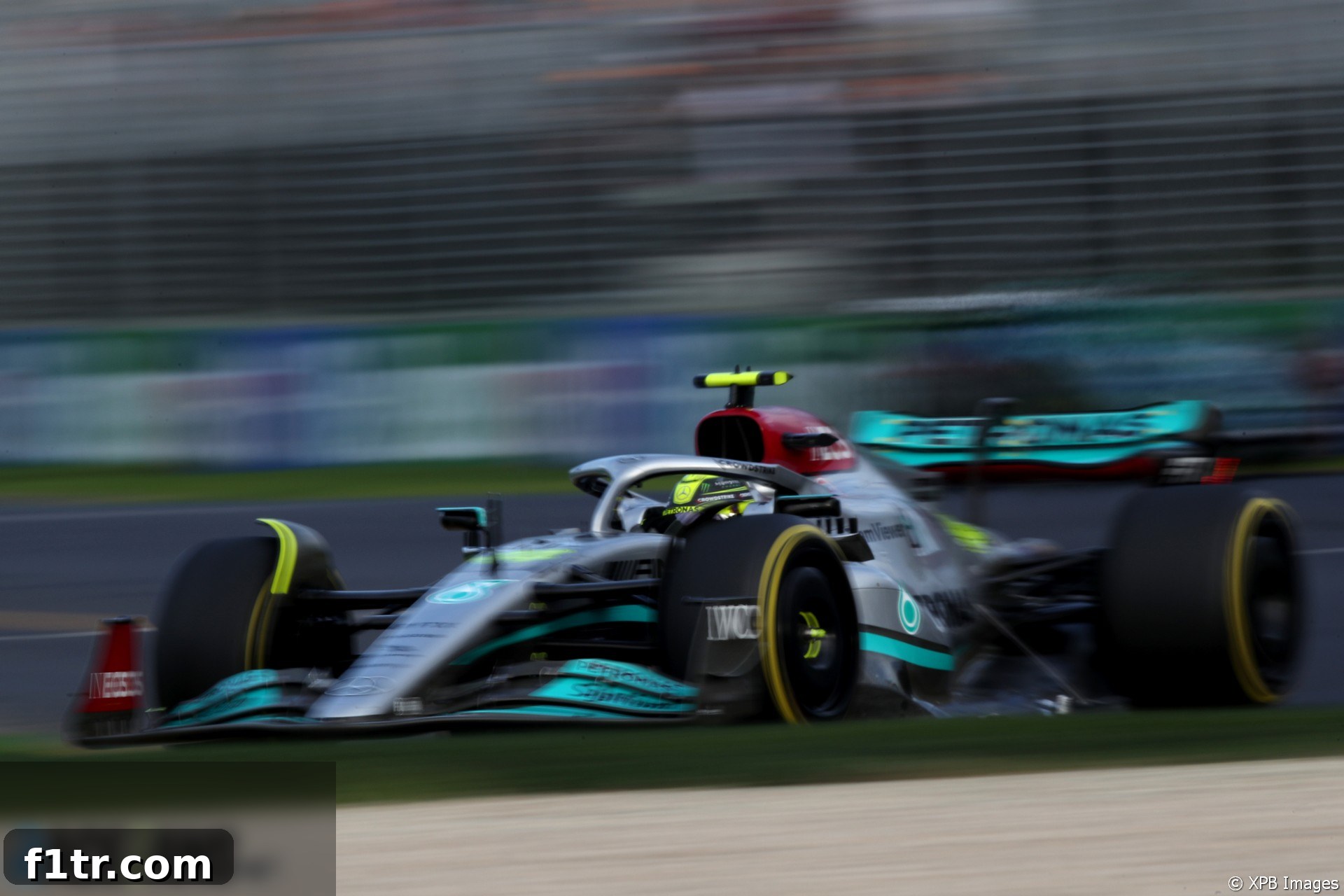
Seven-time Formula 1 world champion Lewis Hamilton revealed that a critical car overheating issue was the primary reason he was unable to mount an attack on his teammate, George Russell, for third place in the concluding stages of the 2022 Australian Grand Prix. This technical constraint ultimately saw Hamilton finish fourth, just behind Russell, despite a promising start to the race.
Advert | Become a Supporter & go ad-free
Hamilton’s “Difficult Position” Clarified: A Battle Against Overheating
During a tense moment late in the race, a radio message from Hamilton to his team was broadcast, in which he expressed feeling in a “difficult position” as he trailed Russell. This brief but impactful remark immediately sparked widespread discussion and speculation among fans and pundits. However, Hamilton swiftly clarified post-race that his comment was not a reflection of team strategy or interpersonal dynamics, but rather a direct reference to the severe thermal management challenges he was facing with his Mercedes W13.
“I couldn’t race for position because the car was overheating, so I had to back off,” Hamilton plainly stated. This explanation shed light on the unseen battle taking place within the cockpit. When a Formula 1 car experiences critical overheating, drivers are often instructed, or compelled, to reduce their pace to protect vital engine components, brakes, or other systems from irreversible damage. Pushing beyond these limits can lead to catastrophic engine failure or significant reliability issues, jeopardizing the car’s integrity and a potential points finish. Therefore, despite his competitive nature, Hamilton was forced to prioritize car preservation over a direct wheel-to-wheel fight with his teammate.
Safety Car Dynamics: A Strategic Turning Point
The race narrative for the two Mercedes drivers took a significant turn earlier in the event due to the deployment of the Safety Car. Initially, Hamilton had been running ahead of Russell, having made an impressive start from the grid and demonstrating strong early pace. However, the timing of the Safety Car intervention proved to be a stroke of luck for Russell. As the safety car neutralized the race, Russell was strategically able to make his mandatory pit stop during this period. A pit stop under Safety Car conditions significantly minimizes the time lost compared to a stop made during green flag racing, as the entire field slows down. This fortunate timing allowed Russell to effectively “undercut” his teammate, emerging from the pits ahead of Hamilton and gaining a crucial track position advantage that he would maintain until the finish line.
For Hamilton, the Safety Car’s appearance at that specific juncture was less favourable. It meant he was forced to stay out on track longer, eventually losing the position he had gained through his strong initial driving. Such strategic nuances around Safety Car periods are a cornerstone of modern Formula 1, often playing a decisive role in the outcome of races and the positions of individual drivers, sometimes irrespective of their raw pace advantage.
Mercedes’ Resilience: Maximising Points Amidst W13 Challenges
Despite the personal frustration of not being able to race Russell, Hamilton highlighted the overall positive result for the Mercedes-AMG Petronas F1 Team. Russell’s third-place finish, combined with Hamilton’s fourth, secured a valuable double-points haul for the squad. This was a particularly commendable achievement given the team’s well-documented struggles in the early phase of the 2022 season, grappling with the performance characteristics and aerodynamic challenges of their W13 car, most notably severe “porpoising” and a noticeable deficit in outright speed compared to front-runners Red Bull and Ferrari.
“It was an amazing result for us as a team,” Hamilton declared, emphasizing the collective effort required to achieve such a strong finish. He candidly reflected on the team’s initial performance in Melbourne, stating, “We were 1.2 seconds off on Friday, and it wasn’t looking spectacular at that point.” This honest assessment underscored the magnitude of the performance gap Mercedes faced during the practice sessions. However, the dedication of the team’s engineers and strategists was evident, as they worked relentlessly overnight to fine-tune the car’s setup, enabling both drivers to extract improved performance in qualifying and deliver an exceptional race start.
Hamilton vividly recalled the initial joy of the race: “We did some great work overnight, qualified on the third row and then a great start. I was up in third, it felt amazing to feel like you’re fighting for a podium in that moment.” This glimpse into his mindset revealed the transient optimism of momentarily contending for a top-three spot, a vital morale boost for a team determined to overcome its early season woes and unlock the full potential of their innovative, yet challenging, new-regulation car.
Consistent Performance Delivery: A Hallmark of Champions
Beyond individual results, Hamilton underscored the team’s remarkable capability to extract the absolute maximum from their current performance package, even if the W13 itself had not undergone a revolutionary transformation in terms of raw pace across the opening three races. “Whilst we haven’t necessarily improved the car over these three races, I think we’ve really extracted the most we could points-wise,” he observed. This statement speaks volumes about Mercedes’ strategic brilliance, operational excellence, and the exceptional skill of their drivers in seizing every available opportunity, consistently converting challenging weekends into strong points hauls, even when their car is not the fastest on the grid. This ability to perform under pressure and make the most of every situation is a hallmark of championship-winning teams.
In a moment of characteristic candour, Hamilton also took the opportunity to reflect on his own performance in the preceding race. “I think from my side I let the team down in the last race, didn’t get the points,” he admitted, referring to the Saudi Arabian Grand Prix where he finished outside the top ten. “But to come away with this result is great.” This willingness to accept personal accountability, combined with a deep appreciation for the team’s collective success, reinforces Hamilton’s unwavering commitment and his role as a pivotal leader within the Mercedes-AMG Petronas F1 Team.
Looking Ahead: Mercedes’ Quest for Dominance
The 2022 Australian Grand Prix served as another clear indicator of the significant challenges confronting Mercedes in the new era of Formula 1 regulations. While a double-points finish, including a podium for Russell, was a commendable testament to their resilience, the underlying performance gap to formidable rivals like Red Bull and Ferrari remained a pressing concern. The team’s technical leadership and engineering staff at Brackley were undoubtedly meticulously analyzing every byte of data from Albert Park, focusing intently on understanding the specific overheating issues and the W13’s sensitivity to varying conditions and setups.
Overheating in a complex F1 machine can originate from a multitude of factors, ranging from engine mapping and cooling system efficiency to aerodynamic designs that might restrict airflow, or even aggressive setup choices that push components to their thermal limits. For a team renowned for its engineering precision and attention to detail like Mercedes, addressing such issues becomes an immediate and paramount priority for investigation and resolution. Their consistent ability to deliver strong results, even with a less-than-optimal car, underscores their deep technical expertise and unwavering determination. The immediate focus for upcoming races would be on thoroughly understanding the W13’s intricate characteristics, developing targeted upgrades to alleviate porpoising and enhance overall aerodynamic efficiency, and critically, ensuring that both drivers are liberated from reliability concerns or critical temperature management constraints.
As the demanding 2022 Formula 1 season progressed, the development battle intensified across the grid. Mercedes’ storied commitment to innovation and their unparalleled track record of overcoming adversity strongly suggest that while the initial phase of the season presented formidable hurdles, they remain fully engaged in the relentless pursuit of regaining their front-running dominance. The Australian Grand Prix, with its blend of strategic intricacies, on-track drama, and technical puzzles, undoubtedly provided invaluable lessons for the Brackley-based outfit as they continue their ambitious quest for championship contention.
Advert | Become a RaceFans supporter andgo ad-free
2022 Australian Grand Prix: Related Articles & Insights
For more in-depth coverage, analysis, and exclusive insights from the thrilling 2022 Australian Grand Prix weekend, delve into these essential reads:
- Aston Martin’s porpoising “does not allow us to exploit the progress the guys have made”
- Wolff puts Mercedes’ odds of championship victory at “two to eight”
- FIA responds to Verstappen’s criticism of Safety Car performance
- “So this is the end of our race, I guess?” How Alonso’s luckless Australian GP unfolded
- Two-degree temperature rise led to Hamilton’s “difficult position” radio message
Browse all 2022 Australian Grand Prix articles