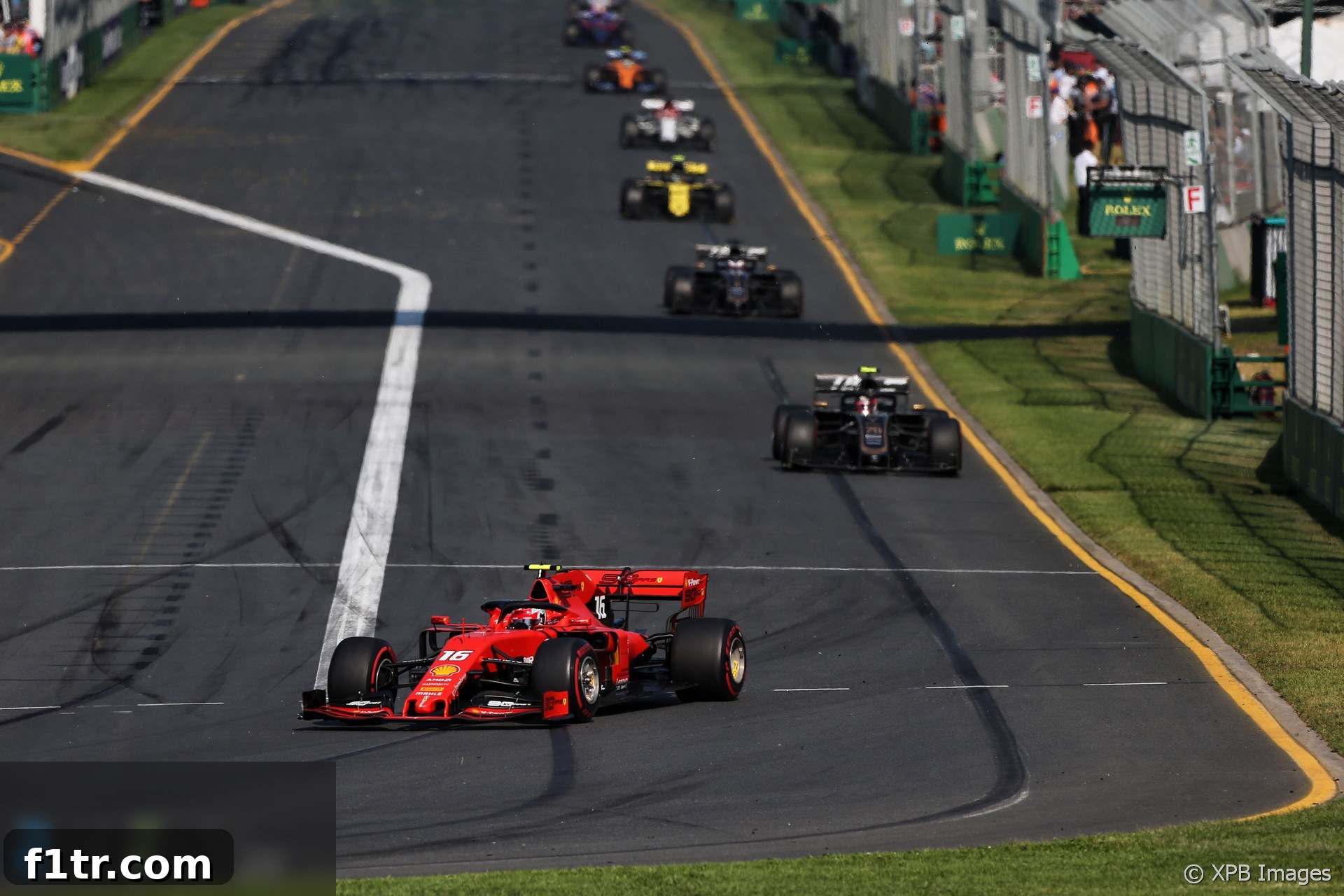
Ferrari, one of Formula 1’s most iconic and strategically scrutinized teams, recently found itself at the center of a debate concerning a crucial in-race decision. Team principal Mattia Binotto acknowledged that the Scuderia would re-evaluate its call not to pit Charles Leclerc for an attempt at the fastest lap bonus point. This strategic choice, made during the closing stages of a Grand Prix, sparked considerable discussion among fans and pundits alike, highlighting the complex balance between aggression and caution that defines top-tier motorsport strategy.
The scenario unfolded in the final laps, with Leclerc positioned behind his teammate, Sebastian Vettel, maintaining a fixed position without the allowance to overtake. Crucially, Leclerc held a significant enough lead over Kevin Magnussen, who was running in seventh place, to afford a ‘free’ pit stop. This window of opportunity meant that he could pit for fresh tyres without risking the loss of his track position. With an invaluable bonus point on offer for the fastest lap, the potential seemed ripe for Ferrari to deploy a bold strategy and claim an extra championship point. However, as Binotto later explained, the team ultimately decided against taking the perceived risk.
Ferrari’s Strategic Crossroads: The Fastest Lap Conundrum
The reintroduction of a bonus point for the fastest lap in 2019 added an intriguing new layer to Formula 1 strategy. This single point, awarded to the driver who sets the fastest lap during a race and finishes in the top ten, has the potential to significantly influence championship battles, both for drivers and constructors. Teams are constantly analyzing race conditions, driver positions, and tyre performance to identify opportunities for a ‘free’ stop – a pit stop that doesn’t jeopardize a scoring position – to chase this coveted bonus point.
The Decision to Prioritize Safety Over Speed
Mattia Binotto, addressing the media after the race, confirmed the team’s internal deliberation: “We had the window to pit Charles for new tyres [and] try to go for the fast lap.” Yet, he swiftly moved to explain the rationale behind their conservative approach. “But I think at that stage whenever you pit it may be a risk and I think for us it was more important for us to bring the car home, score the points.” This statement encapsulates the core of Ferrari’s decision-making process in that moment: minimizing risk to ensure a solid points haul, even if it meant forgoing a potential extra point.
Binotto elaborated on the philosophy, stating, “Sometimes there are races where we are not the best but it’s still important to score points and at the end that was our choice.” This perspective underscores a fundamental principle in Formula 1: consistency and reliability in scoring points are often paramount, especially in seasons where a team might not have the outright pace advantage. Every point contributes to the constructors’ championship, which holds significant financial and prestige implications for the team.
Unpacking the Perceived Risks
What exactly were the “risks” that Binotto and his team considered too significant to warrant a fastest lap attempt? Several factors could contribute to such a cautious stance:
- Pit Stop Execution: Even the most practiced pit crews can experience a slow stop, a minor error, or an equipment malfunction. A delay of just a few seconds could compromise Leclerc’s comfortable gap to Magnussen, potentially losing him a valuable position.
- Tyre Warm-up: New tyres, particularly in cooler conditions or on tracks with specific characteristics, require a lap or two to come up to optimal operating temperature. This period can be unpredictable, and there’s no guarantee that Leclerc could immediately unleash the ultimate pace needed for the fastest lap.
- Track Incidents: An unforeseen incident, such as a yellow flag, a safety car deployment, or debris on track, could occur during or immediately after the pit stop. Such events could nullify the advantage of fresh tyres or, worse, trap Leclerc in traffic or behind a safety car, negating the entire strategy.
- Reliability Concerns: Pushing a car to its absolute limits in the final laps after a full race distance can sometimes expose underlying reliability issues. While rare, a mechanical failure on a fresh set of tyres while chasing a fastest lap would be a devastating outcome.
- Driver Errors: In the heat of chasing a fastest lap, especially with cold tyres, the risk of a minor driver error or an off-track excursion increases. While Leclerc is a top-tier talent, even the best can make mistakes under pressure.
- Traffic Management: Even with a clear gap to the car behind, hitting traffic during the crucial fastest lap attempt could compromise the run, making the pit stop an exercise in futility.
Considering these variables, the decision to prioritize the points already secured for P6 over the speculative gain of a single bonus point becomes more understandable, albeit still debatable.
Leclerc’s Outlook and Future Strategy Review
Interestingly, Leclerc himself had commented earlier in the weekend that he anticipated teams would capitalize on such ‘free’ pit stop opportunities to chase the fastest lap. This prior expectation from the driver suggests a potential difference in immediate tactical thinking between him and the pit wall. While a driver’s instinct is often to push for every possible gain, the team principal bears the ultimate responsibility for balancing aggression with the overall championship picture and minimizing operational risks.
Binotto confirmed that the team would conduct a thorough post-race analysis: “We will review certainly on the race and we will eventually review the decision but the decision was for that reason.” This commitment to review is standard practice in Formula 1, where every decision, successful or otherwise, becomes a learning opportunity. Such reviews involve meticulous data analysis, strategic simulations, and debriefs with drivers and engineers to refine future race strategies. The aim is not merely to critique a past decision but to evolve and optimize their approach for upcoming challenges.
The Broader Implications for F1 Strategy
Ferrari’s cautious approach in this instance highlights a recurring theme in Formula 1: the tension between securing known points versus pursuing speculative gains. While a single point may seem minor in isolation, its cumulative impact over a season can be immense. In closely contested championships, even one point can differentiate champions from runners-up. Other teams might have taken a more aggressive stance, betting on their pit crew’s efficiency and their driver’s ability to extract immediate performance from new rubber. This divergence in philosophy often provides compelling strategic narratives throughout a season.
The incident also subtly touches upon the dynamics within Ferrari, particularly the management of two highly competitive drivers. While Leclerc was behind Vettel, the primary objective was to ensure both cars finished strongly and brought home maximum constructors’ points. Introducing a variable like a fastest lap attempt for one driver could potentially complicate the team’s overall race management or even create a perception of favoritism, though in this case, the decision was framed around general risk.
Ultimately, the fastest lap bonus point mechanism compels teams to perform intricate risk-reward assessments in real-time. Factors such as the current championship standing, the specific circuit characteristics, weather conditions, tyre degradation patterns, and the performance gap to rivals all feed into this complex strategic calculus. Ferrari’s decision, while conservative, was a calculated one, born from a desire to consolidate their position in what might have been a challenging race for the team. It serves as a potent reminder of the myriad pressures and considerations that weigh on an F1 team principal during the frantic final moments of a Grand Prix.
Conclusion: A Continuous Pursuit of Strategic Excellence
The decision not to pit Charles Leclerc for the fastest lap bonus point underscores the high-stakes nature of Formula 1 strategy. While the allure of an extra championship point is undeniable, Ferrari, under Mattia Binotto’s leadership, opted for a conservative path, prioritizing the certainty of existing points over the uncertainty of a bonus. This choice, rooted in a comprehensive assessment of various risks, reflects a pragmatic approach to securing championship points. As F1 continues to evolve, so too will the strategic considerations teams face, making every pit wall decision a critical moment under the global spotlight. The thorough review promised by Binotto highlights the continuous pursuit of perfection and strategic excellence that defines Formula 1’s top contenders.
Further Reading on the 2019 F1 Season
- Crying in the Melbourne car park at 2019 grand prix was my career low – Ocon
- McLaren Racing reports reduced £71 million loss in 2019
- Kvyat: Hockenheim podium last year was “my biggest achievement” so far
- How the FIA’s new encrypted fuel flow meter targets Ferrari’s suspected ‘aliasing’ trick
- “He smashed my office door”: 23 must-see moments from ‘Drive to Survive’ season two
Browse all 2019 F1 season articles