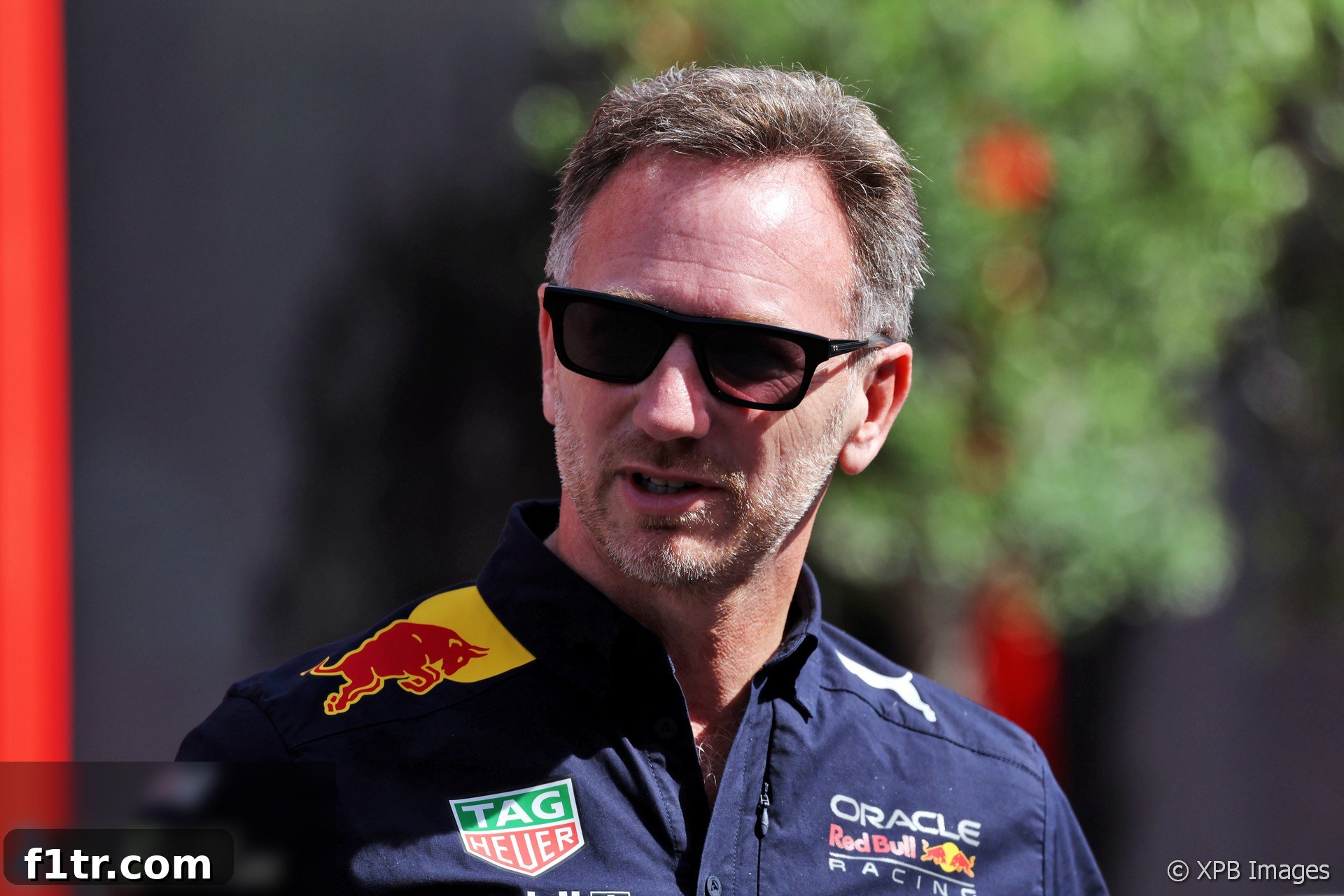
In the high-stakes world of Formula 1, where technological innovation and competitive advantage reign supreme, the design of a racing car is paramount. Teams invest hundreds of millions in research and development, making their intellectual property (IP) an invaluable asset. This fierce battle for engineering supremacy was thrust into the spotlight when Aston Martin unveiled a significantly upgraded AMR22 at the Spanish Grand Prix, bearing a striking resemblance to Red Bull Racing’s championship-leading RB18. This development immediately ignited a fervent debate within the paddock and beyond, prompting Red Bull team principal Christian Horner to announce an internal investigation into potential breaches of their design secrets.
The controversy began with the arrival of Aston Martin’s upgraded challenger at the Circuit de Barcelona-Catalunya. Observers, pundits, and rival teams alike were quick to notice the stark visual similarities between the new AMR22 and Red Bull’s dominant RB18. From the sculpted sidepods and engine cover design to the intricate floor aerodynamics, the updated Aston Martin appeared to be a near-mirror image of its Red Bull counterpart. The racing community instantly dubbed it the “Green Red Bull,” highlighting the perceived lack of originality and raising serious questions about the origins of its design philosophy. This sudden transformation from its original, less competitive specification to one mirroring the front-runner’s design drew immediate scrutiny and skepticism.
Following the widespread speculation and the highly visible similarities, the sport’s governing body, the FIA (Fédération Internationale de l’Automobile), initiated its own preliminary investigation. This process typically involves a thorough review of a team’s Computer-Aided Design (CAD) data, development timelines, and other proprietary information to ascertain the independent creation of components. Aston Martin was required to present compelling evidence demonstrating that their upgraded parts were a result of their own distinct development process, rather than a direct copy of a rival’s design. After evaluating the submitted documentation, the FIA confirmed that Aston Martin had indeed shown they had designed the new components independently, giving the team the initial green light to race their updated package.
Despite the FIA’s initial clearance, Christian Horner remained unconvinced and deeply concerned. He articulated Red Bull’s position, stating, “They’ve followed a timeline and they’re accepting of what Aston Martin have presented here. Of course, if any evidence of foul play came to light, it becomes a different issue.” Horner’s skepticism stemmed from the inherent value of Red Bull’s intellectual property, which represents years of tireless work, immense financial investment, and the collective genius of their engineering team. The potential for this hard-won advantage to be compromised by a rival, especially one that had recently recruited a number of former Red Bull personnel, was a prospect he found unacceptable and sought to address with utmost seriousness.
Adding another layer to Red Bull’s suspicions was the fact that the FIA itself had initially brought the matter to their attention. Horner revealed, “It was brought to our attention actually by the FIA earlier in the week where they said ‘we’ve got a car that looks remarkably like yours, can we have a list of your leavers to see where they went?’ So of course, that immediately raises alarm bells.” This proactive move by the governing body, prompted by their own observations during routine technical checks, intensified Red Bull’s internal concerns. It suggested that even the FIA recognized the striking similarities and the potential for a non-organic development process, prompting them to seek information on recent personnel movements between the two teams. This unusual intervention underscored the gravity of the situation and fueled the perception that something more than mere convergent evolution might be at play.
The movement of engineering talent between Formula 1 teams is a common, albeit complex, aspect of the sport. Engineers, strategists, and technical experts frequently transition between organizations, bringing with them a wealth of experience and knowledge. Horner acknowledged this reality, explaining the distinction between legitimate knowledge transfer and illicit IP theft: “What is permissible, and we see it up and down the paddock, individuals move from team to team after a garden leave period, what they take in their head, that’s fair game. That’s their knowledge. What isn’t fair and what is totally unacceptable, which we wouldn’t accept, is if there has been any transfer of IP at all.” The “garden leave” period, a standard contractual clause, prevents departing employees from immediately joining a competitor, aiming to limit the transfer of highly sensitive, current information. However, policing the boundary between an individual’s accumulated knowledge and proprietary team data remains an enduring challenge for all F1 teams and regulators.
Horner’s resolve to protect Red Bull’s intellectual property was unwavering. He went so far as to label any direct transfer of IP a “criminal offence.” “It’s a criminal offence because IP is a team’s lifeblood. It’s what we invest millions of pounds into and you wouldn’t want to see that just turning up in a rival organisation otherwise we may as well franchise it, we may as well be able to sell aerodynamics,” he asserted. The sheer financial and strategic investment in cutting-edge aerodynamics, powertrain technology, and chassis design makes IP the ultimate competitive differentiator in modern F1. A breach of this trust could not only undermine a team’s performance but also erode the fundamental fairness and integrity of the sport. Such an act would constitute a severe transgression, potentially leading to substantial penalties for the offending team, ranging from fines to points deductions, or even exclusion from the championship, as seen in past high-profile “spy-gate” incidents.
To address his concerns and thoroughly investigate the matter, Horner confirmed that Red Bull would be conducting an extensive internal inquiry. “We will have an internal investigation,” he stated, outlining the measures his team employs to safeguard their designs. “We’ve got our own software protections. We know exactly what software is looked at, where that software is controlled.” This internal probe would likely involve auditing digital access logs, reviewing communication records, and scrutinizing data transfers to determine if any proprietary information might have been inadvertently or deliberately compromised. Such internal security measures are critical for F1 teams, given the constant flow of information and the need to protect sensitive design concepts from falling into rival hands. While Red Bull initiated its own investigation, Horner also emphasized the FIA’s primary role in upholding the regulations. “But I think that it’s the job of the regulator, the FIA, because they have the access and we rely very much on them to ensure that there is no transfer of IP, that there has been no abuse of that. So it’s very much their job to go and police that.” This highlights the collaborative, yet distinct, responsibilities of teams and the governing body in maintaining the integrity of competition.
On the other side of the garage, Aston Martin team principal Mike Krack offered a robust defense of his team’s development process. He insisted that the significant upgrade introduced in Spain was the culmination of a long-term plan, conceived and executed well before the current season’s initial races. “When we had the launch of the car Andy Green at the time, our CTO [Chief Technical Officer], was already mentioning that we had built in some flexibility in the car to be able to develop along the journey. And this is what we have done at the end of the day,” Krack explained. He clarified that the development had been in progress since the original AMR22 design was presented in February, indicating a methodical and independent approach rather than a reactive copy. The team had faced significant “porpoising” issues with their initial car specification, a common challenge under the new ground-effect regulations, which necessitated a strategic shift in their development path. “So from that point of view, it was just a normal development process where at one point we have said, you remember we had all the porpoising difficulties with the other spec car. From that point of view, we said at one point we need to change, we need to make a little update here. And that’s what we did at the end.”
Krack further emphasized Aston Martin’s commitment to transparency throughout their development. He reiterated that the team had fully cooperated with the FIA’s investigation and had received official approval for their updated package. “We have been clear, we have been transparent, we have been open and we have been given the green light. So from that point of view, we pursue our path, continue developing and try to move up the grid,” he asserted. This statement underscored Aston Martin’s confidence in the legality and originality of their design, relying on the FIA’s thorough technical scrutiny as vindication. The team’s position was that any similarities were a result of convergent aerodynamic solutions, a phenomenon often observed in Formula 1 when new regulations prompt teams to explore similar, optimal design pathways, especially when trying to mitigate common issues like porpoising and maximize ground effect performance.
The broader implications of this “Green Red Bull” controversy extend beyond the immediate dispute between two teams. It reignites the perennial debate in Formula 1 about the ethical boundaries of design inspiration versus direct copying, particularly in an era of stringent budget caps and evolving regulations. With engineering talent frequently moving between teams, the line between an individual’s personal knowledge and a team’s proprietary IP becomes increasingly blurred. This situation places immense pressure on the FIA to not only police technical regulations but also to act as a guardian of intellectual property, ensuring fair competition and fostering genuine innovation. The outcome of Red Bull’s internal investigation and any further action by the FIA could set a significant precedent for how design evolution and personnel movement are managed within the sport, shaping the future landscape of Formula 1’s technological arms race and the trust between its fiercely competitive participants.
2022 Spanish Grand Prix
- Q&A: Kubica ‘shocked’ by ‘completely different’ Alfa Romeo in Spain
- How heat and traffic trouble left F1 fans fuming after the Spanish Grand Prix
- Mercedes not yet certain their porpoising problem has “disappeared”
- Sticking to budget cap “pretty much impossible” due to rising costs – McLaren
- Ricciardo hoping to find an explanation for Spanish GP pace deficit to Norris
Browse all 2022 Spanish Grand Prix articles