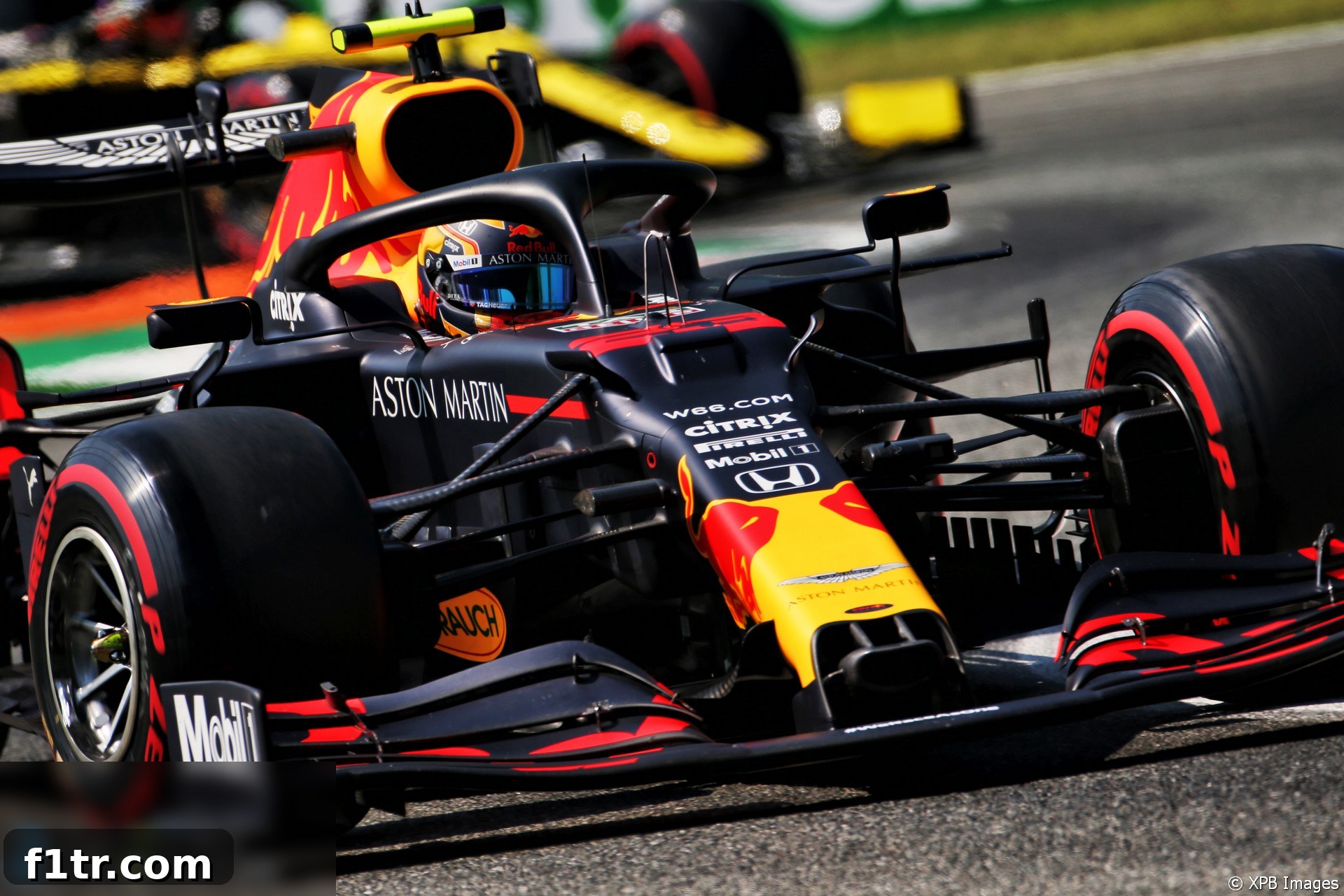
Alexander Albon Reflects on Italian Grand Prix Qualifying: A Challenging Monza for Red Bull
Alexander Albon, the talented Red Bull Racing driver, expressed a measured satisfaction with his ninth-place grid position for the Italian Grand Prix. Competing at the iconic Autodromo Nazionale Monza, often revered as the ‘Temple of Speed,’ Albon acknowledged the inherent difficulties his Red Bull RB16 faced on a circuit uniquely demanding a low-downforce aerodynamic package.
Despite starting further back than his impressive showing at the Belgian Grand Prix the previous weekend, Albon’s performance in qualifying demonstrated a noticeable improvement in his personal comfort and rhythm. Crucially, he managed to qualify within a mere three-tenths of a second of his highly-regarded teammate, Max Verstappen, a testament to his progress amidst the team’s struggles with the circuit characteristics.
Albon’s Perspective: A Smoother Weekend Amidst Track Challenges
Albon offered insight into the team’s qualifying session, stating, “We were just struggling with getting some areas of the track hooked up like some of the other guys.” This candid admission highlights the fine margins that define Formula 1 performance, where even slight discrepancies in car setup or driver feel can significantly impact lap times.
On a personal level, Albon found solace in the flow of the weekend despite the overall grid position. “In the end, personally speaking, I’m quite happy with it. It was a bit of a smoother weekend for me. But, of course, ninth doesn’t really show that,” he elaborated. For a driver who had faced considerable scrutiny and pressure throughout the 2020 season, a “smoother weekend” indicated a renewed sense of confidence and a better understanding of his machine, even if the raw result didn’t fully reflect this internal progression.
His proximity to Verstappen’s qualifying time at a challenging track like Monza further underscores this personal improvement. While ninth might not be the desired outcome for a team of Red Bull’s calibre, for Albon, it represented a step forward in consistency and extracting performance from a car that was fundamentally ill-suited to the circuit’s demands.
The Monza Conundrum: Red Bull’s Battle with Low Downforce
Monza’s layout is characterized by long straights punctuated by high-speed chicanes and sweeping corners, necessitating a specific low-downforce aerodynamic setup. This configuration allows cars to achieve maximum top speeds down the main straights, which are critical for lap time and overtaking opportunities. However, for Red Bull Racing, this philosophy often presents a significant challenge.
Albon openly admitted that “chasing the low downforce, I think we’re a little bit more affected than the others.” Red Bull’s car, the RB16, like its predecessors, is typically designed around a high-rake concept, which thrives on generating significant downforce, particularly in medium-to-high-speed corners. This design philosophy usually makes the car incredibly potent on circuits requiring maximum aerodynamic grip, but it becomes a distinct disadvantage at tracks like Monza where drag must be minimized to achieve competitive straight-line speed.
The intricate balance between drag reduction for straight-line speed and maintaining sufficient grip through corners is a delicate art. At Monza, Red Bull found themselves in a compromise position. To achieve acceptable top speeds, they had to sacrifice downforce, which in turn compromised their cornering performance. This inherent conflict in their aerodynamic package made it difficult to “hook up” all sections of the track, leading to an overall loss of time compared to their rivals who seemed more at home with the low-downforce configuration.
Rival Performance and Aerodynamic Disparities
Albon specifically pointed out certain rival teams that appeared to flourish under Monza’s unique conditions. “The Racing Points, the McLarens and the Renaults – they seem to be good on that low downforce kind of set-up,” he observed. This wasn’t an isolated phenomenon, as he added, “They were like that in Spa. They’ve been like that generally throughout the year compared to us. So it does suit them a little bit.”
The strong performance of Racing Point and McLaren at low-downforce circuits is often attributed to their Mercedes power units, which are renowned for their raw power and efficiency, providing a distinct advantage on long straights. Additionally, their aerodynamic philosophies might be more adaptable to shedding downforce without completely compromising the car’s stability. Renault, on the other hand, with their own power unit and aero package, also demonstrated an ability to extract performance effectively in these conditions.
This comparison highlights a fundamental difference in car design and operational windows between Red Bull and these mid-field contenders. While Red Bull excels on tracks demanding high downforce, their rivals find their sweet spot on the faster, less aerodynamically dependent circuits. This distinction becomes particularly evident in qualifying, where the absolute performance of the car in its ideal setup is paramount.
“I just feel like this track doesn’t really suit us more than anything in the corners. We’re not too bad, but there are a few corners where we lose a chunk compared to cars around us. And then we gain a little bit around the rest of the lap,” Albon further explained. This detailed analysis reveals the compromise Red Bull had to make. While they could claw back some time on the straights thanks to engine power and some drag reduction, the crucial high-speed corners and chicanes, where their car usually shines, became areas of significant time loss due to the necessary low-downforce setup.
Qualifying Strategy and Race Prospects at Monza
Qualifying at Monza often involves a complex dance of slipstreaming, where drivers strategically use the tow from other cars to gain precious tenths of a second on the long straights. While Red Bull likely employed such tactics, the underlying car characteristics were the dominant factor in their eventual grid positions. Securing ninth place, just behind Verstappen, positioned Albon reasonably well for the race, though far from the front-row battles usually contested by Red Bull’s primary rival, Mercedes.
For the Italian Grand Prix race, Albon and Red Bull will face another set of challenges. Monza is known for its dramatic races, often featuring multiple overtakes and safety car periods. While their straight-line speed might not be class-leading, their race pace, potentially with a slightly different setup, and strategic tyre management could allow them to make progress. The key will be to mitigate the cornering deficits and capitalize on any opportunities that arise. For Albon, a strong, consistent race performance, free from incidents, would be crucial to build on the ‘smoother weekend’ sentiment and solidify his position within the team.
Albon’s Season Context and Future Implications
The 2020 Formula 1 season was a challenging one for Alexander Albon, as he consistently battled to match the blistering pace of Max Verstappen. Weekends like Monza, where the car itself was not optimally suited, presented an even tougher test. His ability to remain composed, understand the car’s limitations, and still extract a respectable performance, especially in qualifying, highlighted his resilience.
The Italian Grand Prix, with its unique demands, served as another reminder of Red Bull’s ongoing struggle to consistently challenge Mercedes across all circuit types. While their RB16 was a potent machine on high-downforce tracks, its performance at venues like Monza and Spa underscored the areas where the team needed to improve their fundamental package to become true championship contenders in the long run. For Albon, every race was an opportunity to prove his worth, and a solid, if unspectacular, performance at Monza was a testament to his continued effort and development as a Grand Prix driver.
Conclusion: A Learning Curve for Red Bull at the Temple of Speed
Alexander Albon’s ninth-place qualification at the Italian Grand Prix was a pragmatic result for Red Bull Racing at a circuit that notoriously challenged their car’s design philosophy. His satisfaction stemmed from a personal sense of improved rhythm and proximity to his teammate, rather than the raw grid position itself. The ‘Temple of Speed’ exposed Red Bull’s vulnerabilities with low-downforce setups, highlighting the dominance of rivals like Racing Point, McLaren, and Renault in these specific conditions.
While Monza may not have showcased the RB16 at its absolute best, it offered valuable lessons for the team in understanding their car’s limitations and areas for future development. For Albon, it was another step in a demanding season, reinforcing his personal growth and determination to overcome challenges. As the 2020 F1 season progressed, these experiences at diverse tracks were crucial for Red Bull’s long-term aspirations and for Albon’s continued evolution in Formula 1.
2020 F1 Season Articles
- Grosjean to make F1 test return tomorrow for first time since Bahrain horror crash
- Pictures: Wrecked chassis from Grosjean’s Bahrain fireball crash to go on display
- Bottas vs Rosberg: Hamilton’s Mercedes team mates compared after 78 races each
- F1 revenues fell by $877 million in Covid-struck 2020 season
- Hamilton and Mercedes finally announce new deal for 2021 season
Browse all 2020 F1 season articles