Charles Leclerc’s Excitement for Reverse F1 Races: A Deep Dive into a Radical Concept
In the dynamic world of Formula 1, where innovation is constant and boundaries are perpetually pushed, a truly unconventional idea recently sparked considerable interest: racing Grand Prix circuits in the opposite direction. Leading the charge of enthusiasm for this radical concept is Ferrari’s star driver, Charles Leclerc, who firmly believes that such a shift would force every competitor to entirely re-learn the nuances of each track, introducing an exhilarating new dimension to the sport.
The intriguing proposition first emerged from the iconic Silverstone Circuit. Its managing director, Stuart Pringle, revealed his willingness to explore the idea of hosting a reverse-track race if circumstances necessitated running multiple F1 rounds at the same venue. This discussion gained particular traction during times when the sport sought creative solutions to navigate calendar disruptions and maximize race opportunities. Pringle’s forward-thinking stance quickly ignited widespread debate among drivers, teams, and fans, pondering the practicalities and potential spectacle of such an extraordinary event.
Leclerc’s Perspective: The Thrill of Rediscovery and a Level Playing Field
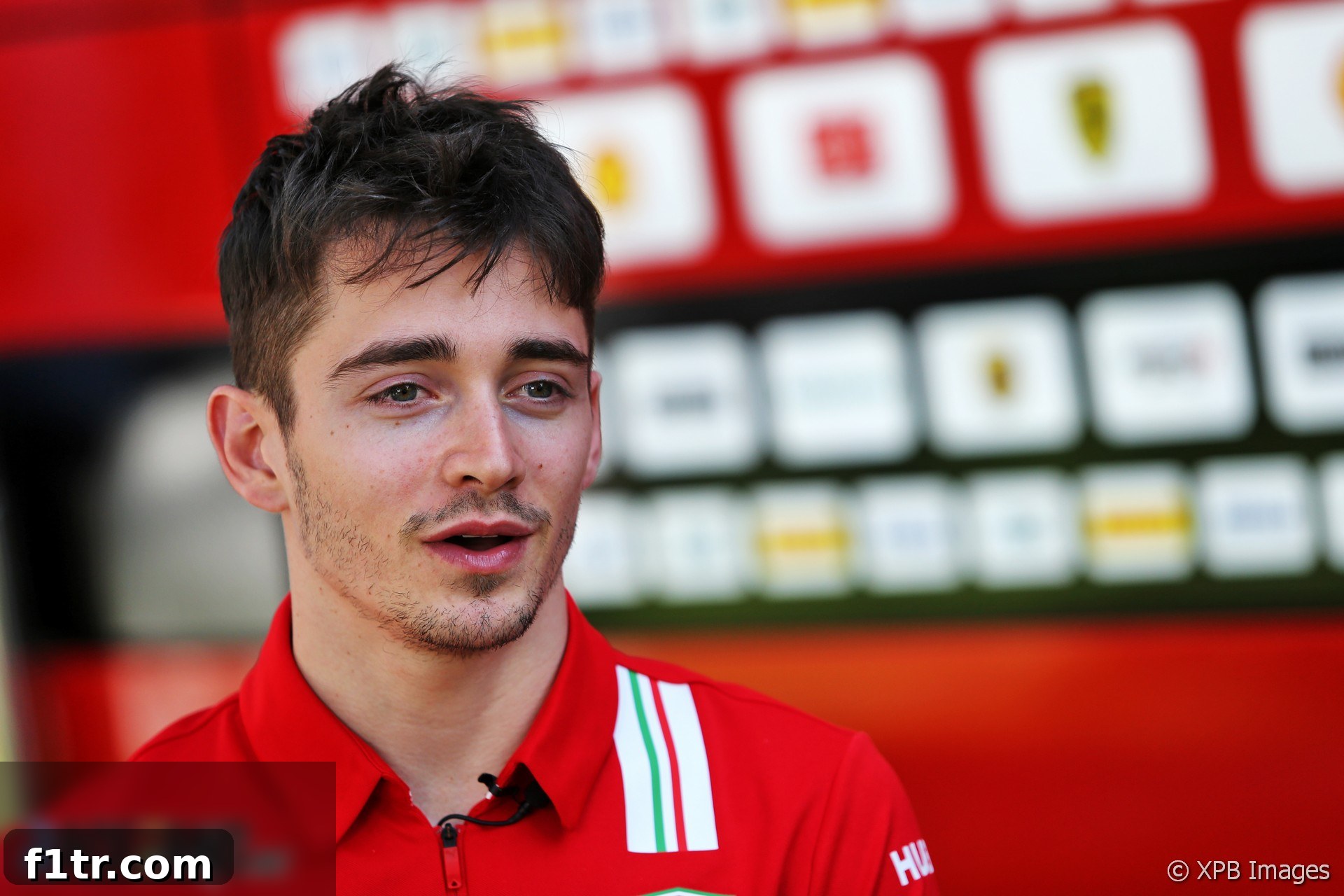
During a recent press conference, Charles Leclerc confirmed his awareness of the suggestion and articulated his strong backing for it. “I’ve seen something about doing races the other way around,” he stated with palpable excitement. “That will be very, very cool, that will be good. I think we’ll all rediscover the track and it will probably be very different also car-wise. So this will be an interesting idea.” His comments highlight not just the novelty but also the profound impact on car setup and driving technique.
Leclerc’s confidence in the transformative effect of reversed circuits stems from his own racing history. He recalled experiences from his karting days where he drove tracks in both conventional and reverse directions. This firsthand knowledge underpins his belief that an F1 circuit, when reversed, would feel fundamentally different – almost like an entirely new track. “I think we’ll definitely have to re-learn the track completely from scratch,” he elaborated. “I’ve done this in karting too, to do one track in one way and then do it the other way. And from my experience, you are just rediscovering another track and it’s definitely like you will race on a new track.”
Beyond the personal challenge, Leclerc sees a crucial competitive advantage in this format: the potential to equalize the playing field. Seasoned Formula 1 drivers possess an unparalleled, almost innate understanding of every curve, apex, and braking point on familiar circuits. Reversing these layouts would disrupt this deep-seated knowledge, compelling even the most experienced competitors to adapt rapidly and learn afresh. “So it will make things exciting because the drivers with experience maybe will have a bit less knowledge about this track and everyone will start on a more par level,” he explained. This element of ‘resetting’ the drivers’ expertise could introduce an unpredictable dynamic, potentially allowing less experienced drivers or teams to shine.
The Practicality Puzzle: Navigating the Immense Hurdles of Reverse F1 Circuits
While the prospect of reverse F1 races is undoubtedly thrilling, the engineering, logistical, and safety challenges involved are nothing short of monumental. Formula 1 circuits are not merely stretches of asphalt; they are intricately designed, highly engineered, and rigorously homologated by the FIA (Fédération Internationale de l’Automobile) to meet the highest Grade 1 safety standards for a specific direction of travel. Reversing this direction would, in essence, create an entirely new circuit requiring comprehensive re-evaluation and potentially extensive, costly modifications.
Safety and Infrastructure: A Design and Homologation Nightmare
The primary concern revolves around safety. Run-off areas, gravel traps, high-speed catch fences, and energy-absorbing barriers are all strategically positioned to mitigate the risks of impacts occurring at specific angles and velocities in the designed racing direction. Should a track be reversed, these critical safety features could become dangerously misaligned, leaving drivers vulnerable in areas not engineered for the new impact scenarios. For instance, a corner typically approached at low speed might become a high-speed entry in reverse, demanding an entirely different set of safety provisions that are simply not in place.
Furthermore, the essential infrastructure supporting a Grand Prix is meticulously organized for directional flow. This includes marshall posts, medical centers, rescue vehicle access points, sophisticated signal lights, and camera positions for broadcasting. Adapting all these elements for a reverse layout would demand a colossal logistical undertaking. The pit lane entry and exit, designed for safe and efficient integration with the main circuit, could become serious hazards in a reversed configuration, potentially creating dangerous merging points or requiring complex and expensive structural alterations.
FIA Regulations and Engineering Complexities
Every F1 circuit must undergo a stringent homologation process by the FIA to ensure it adheres to the highest operational and safety standards. A reverse track layout would effectively be considered a ‘new’ circuit, necessitating a complete re-homologation. This process is incredibly time-consuming, expensive, and involves exhaustive safety analyses, simulations, and on-site inspections. The FIA’s strict regulations are paramount for driver safety, and any deviation from a homologated design would face intense scrutiny and likely refusal without substantial modifications.
Beyond safety, the engineering implications for Formula 1 teams would be profound. Car setups, aerodynamic packages, tire degradation patterns, and intricate brake strategies are all developed and refined with the specific characteristics of a circuit’s conventional direction in mind. Reversing the flow would fundamentally alter these parameters, requiring extensive re-engineering, advanced simulation work, and significant on-track adaptation during practice sessions. These tasks would push even the most technologically advanced F1 teams to their absolute limits.
The Competitive Order: Could a Reverse Track Truly Reshuffle the F1 Grid?
Despite his excitement for the concept, Leclerc maintains a pragmatic view regarding its ultimate impact on the established competitive hierarchy. “It will not change things significantly,” he realistically assessed. “I’m pretty sure Lewis [Hamilton] will still be the favourite.” This candid admission highlights a fundamental truth in Formula 1: while novel challenges can spice up the competition, exceptional driver talent combined with a superior car package often finds a way to dominate, regardless of minor variations in circuit layout or direction.
However, the specific driving experience of a reversed track clearly invigorates Leclerc. “But I think it will be very exciting to do a track like Silverstone the other way around, to arrive so quick in Becketts. I think it will be very exciting.” His particular mention of Becketts, a notoriously high-speed and demanding sequence of corners, underscores the unique thrill and vastly different driving dynamics that a reversed layout could present. New braking points, altered cornering strategies, and revised aerodynamic demands would undeniably test drivers in fresh and innovative ways, even if the eventual champions remain familiar figures.
Beyond Reverse: The Broader Discussion of Multiple Races at the Same Venue
While reversing entire circuits might currently represent an insurmountable engineering and safety hurdle for Formula 1, the broader discussion it triggered – the possibility of F1 hosting more than one race at the same venue within a season – remains highly pertinent and increasingly common. This concept, often implemented as “double-headers” or “multi-race weekends,” has become a more realistic and frequently adopted strategy, particularly in recent years, to bolster race calendars, reduce travel logistics, and optimize costs for teams and organizers.
Leclerc acknowledged the strategic necessity of considering such options to maximize the number of races, especially in challenging seasons. “I think you can always argue the fairness,” he conceded, addressing potential concerns about competitive imbalances if a particular team or driver gains an inherent advantage from repeated visits to the same track. “But at the end we mostly need to look at the situation and try to make the most out of the situation.”
His pragmatic outlook emphasizes the crucial role of adaptability and flexibility within motorsports. “If this will make us race on the same time on the same circuit, twice on the same track, I think we should look closely at this possibility to try and give the answer of the most races possible.” This statement reflects a collective willingness within the F1 paddock to embrace unconventional formats and scheduling adjustments if it means delivering more thrilling racing action to a global fan base, even if it entails a slight departure from traditional notions of circuit diversity or competitive fairness.
Video: Could F1 Really Race Silverstone Backwards?
For a more in-depth visual exploration of the immense challenges and fascinating prospects associated with racing Formula 1 circuits in reverse, the following video specifically examines the case of the iconic Silverstone Circuit:
Conclusion: An Innovative Spirit Guiding Formula 1’s Future
Charles Leclerc’s enthusiastic endorsement of reverse F1 circuits underscores a vibrant desire within the sport for fresh challenges, novel formats, and continuous evolution. While the logistical, engineering, and safety hurdles involved in fundamentally altering track direction are undeniably significant and complex, the very discussion of such ideas is a powerful testament to Formula 1’s innovative spirit and its relentless pursuit of pushing boundaries.
The more realistically implemented strategy of hosting multiple races at the same venue further exemplifies the sport’s remarkable capacity for pragmatic and adaptable solutions in the face of adversity. Ultimately, whether through ambitious proposals like reverse circuits or through more immediate calendar adjustments, the core objective remains unwavering: to deliver thrilling, competitive, and unforgettable motorsport experiences to a vast global audience. Leclerc’s forward-thinking vision, though perhaps ahead of its time in terms of immediate practicality, serves as a compelling reminder that the future of Formula 1 could still hold unexpected twists and turns, ensuring that both drivers and fans remain perpetually on the edge of their seats.
Related Articles from the 2020 F1 Season
- Grosjean to make F1 test return tomorrow for first time since Bahrain horror crash
- Pictures: Wrecked chassis from Grosjean’s Bahrain fireball crash to go on display
- Bottas vs Rosberg: Hamilton’s Mercedes team mates compared after 78 races each
- F1 revenues fell by $877 million in Covid-struck 2020 season
- Hamilton and Mercedes finally announce new deal for 2021 season
Browse all 2020 F1 season articles