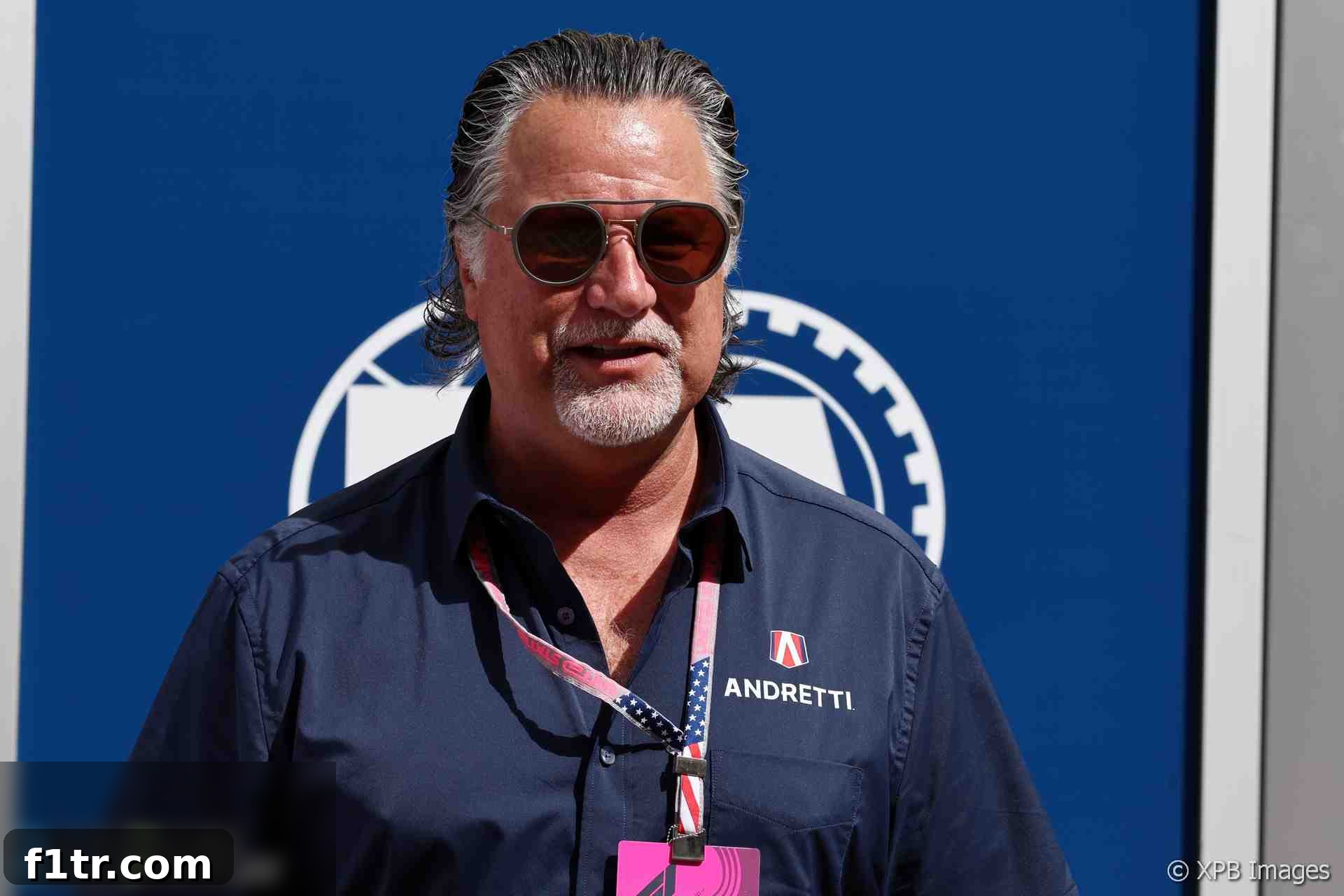
One year ago, the Fédération Internationale de l’Automobile (FIA) formally initiated a call for expressions of interest from prospective teams eager to join the pinnacle of motorsport, the Formula 1 World Championship, for the 2025 or 2026 seasons. This landmark invitation ignited hopes among several ambitious entrants, signaling a potential expansion of the exclusive F1 grid.
Advert | Become a Supporter & go ad-free
The FIA’s announcement, however, came with critical stipulations. It unequivocally stated, “For the avoidance of doubt, no new applicant has an automatic right of entry to the championship and the maximum number of teams competing in the championship up to and including the 2025 season is capped at 12. Existing F1 teams will be given priority over new applicants.” Furthermore, it clarified that “In the event that no applicant is considered suitable by the FIA and/or by the F1 commercial rights holder, no new F1 team(s) will be selected.” These clauses highlighted two pivotal aspects of the entry process.
Firstly, the ultimate decision on any new team’s admission would rest with two distinct entities: the FIA itself, as the sport’s governing body, and Formula One Management (FOM), the commercial rights holder operated by Liberty Media. This dual-approval mechanism underscores the complex interplay between sporting regulations and commercial viability in Formula 1.
Secondly, the communique specified a maximum cap of 12 teams, explicitly noting that this limit applies until the end of the 2025 season. This timing is crucial, as it marks the expiration date of the current Concorde Agreement – a comprehensive three-way contractual arrangement binding FOM, the FIA, and the ten existing Formula 1 teams.
Andretti’s Green Light from the FIA: A Promising Start
From a competitive field of four serious applicants scrutinized by the FIA, only one managed to meet the stringent selection criteria. In October of last year, FIA President Mohammed Ben Sulayem declared, “Andretti Formula Racing LLC was the only entity which fulfils the selection criteria that was set in all material respects.” This endorsement from the sport’s governing body was a significant milestone for Michael Andretti’s ambitious project, Andretti Cadillac. It confirmed their technical capabilities, financial stability, and operational readiness were up to the demanding standards of Formula 1.
However, securing the FIA’s approval was merely the first hurdle. With the sport’s regulatory body giving its nod, Andretti’s focus immediately shifted to obtaining the requisite commercial clearance from Formula One Management. The FIA’s statement succinctly concluded: “As part of the agreed process of the expressions of interest protocol, the FIA findings on Andretti Formula Racing LLC’s submission will now be passed to Formula One Management (FOM) for commercial discussions.” This marked the transition into the most challenging phase of their bid.
Advert | Become a RaceFans supporter andgo ad-free
FOM’s Stance: A Cautious Rejection, But the Door Remains Ajar
Just shy of the one-year anniversary of the FIA’s initial call for applications, Andretti’s aspirations seemed to hit a significant roadblock. FOM released a detailed 1,400-word summary of its “commercial assessment process,” a document that undoubtedly delivered a sobering message to the Andretti team’s headquarters in Indianapolis.
FOM’s assessment outlined several key reasons for its negative recommendation. It questioned whether Andretti would be a truly competitive entrant, expressing concerns about a novice constructor’s ability to immediately challenge the established F1 grid. Furthermore, FOM suggested that the Andretti brand, while recognizable in other motorsport categories, might not be sufficiently well-known globally among the broader Formula 1 fanbase to add significant commercial value. Most critically, FOM concluded that Andretti’s entry would not enhance the commercial rights holder’s financial results, thereby failing a fundamental commercial criterion.
The highly anticipated summary concluded: “The applicant’s application to participate in the championship should not be successful.” Despite the seemingly definitive tone, a closer examination of FOM’s statement revealed a nuanced position. Crucially, nowhere in the document did FOM issue an outright, definitive rejection of Andretti’s application. Its carefully worded conclusion left a glimmer of hope, indicating that the door, while heavily guarded, was not entirely sealed shut.
This subtle distinction explains why both Andretti and the FIA have maintained a forward-looking stance. In response to FOM’s assessment, Andretti issued statements emphasizing, “Our work continues at pace,” signaling their unwavering commitment to the project. Similarly, the FIA indicated that it views the matter as far from settled, stating only, “We are engaging in dialogue to determine next steps” in reaction to FOM’s extensive critique of the application it had already endorsed. This ongoing dialogue suggests a negotiation is still very much active.
Advert | Become a RaceFans supporter andgo ad-free
The FIA-FOM Dynamic: A History of Tensions and Compromise
The current impasse over Andretti’s entry is not an isolated incident but rather a recent manifestation of a complex and sometimes strained relationship between Formula 1’s commercial rights holder and its governing body. Since Mohammed Ben Sulayem assumed leadership of the FIA at the close of 2021, several points of friction have emerged. A notable recent example occurred two months prior when FOM expressed frustration over the FIA’s public announcement of an investigation into an alleged exchange of confidential information between an F1 team principal and an FOM employee, without prior warning to the commercial rights holder. This investigation, which quickly focused on Mercedes boss Toto Wolff and F1 Academy director Susie Wolff (who are married), was swiftly dropped.
Despite these disagreements, both organizations ultimately recognize the immense mutual benefit of cooperation, especially at a time when Formula 1 is experiencing unprecedented global popularity. History shows they can, and often do, set aside their differences to advance the sport. For instance, the FIA initially opposed FOM’s proposal to increase the number of sprint races to six for the 2023 season, citing concerns about operational burden and costs. However, after extensive negotiations, a compromise was eventually reached, demonstrating their capacity to find common ground for the sport’s progression.
In the previous instance, the FIA initially resisted an FOM initiative primarily due to cost considerations. In the current scenario involving Andretti, the roles appear somewhat reversed, with FOM raising commercial and operational concerns against a team that has secured FIA approval. The crucial question now is whether a similar compromise can be forged, and what its specific terms might entail.
2025 vs. 2026 Entry: A Critical Timeline and Regulatory Challenge
A significant portion of FOM’s rationale for dismissing Andretti’s application centered on the logistical and technical challenges of entering Formula 1 in 2025. This year marks the final season under the current technical regulations, which are slated for a drastic overhaul in 2026. FOM articulated its concern, noting: “The applicant proposes, as a novice constructor, to design and build a car under the 2025 regulations, and then in the very next year to design and build a completely different car under the 2026 regulations.” It further added, “The fact that the applicant proposes to do so gives us reason to question their understanding of the scope of the challenge involved.” Building two distinct F1 cars within such a tight timeframe, especially for a new entrant, is indeed an monumental undertaking.
However, Andretti swiftly countered this point in its latest public response. The team clarified that the reason 2025 was listed as the earliest possible entry year was because it was the specific timeframe stipulated by the FIA in its original invitation for applicants. Andretti emphatically stated that its true preference and operational focus had long been on a 2026 entry. “When Andretti Cadillac entered the FIA expression of interest process almost a year ago, the preferred first year of participation was indicated as 2025,” the team explained. “The FIA approved our application, with no specific limitation on whether the entry was for 2025 or 2026.”
Advert | Become a RaceFans supporter andgo ad-free
“Andretti Cadillac has been operating with 2026 as the year of entry for many months now. The technicality of 2025 still being part of the application is a result of the length of this process.” This clarification addresses FOM’s technical concerns by aligning Andretti’s preferred timeline with the introduction of the new regulations, allowing them to focus resources on a single, future-proof car design from the outset.
The strategic importance of a 2026 entry extends beyond technical considerations. It places Andretti’s potential arrival under the ambit of the *next* Concorde Agreement, rather than the final year of the current one. This timing is critical because it introduces speculation about the future structure of the grid. There has been considerable discussion that FOM and the existing teams might utilize the new Concorde Agreement negotiations to reduce the maximum number of teams from 12 to 10, thereby effectively excluding any new entrants like Andretti. This raises a crucial question: is FOM’s current stance merely a negotiating tactic to secure more favorable terms, or does it genuinely intend to prevent an expansion of the grid?
The Anti-Dilution Fee and Grid Expansion Debate
FOM’s objections to adding an eleventh team also included arguments about the operational burden it would place on race promoters, the significant costs some would incur, and a reduction in the technical, operational, and commercial space available to existing competitors. However, Formula 1 last operated with eleven teams just eight years ago, and venues like Monaco’s highly constrained pit and paddock have not shrunk since then. This suggests that FOM’s concerns regarding the operational burden might be more commercially driven than purely practical, reflecting a desire to protect the current teams’ share of revenue and track space.
Under the existing Concorde Agreement, any new team wishing to join the grid is required to pay a substantial $200 million ‘anti-dilution’ fee. This fee serves to compensate the ten established teams for the inevitable loss of prize money that would result from an additional competitor sharing the revenue pool. Notably, soon after the FIA opened its application process last year, discussions began among the teams and FOM about the possibility of significantly increasing this anti-dilution fee. This indicates a clear financial motivation among the existing stakeholders to protect their interests.
A Path Forward: Seeking Compromise for a Stronger F1
The complex interplay of sporting aspiration, commercial interests, and regulatory frameworks points towards a potential compromise that could satisfy the core demands of all parties involved: the FIA, FOM, Andretti, and the ten incumbent F1 teams. Such a resolution could involve Andretti making its highly anticipated entry into Formula 1 in 2026, aligning with its preferred timeline and the new technical regulations. This would allow the team ample time to prepare a competitive car under the new rulebook.
Concurrently, the anti-dilution fee could be substantially increased, moving beyond the current $200 million to a figure that more adequately compensates existing teams for any perceived dilution of prize money and commercial value. This would address FOM’s financial concerns and alleviate resistance from current constructors. Furthermore, the new Concorde Agreement could formalize a slightly expanded grid, perhaps by setting the maximum team cap at a convenient 11 rather than a strict 10 or the previous 12, creating space for Andretti while still maintaining the exclusivity of the championship.
Such a multi-faceted agreement would represent a strategic victory for Formula 1. It would introduce a highly recognized American motorsport entity and a powerful automotive brand like Cadillac to the grid, enhancing the sport’s global appeal and market presence, particularly in the lucrative US market. It would also uphold the FIA’s commitment to opening doors for suitable new entrants, while safeguarding the commercial interests of FOM and the financial stability of the existing teams. While FOM’s initial commercial assessment was a significant hurdle, the measured responses from Andretti and the FIA indicate that negotiations are ongoing, and the prospect of Andretti Cadillac joining the F1 grid remains a tangible, albeit complex, possibility. The path to Formula 1 is never straightforward, but the desire for expansion and the potential for compromise could yet pave the way for a new chapter.
Become a RaceFans Supporter
RaceFans is run thanks in part to the generous support of its readers. By contributing £1 per month or £12 per year (or the same in whichever currency you use) you can help cover the costs of creating, hosting and developing RaceFans today and in the future.
Become a RaceFans Supporter today and browse the site ad-free. Sign up or find out more via the links below:
- Become a RaceFans Supporter
- RaceFans Supporter FAQ
Advert | Become a RaceFans supporter andgo ad-free
Formula 1 Insights
- Understanding F1’s Regulatory Landscape
- The Impact of New Teams on F1 Dynamics
- F1’s Growth and Market Expansion Challenges
- Behind the Scenes: The Business of Formula 1
- The Future of Formula 1: Innovations and Expansions
Browse all Formula 1 articles