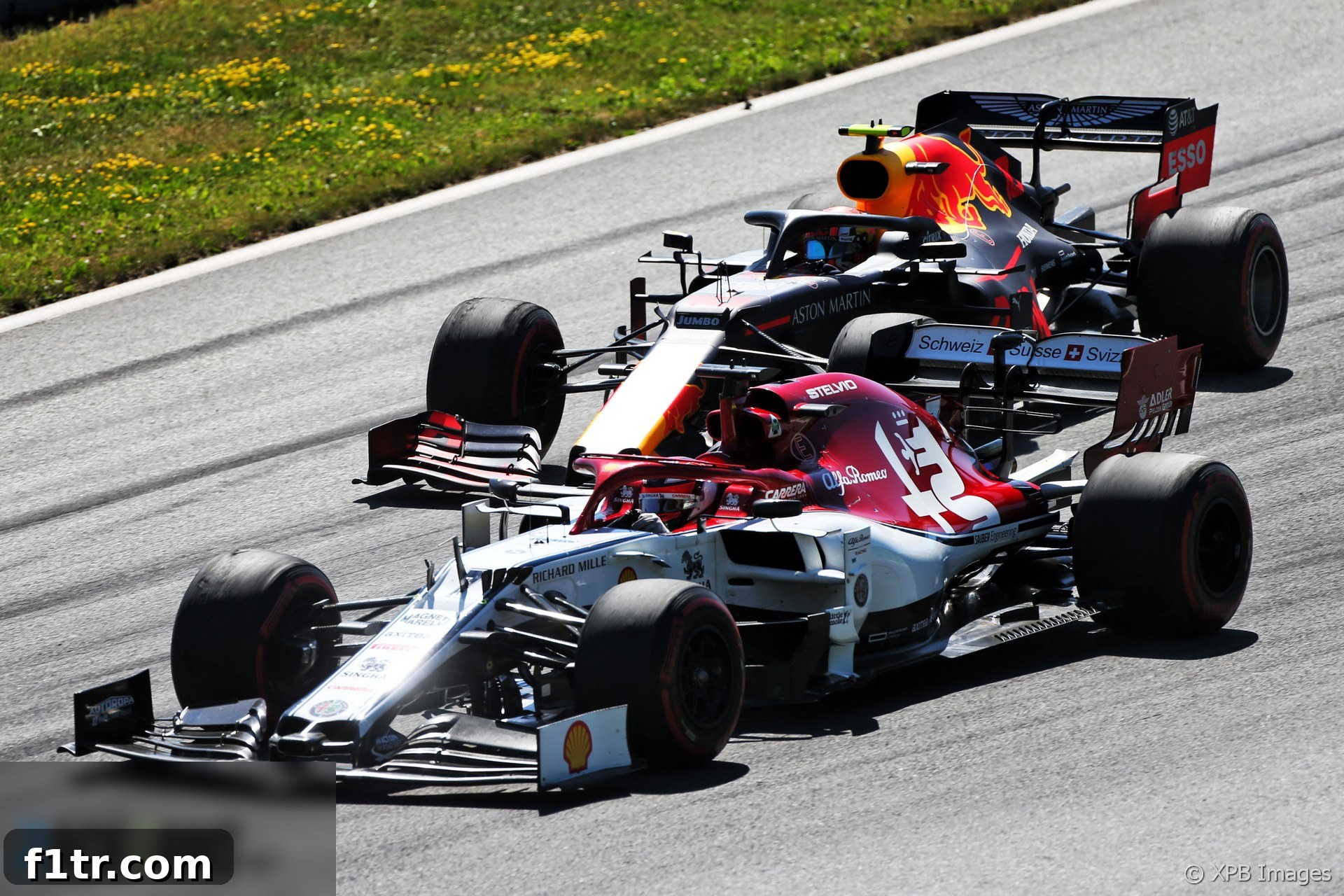
Veteran Kimi Raikkonen, one of Formula 1’s most experienced drivers, has offered a measured perspective on the impact of the new front wing regulations introduced for the 2019 F1 season. While acknowledging an initial positive shift, Raikkonen suggests that definitively assessing the regulations’ long-term effect on the quality of racing remains a complex challenge within the sport’s ever-evolving landscape.
The 2019 season marked a significant effort by the sport’s governing bodies to address a long-standing issue: the difficulty drivers faced when attempting to follow and overtake other cars. This problem, often attributed to the disruptive “dirty air” created by complex aerodynamic designs, had been a frequent point of contention among drivers and fans alike. The core of these regulatory changes focused primarily on simplifying the front wing design.
The Rationale Behind the 2019 Front Wing Regulations
At the heart of the 2019 aerodynamic overhaul was a clear objective: to mitigate the negative effects of aerodynamic ‘outwash’. Outwash refers to the phenomenon where the sophisticated elements of a Formula 1 car’s front wing are designed to push turbulent air away from the car’s sides. While this improves the airflow over the car itself, it creates a wide wake of disturbed air behind it, making it incredibly challenging for a following car to maintain downforce and grip.
To combat this, the new regulations stipulated several key modifications. The maximum front wing width was increased by a significant 20 centimetres, extending to a total of two metres wide. More crucially, the shape and design of the wings were far more tightly controlled. Complex endplates, intricate cascades, and other multi-element aerodynamic furniture that previously generated substantial outwash were either banned or severely restricted. The intention was to create a front wing that produced less turbulent air, thereby reducing the ‘dirty air’ that drivers had to contend with when running closely behind another car. This simplification was expected to allow cars to run in closer proximity without suffering a dramatic loss of performance, theoretically leading to more exciting wheel-to-wheel battles.
Kimi Raikkonen’s Evolving Perspective on the New Rules
When the 2019 season kicked off, there was a palpable sense of anticipation regarding the new aerodynamic rules. Drivers and teams alike were keen to see if the theoretical benefits would translate into tangible improvements on track. Kimi Raikkonen, known for his frank and straightforward assessments, noted an immediate difference. “For sure in the first races it felt that it was more easy to follow,” he remarked. This initial impression aligned with the FIA’s goals, suggesting that the simplified front wings were indeed having the desired effect of creating a cleaner wake for pursuing cars.
However, as the season progressed, Raikkonen’s observations became more nuanced. While the initial feeling was positive, he later found himself less frequently in direct fighting positions that would allow for a conclusive assessment. “After that I haven’t been that much in a position to fight,” he explained, indicating that his personal race situations hadn’t consistently provided the necessary opportunities to test the limits of the new regulations in prolonged, tight battles. This highlights the inherent difficulty in isolating the impact of a single rule change within the complex ecosystem of Formula 1 racing, where car performance, track characteristics, tire strategy, and driver skill all play critical roles.
The Challenge of Measuring Impact in a Dynamic Sport
Raikkonen’s cautious optimism reflects a broader challenge in Formula 1: quantifying the precise effect of regulatory changes. While the rules certainly didn’t make racing worse – “that’s one hundred percent sure” – he questioned if the improvement was substantial enough to make a consistently “obvious difference all the time.” The veteran driver’s perspective suggests that while the front wing modifications were a step in the right direction, they might have offered only a marginal improvement rather than a revolutionary transformation in racing dynamics. This sentiment is often echoed across the paddock, where the pursuit of close racing is a continuous quest that rarely finds a single, definitive solution.
The inherent competitive nature of Formula 1 means that any gains from rule changes can be quickly eroded. Raikkonen aptly summarized this phenomenon: “There’s an awful lot of very smart people in F1 paddocks and they’ve found their way always to improve the cars and we’ve seen it over the years. It’s hard to stop it.” This refers to the relentless development arms race where engineers and designers tirelessly work to optimize their cars within the given regulations. Even if regulations initially achieve their goal of slowing cars down or simplifying aerodynamics, teams rapidly innovate, recovering lost performance and often finding new ways to generate downforce, sometimes reintroducing elements that create turbulent air, albeit within the new rulebook.
The Relentless Pursuit of Performance: F1’s Development Arms Race
Kimi Raikkonen’s observation about the “very smart people” in F1 is a profound truth that underpins the sport’s technical evolution. Formula 1 is not just a race of drivers but also a battle of engineering brilliance. Every new regulation, whether intended to slow cars down, promote closer racing, or improve safety, immediately becomes a new puzzle for thousands of highly skilled engineers, aerodynamicists, and designers. Their primary objective is to extract every possible ounce of performance from their machinery, pushing the boundaries of physics and design.
This relentless development cycle means that any initial gains from rule changes aimed at simplifying aerodynamics or reducing dirty air can be temporary. Teams invest colossal resources in R&D, utilizing advanced simulation tools, wind tunnels, and computational fluid dynamics (CFD) to identify loopholes or optimized interpretations of the rules. Over the course of a single season, let alone several, car performance often improves significantly. This continuous optimization can, and often does, mask the intended effects of specific aerodynamic regulations. For instance, even if the 2019 front wing rules made it initially easier to follow, the overall performance creep of cars through chassis development, suspension tuning, and subtle aero refinements could quickly make following difficult again, bringing the challenge back to square one.
A Close Encounter: Kimi Raikkonen and Nico Hulkenberg at the French Grand Prix
A specific instance that illuminated Raikkonen’s nuanced view came during the French Grand Prix, where he engaged in a prolonged battle with Nico Hulkenberg. This race provided a real-world test case for the 2019 regulations, demonstrating both the potential and the limitations of the new front wing designs. Raikkonen recounted the battle, stating that Hulkenberg “For sure he stayed close, very close, most of the time.” This ability to remain in striking distance, lap after lap, suggests that the reduction in outwash did indeed make it easier for a pursuing car to maintain proximity, rather than dropping back due to severe aerodynamic degradation.
Despite Hulkenberg’s persistent pressure, the critical element of making a successful overtake proved elusive. Raikkonen described the race as anything but boring from his perspective, as he was forced to be “absolutely perfect in all the places.” He knew that even a small mistake would be immediately capitalized upon by Hulkenberg on the straight, where the slipstream effect, combined with DRS (Drag Reduction System), could potentially grant the Renault driver the edge needed. However, despite being consistently close, Hulkenberg “never got that very last bit of run” needed to execute a pass. He was “pretty close a few times” but couldn’t quite seal the deal. This scenario perfectly illustrates Raikkonen’s earlier point: while following might have improved, the ultimate act of overtaking remained incredibly challenging, demanding a significant performance differential or a driver error.
Decoding the Art of Following vs. Overtaking
The French Grand Prix battle serves as a crucial distinction between “following” and “overtaking” in Formula 1. The 2019 front wing regulations were designed primarily to improve the former – to allow cars to run closer without being severely compromised by turbulent air. Raikkonen’s experience confirmed this to some extent; Hulkenberg could indeed stay ‘very close’. However, overtaking requires more than just proximity. It demands a significant speed advantage at a critical point, often at the end of a long straight, enabled by slipstream, DRS, or a massive out-of-position moment from the car ahead.
Even with reduced dirty air, the aerodynamic efficiency of modern F1 cars means that following closely still incurs a performance penalty. While less severe than before 2019, it’s often enough to prevent a clean run at an overtake unless there’s a substantial difference in tire performance or engine mode. The Hulkenberg-Raikkonen duel highlighted that while the regulations made the race more engaging for the defending driver and arguably for spectators due to the sustained pressure, the final act of passing remained largely contingent on more than just the simplified front wing. It proved that while the problem of ‘dirty air’ was addressed, the solution wasn’t a silver bullet for the age-old challenge of making overtaking truly abundant in Formula 1.
Looking Beyond 2019: The Ongoing Quest for Better Racing
The 2019 front wing regulations represented a significant, albeit nuanced, step in Formula 1’s ongoing quest to enhance the quality of racing. While Kimi Raikkonen’s experience suggests they improved the ability of cars to follow, they didn’t entirely solve the challenge of making overtakes commonplace. This particular regulatory cycle can be seen as a learning experience, providing valuable data and insights that would ultimately inform even more radical changes in subsequent seasons. The FIA and Formula 1 management continued to analyze the effects of aerodynamics, recognizing that a more fundamental overhaul might be necessary to truly achieve their goals for closer, more exciting on-track action.
The lessons from 2019 directly contributed to the development of the 2022 technical regulations, which introduced a completely redesigned aerodynamic philosophy centered around ground effect. The aim of these later changes was to further reduce the impact of dirty air by shifting the primary source of downforce from complex over-body aerodynamics to under-floor channels. This continuous evolution underscores the complexity of engineering a racing series that balances cutting-edge technology with pure, unadulterated wheel-to-wheel spectacle. The pursuit of the ideal racing formula is perpetual, and every season, including 2019, contributes another chapter to this fascinating technical and sporting journey.
In conclusion, Kimi Raikkonen’s insights into the 2019 front wing regulations offer a clear view of incremental progress rather than revolutionary change. While the modifications undoubtedly made it somewhat easier for cars to follow, the relentless ingenuity of F1 teams in optimizing performance, coupled with the inherent difficulty of overtaking, meant that the impact wasn’t always as profound or consistently evident as some might have hoped. It was a positive step, affirming the direction of travel for the sport’s technical regulations, but also a reminder that Formula 1’s eternal challenge lies in finding that delicate balance between technological advancement and spectacular racing.
More from the 2019 F1 Season
- Crying in the Melbourne car park at 2019 grand prix was my career low – Ocon
- McLaren Racing reports reduced £71 million loss in 2019
- Kvyat: Hockenheim podium last year was “my biggest achievement” so far
- How the FIA’s new encrypted fuel flow meter targets Ferrari’s suspected ‘aliasing’ trick
- “He smashed my office door”: 23 must-see moments from ‘Drive to Survive’ season two
Browse all 2019 F1 season articles