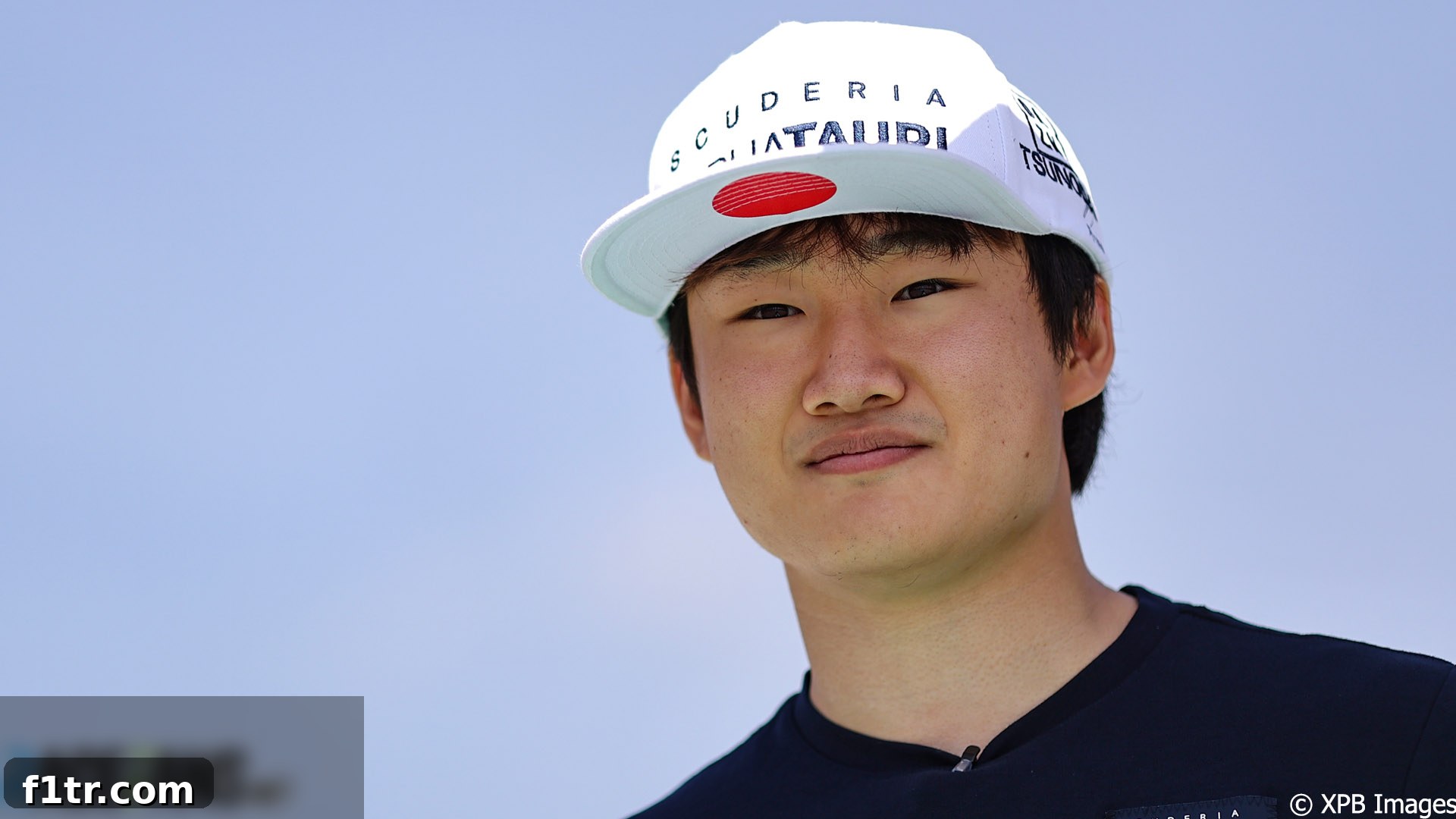
Yuki Tsunoda’s Qualifying Evolution: Mastering F1 Strategy and Pace Building
AlphaTauri Rookie Shifts Approach After Costly Qualifying Incidents
Yuki Tsunoda, AlphaTauri’s dynamic young talent, has openly acknowledged a critical need to re-evaluate and fundamentally change his strategy for Formula 1 qualifying sessions. This candid self-assessment follows a series of unfortunate incidents in the last two Grand Prix rounds, which have notably impacted his starting positions and overall race weekend potential. His recent struggles highlight the formidable challenge F1 rookies face in consistently extracting peak performance under immense pressure and tight timelines.
Advert | Become a Supporter & go ad-free
The 21-year-old Japanese driver has been involved in three qualifying crashes during his maiden F1 season, a figure that unfortunately places him significantly behind his experienced and often impeccable teammate, Pierre Gasly. While Tsunoda has undeniably showcased flashes of raw speed and aggressive, determined racing during Grand Prix Sundays, his Saturday performances have frequently been compromised by an inclination to push the limits prematurely in the high-stakes qualifying segments. These early errors have not only resulted in damaged machinery but also severely hampered his ability to start races from competitive grid positions.
Following two particularly impactful qualifying accidents – one occurring during the pivotal Q3 session in Baku, Azerbaijan, and another during Q1 at the French Grand Prix held at Paul Ricard – Tsunoda has articulated a clear and decisive shift in his strategic mindset. He now recognizes that a more measured, patient, and analytical methodology will be indispensable for future qualifying endeavors, moving away from his inherent instinct for an all-out attack from the very first flying lap. This strategic pivot is crucial for his ongoing development and consistent performance in the sport.
The Rookie’s Dilemma: Overcoming the Instinct to Push Too Hard
Tsunoda candidly elaborated on the root cause of his past qualifying mistakes, explaining that his ingrained approach has been to “always push hard from the beginning in qualifying one.” While this aggressive default setting is often a hallmark of successful junior formula drivers and is celebrated for its sheer bravery, it has proven to be counterproductive within the precision-demanding environment of Formula 1. This is especially true when considering the finely balanced characteristics of the AlphaTauri AT02.
“Normally I attempt to always push hard from the beginning in qualifying one, which I don’t have to,” Tsunoda stated, reflecting on his overly ambitious initial efforts. He further clarified his understanding of the situation, explaining, “[It’s] not so much necessary to do it, especially [with] our car having always consistently good pace [there’s] always potential to go through to Q3.” This realization is a significant step in his learning curve. It underscores that the AlphaTauri, while positioned in the midfield, consistently possesses a solid baseline performance that typically allows its drivers to progress through the initial qualifying stages without resorting to excessive risks or pushing beyond the car’s initial capabilities.
The inherent competitive fire of an F1 driver, particularly a rookie eager to prove their worth, can often lead to this kind of premature exuberance. The intense desire to immediately demonstrate formidable pace and secure an impressive lap time can easily override the strategic patience and methodical approach that is essential in Formula 1. “But I tend to always push from beginning and recently, like the last three races, I did two mistakes and same thing, same reason. Pushing too hard, from the first push that makes [my] whole qualifying finish,” he admitted, clearly identifying a recurring pattern that he is now resolutely determined to break. These early, costly mistakes have the compounding effect of truncating his entire qualifying effort, leaving him with limited or no further opportunities to set a competitive time, often leading to profoundly disappointing grid slots and compromised race strategies.
Embracing Strategic Patience: A Refined Approach to Qualifying Pace Building
As he looks ahead to the demanding schedule of upcoming Grand Prix weekends, Tsunoda is fully committed to adopting a more patient, analytical, and structured methodology for building his qualifying speed. He now understands that the inherent, reliable pace of the AlphaTauri AT02 means there is no imperative to gamble everything on the very first flying lap. Instead, a meticulous and gradual accumulation of pace, combined with growing confidence and a deeper understanding of the car, will become his new mantra for Saturday sessions.
“I’ve just got to take a more different approach, to be more relaxed,” Tsunoda confirmed, emphasizing the significant mental shift required for this strategic evolution. The ultimate objective remains steadfast – to achieve the best possible qualifying result – but the precise path to reach that goal will be meticulously revised and refined. “I don’t want to do mistakes again. I’ve still got to push in qualifying to have a good result, as much as possible but definitely I’ve got to change approach.” This isn’t about tempering his natural ambition, but rather about refining the methodology to achieve his goals consistently, reliably, and most importantly, without succumbing to avoidable incidents.
This critical shift in strategy will involve a much deeper and more nuanced understanding of the car’s nuanced behavior, particularly how it reacts to evolving track conditions and any setup changes implemented between sessions. Instead of immediately launching into an aggressive attack, Tsunoda intends to dedicate his initial laps in qualifying to gathering crucial feedback. This involves carefully feeling the car’s balance, assessing tire performance, and understanding grip levels, thereby allowing him to gradually build up to both the car’s and his own maximum potential. This iterative process of exploration and optimization is a hallmark of experienced Formula 1 drivers and represents a vital skill that any young talent must cultivate to achieve long-term success at the pinnacle of motorsport.
Learning from Experience: The Pierre Gasly Blueprint for Success
A significant and invaluable component of Tsunoda’s refined development strategy involves closely observing and, to a certain extent, emulating his highly successful teammate, Pierre Gasly. Gasly, a proven race winner and a driver consistently extracting exceptional performances from the AlphaTauri chassis, serves as an invaluable benchmark and an informal mentor. Tsunoda has been particularly attentive to how Gasly meticulously builds his pace throughout an entire Grand Prix weekend, particularly in the intense and high-pressure transition between free practice sessions and the critical qualifying hour.
“He’s clever, how he approaches every session, especially what I saw in France between FP3 and qualifying,” Tsunoda remarked, acknowledging Gasly’s methodical genius and strategic acumen. The French Grand Prix provided a particularly stark and illuminating lesson, where the AlphaTauri team implemented substantial setup changes between the final practice session and qualifying. While Tsunoda judiciously chose not to disclose the specific modifications made to the car, he highlighted Gasly’s intelligent and adaptive response to these changes.
Gasly’s sophisticated method involves a nuanced initial approach during qualifying. “He was more clever in qualifying one, first push he just tried to feel that balance and what was different on the car and from there just started building up the pace,” Tsunoda meticulously explained. This patient, exploratory reconnaissance lap allows Gasly to acquire a profound understanding of how the car has been altered, how it responds to the new settings, and precisely where its dynamic limits now lie, all before committing to a full-blown, maximum-attack assault on the stopwatch. This calculated approach stands in stark contrast to Tsunoda’s prior tendency to immediately “send it from a first push” irrespective of any recent setup modifications, which often led to dire consequences.
Despite Gasly’s considerably greater experience in Formula 1, his disciplined and patient approach remains steadfast and unwavering. “He still takes it easy to feel the car balance and as soon as he got [that] balance and feel he just put it all together, which is a different approach [to] me,” said Tsunoda. This observation powerfully underlines the paramount importance of developing a truly keen ‘feel’ for the car – an almost intuitive and visceral understanding of its grip levels, its weight transfer characteristics, and its aerodynamic balance. It is a highly refined skill, honed over years of competitive driving, which consistently allows a driver to identify and exploit the car’s performance sweet spot.
Tsunoda further articulated Gasly’s remarkable strength in this regard: “His strength, for me [is] just we did quite similar steps and I just didn’t [take] care for the set-up change, I just sent it from a first push and there was the barrier. So that’s how he approached the session and [that] cleverness is, I think, his strength.” This particular incident and its analysis highlight a critical and undeniable lesson for any Formula 1 rookie: even seemingly minor changes in car setup demand a complete recalibration of the driver’s approach and expectations. Ignoring this fundamental principle can lead to immediate and costly consequences, a lesson Tsunoda regrettably discovered firsthand. Gasly’s exceptional ability to swiftly assimilate these changes, adapt his driving style accordingly, and then execute a perfect lap is a profound testament to his experience, mental acuity, and unwavering discipline.
The Road Ahead: Maturation, Consistency, and Future Prospects
Yuki Tsunoda’s frank and courageous acknowledgment of his qualifying struggles, coupled with his proactive and well-articulated plan to address these issues, are unequivocally positive indicators of his rapid growth and maturation as a Formula 1 driver. The journey from junior categories, where raw, unbridled speed often suffices, to the pinnacle of motorsport demands not only innate pace but also meticulous strategic thinking, unparalleled psychological discipline, and a deep, intuitive understanding of incredibly complex machinery.
This current period of self-reflection, learning, and adaptation is an absolutely crucial phase in the development trajectory of any F1 rookie. By consciously integrating a more patient, analytical, and structured approach to qualifying, Tsunoda aims to significantly minimize unnecessary risks, maximize the AlphaTauri’s consistent potential for reaching Q3, and ultimately secure more favorable and advantageous starting positions on the grid. Consistently achieving stronger grid slots will not only substantially boost his chances for scoring valuable championship points but will also profoundly build his confidence, contributing to a more stable and upwardly mobile performance trajectory over the remainder of the current season and well into his future career.
The invaluable lessons gleaned from his recent crashes, particularly when viewed through the exemplary lens of Gasly’s experienced and methodical approach, are truly priceless. For Yuki Tsunoda, the ultimate goal is now crystal clear: to seamlessly transform his undeniable raw talent and formidable speed into consistently intelligent, strategic, and high-performance driving, ensuring that his incredible pace is channeled effectively and efficiently, free from the costly and avoidable errors that have regrettably plagued his recent Saturday sessions. His unwavering commitment to evolving and refining his approach promises to forge a more mature, formidable, and consistent competitor in the exciting future of Formula 1.
Advert | Become a RaceFans supporter andgo ad-free