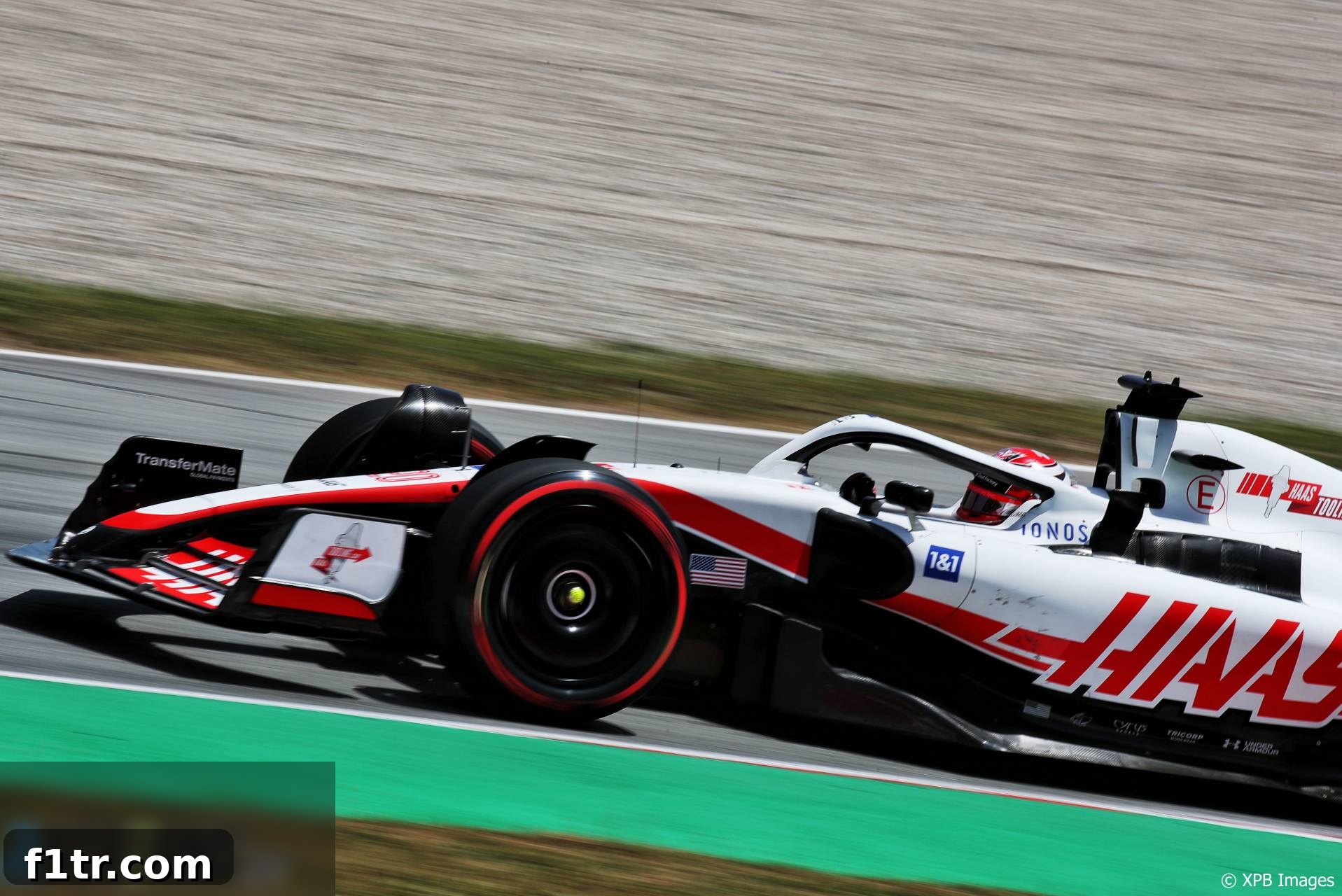
The exhilarating highs of a strong qualifying performance for the Haas F1 Team at the Spanish Grand Prix were swiftly followed by the uncertainty of a stewards’ investigation. Both Kevin Magnussen and Mick Schumacher, having secured impressive starting positions for Sunday’s race, found themselves under official scrutiny for alleged breaches of FIA regulations concerning driving speeds during the crucial qualifying session at the Circuit de Catalunya.
For the Haas team, reaching Q3 with both cars was a significant achievement, marking a testament to their improved pace and strategic execution. Kevin Magnussen, demonstrating his characteristic skill and determination, managed to secure an outstanding eighth position on the grid. His teammate, Mick Schumacher, also put in a commendable effort, placing tenth and ensuring a double Q3 appearance for the American outfit. This collective performance highlighted a promising upward trajectory for Haas in the 2022 Formula 1 season, setting a buoyant mood within the team before the news of the investigation emerged.
However, the celebratory atmosphere was tempered when the stewards announced that both drivers were being investigated for potentially driving unnecessarily slowly during their qualifying out-laps. This specific inquiry centered on an “alleged breach of Article 12.2.1 i) of the International Sporting Code and non-compliance with race director’s event notes (point four of document 34); driving unnecessarily slowly during qualifying.” This particular article of the International Sporting Code is in place to ensure fair play and, more critically, safety on the track during high-stakes sessions like qualifying.
The FIA’s regulations mandate that drivers must “stay below the maximum time set by the FIA between the Safety Car lines shown on the pit lane map” during all laps in the qualifying session. This rule is a cornerstone of modern F1 safety protocols, designed specifically to prevent drivers from circulating at excessively slow speeds. Such slow driving, particularly on an out-lap where drivers might be attempting to create space for a clean run or manage tire temperatures, can pose a significant hazard to other cars that are either on a flying lap or also preparing for one at higher speeds. The stark difference in speeds can lead to dangerous closing rates and potential collisions, especially on tighter sections of the track.
The maximum lap time threshold is a dynamic measure, carefully set by the FIA to balance the need for drivers to prepare their tires and create space with the imperative of maintaining a safe operational speed on the circuit. This ensures that the track doesn’t become overly congested with cars traveling at vastly different paces, particularly as drivers exit the pits or complete slower cool-down laps. Drivers are constantly communicating with their engineers to manage this delicate balance, navigating traffic and adhering to the prescribed time limits, all while trying to maximize their performance window.
For Haas, the investigation added an unexpected layer of tension to an otherwise stellar Saturday. While securing top-ten starting positions was a clear indicator of their competitiveness at the Circuit de Catalunya, any potential penalty could jeopardize these hard-fought gains. The stewards, acting as the judicial body of the race weekend, review telemetry data, onboard footage, and radio communications to ascertain if an infraction has occurred. Their decisions are paramount in upholding the integrity and safety standards of Formula 1.
Update: Both drivers were given official warnings
Following a thorough review, the stewards ultimately decided to issue official warnings to both Kevin Magnussen and Mick Schumacher. This outcome, while less severe than a grid penalty or a fine, serves as a formal reprimand and a clear signal from the FIA that such infringements will not be overlooked. The decision to issue warnings rather than more stringent penalties often indicates that while a technical breach occurred, the intent to cause danger might have been deemed minimal or unintentional in the specific circumstances. Nevertheless, it underscores the FIA’s commitment to strictly enforce rules designed to maintain high safety standards and fair competition within the pinnacle of motorsport.
The 2022 Spanish Grand Prix weekend highlighted the fine margins that drivers and teams operate within, not just in terms of performance but also in adherence to the complex tapestry of regulations. Even minor deviations can lead to investigations, serving as a constant reminder of the vigilance required at every stage of a Grand Prix event. While Haas celebrated their qualifying achievement, the incident also served as a valuable learning experience, reinforcing the importance of meticulous attention to detail even on out-laps where the focus might naturally drift towards the upcoming flying lap.
The episode at Circuit de Catalunya underscores a broader trend of the FIA’s increased focus on track safety during qualifying, particularly regarding traffic management and speed differentials. Drivers are continually walking a tightrope, needing to warm their tires optimally and find clear air, but doing so within strict time parameters set to prevent dangerous situations. This balancing act is a testament to the comprehensive nature of Formula 1 regulations, where every action on track, no matter how seemingly innocuous, is subject to scrutiny to ensure the safety and fairness of the sport for all competitors.
2022 Spanish Grand Prix
- Q&A: Kubica ‘shocked’ by ‘completely different’ Alfa Romeo in Spain
- How heat and traffic trouble left F1 fans fuming after the Spanish Grand Prix
- Mercedes not yet certain their porpoising problem has “disappeared”
- Sticking to budget cap “pretty much impossible” due to rising costs – McLaren
- Ricciardo hoping to find an explanation for Spanish GP pace deficit to Norris
Browse all 2022 Spanish Grand Prix articles