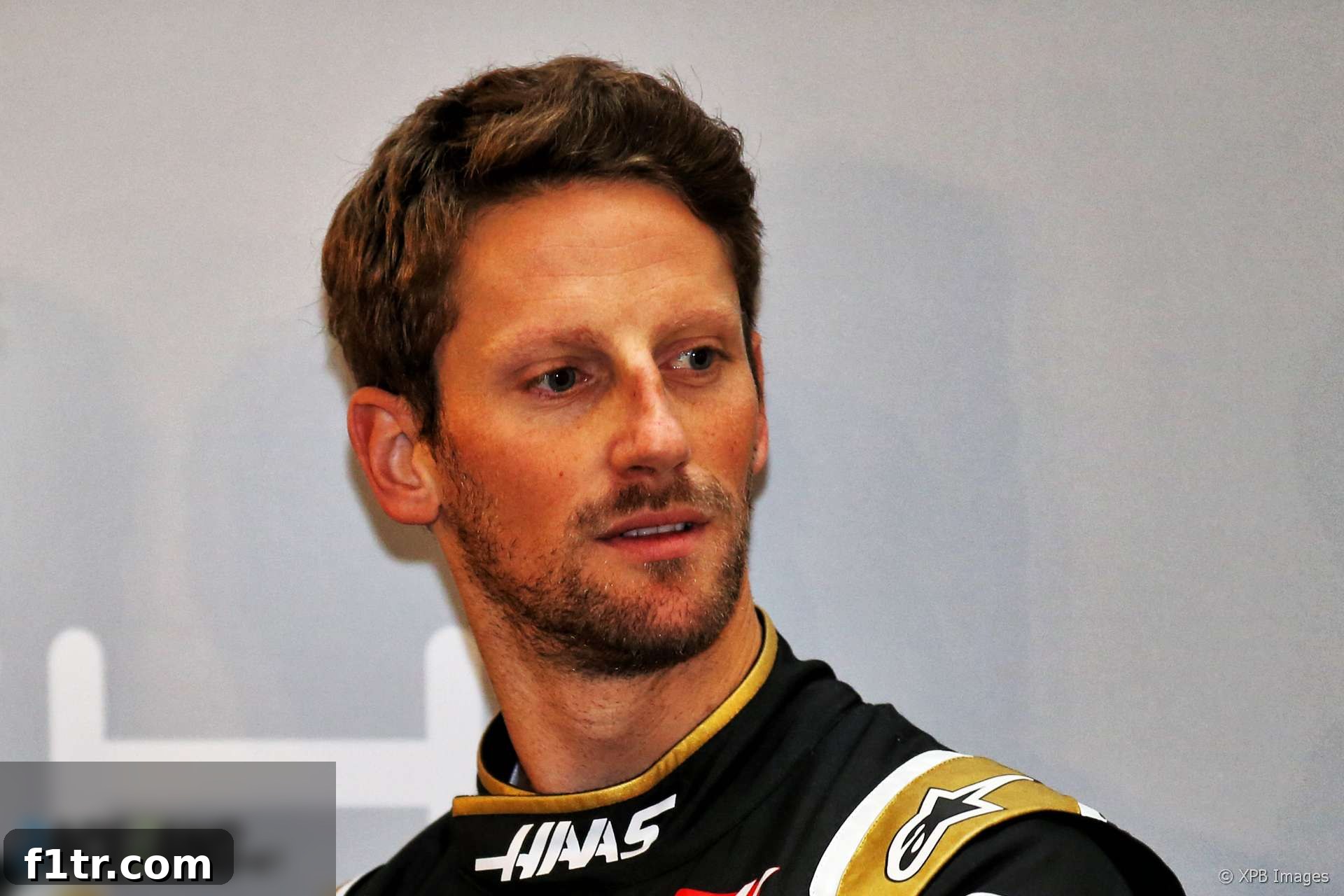
In the high-octane world of Formula 1, where technological prowess meets unparalleled driving skill, the dream of hoisting a winner’s trophy is what fuels every team and driver. However, for many on the grid, this dream remains a distant aspiration, consistently overshadowed by the sport’s dominant titans. Veteran driver Romain Grosjean, a candid voice in the paddock, has openly voiced his skepticism regarding any team outside of F1’s established ‘big three’ breaking through to claim a Grand Prix victory before the much-anticipated regulatory overhaul in 2021.
Grosjean’s sentiments reflect a widely held concern within the sport regarding the current competitive imbalance. For the past five seasons, the top step of the podium has been exclusively reserved for drivers from Mercedes, Ferrari, and Red Bull. This formidable triumvirate has not only dominated the constructors’ championship but has also monopolized race wins, creating a predictable landscape at the very front of the pack. Speaking at the launch of Haas’s striking new livery in London, Grosjean shared his insights with RaceFans and other media outlets, emphasizing the critical need for F1’s regulatory framework to foster a more inclusive and competitive environment, one where multiple teams have a genuine shot at victory.
The Undeniable Dominance of F1’s Elite Three
The statistical reality is stark: an unbroken streak of victories for Mercedes, Ferrari, and Red Bull stretching over half a decade. This period has seen incredible engineering feats and outstanding driver performances from these teams, but it has also created a significant chasm between them and the rest of the grid. While the pinnacle of motorsport is inherently about pushing boundaries, the current ecosystem often leaves smaller, independent teams struggling to even contend for a podium finish, let alone a win. Grosjean articulated this frustration, stating, “I think Formula 1 needs to get better at having more chances to win races. I don’t think that’s going to be before 2021.” This timeline is crucial, as 2021 is the year earmarked for a sweeping set of new regulations designed to fundamentally reshape the sport’s competitive dynamics, including significant changes to technical rules and the introduction of a budget cap.
The Frenchman further elaborated on the distinct races unfolding within a single Grand Prix event. “If you look at the midfield race last year, it was quite exciting, a lot of changing of orders, and then there’s another race at the front,” he observed. This ‘two-tier’ system highlights a key challenge for F1’s commercial appeal. While the battles for P7 or P8 might be thrilling for avid fans, the lack of genuine contention for overall victory among a wider array of teams can diminish the spectacle for a broader audience. Ideally, the sport would thrive on unpredictability and the possibility of any team, on their day, challenging for a win, fostering a deeper connection with fans and attracting new viewers. Grosjean’s vision, shared by many, is simple: “Ideally you would like as many teams as possible to be fighting for a win.”
Haas F1’s Aspiration and the Resource Divide
The desire for a more level playing field isn’t just a driver’s wish; it’s a strategic imperative for team owners. Gene Haas, the visionary behind the Haas F1 Team, entered the sport just three years ago with ambitions far beyond simply making up the numbers. Grosjean confirmed that Gene Haas shares his desire for greater competition, posing a fundamental question for teams operating outside the financial and technical might of the top three: “What’s the point of coming just to be always behind the same ones?” This query underscores the immense challenge smaller teams face. Despite strong leadership, talented personnel, and efficient operations, the sheer resource disparity often proves insurmountable.
The financial arms race in Formula 1 is relentless. Grosjean pointed out, “Ferrari’s announcing that they’re going to increase their budget for the year. Red Bull is saying that they spent a lot of money on the front wing. Mercedes has been working really hard as well.” These examples illustrate the continuous investment and development cycle that the ‘big three’ can sustain, thanks to their vast budgets and corporate backing. This creates a significant hurdle for independent teams like Haas. While Grosjean was quick to clarify, “Don’t get me wrong, we haven’t been sleeping,” he acknowledged the inescapable reality: “as long as there’s going to be so different resources between teams, there’s always going to be a difference of development.” This gulf in resources extends beyond mere financial spend, encompassing the scale of research and development facilities, the number of engineers and designers, and the sheer volume of parts that can be produced and tested throughout a season.
Haas’s 2018 Success and 2019 Ambitions: Leading the Midfield Charge
Despite the competitive challenges, the Haas F1 Team has consistently defied expectations. In the 2018 season, the team achieved an impressive fifth place in the constructors’ championship, a remarkable feat for a relatively new entrant. Even more telling was the underlying performance: on average, Haas possessed the fourth-quickest car on the grid, frequently challenging the likes of Red Bull in qualifying and showing flashes of brilliance in races. This performance instilled a strong sense of optimism but also set a high benchmark for subsequent seasons.
Looking ahead to 2019, Grosjean outlined the team’s clear objectives: “I think the expectations are to try to do better than last year. We set the bar quite high up last year with fifth.” While acknowledging the difficulty, the team harbored aspirations of climbing even higher. “Obviously we want to keep an eye on fourth if it’s possible,” he added, underscoring their competitive spirit. However, the experienced driver also maintained a pragmatic outlook, emphasizing that early season performance would be crucial. “The first indication is going to be how good the car is in Barcelona, and then how much development we can actually put on the car for the season.” The Barcelona pre-season testing sessions are historically pivotal, offering the first true glimpse into each team’s potential before the racing action begins. Yet, even with a strong start, Grosjean remained realistic about the ultimate challenge: “Again, I’m not thinking we’re going to beat Red Bull, Ferrari or Mercedes this year.” The gap, he implies, remains too significant to bridge in a single season under the current regulations.
The Fierce Battle for “Best of the Rest”
If the ultimate victory remains the preserve of the big three, the battle immediately behind them is arguably the most intense and unpredictable in Formula 1. This “best of the rest” fight is where Haas expects to be, facing off against a cadre of ambitious and well-funded rivals. Grosjean identified several key contenders who could pose a significant threat:
- Renault: As a factory team, Renault possesses substantial resources and a clear long-term vision. “I think Renault could be strong,” Grosjean noted, recognizing their potential to make significant strides up the grid. Their investment in infrastructure and talent suggests a strong push for higher finishes.
- McLaren: A legendary name in motorsport, McLaren has endured challenging seasons but always carries the potential for a resurgence. “McLaren you never know, big team, could come back strong,” Grosjean speculated, acknowledging the Woking outfit’s historical pedigree and renewed determination.
- Racing Point (formerly Force India): Following a change of ownership and significant investment, the team, known for consistently overachieving with limited resources, is poised for growth. “We know that Racing Point, or Force India, or whatever it’s called are injecting a lot of money in the team,” he explained, indicating the heightened threat they represent.
- Toro Rosso: Red Bull’s sister team benefits from a close technical partnership and shared engine supply. “Toro Rosso also it’s probably going to be very close with Red Bull in terms of technical partnership, they share the same engine,” Grosjean observed, highlighting the potential synergies and competitive advantage this relationship brings.
This packed midfield ensures that while the top three might be out of reach, the racing for the remaining points positions will be nothing short of spectacular. Every point gained or lost in this fierce segment of the grid can make a substantial difference in the constructors’ standings and the ultimate financial rewards for the teams.
Video: Haas launches its 2019 F1 livery
Looking Ahead: The Promise of 2021 and a More Competitive Future
Romain Grosjean’s unwavering focus on the 2021 regulations as the turning point for F1’s competitive landscape encapsulates the hopes of many in the paddock and among the fanbase. The new rules, envisioned by Formula 1 management and the FIA, aim to reduce the performance gap between teams through various mechanisms, most notably a budget cap and significant technical overhauls designed to promote closer racing and make following cars easier. By curbing the spending power of the wealthiest teams and creating more prescriptive technical regulations, the sport hopes to cultivate an environment where ingenuity and efficient execution triumph over sheer financial muscle.
This impending shift represents a crucial juncture for Formula 1. A more competitive grid, where multiple teams genuinely contend for race wins, promises to reignite passion, attract new talent, and broaden the sport’s global appeal. Grosjean’s honest assessment serves as a powerful reminder of the current challenges but also underscores the immense potential for a brighter, more unpredictable future in Formula 1, where the dream of victory might finally be within reach for more than just the dominant few. The sport is at a crossroads, and the decisions made now will undoubtedly shape its destiny for years to come.
2019 F1 season
- Crying in the Melbourne car park at 2019 grand prix was my career low – Ocon
- McLaren Racing reports reduced £71 million loss in 2019
- Kvyat: Hockenheim podium last year was “my biggest achievement” so far
- How the FIA’s new encrypted fuel flow meter targets Ferrari’s suspected ‘aliasing’ trick
- “He smashed my office door”: 23 must-see moments from ‘Drive to Survive’ season two
Browse all 2019 F1 season articles