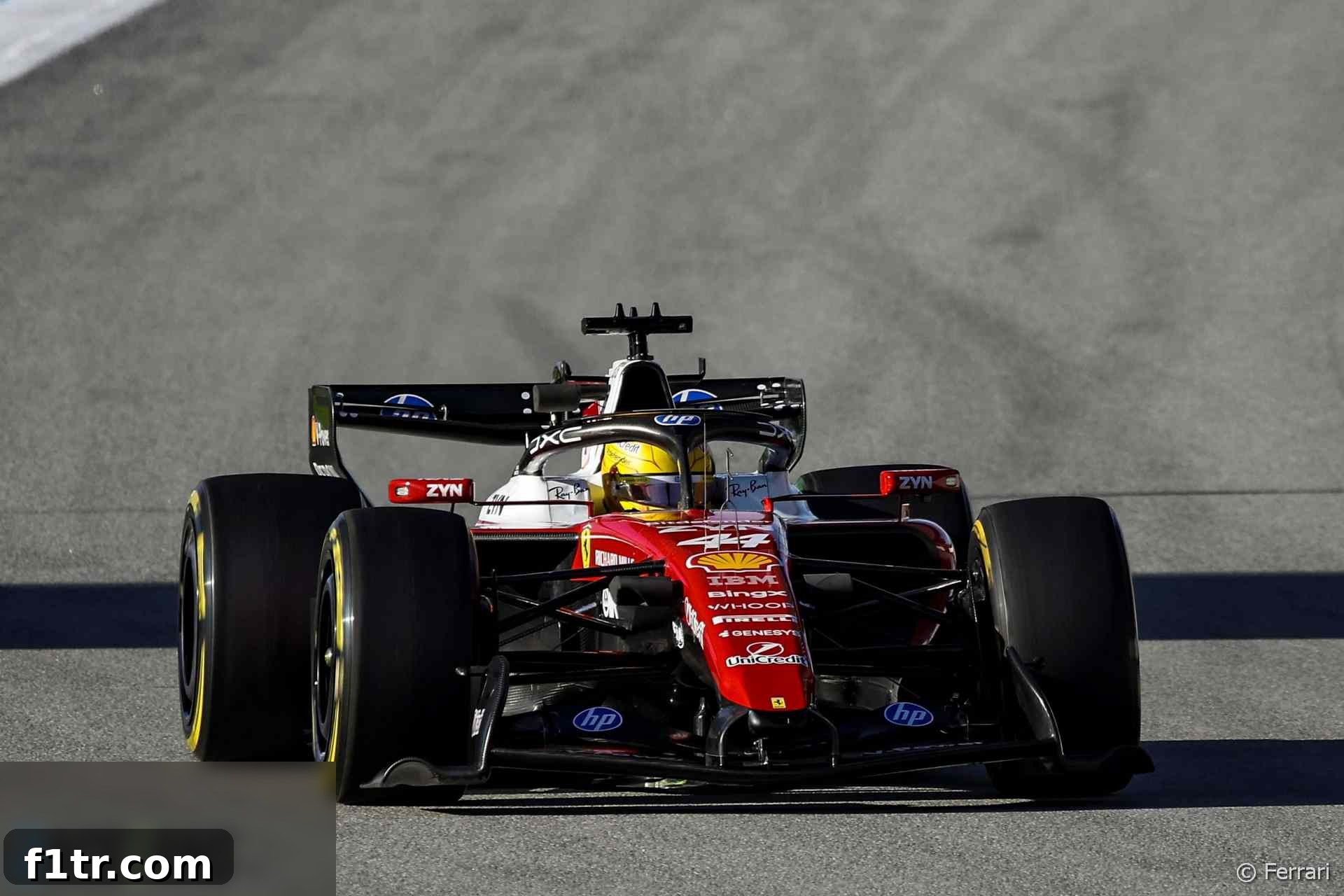
Lewis Hamilton Praises Ferrari’s Strong Start to F1 Pre-Season Testing Under New Regulations
Seven-time Formula 1 World Champion Lewis Hamilton has expressed considerable optimism regarding Ferrari’s initial performance in the new season’s pre-season testing. Despite the radical overhaul of technical regulations, Hamilton, now embarking on his second year with the iconic Italian Scuderia, believes the team is in a significantly better position than they were at this stage last year. His comments provide an encouraging signal for Ferrari fans and set an intriguing tone for the upcoming championship battle.
Advert | Become a Supporter & go ad-free
Hamilton’s positive assessment comes after his first substantial dry-weather running in Ferrari’s latest challenger, the SF-26. The British driver, known for his meticulous feedback and ability to push cars to their limits, spent the morning session of the second testing day getting acquainted with the new machinery. This crucial track time offered him the first real opportunity to gauge the car’s characteristics and potential following its initial shakedown runs, which were hampered by adverse weather conditions. The ability to complete a significant number of laps in optimal dry conditions is paramount for gathering relevant data and fine-tuning the vehicle’s setup.
Exceptional Reliability Marks a Promising Beginning for Ferrari
One of the standout aspects highlighted by Hamilton was the SF-26’s impressive reliability. “When you come to the test, you always want to get a lot of mileage, and today I did 85 laps in the morning, which is amazing,” Hamilton stated on Thursday. This significant lap count underscores the robustness of the new car, especially considering the extensive changes implemented under the revised technical rules. Accumulating such high mileage early in pre-season testing is invaluable, allowing teams to gather vast amounts of data, validate simulations, and identify any potential issues before the competitive season begins. For a team like Ferrari, reliability has often been a determining factor in their championship aspirations, making this early indicator particularly reassuring.
Hamilton was quick to credit the diligent efforts of the entire team back at the factory in Maranello. “That’s really down to all the people at the factory who have done such a great job to make sure the car, so far, is really reliable,” he acknowledged. The seamless operation of a brand-new car, particularly one designed to conform to a fresh set of regulations, is a testament to the engineering prowess and meticulous preparation of the Ferrari squad. Reliability forms the bedrock of any successful Formula 1 campaign, enabling drivers to maximize track time, push the limits, and consistently compete for points. An encouraging start in this area can significantly boost driver confidence and team morale, setting a positive tone for the challenging season ahead.
Navigating the New Technical Landscape and Performance Gains
The 2024 season ushers in a “completely new band of rules,” as Hamilton described it, presenting a fresh challenge for all teams on the grid. These technical regulation changes typically involve significant alterations to aerodynamics, chassis design, or power unit parameters, aimed at various objectives, such as improving racing, reducing costs, or enhancing safety. Adapting to such changes swiftly and effectively is paramount for any aspiring championship contender, as a misstep can cost valuable time and performance throughout the season.
Drawing a clear comparison to the previous year, Hamilton noted, “Last year we had a worse start to testing. So considering this is a completely new band of rules, it’s better than we’ve experienced in the past. So I’m really hopeful that continues.” This direct comparison is particularly insightful. For Ferrari, a team under immense pressure to deliver a championship challenge, starting on a stronger footing than their prior efforts under new regulations is a crucial positive indicator. It suggests that the design philosophy and engineering solutions adopted for the SF-26 might be more aligned with the new regulatory framework, offering a more stable and predictable platform for development. This foundational stability is key to unlocking the car’s full potential as the season progresses and competitive upgrades are introduced.
Tyre Dynamics and the Challenge of Cold Track Conditions
While the overall reliability and early performance of the SF-26 garnered praise, Hamilton also touched upon the complexities of tyre assessment during pre-season testing. His teammate, Charles Leclerc, took over the driving duties in the afternoon session, adding another 89 laps to Ferrari’s combined tally, further accumulating crucial data. However, Hamilton pointed out that the prevailing track conditions posed a significant challenge to fully understanding the car’s interaction with its Pirelli tyres.
“It was nice to get out in the dry and do some running because obviously our first day was in the miserable wet weather,” Hamilton reflected, highlighting the frustration of limited dry running. He also recalled a brief outing at Fiorano, Ferrari’s private test track, which offered only “one lap or two laps to kind of feel the car” – an insufficient basis for comprehensive evaluation. Therefore, the dry running on the second day of testing was vital for initial data acquisition, allowing the team to begin calibrating the car’s setup for various scenarios.
The Impact of Ambient Temperatures on Tyre Performance and Data Collection
Hamilton elaborated on the specific compounds tested, mentioning the C2 and C1 options, which represent harder tyre specifications in Pirelli’s range. However, he stressed, “it’s so cold that the tyres are not really working so much.” This is a common challenge in pre-season testing, often held at circuits where ambient and track temperatures are significantly lower than those expected during the actual race weekends. Formula 1 tyres are meticulously designed to operate within very specific temperature windows, and when conditions are too cold, they fail to generate optimal grip, making it difficult for drivers to get a true feel for the car’s balance and performance limits. This also makes it harder to assess tyre degradation accurately, a critical factor for race strategy.
Despite these less-than-ideal conditions for comprehensive tyre evaluation, Hamilton confirmed that Ferrari successfully navigated their planned testing programme. “But we got through our programme and got a bit of an understanding of where the car is at and where we need to improve,” he stated. This indicates a disciplined approach from the team, focusing on collecting data regardless of the external variables, understanding that the absolute performance numbers derived under cold conditions are less important than the relative changes observed and the foundational understanding of the car’s behaviour. Identifying areas for improvement early on is precisely the purpose of these test sessions, allowing engineers to refine designs and setups before the competitive pressure mounts.
Ferrari’s Comprehensive Testing Strategy and Team Synergy
The combined effort of Lewis Hamilton and Charles Leclerc during testing is critical for Ferrari. Both drivers bring unique perspectives and driving styles, and their collective feedback allows the engineering team to build a holistic picture of the car’s strengths and weaknesses. Leclerc’s subsequent 89 laps complemented Hamilton’s morning stint perfectly, ensuring maximum data capture and a broad range of driver input on the new SF-26. This dual-driver approach is standard in F1 testing, as it provides a wider spectrum of performance data and subjective feedback, which is crucial for development.
Ferrari will conclude its intense three-day pre-season test today, marking the culmination of months of design, development, and manufacturing efforts. These three days represent the sole opportunity for teams to fine-tune their machines before the competitive lights go out. Every lap, every data point, and every driver comment is meticulously analyzed to gain an edge. The objective is not just raw pace, but also understanding consistency, degradation, and how the car responds to different setup changes – all vital elements for a successful season. The knowledge gleaned from these sessions will directly influence the setup for the first Grand Prix and dictate the early-season development path.
The Road Ahead for Ferrari: From Testing to Championship Ambitions
The positive initial feedback from Lewis Hamilton regarding the SF-26’s reliability and improved standing compared to previous years offers a ray of hope for Ferrari’s tifosi. The Scuderia, with its rich history and passionate fanbase, carries the weight of immense expectations into every season. After a challenging few years where they have shown flashes of brilliance but struggled for consistent championship contention, a strong start to testing is precisely what the team needs to build momentum and psychological advantage.
While pre-season testing results must always be interpreted with caution – as teams often run different fuel loads, engine modes, and test programmes, making direct comparisons difficult – Hamilton’s direct comparison to past testing experiences provides a more concrete basis for optimism. His confidence in the factory’s work and the car’s foundational reliability suggests that Ferrari has tackled the new regulations effectively from the outset, potentially laying a more stable platform for development throughout the season. This stability is often a precursor to consistent performance.
The transition for a driver of Hamilton’s caliber to a new team and car is always a significant story within Formula 1. His ability to quickly adapt and provide valuable feedback on the SF-26 is a testament to his experience and skill. His immediate positive assessment of the car’s fundamental aspects, such as reliability and overall balance, will be a huge confidence booster for Ferrari as they head into the first race of the season. The journey from pre-season testing success to championship glory is long and arduous, demanding continuous development and flawless execution, but Ferrari appears to have taken an encouraging first step.
The engineers and strategists at Maranello now face the monumental task of poring over the vast quantities of data collected over the three days. This data will inform final setup decisions, identify areas for immediate improvement, and guide the development trajectory for the entire year. The competitive landscape of Formula 1 is relentless, with every team striving to unlock marginal gains. Ferrari’s strong showing in testing provides a solid foundation, but the true test will come when the lights go out for the first Grand Prix and the battle for supremacy truly begins.
Advert | Become a RaceFans supporter andgo ad-free
Formula 1 Insights & Analysis
Explore more in-depth articles and stay updated on the latest developments in the world of Formula 1:
- “Overtaking is overtaking”: Domenicali denies F1’s yo-yo racing is “artificial”
- The crashes F1 is trying to prevent may be rare – but the danger is obvious
- F1 returning to India soon after 2027 sounds like wishful thinking
- Verstappen loathes F1’s new generation of cars – but what do his rivals reckon?
- The ‘throwback weekend’ is back in fashion. But it’s a flawed concept – especially for F1
Browse all Formula 1 articles