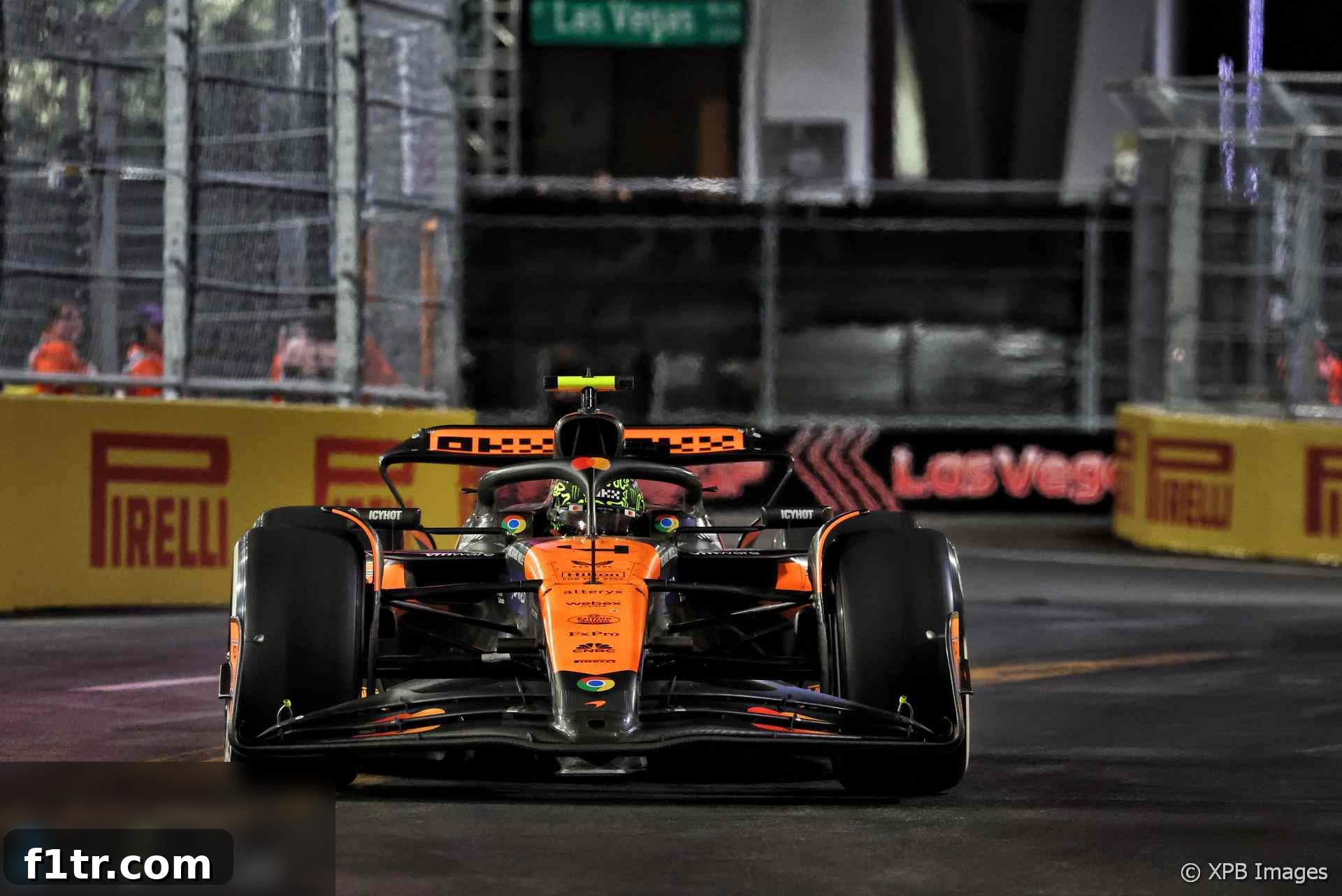
In the high-stakes world of Formula 1, where every design tweak and strategic decision can dictate success or failure, the performance of teams like McLaren often comes under intense scrutiny. Following a challenging outing at the Las Vegas Grand Prix, McLaren driver Lando Norris emphatically dismissed speculation linking the team’s struggles to a specific rear wing design change. This modification, enforced after an earlier season race, had been a point of contention and discussion within the F1 paddock, but Norris was quick to shut down what he perceived as baseless claims.
Advert | Become a Supporter & go ad-free
The genesis of this rear wing discussion dates back to the Azerbaijan Grand Prix. It was there that several teams, including McLaren, faced regulatory scrutiny over their rear wing designs. The concern arose from observations of the MCL38’s rear wing visibly deforming when subjected to the extreme aerodynamic loads encountered at top speed along the extended straights of the Baku City Circuit. Such deformation, while potentially offering a straight-line speed advantage, raised questions about legality and fairness, leading to an agreement among teams and the FIA to implement design changes. These adjustments were intended to ensure all components remained rigid under racing conditions, preventing any flexible bodywork that could provide an unfair edge.
Ironically, McLaren had enjoyed a remarkably strong showing in Azerbaijan despite, or perhaps even because of, this characteristic. Oscar Piastri delivered a stellar performance, securing a victory for McLaren, a significant milestone for the team. His teammate, Norris, also demonstrated exceptional skill and race craft, climbing from a challenging 15th position on the grid to clinch an impressive fourth-place finish. This strong performance, particularly on a track renowned for its extensive straights, naturally fueled theories that the subsequent rear wing modifications might negatively impact McLaren’s straight-line speed capabilities on similar layouts.
Fast forward to the Las Vegas Grand Prix, held on a brand-new street circuit that, like Baku, featured several incredibly long straights and demanded high top speeds. McLaren’s performance here was noticeably less competitive. Norris managed to finish sixth, with Piastri trailing him in seventh place, a result that included a five-second penalty. The contrast between their Baku success and Las Vegas struggles led many observers and pundits to draw a direct line to the rear wing changes implemented since the September Azerbaijan race. This narrative suggested that the enforced modifications had stripped McLaren of a key aerodynamic advantage, particularly on circuits emphasizing outright speed.
However, Lando Norris, known for his candid and often blunt assessments, unequivocally rejected these claims. Speaking to Sky Sports after the Las Vegas race, he dismissed the notion that McLaren’s performance dip was intrinsically linked to the post-Baku rear wing profile adjustments. “No, everyone wants to say whatever they want, but they can all believe their own BS that they tell themselves,” Norris stated, mincing no words. His firm stance indicated a frustration with what he perceived as a simplistic and incorrect analysis of the team’s complex performance dynamics. He elaborated, “It made a very small amount of difference, a lot less than what everyone thinks. It gained us a lot less than what everyone thinks. It’s got nothing to do with that.” This strong rebuttal from Norris underscored his belief that the core issues in Las Vegas lay elsewhere, and that the impact of the rear wing change was minimal at best, certainly not the primary determinant of their results.
Instead of the rear wing, McLaren’s team principal Andrea Stella pointed to other factors, particularly within race strategy and execution, as more critical to their Las Vegas performance. Stella highlighted the significant efforts made by the team to improve their pace during the race, especially concerning tire management. He revealed that a “drastic change” was implemented in how Norris and his car approached tire usage during the final stint. This strategic shift paid dividends, as Norris’s lap times improved considerably in the latter stages of the Grand Prix. While by then he had fallen too far adrift of the leading pack to genuinely challenge for a podium or victory, the improved pace allowed him to build a sufficient gap to make an additional pit stop for a fresh set of soft tires. This enabled him to push hard and ultimately set the fastest lap of the race, securing an extra championship point – a small but valuable consolation in an otherwise challenging weekend.
Advert | Become a RaceFans supporter andgo ad-free
Meanwhile, Oscar Piastri echoed the sentiment of a difficult race, describing his experience as “very difficult” overall. He finished a substantial 51 seconds behind race winner George Russell, a gap that already included his five-second penalty for a false start at the beginning of the Grand Prix. Piastri’s primary concern revolved around the car’s interaction with the tires on the unique Las Vegas surface. “We just struggled with the tyres so there’s definitely some things to look at,” he commented, indicating that the team needed to delve deep into the data to understand the root cause of their tire degradation and lack of consistent grip. He acknowledged that their finishing positions were likely close to their potential for the weekend, but expressed disappointment with the sheer magnitude of the gap to the front-runners. “I don’t think we hoped for a whole lot more than where we finished, but obviously the gap was a bit disappointing.” This candid reflection from Piastri underscored the significant challenges McLaren faced in unlocking optimal performance on the new track, particularly concerning tire windows and overall car balance.
The Las Vegas Grand Prix presented a unique set of challenges for all teams, with its low-grip surface, cooler evening temperatures, and distinct track layout. For McLaren, a team that had demonstrated incredible strides in performance throughout the season, their struggles highlighted the delicate balance required in Formula 1 car setup and strategy. Norris’s strong dismissal of the rear wing theory suggests that the team likely identified more fundamental issues, possibly related to generating sufficient tire temperature, optimizing car balance for the specific conditions, or adapting to the low-downforce demands of the circuit. The ability to manage tire degradation and find the optimal operating window is paramount in modern F1, and it appeared McLaren faced a steeper learning curve than some of their rivals in Las Vegas.
While the Azerbaijan Grand Prix had showcased McLaren’s potential and their impressive development trajectory, the Las Vegas weekend served as a stark reminder that success in Formula 1 is never guaranteed and requires constant adaptation. The team’s focus would undoubtedly shift to analyzing the extensive data gathered from the event, understanding why their car struggled more than anticipated, and learning crucial lessons to apply to future races on similar high-speed, low-downforce tracks. Ultimately, Lando Norris’s rejection of the rear wing narrative prompts a deeper investigation into the multifaceted elements that truly dictate F1 performance, from intricate aerodynamic details to complex tire dynamics and strategic prowess. The relentless pursuit of perfection means constantly evolving, and McLaren’s journey through the highs of Baku and the challenges of Las Vegas is a testament to the ever-demanding nature of the sport.
Miss nothing from RaceFans
Get a daily email with all our latest stories – and nothing else. No marketing, no ads. Sign up here:
Advert | Become a RaceFans supporter andgo ad-free
2024 Las Vegas Grand Prix
- “Disappointing” Las Vegas GP performance prompts ticketing changes for 2025 race
- Vowles clarifies Colapinto’s claim he was concussed in Las Vegas crash
- Norris lost title because McLaren weren’t competitive enough early on – Stella
- Ferrari are now in their longest-ever championship drought
- F1 “was trying too hard” in first year at Las Vegas – Sainz
Browse all 2024 Las Vegas Grand Prix articles