Max Verstappen’s dominant victory at the iconic Monaco Grand Prix not only secured him a memorable win but also propelled him to the summit of the drivers’ championship, displacing seven-time world champion Lewis Hamilton. This shift at the top provides the clearest mathematical proof yet that the 2021 Formula 1 season is poised to deliver the genuine, season-long championship fight that fans and pundits alike have been eagerly anticipating for years.
The immediate impact of Verstappen’s triumph resonated throughout the paddock, creating a palpable sense of excitement. It marked a pivotal moment, signaling a potential paradigm shift after years of relative dominance by Mercedes and Hamilton. For the first time in a considerable period, the championship narrative feels truly open, promising a captivating battle that could extend all the way to the final race of the season.
Challenging the Narrative: Has Hamilton’s Reign Been Untested?
Before the Monaco Grand Prix, McLaren Racing CEO Zak Brown weighed in on the burgeoning rivalry, describing the showdown between Hamilton and Verstappen as a “great rivalry” and commenting, “Lewis has had a pretty easy ride outside of his one year with Nico.” This statement refers to the intense 2016 season where Nico Rosberg famously beat Hamilton to the title. However, such a perspective prompts a deeper inquiry: has Hamilton truly gone without serious, sustained opposition in the intervening years, or does the headline dominance of Mercedes overshadow more nuanced battles?
While Mercedes’ unprecedented sweep of every championship awarded since 2014 paints a picture of absolute supremacy, suggesting an easy ride for their star driver, the reality on the ground has often been far more complex and challenging. The sheer statistical might of Mercedes, clinching both drivers’ and constructors’ titles year after year, certainly makes for grim reading for any competitor. Yet, to conclude that Hamilton’s path to his many accolades has been devoid of genuine challenge would be an oversimplification, overlooking periods of intense pressure and hard-fought victories against formidable opponents.
Remembering the Battles: Hamilton vs. Vettel (2017-2018)
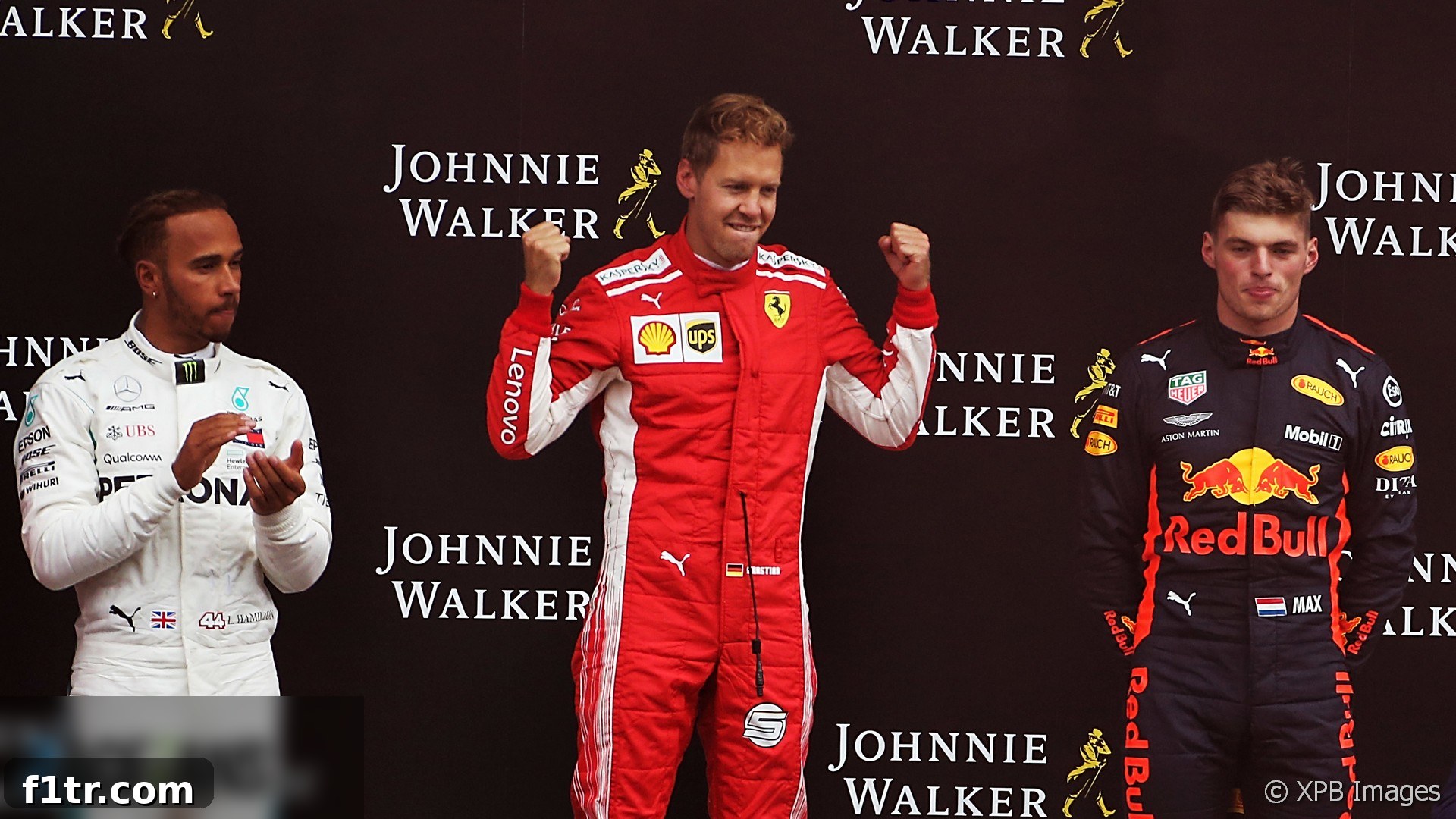
Indeed, a closer look at the 2017 and 2018 Formula 1 seasons reveals a compelling counter-narrative to the idea of an “easy ride.” As both seasons reached their halfway points, the drivers’ championship was not led by Lewis Hamilton’s Mercedes, but by the determined Ferrari of Sebastian Vettel. These were periods when Ferrari, under Vettel’s leadership, mounted credible and sustained title challenges, pushing Mercedes and Hamilton to their absolute limits.
Vettel’s early season performances in both years were nothing short of exceptional. In 2017, he kicked off his campaign with a remarkable streak of six consecutive top-two finishes, showcasing Ferrari’s renewed competitiveness and his own formidable driving prowess. This consistent point-scoring immediately put him at the forefront of the championship fight. The following year, 2018, saw an equally impressive start; Vettel secured four victories within the first ten races and consistently placed within the top five, only missing out once. His aggression, precision, and the significant strides made by Ferrari’s car and engine package created a genuine sense of anticipation that Mercedes’ reign could finally be broken.
The striking similarity in both of these seasons, however, lies not just in Vettel’s blistering starts, but in how dramatically they unravelled towards the end. Despite leading the championship for significant stretches, Vettel ultimately saw both titles slip away to Hamilton, who clinched them early – in Mexico, coincidentally, with multiple races remaining: two in 2017 and three in 2018. This stark contrast between early season promise and late-season capitulation underscores the immense pressure and relentless development race inherent in Formula 1 at the highest level.
Reflecting on those campaigns, Vettel himself acknowledged the crucial turning points. When asked about those years by RaceFans, he candidly stated, “Ultimately we didn’t win the championships. We were leading the championships but we didn’t win them at the end. I think in both of those years we actually had a very strong beginning, but we weren’t that strong at the end. And ultimately, that’s why we lost out, we just didn’t have the pace.” His words highlight a critical factor: the ability to maintain performance and pace throughout an entire, gruelling season.
The reasons for Ferrari’s inability to sustain their challenge were multifaceted. In 2018, notably, Vettel made a series of high-profile mistakes, most notably at Hockenheim, which directly swung the pendulum of momentum decisively in Hamilton’s favour. Beyond driver errors, Mercedes’ superior in-season development rate played an equally significant role. The Silver Arrows consistently brought upgrades that allowed them to pull away from Ferrari in the latter half of the season, extending their advantage when it mattered most. Vettel succinctly summarized this dynamic: “The package… all needs to come together. And in that regard Mercedes have been quite strong since 2014 and won everything there is to win in the big picture.” The “package” encompasses not just the car, but also the team’s strategy, operational efficiency, and relentless development curve – areas where Mercedes consistently demonstrated unmatched strength.
Lessons for Verstappen and Red Bull
We are still in the early stages of the 2021 season. Five races in, Max Verstappen’s lead stands at a mere four points. This slender advantage, while significant psychologically, serves as a powerful reminder of the historical challenges faced by those who have led early but failed to clinch the title. Sebastian Vettel’s 2017 season, where he held a 25-point lead at one stage only to lose by 46 points by the year’s end, is a cautionary tale that will not be lost on Verstappen or his Red Bull Racing team.
Verstappen has achieved a significant milestone, becoming the first non-Mercedes driver to take the championship lead since Sebastian Vettel in mid-2018. However, the possibility that this hard-won advantage could slip away will undoubtedly be uppermost in his mind. The lessons from Vettel’s experience are clear: a strong start, while crucial, is easily overshadowed and forgotten if the title fight cannot be sustained and converted into a championship at the end of the year. Red Bull’s challenge is not just to maintain their current performance, but to accelerate their development, match Mercedes’ renowned mid-season upgrade pace, and ensure consistent, error-free execution from both driver and team.
Mercedes’ capacity to fight back, coupled with Lewis Hamilton’s unparalleled experience and mental fortitude, remains a formidable threat. They have a proven track record of recovering from challenging situations, absorbing pressure, and delivering when it counts. The development war between the two teams will be fierce, and every strategic decision, every pit stop, and every lap will carry immense weight. The psychological aspect of leading and being hunted, as Vettel learned, can be as demanding as the on-track competition.
The Road Ahead: A Season-Long Thriller
The 2021 F1 season promises to be a true modern classic. The rivalry between Verstappen and Hamilton, two drivers at the peak of their powers, driving for two of the most competitive teams on the grid, offers all the ingredients for a memorable championship battle. Factors such as in-season car development, reliability, strategic decision-making, and the mental strength of both drivers will be paramount. Every race, every point, and every advantage gained or lost will contribute to the unfolding drama.
This is precisely the type of intense, head-to-head competition that elevates Formula 1 beyond mere racing into a compelling narrative of human and technological endeavour. Fans can look forward to a season where the outcome is far from predetermined, a testament to the thrilling potential when genuine contenders go wheel-to-wheel for the ultimate prize in motorsport. The stage is set for an epic showdown, and the lessons from past rivalries only serve to heighten the anticipation for what’s to come.
2021 F1 Season Insights
- Masi ‘basically gifted the championship’ to Verstappen says 2021 FIA steward Sullivan
- Las Vegas race backers looking to extend F1 deal beyond 2025
- Why Mercedes put ‘a reminder of joy and pain’ on display in their factory lobby
- Verdict on error in GT race suggests Mercedes would have lost 2021 Abu Dhabi GP appeal
- Title ‘stolen’ from Mercedes made us ‘underdogs people cheer for’ – Wolff
Browse all 2021 F1 season articles