2018 Formula 1 Mid-Season Driver Rankings: A Deep Dive into Performance (Part 1)
As the 2018 Formula 1 season reached its critical mid-point, it presented a timely opportunity to scrutinize the grid, evaluate each driver’s performance, and distinguish those excelling from those struggling. This comprehensive mid-season assessment aims to provide an in-depth analysis of the drivers, their impact on their teams, and their journey through the first half of a thrilling championship. Here, we unveil the first part of our detailed driver rankings, dissecting the contributions and challenges faced by each competitor.
20. Romain Grosjean
Romain Grosjean |
|
|---|---|
| Beat team mate in qualifying | 3/10 |
| Beat team mate in race | 3/8 |
| Races finished | 8/12 |
| Laps spent ahead of team mate | 184/615 |
| Qualifying margin | +0.13 |
| Points | 21 |
The 2018 season has been a story of stark contrasts for Haas. Their VF-18 chassis, benefiting significantly from the permissible 2018 Ferrari hardware, emerged as a surprisingly competitive package, positioning the team as a strong contender for fourth in the constructors’ championship. However, despite the car’s inherent pace, Haas finds itself lagging behind its potential, a situation for which Romain Grosjean bears a considerable share of responsibility.
Grosjean’s first half of the season was marred by an alarming series of incidents and missed opportunities. His tendency for crashes has been a recurring and costly problem for the team, undermining their efforts to consolidate points. More disconcertingly, his seasoned teammate, Kevin Magnussen, has consistently demonstrated superior pace and consistency, a development that has surprised many paddock observers. Magnussen’s ability to extract performance from the VF-18 has highlighted Grosjean’s struggles even further.
While moments of brilliance have flickered through—most notably a solid fourth-place finish in Austria and a commendable late-race charge through the field in Germany—these isolated performances have been overshadowed by a string of unforced errors and squandered potential. The Frenchman’s season has been a litany of “what ifs,” with numerous races where promising positions evaporated due to mistakes. For Haas to truly capitalize on their competitive machinery in the latter half of the season, Grosjean will need to find a significant and immediate uplift in his consistency and race craft, minimizing the incidents that have plagued his campaign.
19. Marcus Ericsson
Marcus Ericsson |
|
|---|---|
| Beat team mate in qualifying | 3/12 |
| Beat team mate in race | 4/9 |
| Races finished | 10/12 |
| Laps spent ahead of team mate | 186/574 |
| Qualifying margin | +0.6 |
| Points | 5 |
Marcus Ericsson’s tenure in Formula 1 has seen him outperforming several former teammates, including Pascal Wehrlein and Felipe Nasr, only for them to subsequently lose their seats – a testament to the powerful influence of financial backing in the sport. However, the 2018 season has presented a different narrative entirely, as Ericsson finds himself facing an overwhelming challenge from rookie sensation Charles Leclerc.
In the initial stages of the season, Ericsson’s greater experience in Formula 1 seemed to give him an edge, particularly over the raw inexperience of Leclerc. It was Ericsson who commendably secured Sauber’s first points of the year, providing a glimmer of hope for the Swiss outfit. This early performance hinted that Ericsson might once again assert his position within the team. Yet, this early advantage proved fleeting. Once Leclerc found his rhythm and unleashed his prodigious talent, Ericsson struggled to match his young teammate’s pace and consistency, often appearing to be comprehensively outclassed.
Leclerc’s rapid adaptation and exceptional performances quickly cemented his status as a future star, leaving Ericsson in his wake. The qualifying margin statistics, revealing Ericsson significantly behind Leclerc, underscore the chasm that developed between the two drivers. Only in the challenging wet conditions of the Hungarian Grand Prix did Ericsson manage to deliver a standout performance, demonstrating flashes of his capability and hinting at the experience he could still impart. However, such instances have been too rare, and the overall picture paints a challenging scenario for Ericsson against a teammate widely tipped for a move to a top team.
18. Sergey Sirotkin
Sergey Sirotkin |
|
|---|---|
| Beat team mate in qualifying | 6/11 |
| Beat team mate in race | 3/8 |
| Races finished | 9/12 |
| Laps spent ahead of team mate | 230/543 |
| Qualifying margin | -0.04 |
| Points | 0 |
Sergey Sirotkin entered his rookie Formula 1 season with a reputation as a thoughtful and technically astute driver, qualities he has diligently applied despite the formidable challenges presented by his machinery. Unfortunately, his debut year has been significantly hampered by driving what is arguably the least competitive car on the 2018 grid, the Williams FW41. This unenviable situation means that for much of the season, Sirotkin’s primary benchmark has been his equally embattled teammate, Lance Stroll, who is also striving to shed the “pay driver” label and prove his worth.
Sirotkin’s struggles were compounded early in the season by an ill-fitting seat, which caused considerable physical discomfort and undoubtedly affected his performance for several races. Despite this significant setback, the young Russian has steadily adapted and improved, demonstrating an increasing capability to match, and often outperform, Stroll. The qualifying margin statistics, showing a slight edge for Sirotkin, highlight his growing confidence and ability to extract performance from the difficult FW41.
As the season progresses into its second half, Sirotkin is under pressure to solidify this advantage over his teammate. If Williams can make any discernible progress in improving the FW41’s performance—a significant “if,” given their current trajectory—Sirotkin might still have a realistic chance to open his Formula 1 points account before the year concludes. His methodical approach and technical feedback are invaluable to a struggling team, and a tangible result would be a much-needed morale booster for both driver and team.
17. Brendon Hartley
Brendon Hartley |
|
|---|---|
| Beat team mate in qualifying | 3/10 |
| Beat team mate in race | 2/6 |
| Races finished | 9/12 |
| Laps spent ahead of team mate | 90/431 |
| Qualifying margin | +1.38 |
| Points | 2 |
Brendon Hartley’s 2018 season has, in some respects, mirrored Romain Grosjean’s with a number of significant incidents, yet with a crucial distinction: only one of Hartley’s major shunts this year was attributable to his own error – a costly spin at Turn 9 of the Circuit de Catalunya which effectively ruined his Spanish Grand Prix weekend. The majority of his other incidents were through no fault of his own, which offers some mitigation for his overall record.
Despite these external factors, Hartley has often shown solid, if not spectacular, driving. However, his performance has too frequently fallen short of matching his highly-rated teammate, Pierre Gasly. Gasly has consistently demonstrated greater raw pace and a quicker adaptation to the Toro Rosso package, leaving Hartley playing catch-up for much of the first half of the season. The significant qualifying margin in Gasly’s favour underscores this disparity in one-lap performance.
Encouragingly, Hartley has visibly been on an upward trajectory. His race starts have improved considerably, demonstrating better car control and awareness in the crucial opening laps. Furthermore, he achieved his first Q3 appearance at the most recent round, a clear sign of progress and an indication that he is starting to unlock more potential from the STR13. However, the raw statistic of contributing only two of Toro Rosso’s 28 points so far serves as a stark reminder that while improvement is evident, he is still some way from consistently delivering the results expected from a Formula 1 driver, especially against a competitive teammate like Gasly. The pressure will be on to convert this upward curve into more tangible championship points.
16. Lance Stroll
Lance Stroll |
|
|---|---|
| Beat team mate in qualifying | 5/11 |
| Beat team mate in race | 5/8 |
| Races finished | 10/12 |
| Laps spent ahead of team mate | 313/543 |
| Qualifying margin | +0.04 |
| Points | 4 |
Lance Stroll’s commendable eighth-place finish at the Azerbaijan Grand Prix stands out as the singular highlight of his 2018 season thus far, a result that almost single-handedly keeps Williams’ championship points tally from looking entirely dismal. The Baku street circuit, with its unique challenges and propensity for chaos, undeniably seems to bring out the best in Stroll, much as it did in his rookie season. Beyond this one notable performance, however, the rest of his campaign has largely been a challenging and unrewarding grind, beset by the inherent limitations of the FW41.
Following the departure of veteran Felipe Massa, Stroll was thrust into the role of the senior driver and de facto team leader at Williams. This increased responsibility has proven difficult for the young Canadian. He has rarely looked comfortable in this leadership position, struggling to inspire confidence both on track and through his increasingly terse radio communications, which frequently convey frustration with the performance of his uncompetitive car. The weight of expectation and the difficulty of the machinery seem to have taken their toll.
Compounding his challenges, rookie teammate Sergey Sirotkin has progressively closed the gap in performance, now frequently matching or even outperforming Stroll, particularly in qualifying. The once clear pecking order within Williams has blurred, and the battle between the two drivers is poised to intensify significantly in the second half of the season. For Stroll, demonstrating clear leadership and outperforming his teammate consistently will be crucial for his standing and future prospects in Formula 1.
15. Stoffel Vandoorne
Stoffel Vandoorne |
|
|---|---|
| Beat team mate in qualifying | 0/12 |
| Beat team mate in race | 2/8 |
| Races finished | 10/12 |
| Laps spent ahead of team mate | 95/639 |
| Qualifying margin | +0.35 |
| Points | 8 |
Stoffel Vandoorne undoubtedly harbored significantly higher hopes for his second full season in Formula 1. With McLaren transitioning to Renault power, the expectation was that he would finally be provided with a car capable of consistently challenging for points, allowing him to demonstrate the talent that made him a GP2 champion. Unfortunately, the reality of the 2018 season has been far more challenging and ultimately disappointing for the Belgian driver.
Early in the season, the McLaren MCL33 showed flashes of pace, and Vandoorne was able to keep pace with his illustrious teammate, Fernando Alonso, often securing points finishes alongside him. However, as the season progressed, the team’s struggles with the complex aerodynamics of the MCL33 became increasingly apparent, and the car’s performance began to slide. This decline in competitiveness proved particularly detrimental to Vandoorne, who found himself unable to extract the same level of performance as Alonso, especially in qualifying, where he has yet to outqualify his double-world champion teammate.
To compound his frustrations, Vandoorne suffered from an unconfirmed chassis problem during the British and German Grands Prix, which undoubtedly hindered his performance during those crucial races. Once a new chassis was introduced, he showed renewed promise, running strongly in the points in Hungary before an unfortunate mechanical failure forced his retirement. This sequence of events, where glimmers of potential are extinguished by external factors or the car’s fundamental limitations, encapsulates a largely frustrating and unfulfilling first half of the season for Vandoorne, leaving him desperately seeking a breakthrough.
14. Kimi Raikkonen
Kimi Raikkonen |
|
|---|---|
| Beat team mate in qualifying | 2/12 |
| Beat team mate in race | 4/9 |
| Races finished | 10/12 |
| Laps spent ahead of team mate | 182/668 |
| Qualifying margin | +0.27 |
| Points | 146 |
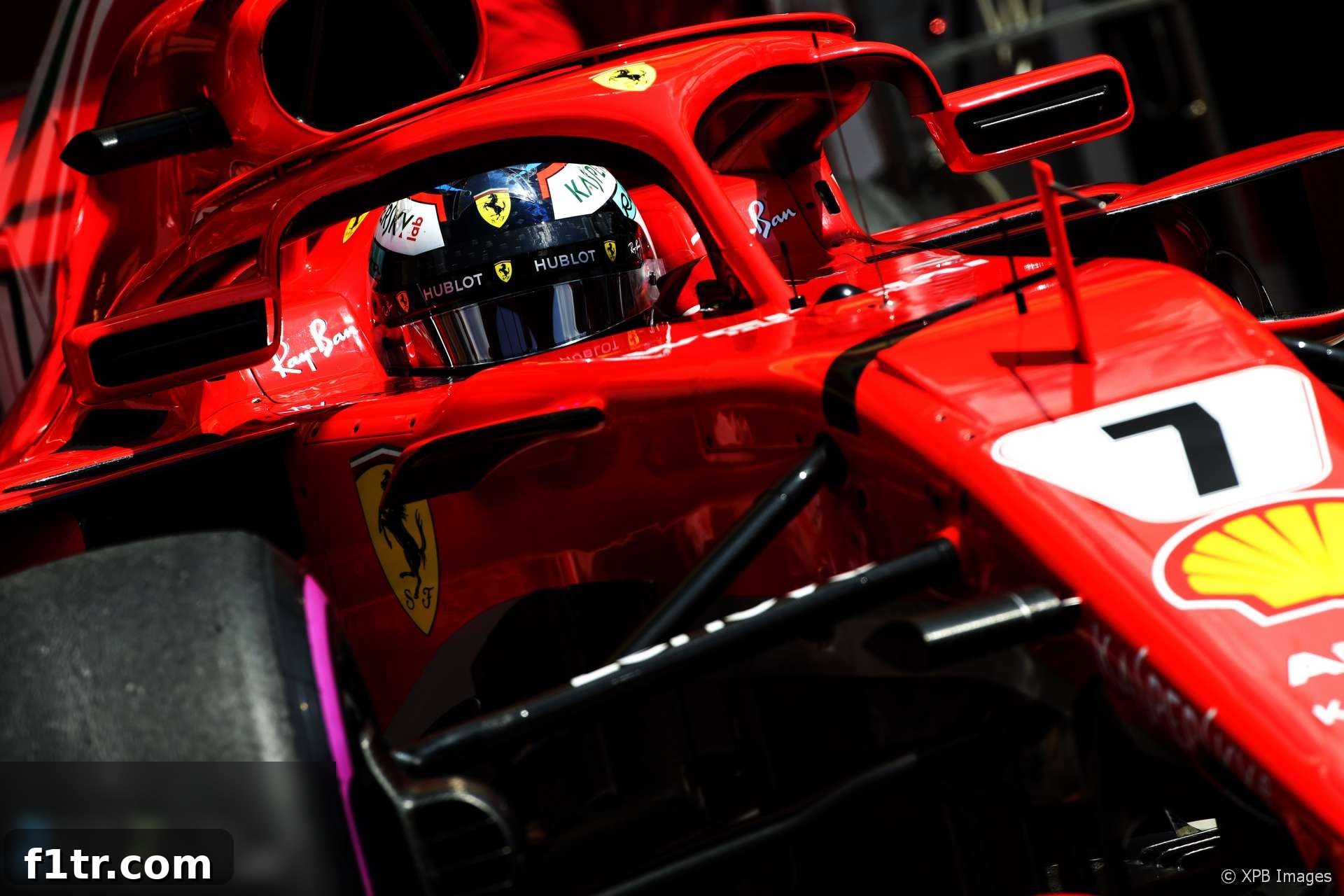
Kimi Raikkonen’s second stint at Ferrari has continued its characteristic, if unspectacular, trajectory through the first half of the 2018 season. While he remains a highly popular figure, his performances have consistently placed him as a clear number two driver behind Sebastian Vettel. This dynamic, rather than being a source of concern, increasingly appears to be an intentional strategy for the Scuderia, ensuring a reliable points scorer who doesn’t disrupt the primary championship challenge of his teammate.
On the rare occasions Raikkonen has found himself ahead of Vettel on track or in qualifying, it has more often than not been due to a mistake or misfortune affecting the German driver, rather than a definitive performance advantage from the Finn. A recurring theme of Raikkonen’s qualifying sessions has been his strong pace leading up to Q3, often looking like a genuine contender for pole position. However, these promising runs have frequently been undone by ill-timed errors in the crucial final segment, preventing him from fully capitalizing on the Ferrari’s speed.
Despite these qualifying setbacks and a clear performance gap to Vettel, Raikkonen’s consistency in race trim is undeniable. He has diligently accumulated a substantial number of strong points finishes, including an impressive streak of five consecutive podiums. Yet, a significant criticism remains: at no point has he truly looked like a serious contender for victory. A prime example occurred in Austria, where both Mercedes cars retired and Vettel was hampered by a penalty. In a golden opportunity, Raikkonen allowed Max Verstappen to aggressively pass him for a victory that many felt should have been Ferrari’s to lose. This highlights a persistent lack of the ultimate cutting edge required to convert prime opportunities into wins, a factor that keeps him firmly in the supporting role at Ferrari.
13. Carlos Sainz Jnr
Carlos Sainz Jnr |
|
|---|---|
| Beat team mate in qualifying | 5/12 |
| Beat team mate in race | 2/8 |
| Races finished | 11/12 |
| Laps spent ahead of team mate | 147/562 |
| Qualifying margin | -0.41 |
| Points | 30 |
Under normal circumstances, where Carlos Sainz Jnr wasn’t on loan to Renault from Red Bull, it would be difficult to fathom him being without a confirmed drive for the next season, especially given the strong and consistent performances he has delivered in the first half of 2018. His contributions have been vital to Renault’s ambition of securing a solid fourth place in the Constructors’ Championship, a position they currently hold.
Sainz has consistently showcased his impressive qualifying prowess, making it into Q3 more frequently than any other driver in the midfield pack. This ability to extract maximum performance from the car over a single lap has been a significant asset for Renault. A standout example of his skill was his inspired call in a wet qualifying session, which saw him brilliantly secure fifth on the grid – a result that underlined his strategic acumen and bravery in challenging conditions. The data shows a healthy negative qualifying margin against his teammate, illustrating his strong one-lap pace.
In recent races, Sainz has undeniably grown into a stronger and more consistent threat to his experienced teammate, Nico Hulkenberg. This improvement can be attributed in part to a more stable and settled environment within the team, allowing Sainz to integrate more fully and maximize his potential. His points tally, currently standing at 30, would likely be even higher had he not been an innocent victim of Romain Grosjean’s incident at Silverstone. Based purely on the strength of his first half-season performances, Carlos Sainz Jnr has undeniably earned a deserving and prominent drive for the upcoming 2019 Formula 1 season, demonstrating he is a top-tier midfield talent.
2018 F1 season
- F1 feared “death knell” for Drive to Survive after Ferrari and Mercedes snub
- McLaren staff told us we were “totally crazy” to take Honda engines in 2018 – Tost
- ‘It doesn’t matter if we start last’: How Red Bull’s junior team aided Honda’s leap forward
- Honda’s jet division helped F1 engineers solve power unit problem
- McLaren Racing losses rise after Honda split
Browse all 2018 F1 season articles