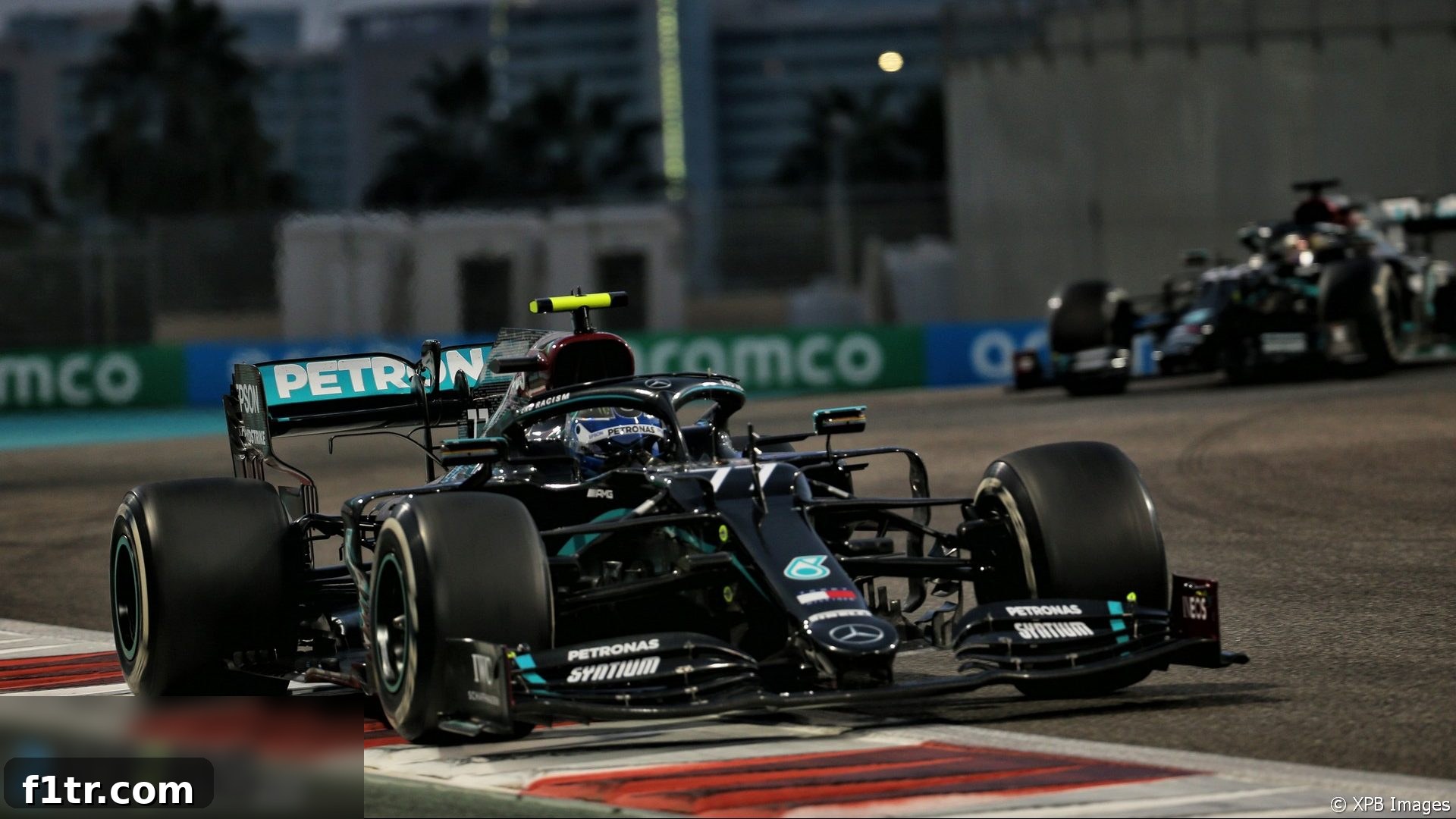
Mercedes’ Abu Dhabi Power Unit Strategy: Unveiling MGU-K Reliability Concerns
In a candid revelation following the intense Abu Dhabi Grand Prix, Mercedes-AMG Petronas Formula One Team confirmed that they had proactively reduced the strain on their highly sophisticated power units. This strategic decision stemmed from burgeoning concerns over the reliability of their engines, particularly regarding the critical Motor Generator Unit – Kinetic (MGU-K) component, a vital element of modern Formula 1 hybrid powertrains.
Advert | Become a Supporter & go ad-free
Andrew Shovlin, Mercedes’ Head of Trackside Operations, shed light on the matter, indicating that while the performance impact on their cars was minimal, the measures were a necessary precaution. Interestingly, both Lewis Hamilton and Valtteri Bottas, the team’s star drivers, publicly stated after the race that they were unaware of any specific instructions to “turn down” their engines. This highlights the subtle and precise nature of the adjustments made by the engineering team, designed to be imperceptible from the cockpit yet effective in mitigating risk.
The MGU-K Conundrum: A Critical Component Under Scrutiny
Shovlin elaborated that these preventative steps were a direct response to a series of recent MGU-K failures experienced across Mercedes-powered cars. The MGU-K is an integral part of the F1 hybrid system, responsible for recovering kinetic energy from braking and converting it into electrical energy, which can then be deployed to boost power. Its proper functioning is paramount for both performance and efficiency, as a failure can severely compromise a car’s speed and even lead to an immediate retirement.
The most prominent incidents involving this component included Sergio Perez’s dramatic retirement late in the Bahrain Grand Prix. In that instance, the MGU-K failure led to his car spewing flames, forcing him out of a potential podium finish. Alarmingly, Perez faced a similar, MGU-K related fault in the very next race, the Abu Dhabi Grand Prix, which forced an early exit. These back-to-back failures, though occurring in a customer team (Racing Point at the time), sent clear warning signals through the Mercedes power unit department.
What makes Mercedes’ position particularly challenging, as Shovlin admitted, is their incomplete understanding of the precise root cause of these MGU-K issues. This lack of definitive diagnosis meant that rather than targeting a specific fix, the team had to resort to broader, more conservative measures to prevent recurrence. “It’s not fully understood yet but there have been failures related to the K on Mercedes engines in the last couple of events,” Shovlin explained. “I would say that rather than being acutely aware of a specific problem, we are operating the power unit in a way that’s as conservative as we can be in order to try and avoid a problem.”
Proactive Management: A Balancing Act Between Performance and Reliability
Operating a Formula 1 engine at peak performance while simultaneously managing the inherent risks of mechanical failure is a tightrope walk for any engineering team. Mercedes, renowned for its meticulous engineering and historical reliability, found itself in an unusual predicament. Without a complete grasp of the “string of issues,” their only viable option was a cautious approach. “When you don’t understand exactly the string of issues all you can do is just be a bit cautious. So during the race we were trying to reduce the duty marginally,” Shovlin clarified.
The strategy involved making subtle adjustments “in the background,” imperceptible to the drivers, yet significant enough to reduce stress on the critical components. This level of precise engine management underscores the sophistication of modern F1 operations, where engineers monitor countless parameters in real-time to optimize every aspect of the car’s performance and longevity. The fact that top-tier drivers like Hamilton and Bottas didn’t notice any change speaks volumes about the marginal nature of these adjustments and the seamless integration of power unit management into overall race strategy.
Minimal Impact, Maximum Precaution: Analyzing the Performance Reduction
Despite the underlying concerns, Shovlin was quick to downplay the impact of these power reductions on Mercedes’ overall performance in Abu Dhabi. He asserted that the reduced output was “small, not an amount that’s going to determine the race result. You’re talking significantly less than a tenth of a second [per lap] so not the difference between first and second.”
In the high-stakes world of Formula 1, where races are often won or lost by fractions of a second, even “significantly less than a tenth” can sound substantial. However, in the context of an entire race distance, and considering Red Bull’s dominant performance that weekend, Mercedes’ reliability-driven power reduction likely played a negligible role in the final standings. The team’s primary objective was to ensure both cars finished the race without catastrophic failure, safeguarding valuable championship points and data for future development. This conservative approach is a testament to Mercedes’ long-term vision, prioritizing engine integrity over marginal, short-term gains when faced with an unknown reliability risk.
Broader Implications for Mercedes and the F1 Power Unit Landscape
Mercedes’ MGU-K concerns, though seemingly minor in their immediate race impact, carry broader implications for the team and potentially for the entire F1 power unit landscape. Mercedes has long been the benchmark for engine performance and reliability, supplying not only their works team but also several customer teams, who rely on their power units for competitive advantage. Any persistent reliability issue, even a subtle one, can erode confidence and necessitate costly redesigns or further de-tuning.
This situation highlights the immense engineering challenge of modern F1 regulations, which push manufacturers to extract maximum power from highly complex hybrid systems while adhering to strict material and usage limits. The constant pursuit of performance boundaries inevitably leads to components operating at their very limits, making them susceptible to unforeseen stresses and failures. For Mercedes, a team that prides itself on technical excellence, this MGU-K issue represents a critical learning opportunity, driving deeper investigations and potentially influencing their power unit design philosophy for future seasons.
Learning from such incidents is crucial for continuous improvement. The data gathered from Perez’s retirements and their own precautionary measures will be invaluable in dissecting the problem, developing more robust components, and refining their engine management strategies. This iterative process of innovation, testing, failure analysis, and re-design is at the heart of Formula 1’s technological arms race.
Conclusion: A Prudent Step in a High-Stakes Environment
Ultimately, Mercedes’ decision to reduce power unit strain during the Abu Dhabi Grand Prix was a pragmatic and prudent step. Faced with an evolving and not fully understood MGU-K reliability concern, the team prioritized the longevity of their engines and the safe completion of the race for both Lewis Hamilton and Valtteri Bottas. While the performance cost was minimal and did not alter the race outcome, it underscored the constant battle between pushing technological boundaries and ensuring unwavering reliability in the intensely competitive world of Formula 1. This incident serves as a reminder that even the most dominant teams must remain vigilant against potential mechanical vulnerabilities, continuously striving for perfection in every component.
Advert | Become a RaceFans supporter andgo ad-free
More from the 2020 Abu Dhabi Grand Prix
- Mercedes also had MGU-K concerns over Russell’s car
- Ferrari hail “outstanding professional” Vettel after his final drive for team
- 2020 Abu Dhabi Grand Prix Star Performers
- Driver line-up confirmed for Yas Marina test, two teams won’t attend
- Paddock Diary: Abu Dhabi Grand Prix
Browse all 2020 Abu Dhabi Grand Prix articles