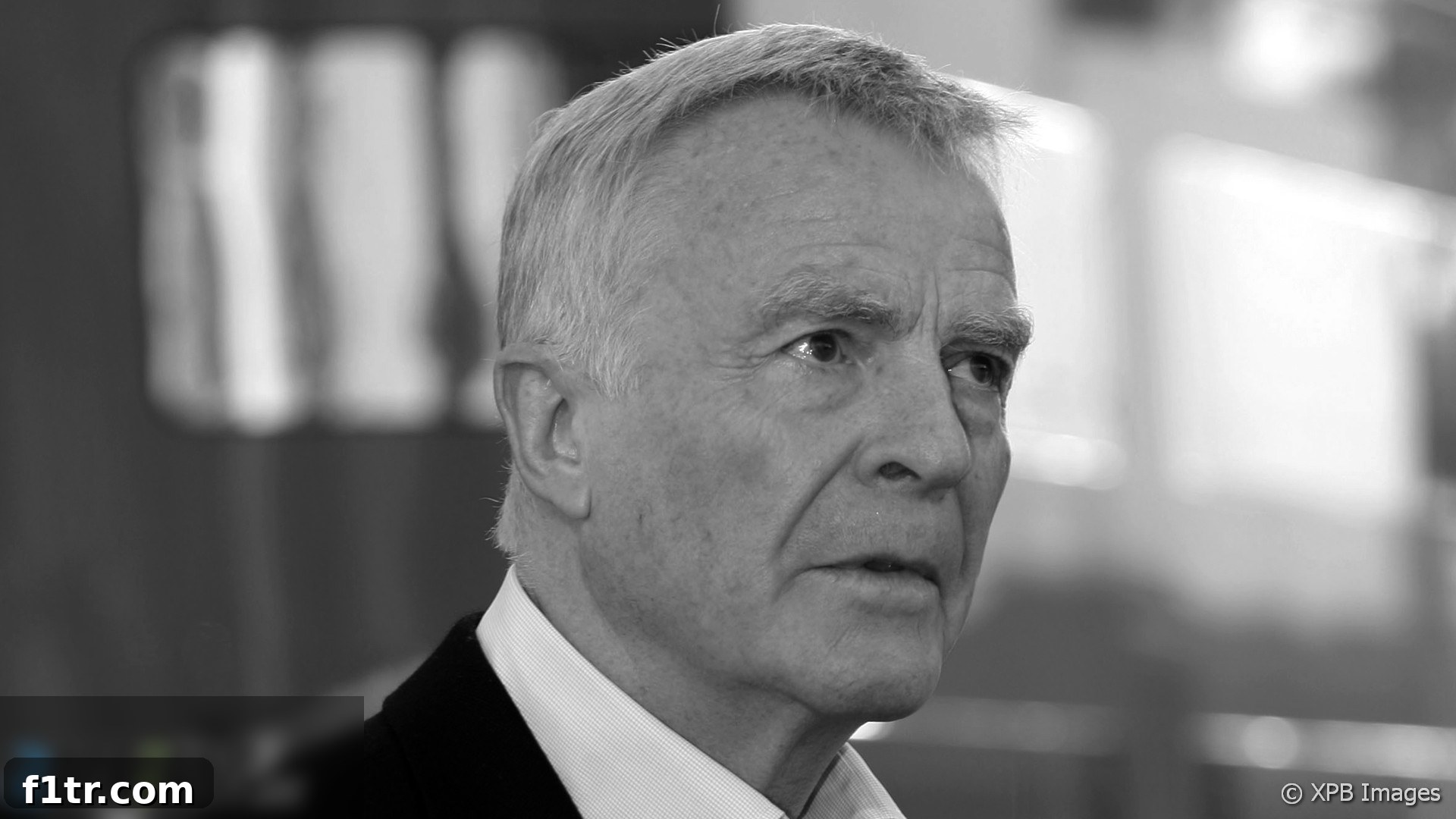
The motorsport world mourned the passing of Max Mosley, a towering figure who served as President of the Fédération Internationale de l’Automobile (FIA) for 16 pivotal years. Mosley, who was also a former racing driver and Formula 1 team manager, died at the age of 81. His legacy is complex and multifaceted, marked by profound advancements in safety, contentious political battles, and a relentless pursuit of privacy.
Max Mosley: A Champion of Safety and Architect of Modern Motorsport
From 1993 to 2009, Max Mosley stood at the helm of the FIA, the global governing body for motorsport. During his extensive tenure, he became the chief architect of significant transformations, most notably in the realm of safety, but also in the commercial and regulatory frameworks that underpin Formula 1 and other racing categories worldwide. His leadership was instrumental in shaping the sport into what it is today.
Transformative Safety Reforms in Formula 1 and Beyond
Mosley’s early years as FIA President were largely defined by an urgent and unwavering commitment to enhance safety in motorsport. Having been elected president of FISA, the FIA’s former sporting arm, in 1991, he assumed the full FIA presidency two years later. His dedication to safety was tragically underscored by the 1994 Formula 1 season, which witnessed the shocking deaths of two drivers, Ayrton Senna and Roland Ratzenberger, at the San Marino Grand Prix. These fatalities, the first at an F1 race weekend in over a decade, sent shockwaves through the sport and prompted immediate, decisive action from Mosley.
In response to the crisis, Mosley swiftly established the Advisory Expert Group, a body comprised of leading engineers, doctors, and safety experts. This group was tasked with meticulously reviewing all aspects of motorsport safety, leading to a cascade of regulatory changes that fundamentally altered car design, track configurations, and medical protocols. Innovations such as improved crash structures, mandatory head and neck support (HANS) devices, and stringent crash testing became standard, saving countless lives not only in Formula 1 but across various international motorsport disciplines. His foresight and determination during this critical period solidified his reputation as a true pioneer in driver protection, moving the sport from an era where fatalities were tragically commonplace to one where they became exceedingly rare.
Shaping the Commercial Landscape: The Concorde Agreements
Beyond safety, Mosley’s strategic acumen was also evident in his negotiation of the crucial Concorde Agreements. These complex commercial documents dictated the financial and broadcasting terms for all teams participating in Formula 1, effectively laying the groundwork for the sport’s modern commercial structure. These agreements, renegotiated multiple times under his watch, aimed to ensure fairer distribution of revenue, stabilize the sport’s economics, and facilitate its global growth. They were a testament to his legal background and his ability to navigate intricate corporate and sporting politics, balancing the interests of competing teams, the commercial rights holder, and the governing body.
Regulatory Authority and the European Commission Battle
Mosley’s second term as FIA president, commencing in 1997, was largely overshadowed by a protracted and intense dispute with the European Commission. The EC harbored suspicions that the FIA’s extensive control over various aspects of motorsport, particularly Formula 1, could be anti-competitive. This battle was significant, as it challenged the very structure of motorsport governance.
By 2000, a landmark settlement was reached. The FIA accepted a clearly defined, solely regulatory role within Formula 1, formally separating its sporting governance from the commercial exploitation of the sport. This pivotal decision placed commercial matters firmly in the hands of Bernie Ecclestone, who, as the former owner of the Brabham F1 team, had co-founded the Formula 1 Constructors’ Association (FOCA) in 1974. Ecclestone, a self-made entrepreneur who transformed from a used car dealer into a billionaire F1 magnate, forged an unlikely yet remarkably successful working relationship with the Oxford-educated lawyer, Mosley. Their partnership, often characterized by shrewd negotiation and strategic maneuvering, propelled Formula 1 into a new era of global popularity and commercial success.
Expanding Horizons: Road Safety and EuroNCAP
Under Mosley’s discerning leadership, the FIA’s influence extended far beyond the confines of professional motor racing. The organization became increasingly diverse in its scope, heavily investing in global road safety advancements. A key initiative spearheaded by the FIA during this period was the introduction of the EuroNCAP (European New Car Assessment Programme) crash testing program. EuroNCAP fundamentally changed consumer expectations for car safety, providing independent safety ratings for new vehicles. This program pushed automotive manufacturers to prioritize and innovate in passenger protection, thereby saving countless lives on public roads across Europe and influencing safety standards worldwide. This demonstrated Mosley’s vision for the FIA as a broader force for good in mobility and safety.
The Controversial Years: Challenges and Scandals
Mosley’s fourth and final term as FIA president, spanning from 2005 to 2009, proved to be arguably his most challenging and controversial period. During this time, Formula 1 was gripped by intense political infighting, economic pressures, and high-profile scandals that tested the resilience of the sport and its leadership.
The 2005 United States Grand Prix Debacle
One of the most indelible and contentious incidents of his final term occurred at the 2005 United States Grand Prix. A major crisis erupted when the majority of teams, all utilizing Michelin tyres, discovered their rubber was unsafe for the high-speed, banked final corner of the Indianapolis road course. Faced with an unresolvable safety dilemma, seven of the ten teams ultimately withdrew their cars before the race, leaving a paltry field of six vehicles. Many within the sport, including some team principals, openly criticized Mosley for his perceived failure to facilitate a satisfactory solution, fueling accusations of inflexibility and poor crisis management.
Cost Wars and Global Financial Crisis
The latter half of the 2000s coincided with the onset of the global financial crisis (2007-2008), prompting Mosley to advocate for drastic cost reductions within Formula 1. This initiative placed him at loggerheads with several well-funded manufacturer teams who were accustomed to spending immense sums of money annually. Mosley believed that financial sustainability was paramount for the sport’s long-term health, a stance that inevitably generated friction with those who resisted budget caps and other cost-cutting measures.
A String of Scandals and Personal Ordeal
This turbulent period was further exacerbated by a series of massive controversies that rocked the integrity of Formula 1. These included McLaren’s ‘Spygate’ scandal in 2007, where confidential Ferrari technical documents were found in McLaren’s possession, and the infamous ‘Crashgate’ affair in 2009, involving Renault’s alleged conspiracy to rig the Singapore Grand Prix. Amidst these external challenges, Mosley himself became embroiled in a deeply personal scandal that captivated global headlines.
In March 2008, the British tabloid News of the World published highly salacious details about Mosley’s private life in a front-page story. The revelations plunged Mosley into an immense public and private crisis, placing him under enormous pressure to resign from his position as FIA President. Despite the intense scrutiny and calls for his departure, he steadfastly refused to resign. However, he ultimately chose not to seek re-election for a further term at the end of the year, signaling the end of his long and impactful tenure.
Following this deeply personal ordeal, Mosley dedicated himself to campaigning vigorously against press intrusion, particularly concerning privacy laws. His relentless efforts and legal battles against the media played a significant role in highlighting journalistic misconduct, and within two years, revelations about the News of the World’s unethical journalistic practices ultimately led to the newspaper’s closure, a testament to Mosley’s tenacious pursuit of justice and privacy.
Early Career: From Racer to Team Principal
Before ascending to his most famous role as FIA President, Max Mosley had a hands-on involvement in motorsport as a racer himself. He made one non-championship Formula 1 start in 1969. However, he quickly recognized that his driving talent, while respectable, could not match that of the era’s superstars. Rather than pursuing a career as a professional driver, Mosley leveraged his intelligence and entrepreneurial spirit, deciding instead to establish his own race car manufacturing company.
This led to the creation of March Engineering in 1969, an enterprise that would become a significant force in motorsport. March achieved notable success, taking two Formula 1 wins as a works entity and supplying competitive chassis to numerous customer teams across various racing categories, from F1 to Formula 2 and IndyCar. This venture proved crucial for Mosley, as it not only built his extensive connections across the motorsport world but also allowed him to work with Bernie Ecclestone for the first time. Their collaboration at March ultimately laid the groundwork for the formation of FOCA, the Formula 1 Constructors’ Association, an organization that revolutionized the commercial structure of F1. The experience gained and the political clout amassed through March provided Mosley with the necessary foundation and ambition to pursue his own political career within motorsport in the 1980s, setting him on the path to the FIA presidency.
A Complex Family Legacy and Later Legal Battles
Mosley’s personal and political life was inextricably linked to his controversial family background. Any realistic aspirations he might have held for a mainstream political career in the UK were complicated by his birth. He was the son of Sir Oswald Mosley, the infamous leader of the British Union of Fascists, who married aristocrat Diana Mitford in Nazi Germany at the home of propaganda minister Joseph Goebbels. This profound and often uncomfortable family legacy cast a long shadow over Max Mosley’s public image throughout his life, frequently leading to intense scrutiny and debate regarding his own political views and associations.
In the months leading up to his death, Mosley continued to engage in legal battles with various newspapers, underscoring his lifelong commitment to fighting what he perceived as media intrusion and misrepresentation. At the end of 2020, the High Court rejected his legal action against the Daily Mail, which related to the reporting surrounding his earlier News of the World trial. Two years prior, the Mail had unearthed an election pamphlet from 1961, published by Mosley in support of a candidate for his father’s far-right Union Movement party. The pamphlet contained racist statements about immigrants, further fueling the ongoing discussion about his personal beliefs and the enduring impact of his family’s history.
Max Mosley’s life, rich with achievement, controversy, and profound impact, is set to be explored in a documentary film titled “Mosley: It’s Complicated,” slated for release in July of the year of his passing. The title itself encapsulates the intricate and often contradictory nature of a man who steered motorsport through some of its most transformative and turbulent periods.
Max Mosley is survived by his wife, Jean Taylor, and his son, Patrick. Their first son, Alexander, tragically passed away in 2009.