The past six years have truly redefined the landscape for motorsport enthusiasts in gaming. We’ve witnessed the exhilarating emergence of dedicated simulation franchises like Project Cars and Assetto Corsa, pushing the boundaries of realism. Simultaneously, established titans such as Gran Turismo and Forza Motorsport have continued to command a loyal following, demonstrating their enduring appeal in the competitive world of racing titles. Even Codemasters, a name synonymous with quality racing experiences, has consistently delivered with their critically acclaimed and commercially successful officially-licensed F1 series and the high-energy Dirt Rally games.
However, amidst this bustling era of racing innovation and success, one particular Codemasters franchise has been noticeably absent, leaving a void for fans of pure, unadulterated speed and aggression: the high-octane arcade action of the Grid series. This extended hiatus has left many wondering when, or if, the beloved series would make its triumphant return.
The Return of a Racing Icon: GRID Reboot Lands
That long wait concludes with the highly anticipated release of ‘Grid,’ a complete reboot of the series. Launching on PS4, Xbox One, and PC, this fresh take aims to re-establish its presence in an already saturated and incredibly competitive racing game genre. The pressing question for many players in 2019 is whether this overdue title can carve out a meaningful place for itself, or if it will simply be overshadowed by its rivals, left to fade in the exhaust fumes of more established or intricate racing experiences.
From the moment you ignite the engine, it’s unequivocally clear: the new Grid is completely, and unashamedly, arcade in its very nature. It boldly dismisses the intricate complexities of modern motorsport – all the laborious practice sessions, the meticulous penalty systems, and the underlying political machinations that often characterize simulations – throwing them out the driver’s side window without a second thought. For those who are veterans of the series, it’s crucial to understand that this iteration is distinct from Grid: Autosport. Instead, it feels much more like a spiritual successor, capturing the essence and raw excitement that defined the original Grid and its immediate sequel, Grid 2.
Embracing the Spectacle: A Hollywood Vision of Motorsport
Grid makes little to no attempt to meticulously emulate the real world of racing. Its purpose is far grander: it’s a vibrant celebration of the beautiful, mechanical chaos that makes motorsport so captivating. Races in Grid are designed to be short, intense, and frenzied affairs, ensuring that every moment behind the wheel is packed with adrenaline. You can expect almost every car that crosses the finish line in Grid to bear at least some battle scars, a testament to the game’s contact-heavy philosophy. There are no yellow flags to slow the action, nor are there penalties for ‘causing a collision.’ In the world of Grid, racing is, unapologetically, a full-contact sport, where rubbing is racing and every scrape tells a story.
The fictionalized world of motorsport crafted within Grid feels like a vivid Hollywood interpretation of what racing could be if unbound by reality. As your car speeds past the finish line, you’re greeted by an explosion of confetti and pyrotechnics, transforming every victory into a grand spectacle. Night races are illuminated by a dazzling display of balloons and fireworks, painting the sky with vibrant colors. The public address announcer, with infectious enthusiasm, hypes up every single race as if it were a gold medal event at the X-Games. This relentless focus on making every race a memorable spectacle is a core tenet of Grid’s design, and for the most part, it succeeds brilliantly, immersing players in a thrilling, over-the-top racing universe.
Expansive Content and Star Power
Grid’s sizeable career mode offers an impressive wealth of vehicles and racing disciplines to explore. Players can choose from over 60 cars, spanning diverse categories such as Touring Cars, GT machines, Stock cars, and Tuner disciplines. The roster is further enhanced with powerful Daytona Prototypes and an exclusive Invitational class that features everything from nimble Mini Coopers and revered historic cars to the legendary Fernando Alonso’s 2006 Formula 1 world championship-winning Renault R26. This iconic inclusion adds significant prestige to the game.
Speaking of Fernando Alonso, his involvement goes beyond a single car. The game features an entire career mode tree dedicated to his real-world eSports team, allowing players to race under his banner and experience unique challenges. The ultimate test in Grid arrives with the final challenge of the Grid World Series, accessible only after mastering four core disciplines, culminating in an epic showdown with the two-time Formula 1 world champion himself. This unique integration not only adds depth to the career progression but also provides a tangible connection to a motorsport legend, significantly boosting the game’s appeal for fans.
The racing environments are equally diverse and engaging, with 12 unique locations designed to push your skills to the limit. These include meticulously recreated real-world circuits like the iconic Silverstone or the challenging Sepang International Circuit, alongside brilliantly imagined fictionalized street circuits set in vibrant cities such as San Francisco, Havana, and Shanghai. When considering all circuit variations and reverse layouts, Grid truly serves up an astonishing array of over 80 circuits, providing ample opportunity to thrash its entire roster of available cars around varied and dynamic tracks.
Handling the Chaos: Arcade Perfection
The frantic, action-packed racing is perfectly complemented by an intuitive arcade handling model. Players should prepare to drift around the vast majority of corners, often even in single-seater vehicles, as it’s frequently the fastest and most exhilarating way to navigate the tracks. With an abundance of power-sliding and dramatic tankslappers on display, races can often feel less like conventional circuit racing and more like 16-car rallycross events on tarmac, creating an incredibly dynamic and unpredictable experience. While some purists might scoff at this approach, the handling model feels perfectly suited for the specific brand of exciting, accessible racing that Grid aims to offer, prioritizing fun over uncompromising realism.
The artificial intelligence opponents, a roster of 400 individual drivers you’ll face, are appropriately aggressive and often unpredictable. On higher difficulty settings, they can prove to be formidable adversaries, requiring precision and cunning to overcome. While the game encourages getting your elbows out and engaging in some contact, rub paint with a rival too hard or too often, and they will become marked as your ‘nemesis.’ This vendetta doesn’t mean they’ll deliberately try to wreck you, but they certainly won’t shy away from shoving their noses into gaps that are clearly disappearing, leading to tense, reactive moments. Players should also anticipate the occasional surprise, such as rounding a blind corner only to find a crashed AI car sitting squarely on the racing line, adding an element of chaotic realism to every event.
There’s an inherent joy in chucking beautifully modeled cars sideways into a fast sweeping turn while surrounded by a pack of rivals, all fiercely jockeying for track position. The thrill of divebombing two cars ahead into a tight hairpin turn by lunging up the inside is undeniably more enjoyable when you don’t have to constantly worry about the severe consequences of realistic damage models or intricate penalty systems. Grid liberates players from these concerns, allowing for pure, unadulterated racing exhilaration.
While the arcadey handling model is commendably easy to grasp, players will discover a nuanced layer of strategy: you’ll often achieve faster lap times in certain car classes by adopting a gentle and precise approach, rather than resorting to all-out aggression. It feels almost counter-intuitive to exercise Alain Prost-like restraint in a game that, at its core, seems to be urging you to go full Max Verstappen. However, with some of the more sensitive cars, the true challenge lies in maintaining a precise line through a quick sequence of turns, showcasing a subtle depth beneath the surface chaos.
Career Progression and Visual Splendor
For every race completed, you’ll earn credits, which are essential for purchasing new cars and progressing through the extensive career mode. A 10% bonus is even awarded if you’re a ‘VIP’ player, typically achieved by investing in the ‘Ultimate’ edition of the game. Furthermore, you’ll be accompanied by a dedicated teammate at each event, who actively contributes to your points total and credit earnings. As you advance through the career, you gain the ability to unlock and hire a diverse raft of alternative drivers, each possessing a unique set of attributes, including varying levels of speed and loyalty, allowing for some strategic team building.
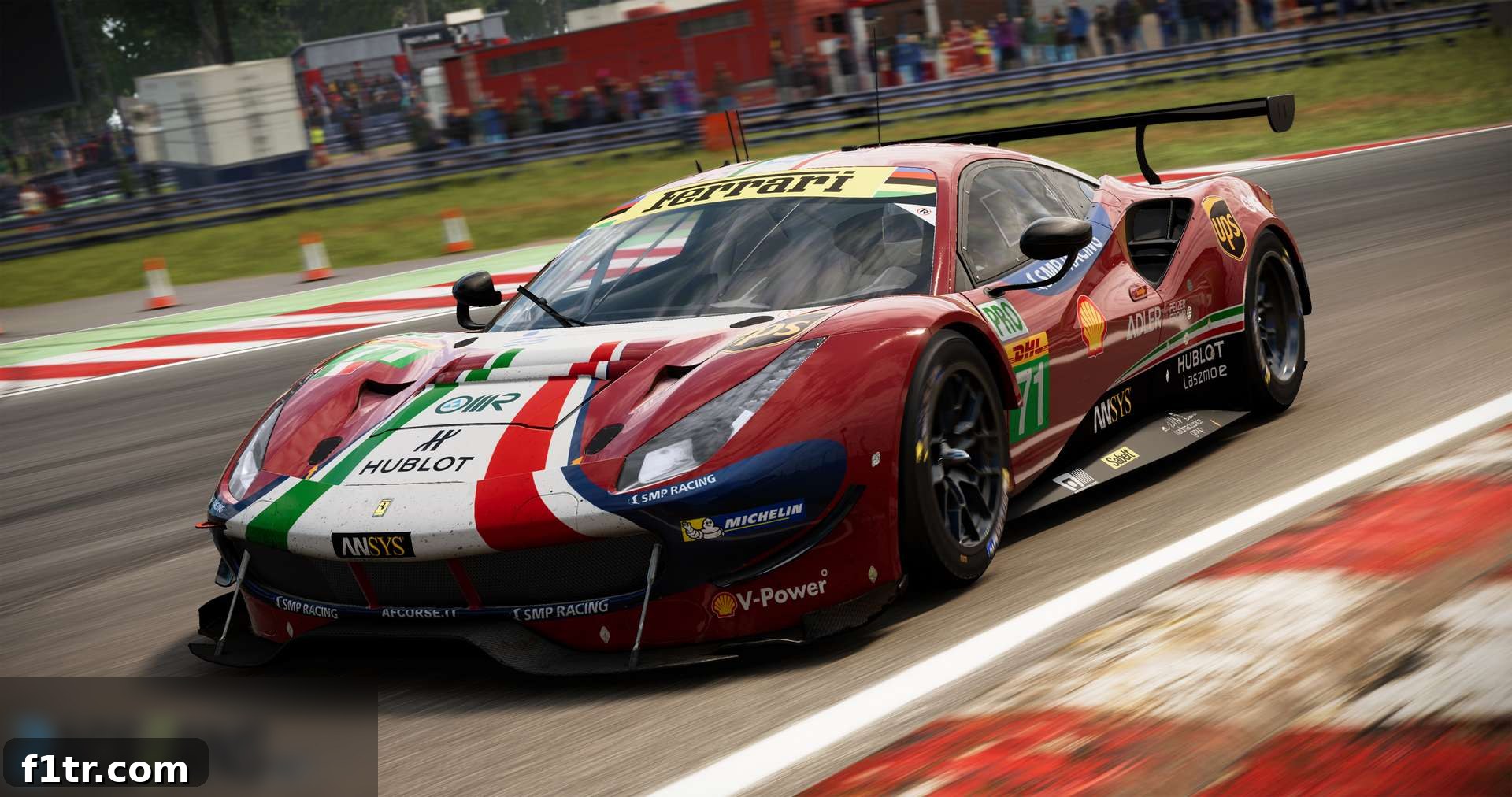
Graphically, Grid is an absolute feast for the eyes, delivering stunning visuals even on the standard PS4 console on which it was reviewed. Colors explode with vibrancy against the backdrop of a Shanghai sunset, creating breathtaking vistas. San Francisco is rendered as a thriving, dynamic metropolis, looking particularly impressive when lit up against the dark night sky, while Havana boasts a distinctive, atmospheric haze. Given the intense saturation of colors, it’s crucial not to skip the initial gamma adjustment when first starting the game; failing to do so might result in scenes becoming a little too bright, particularly when the setting sun is directly in your driver’s eyeline, impacting visibility and immersion.
While the visual effects are abundant and spectacular, frame rates do feel somewhat lower compared to Codemasters’ other flagship titles like the F1 series or Dirt Rally. This is most likely attributable to the sheer volume of dazzling visual effects and environmental details constantly on display during gameplay. However, for an arcade racer, this slight dip in frame rate doesn’t detract from the game’s core appeal in the same way it might for a high-fidelity simulation title. The game also provides a comprehensive range of camera options to cater to different preferences, including a meticulously detailed cockpit view available for every single car, enhancing the sense of immersion.
Despite the otherwise chaotic and engaging racing action, it’s a regrettable oversight that Grid lacks a dedicated photo mode. Such a feature would have been invaluable for capturing those dramatic, bumper-to-bumper moments and breathtaking environmental shots in the most visually appealing way possible, allowing players to immortalize their favorite racing memories.
Car customization is an integral part of the experience, available for every vehicle in the game, both in career and online modes. While it doesn’t offer the expansive, intricate full livery editor found in titles like Forza or Gran Turismo Sport, there is a pretty decent selection of preset liveries to unlock and paint. This allows players to personalize their vehicles to a satisfactory degree, adding a touch of individual flair to their formidable machines.
Areas for Improvement: Beneath the Shine
While there is undoubtedly plenty to enjoy in this long-awaited return of the Grid series, a number of areas, over time, begin to take some of the shine off this otherwise promising reboot. Grid is a game designed almost entirely around providing quick, accessible thrills. And while the arcade style of racing is undeniably fun and engaging, the gameplay in Grid unfortunately lacks the deep strategic layers and nuanced progression systems found in its acclaimed sister titles, Dirt and the F1 series.
The career mode, though offering a plethora of events across multiple disciplines, can become repetitive. Players aren’t required to complete every single event to progress, which offers some flexibility, but the constant cycle of short sprint race after short sprint race can quickly feel monotonous. There’s a notable absence of pit strategy or any drastic changes to the core racing formula that could shake things up as time goes on, leaving the experience feeling somewhat one-dimensional after extended play.
Although the handling model is accessible enough for almost anyone comfortable with a controller or racing wheel to pick up and play, there’s surprisingly little tangible difference in how the various disciplines actually drive. Yes, the Touring class of cars feels more tail-happy and prone to oversteer than the GT class, for instance. However, you can largely swap from an American muscle car to a thoroughbred GT3 machine without having to fundamentally adjust your driving style, which diminishes the unique character of each car type and discipline.
The teamplay aspect of the game also feels disappointingly shallow, especially when compared to the more robust systems found in Dirt Rally. While, in theory, you can use the D-pad to issue basic orders to your teammate, such as ‘push for a better position’ or ‘hold on to your position,’ in practice, this feature often feels inconsequential. It had the potential to add interesting strategic depth to races, but with sprint events being so short, there’s rarely much practical need to worry about it. Furthermore, you can only select and hire a single teammate; the engaging team personnel management and maintenance systems that added such an enjoyable extra dynamic to the Dirt series are notably absent here.
Verdict: A Fun, Frantic Palette Cleanser
Despite these minor grievances and the occasional gnawing thoughts about what Grid could have been if it embraced more depth, the reality is that this new entry in the franchise successfully delivers on its primary objective: to provide a fun and frantic racing experience. It’s a game that prioritizes immediate enjoyment and spectacular moments above all else.
The substantial roadmap for downloadable content (DLC) that Codemasters has already announced for Grid clearly indicates their significant investment in this title. This commitment suggests that if this reboot proves successful, fans might not have to endure such a long wait for the next installment in the series, offering hope for continued evolution and expansion.
So, does Grid truly have a place among its highly regarded peers in the competitive racing game market of 2019? Absolutely. There is immense fun to be had with its accessible and intensely action-focused gameplay. However, if your expectation is for it to become your primary, go-to racing game, offering endless strategic depth and long-term engagement, you might find yourself feeling a little disappointed.
Instead, if you’re searching for a perfect ‘palette cleanser’ – a refreshing break from the more serious, highly involved racing simulation games that dominate your library – then Grid may just be the exhilarating tonic you need. It’s a game to pick up, enjoy in short, intense bursts, and revel in its pure, unadulterated arcade glory.
RaceFans Rating
Overall: [Your Rating Here, e.g., 7/10]
Where to Buy GRID
- Buy Grid: Ultimate Edition (PS4)
- Buy Grid: Ultimate Edition (Xbox One)
- Buy Grid: (PS4)
- Buy Grid: (Xbox One)
- Buy Grid: (PC DVD)
GRID Game Details
Author: Codemasters
Publisher: Koch Media
Published: 2019
Price: £39.99-69.99
RaceFans earns a commission on products sold via the links to our affiliate partners above, however you are not charged any extra. See here for more information.
Related Reviews
- Next new F1 game to arrive in 2027, EA to offer 2026 season as paid DLC
- “F1 Insider: Notes from the Pit Lane” – Ted Kravitz’s new F1 book reviewed
- “Rennsport”: The RaceFans review
- “Grid to Glory: 75 Milestone F1 Moments” – Alex Jacques’ new book reviewed
- “Formula 3000: Where Legends Earned Their Stripes” reviewed
Browse all Reviews