In the highly competitive world of motorsport, rising through the ranks requires an extraordinary blend of talent, dedication, and often, a significant stroke of luck. Few young drivers have demonstrated this more emphatically than Oscar Piastri, who recently clinched the Formula 2 title in his rookie season. This remarkable achievement marked his third championship victory across three different categories in as many years, a testament to his exceptional skill and consistency. Yet, despite such a stellar record, the path to the pinnacle of motorsport – a Formula 1 race seat – remained elusive for the 2022 season.
Piastri’s situation has ignited a fierce debate within the motorsport community, prompting many to question the integrity and efficacy of the single-seater ladder system, the strategic decisions of his affiliated Alpine F1 team, and even the very nature of Formula 1 itself. How can a talent of this magnitude, a driver who has consistently outperformed his peers, find himself on the sidelines when his immediate predecessors and even some less decorated contemporaries secure coveted F1 berths?
To truly grasp the significance of Piastri’s accomplishments, one must look at his meteoric rise. He has conquered the Formula Renault Eurocup, FIA Formula 3, and Formula 2 titles in three successive seasons. This incredible feat places him among an elite few – only the second driver in the storied history of single-seater racing to achieve such a consecutive championship sweep on their journey towards Formula 1. His unparalleled success has also cemented his position as the most accomplished member of the Alpine driver development program since its inception in 2002, a program designed specifically to identify and nurture future F1 stars. This unique trajectory underscores not only his raw speed but also his exceptional ability to adapt, learn, and consistently perform under immense pressure across varying machinery and competitive landscapes.
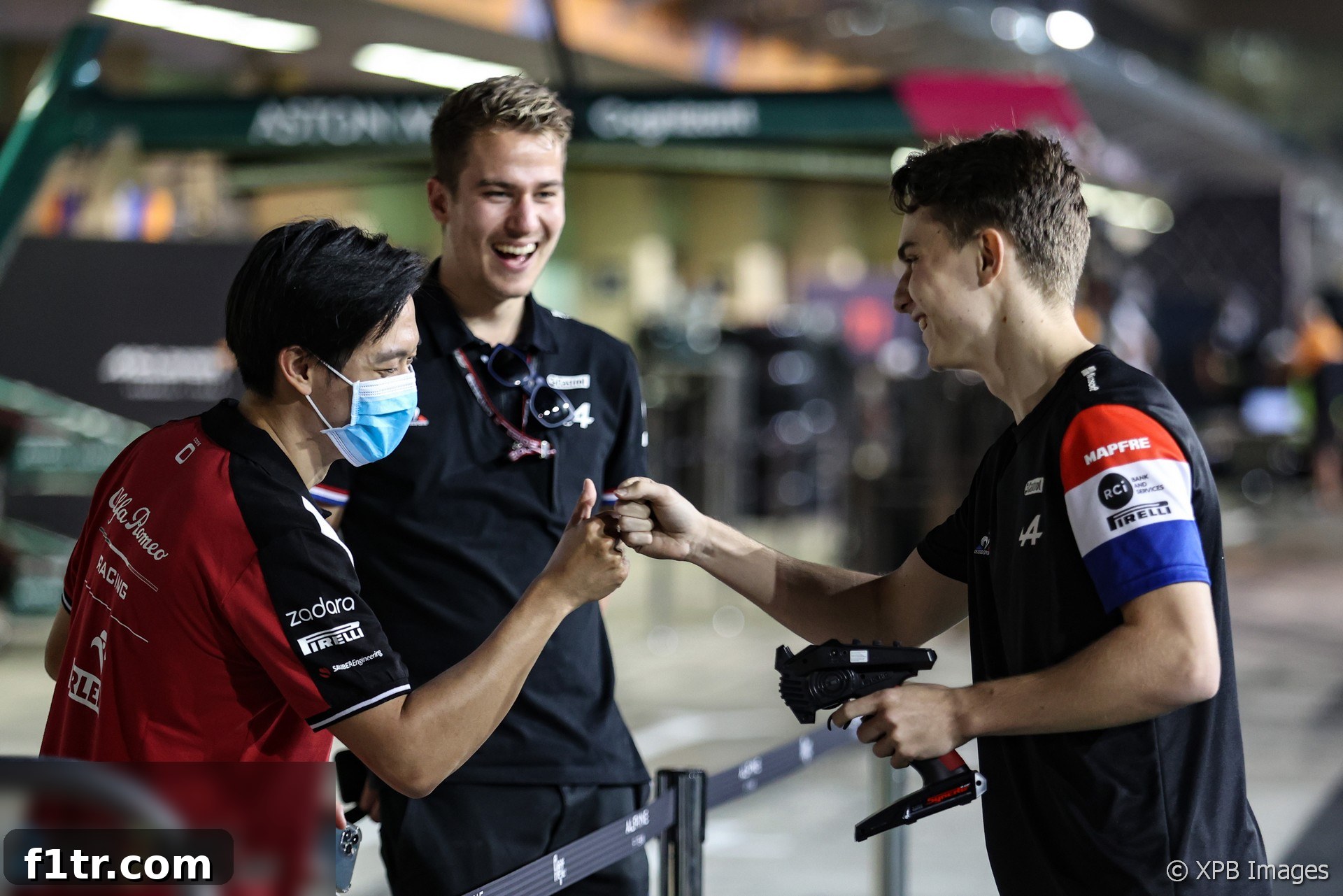
The contrast with his fellow Alpine junior, Guanyu Zhou, provides a crucial insight into the complexities of F1 driver selection. Zhou, despite finishing third in the F2 standings – behind Piastri – had already secured a race seat with Alfa Romeo for the 2022 F1 season. This decision highlighted the diverging priorities between teams. Alfa Romeo, as part of the Stellantis automotive conglomerate, operates under distinct commercial pressures compared to the Renault Group, which owns the Alpine F1 team and its sportscar brand. Zhou’s appeal, particularly his marketability in the vast Chinese market, evidently outweighed his raw sporting results in this particular context. This scenario perfectly illustrates how modern Formula 1 demands more than just on-track performance; it requires a delicate balance of talent, financial backing, and strategic brand alignment.
Right Driver, Right Place, Wrong Time: The Unforeseen Challenges
Oscar Piastri’s journey began with immense promise. After triumphing in the 2019 Eurocup, he joined what was then the Renault Sport Academy, a critical step that also provided him with much-needed financial backing to compete. Simultaneously, he secured a coveted spot in Prema’s F3 line-up for the 2020 season, a team renowned for developing champions. During a pivotal trip to the UK to finalize his Renault agreement, he also signed with the management company led by his compatriot and former F1 star, Mark Webber. Webber’s mentorship, deep industry connections, and experience at the highest level of motorsport were anticipated to be invaluable assets in navigating the intricate world of Formula 1.
Piastri’s initial integration into the Renault factory team was followed by F3 pre-season testing in Bahrain, a return to boarding school in the UK, and then a crucial period back home in Australia, where he was embedded with Renault for the season-opening Australian Grand Prix. This initial phase was designed to integrate him fully into the F1 ecosystem and provide him with an unparalleled learning experience. However, the unexpected arrival of the Covid-19 pandemic abruptly altered these carefully laid plans, throwing a significant wrench into his meticulously planned career trajectory.
The global health crisis brought racing to a grinding halt, with a lengthy factory shutdown period and severe international travel restrictions. Being stranded on the other side of the globe, far from the European motorsport hub, undeniably worked against Piastri. This enforced separation from the team and the heart of the racing world meant missing out on critical opportunities for acclimatization, simulator work, and networking – elements that are often instrumental for junior drivers aiming for Formula 1. The delay in returning to Europe created a substantial setback in his rhythm and vital direct engagement with the team.
Eventually, Piastri managed to return to Europe, settling into a flat with a fellow Renault junior. While he missed a team training camp in Tenerife where other Alpine juniors were quarantined, the presence of key Alpine personnel at the camp did, at least, foster stronger bonds among some members of the academy. However, the broader implications of the pandemic on his progression were far more significant. When the F3 season eventually commenced, the paddocks were subject to stringent segmentation protocols designed to curb the spread of Covid-19. This crucial measure, while necessary for public health, inadvertently created a substantial barrier between the junior series drivers and the F1 fraternity. The casual mingling, informal introductions, and opportunities to make new connections – which are often vital for young drivers to impress team principals and key personnel – were severely curtailed. This situation disproportionately benefited drivers who already had substantial financial backing or established relationships, such as Guanyu Zhou, and prevented aspiring talents like Piastri from shadowing F1 teams or gaining valuable insights by observing garage operations. The chance for a driver to impress simply through their presence and keen observation, a subtle but effective way to make a strong impression, largely passed Piastri by.
Changing Times for Renault and Alpine: A Shifting Landscape
Despite these unprecedented challenges, Piastri remained focused on his rookie F3 campaign, ultimately clinching the title. While a championship win is always impressive, in terms of sheer dominance, his F3 season wasn’t overwhelmingly spectacular. He never qualified higher than third, and in the second half of the season, he was only the fifth-highest points scorer. By his own candid admission, his two consecutive titles in F3 and Formula Renault were, in part, sealed thanks to “a mistake from my rival” in the penultimate rounds, highlighting the razor-thin margins and strategic aspects of junior formula racing rather than overwhelming pace in every single session. Nevertheless, securing two titles back-to-back showcased a remarkable ability to manage championships and perform consistently under pressure – a true mark of a future F1 driver.
While Piastri faced limited access to the F1 paddock, his manager Mark Webber, leveraging his broadcasting role with Channel 4’s free-to-air coverage in the UK, maintained a crucial presence. According to Piastri, Webber’s “most important work” during this period was tirelessly securing the necessary budget for a competitive Formula 2 seat for 2021. This was achieved before the year’s end, a testament to Webber’s influence and dedication. However, even Webber’s considerable clout was constrained by the ongoing restrictions in the F1 paddock, limiting his ability to actively promote his protégé as effectively as he would have liked, thus hindering crucial face-to-face interactions that often seal deals in F1.
The winter break brought significant internal restructuring for Renault. The decision to rebrand its F1 team to Alpine heralded a substantial shift in the power dynamics both within the team and across the broader Renault Group. The newly christened Alpine Academy found itself pulled in two different strategic directions. On one side, Director Mia Sharizman championed the traditional ideal of the academy as a pure talent incubator, focused on creating future F1 drivers based on merit and sporting achievement. On the other, Alpine’s chief executive officer, Laurent Rossi, was increasingly steering the ship towards commercially-led preferences, emphasizing brand value, marketability, and strategic partnerships over raw sporting achievement alone. This corporate strategic shift would have profound implications for driver development and selection within the academy, particularly for drivers like Piastri whose commercial appeal was still nascent compared to others.
Compounding these internal shifts, the Renault Group, which was rapidly orienting itself towards an electric vehicle (EV) future, faced considerable headwinds in the Australian market due to the lingering effects of the pandemic and other local challenges. Renault began withdrawing most models from sale in the nation, including the facelifted Zoe electric car. This model, intended to spearhead Renault’s EV push, had reportedly sold fewer than 70 units in the region over four years before it tragically became only the third vehicle in history to receive a zero-star Euro NCAP safety rating – a significant blow to the brand’s image and EV ambitions in Australia. The introduction of restrictive state taxes against electric vehicles in Australia further exacerbated the already challenging market conditions. Industry insiders down under expressed nervousness as Renault’s next generation of models – including one ironically named the ‘Austral’ – were yet to be confirmed for the Australian market. Falling demand for new cars and severely disrupted supply chains during the pandemic made these kinds of long-term commitments harder to justify for Renault, leading to other, more lucrative global markets being prioritized. For Alpine and the Renault Group, promoting F1, a high-octane sport fueled by internal combustion engines, was increasingly at odds with their overarching corporate strategy of transitioning to zero-carbon electric mobility and reducing their carbon footprint. This conflict of interest inadvertently diminished the strategic value of an Australian F1 driver.
Piastri Plays the Waiting Game: A Paradox of Opportunity
Against this backdrop of corporate reorientation and market challenges, Piastri’s potential as a marketing tool throughout 2021 was inherently limited compared to Guanyu Zhou. The prospect of bringing China’s first-ever Formula 1 racer to the grid represented an unparalleled marketing coup for any team. The immense commercial and brand-building opportunities associated with tapping into the colossal Chinese market were openly acknowledged as a cornerstone of Alpine’s strategic plans during their team launch. This was a clear demonstration of how a driver’s nationality and market appeal can sometimes supersede pure sporting performance in F1’s complex ecosystem. When juxtaposed with Alpine’s existing marketing efforts – featuring current driver Esteban Ocon piloting an Alpine A110 sportscar on the Monte Carlo Rally amid snow-filled posters – it became clear that Alpine was already firmly committed to a long-term brand image that emphasized specific national identities and market reach. Zhou provided a unique and powerful extension to this brand-building strategy.
One of Alpine’s initial hurdles at the start of 2021 was actually recalling Piastri back to Europe after he had visited Australia over the new year, a journey complicated by stringent travel restrictions. The intermittent internet connection in his quarantine location made it difficult for him to fulfill media commitments and engage in more pressing team work remotely. However, Piastri approached 2021 with a remarkably smart and strategic mindset. He chose to live near the Enstone factory and, from the outset, declared his intention to immerse himself fully, to get to know the F1 team intimately, and to become a popular and integral presence on the factory floor. This was an approach reminiscent of how Nico Hulkenberg had meticulously endeavored to prove his worth to Williams years earlier, focusing on building internal relationships and demonstrating commitment beyond the racetrack, hoping to make himself indispensable.
Despite this dedicated approach and the undeniable on-track success that followed in Formula 2, formulating a clear and immediate strategy for Piastri’s future did not initially appear to be a top priority for Alpine. Internal discussions reportedly indicated that Christian Lundgaard, another Alpine Academy driver, had been the highest performer among the three in the private F1 tests conducted by the Academy. However, the Dane ultimately opted for a move to IndyCar, further complicating Alpine’s talent pool management. When the crucial suggestion of loaning Piastri and Zhou to other F1 teams to gain invaluable experience was raised, it led to a significant and ultimately paralyzing disagreement higher up within the Alpine hierarchy.
Some influential figures within the team recognized the strategic benefit of such a move, understanding that real-world F1 experience, even with a competitor, would accelerate their junior drivers’ development. However, others involved held strong reservations, particularly concerning the prospect of an Alpine-backed driver competing in an F1 car that was not powered by a Renault engine. This specific point of contention – which Guanyu Zhou will now bypass by racing for Alfa Romeo, a Ferrari engine customer – caused agonizing delays. The internal indecision dragged on for so long that it effectively killed off any viable prospect of loaning their drivers out, despite very public comments from Alpine that this was an active and serious consideration in their overall plan to transition their most promising juniors into Formula 1. This internal friction showcased a clear misalignment between the team’s driver development ambitions and its commercial or brand protection imperatives, ultimately hindering Piastri’s progression.
Ultimately, the only viable card Alpine had left to play for Piastri was to promote him to the status of reserve driver for the 2022 season. Critically, this opening only materialized once Guanyu Zhou had finalized his exit for Alfa Romeo. This creates a fascinating paradox: of all the myriad factors that determined Piastri’s path to the F1 sidelines, it was actually Zhou’s move into a coveted grand prix race seat that, indirectly, enabled the reigning Formula 2 champion to get one step closer to his ultimate goal, rather than denying him a direct route into the world championship. It was not a direct promotion based solely on merit, but rather a strategic realignment triggered by another driver’s departure. This outcome underscores the complex interplay of sporting achievement, commercial imperatives, and sheer timing that defines the modern Formula 1 landscape, where even the most exceptional talent like Oscar Piastri must navigate a labyrinthine path to reach the top, often relying on a confluence of external circumstances beyond their control.
2021 F1 Season Articles
- Masi ‘basically gifted the championship’ to Verstappen says 2021 FIA steward Sullivan
- Las Vegas race backers looking to extend F1 deal beyond 2025
- Why Mercedes put ‘a reminder of joy and pain’ on display in their factory lobby
- Verdict on error in GT race suggests Mercedes would have lost 2021 Abu Dhabi GP appeal
- Title ‘stolen’ from Mercedes made us ‘underdogs people cheer for’ – Wolff
Browse all 2021 F1 season articles