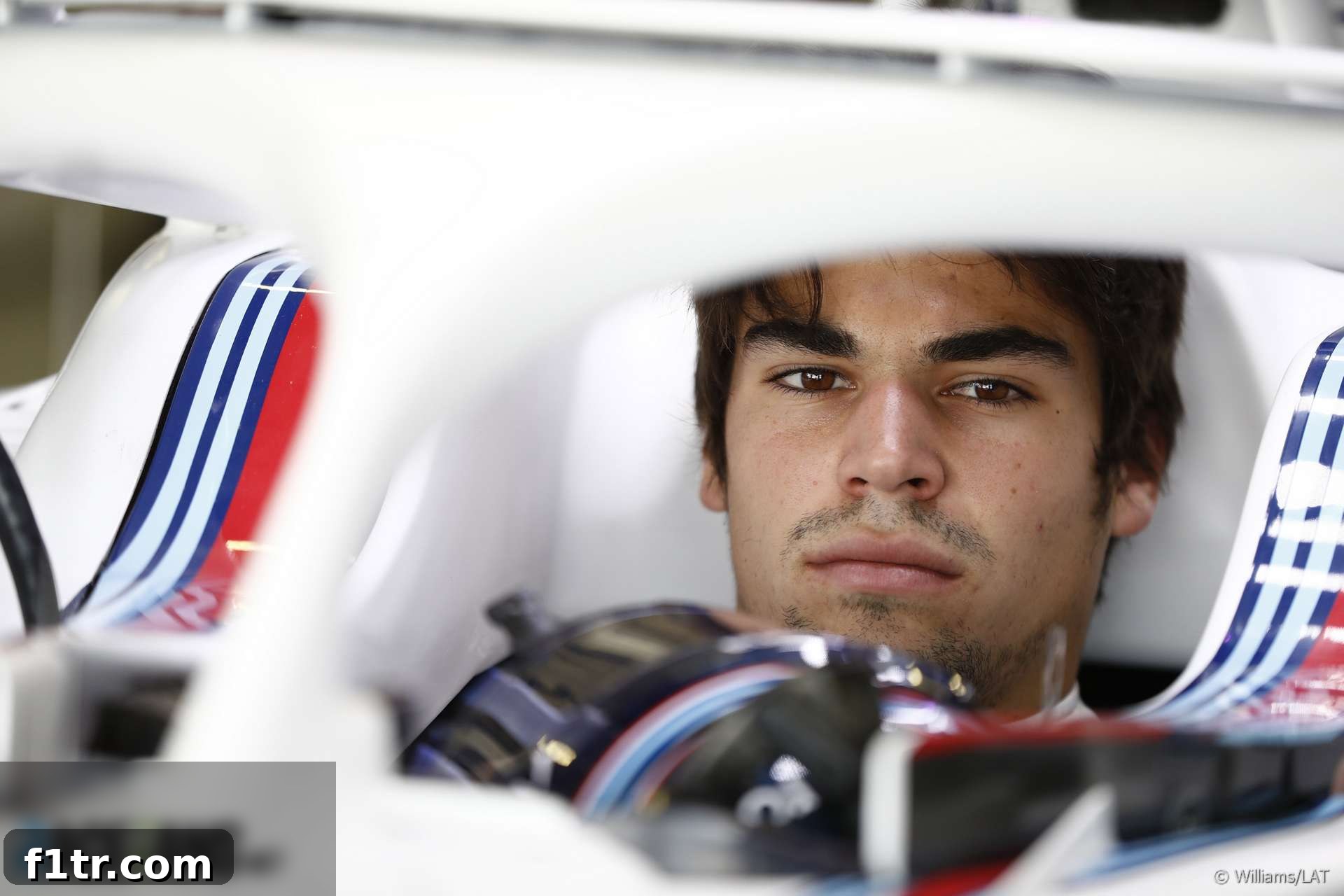
Lance Stroll, a prominent figure in the Formula 1 paddock, did not mince words when reflecting on his experience with the Williams Racing team during the 2018 season. In a candid interview, Stroll described the team’s FW41 car as “terrible” and expressed profound frustration over what he perceived as a complete lack of progress and development since the season’s opening race in Australia. His remarks cast a stark light on the significant challenges faced by the once-dominant British outfit in a highly competitive era of Formula 1.
A Season Riddled with Performance Deficiencies
When asked to provide his season’s overview in Brazil, Stroll’s tone was one of disappointment mixed with a pragmatic acceptance of the harsh realities. He acknowledged the few races where he managed to score points, noting, “The couple of races I scored points were good. But I really had to work for it.” This statement underscores the immense effort required from the young Canadian driver to extract any semblance of performance from a car widely regarded as one of the least competitive on the grid. The struggle wasn’t just about pace; it was about handling, balance, and the sheer unpredictability of the Williams FW41.
Stroll elaborated on the car’s fundamental flaws, stating, “Generally the car hasn’t been there, it’s been terrible to drive. The performance just has been awful. That’s been frustrating but that’s how it is. I’ve digested it.” Such strong language from a driver highlights the deep-seated issues within the car’s design and aerodynamic package. For a Formula 1 driver, a “terrible” car often translates to a lack of confidence, inconsistent feedback through the steering wheel, and an inability to push the limits without risking significant incidents. This constant battle with the machinery inevitably takes a toll on a driver’s morale and focus throughout a demanding championship season.
The stark reality of Williams’ 2018 campaign was further emphasized by the significant drop in Stroll’s personal points tally. After securing a respectable 40 points in his debut 2017 season, his 2018 score plummeted to a mere six points. This dramatic decline was not a reflection of Stroll’s individual talent but rather a clear indicator of the FW41’s severe performance deficit compared to its predecessor and the escalating competitiveness of the mid-field teams. The gap to the front-runners seemed to widen with each passing Grand Prix, leaving Williams in an unenviable position at the back of the grid.
Personal Growth Amidst Unprecedented Challenges
Despite the overwhelming difficulties presented by the underperforming FW41, Stroll expressed confidence in his own development as a driver. He firmly believes that his second full season in Formula 1 saw him mature significantly, honing his skills and approach to racing under immense pressure. “If I take the car out of the equation I believe I’ve improved well as a driver and I’ve matured a lot,” Stroll asserted. This ability to separate personal performance from the car’s capabilities is a hallmark of experienced drivers, demonstrating resilience and a clear understanding of one’s own strengths and weaknesses.
Stroll pointed to specific moments that underscored his progress, notably his qualifying performances. “I’ve had a few good qualifyings where I’ve managed to get the car into Q2 and Q3 in Monza which is a big deal for us as a team, even though the position’s far from ideal.” Qualifying for the second or even third session in a car that lacked fundamental pace against its rivals is a testament to a driver’s ability to extract the absolute maximum. Monza, with its high-speed characteristics, often exposes aerodynamic inefficiencies, making Stroll’s achievement there particularly noteworthy for the Williams team. These flashes of potential, even in a struggling car, provided glimmers of hope and reinforced Stroll’s belief in his own evolving skillset.
Beyond raw speed, operating within a difficult team environment and consistently battling at the rear of the grid demands a unique kind of mental fortitude. Stroll’s comments reflect a driver who has learned to manage expectations, stay motivated despite setbacks, and maintain a professional outlook even when frustration is high. This period of adversity, though challenging, ultimately served as a crucible for Stroll’s character, preparing him for future challenges in his Formula 1 career. He concluded his self-assessment by stating, “And I’ve had a couple of good races scoring points. I believe that it’s still been a good year in that sense.”
The FW41’s Stagnation: A Cause for Deeper Concern
One of the most damning criticisms from Stroll revolved around the perceived stagnation of the FW41’s development throughout the season. Despite the team introducing a mid-season upgrade package at the Hockenheimring, which Williams’ chief technical officer, Paddy Lowe, optimistically described as a “big step” at the time, Stroll remained unconvinced. His perspective painted a starkly different picture: “Overall I expected much more from us as a team this year and from the car, we haven’t developed the car at all. We have the same car that we had in Australia which is a bit of a shame.”
This discrepancy between the team’s official pronouncements and the driver’s lived experience highlights a critical issue within Williams Racing during that period. In the cutthroat world of Formula 1, continuous and effective car development is paramount. Teams regularly introduce updated aerodynamic components, chassis improvements, and software enhancements to gain even marginal advantages. For a driver to feel they are competing with essentially the “same car” from the first race to the last implies a significant failure in the team’s development pipeline, resource allocation, or a fundamental flaw in the car’s initial design that proved unfixable.
The lack of tangible progress on the FW41 had cascading effects. It not only hampered the drivers’ ability to compete but also likely impacted team morale, investment, and future prospects. Without a clear path to improvement, the team risked falling further behind its rivals, making the prospect of climbing back up the grid an increasingly daunting task. Stroll’s candid assessment served as a loud alarm bell, drawing attention to a team in crisis, struggling to adapt and innovate in an ever-evolving sport.
Turning the Page: A New Chapter Ahead
As the 2018 season drew to a close, speculation about Lance Stroll’s future intensified. The 20-year-old, completing his second season with Williams, was widely anticipated to make a move to the then-named Force India team for the following year, replacing Esteban Ocon. While Stroll refrained from confirming his plans at the time, his desire to leave the challenging situation at Williams was clear. He explicitly stated he was “ready to wrap up” his difficult season, signaling his readiness for a change of scenery and a fresh start.
“It’s been a very challenging year with the car. It just hasn’t been performing at all. So I’m ready to turn the page and move on,” Stroll conveyed, articulating a common sentiment among drivers who find themselves in uncompetitive machinery. The opportunity to move to Force India, a team known for its efficient operation and ability to punch above its weight, presented a compelling prospect. This move was also underpinned by significant investment from Stroll’s father, Lawrence Stroll, who led a consortium to acquire Force India, creating a direct path for Lance into a potentially more competitive environment and offering the chance to re-establish his reputation as a formidable F1 talent.
The Broader Landscape: Williams F1’s Challenging Era
Lance Stroll’s comments about the FW41 were not isolated but rather indicative of a broader period of struggle for Williams Racing. The 2018 season marked a significant low point for the historically successful team, which had once boasted multiple constructor and driver championships. The challenges extended beyond technical issues to include financial constraints, leadership transitions, and a struggle to adapt to modern Formula 1’s highly specialized demands. The lack of car development, as highlighted by Stroll, was a symptom of these deeper systemic issues that plagued the Grove-based squad.
The team’s inability to provide its drivers with a competitive car not only affected individual performances but also raised significant questions about the future trajectory of Williams in Formula 1. Restoring a team of its stature to competitiveness requires not only substantial financial investment but also a clear technical vision, a stable management structure, and the ability to attract and retain top talent. Stroll’s departure, though understandable from a career perspective, underscored the urgent need for Williams to address its fundamental problems and embark on a path towards recovery to reclaim its former glory.
Conclusion: A Character-Building Season and Future Prospects
Lance Stroll’s 2018 Formula 1 season with Williams Racing was undoubtedly one of immense challenge and frustration, dominated by the underperforming FW41. His candid assessment of the car as “terrible” and the team’s perceived lack of development resonated deeply within the motorsport community, highlighting the profound difficulties faced by both driver and team. Despite the car’s deficiencies, Stroll’s unwavering belief in his personal growth and maturity as a driver, evidenced by strong qualifying performances in difficult circumstances, speaks volumes about his resilience and determination.
While the Williams chapter concluded on a challenging note for Stroll, the experience undoubtedly forged a tougher, more adaptable competitor. The anticipation of his move to Force India symbolized a desire for a fresh start and a more competitive platform to showcase his true potential in Formula 1. For Williams, Stroll’s insights served as a critical, albeit painful, reminder of the urgent need for fundamental change and a renewed focus on performance to climb back up the grid. The 2018 season ultimately became a pivotal, character-building year for Lance Stroll, setting the stage for the next phase of his exciting Formula 1 career.
2018 F1 season
- F1 feared “death knell” for Drive to Survive after Ferrari and Mercedes snub
- McLaren staff told us we were “totally crazy” to take Honda engines in 2018 – Tost
- ‘It doesn’t matter if we start last’: How Red Bull’s junior team aided Honda’s leap forward
- Honda’s jet division helped F1 engineers solve power unit problem
- McLaren Racing losses rise after Honda split
Browse all 2018 F1 season articles