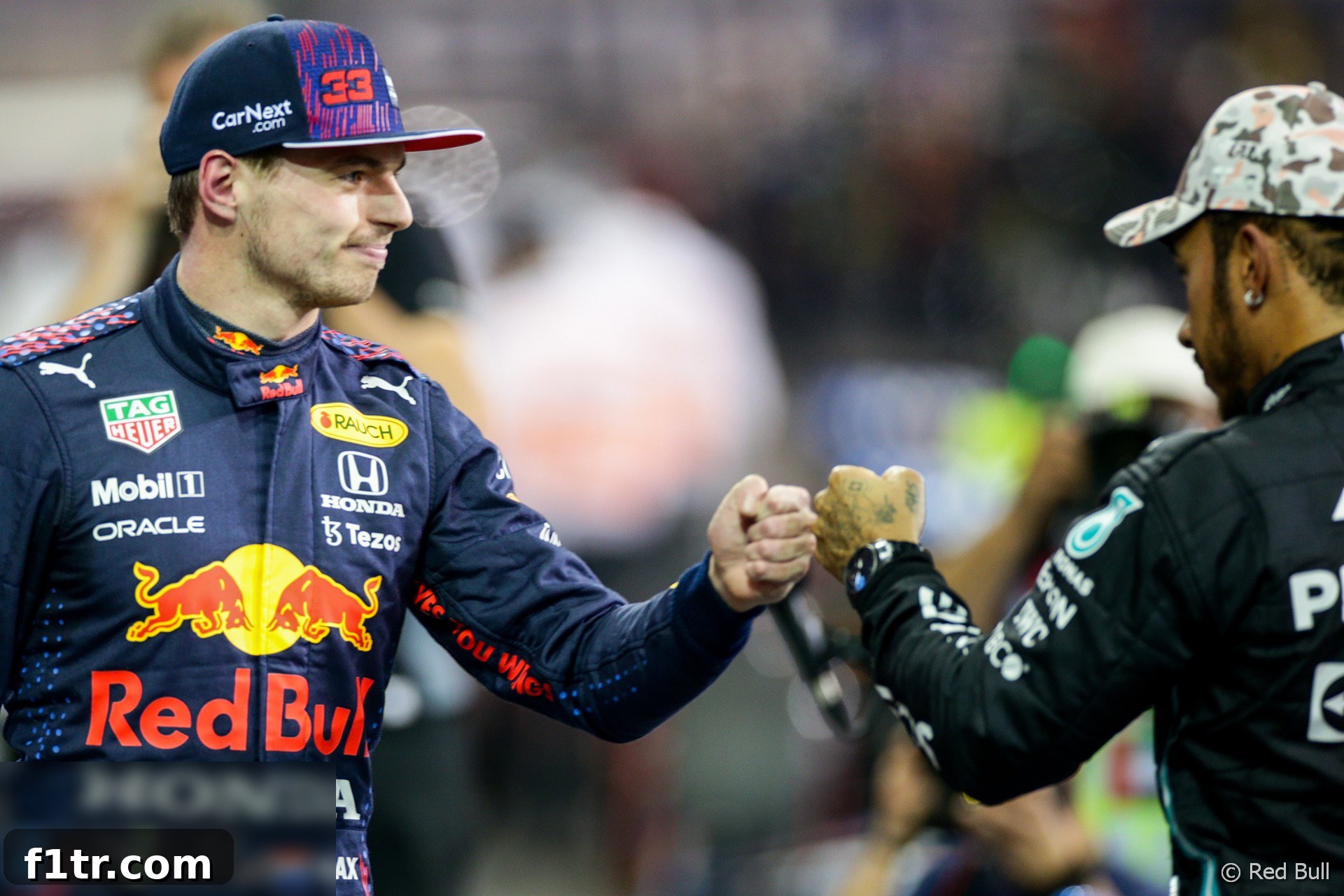
In the high-octane world of Formula 1, few rivalries have captivated audiences quite like the intense dynamic between Max Verstappen and Lewis Hamilton. Their clashes on track, which defined the unforgettable 2021 season, raised a pivotal question: were these two titans locked in a bitter personal feud, or were they consummate professionals pushing each other to unparalleled limits, all while maintaining an underlying mutual respect? This compelling narrative, brimming with raw emotion, strategic brilliance, and controversial moments, became the defining story of modern F1, drawing comparisons to legendary duels of the past and cementing its place in motorsport history.
The 2021 Formula 1 World Championship was not merely a series of races; it was an epic saga, unfolding lap by lap, pushing both drivers and their respective teams, Red Bull Racing and Mercedes-AMG Petronas, to the absolute brink. Each race became a battleground, not just for points, but for psychological advantage, reputation, and ultimately, the coveted world title. For Max Verstappen, this season represented the culmination of years of promise, a chance to finally seize his maiden championship and validate the immense talent he had showcased since his teenage debut. For Lewis Hamilton, an already seven-time world champion, it was an opportunity to rewrite the record books, claiming an unprecedented eighth title and further solidifying his status as the greatest of all time. The stakes could not have been higher, fueling a rivalry that transcended mere competition, evolving into a cultural phenomenon that resonated with fans globally.
McLaren CEO Zak Brown, a figure known for his deep passion and extensive knowledge of the sport, weighed in on the palpable tension. With an enviable collection of historic racing cars, Brown’s insights often cut to the core of F1’s competitive spirit. He firmly believed that the animosity between the title contenders was unequivocally real, a sentiment that echoed widely within the paddock and among observers. “I don’t remember venom between two drivers and teams like this since the [days] of Senna and Prost,” Brown remarked, invoking the ghosts of one of F1’s most infamous and dramatic rivalries. The collision-laden showdowns between Ayrton Senna and Alain Prost in 1989 and 1990 at Suzuka, Japan, remain etched in F1 folklore as a benchmark for intense, often acrimonious, championship battles. Brown’s comparison instantly elevated the 2021 season to a similar legendary, if controversial, status, suggesting a deep-seated antagonism that ran through the very fabric of both teams.
Yet, amidst the swirling speculation of enmity, a different narrative emerged from the drivers themselves. Following the crucial qualifying session that determined the starting grid for the final, winner-takes-all title decider, both Verstappen and Hamilton offered surprisingly appreciative remarks about each other and the thrilling championship contest they had collectively crafted. It was a moment of calm reflection, a pause in the storm of competition, revealing a layer of professional respect beneath the fierce combativeness. This duality – intense rivalry juxtaposed with mutual admiration – became a hallmark of their dynamic, complicating the simple “grudge match” narrative that often dominated media headlines.
Verstappen, reflecting on the season, articulated the immense challenge and growth brought forth by his rival. “Lewis has won already so many championships,” he acknowledged, placing Hamilton’s achievements into perspective. “But also, this year I think we have been pushing each other, certainly in some races… to the limit.” He elaborated on the relentless pursuit of perfection that defined their season: “We’ve been really basically trying to get everything out of our cars, tyres, to the last lap, to the last corner.” This sentiment highlighted the sheer dedication and technical mastery required to compete at such an elite level, suggesting that the pressure from his rival had inadvertently elevated his own performance. He emphasized the unique thrill of this specific battle: “And that’s very exciting – especially when it’s between two teams as well because when it’s team mates it’s always a bit different from when there are two teams fighting. So it has been really enjoyable for most of the time.” This insight underscored the broader team-versus-team narrative, adding another layer of complexity and excitement to the championship.
Hamilton wholeheartedly echoed Verstappen’s sentiments, expressing gratitude for the high-level competition. “It’s been an incredible year, an amazing battle, and I’m grateful to have had such a close battle with Max and his team.” As a seven-time champion, Hamilton was no stranger to pressure, but this season marked his first final-round decider in five years, following a period of dominance where he had secured every title since 2017. He acknowledged the formidable challenge posed by his opponents: “They’ve done an exceptional job and shown true strength. So it’s pushed us to the limit and in ways that we needed. We, I think, have grown stronger as a team in ways we didn’t know we could grow.” This admission from a driver of Hamilton’s stature spoke volumes about the intensity of the fight and the transformative impact it had on Mercedes, forcing them to innovate and improve even further.
Undeniably, both Verstappen and Hamilton possess an almost ruthless competitive streak, a non-negotiable trait for any elite driver competing at the pinnacle of motorsport. This innate aggression manifested itself in several high-profile wheel-to-wheel skirmishes throughout the 2021 season, which captivated and sometimes infuriated fans. Early clashes in Bahrain, Imola, and Spain provided a taste of the fierce competition to come. These initial encounters escalated into more contentious episodes at Silverstone, Monza, Interlagos, and most memorably, the chaotic and drama-filled Jeddah Grand Prix just a week before the finale. Each incident added fuel to the fire, stoking public debate and intensifying the rivalry, making every subsequent race a must-watch event. These flashpoints were not mere racing incidents; they were pivotal moments that shaped the championship narrative, highlighting the unwavering determination of both drivers to yield not an inch.
Beyond the drivers themselves, the competitive heat was continuously amplified by the outspoken team principals, Toto Wolff of Mercedes and Christian Horner of Red Bull. Their verbal sparring matches and strategic mind games became an almost integral part of the show, mirroring the intensity on track. Zak Brown astutely observed that these two influential figures “definitely have a true dislike for each other,” a sentiment that often spilled over into public comments and press conferences. Their rivalry, fueled by pride, ambition, and fierce corporate competition, undoubtedly contributed to the overall atmosphere of animosity surrounding the championship. Yet, in a rare moment of pre-race protocol and perhaps a glimmer of sportsmanship, Wolff and Horner managed a civil handshake on Friday, a gesture that, while symbolic, perhaps belied the true depth of their professional antagonism.
The rivalry’s momentum was further amplified by forces extending far beyond the F1 paddock. Social media, with its partisan and increasingly tribalistic fan bases, became a vibrant, often volatile, forum for debate, praise, and criticism. Traditional media, including broadcasters and journalists, also played a significant role, often hyping the rivalry and framing it in sensational terms to attract wider audiences. At times, this relentless external amplification threatened to overshadow the genuine sporting contest, risking the perception of what many had hailed as a dream championship showdown. This was the clash F1 aficionados had long awaited, ever since Verstappen’s meteoric rise with Red Bull coincided with Hamilton’s sustained dominance with Mercedes. The yearning for a true, season-long battle between two generational talents was finally being fulfilled, even if the external noise occasionally veered into unhelpful territory.
Hamilton himself had openly expressed his desire for such a profound challenge throughout his career. While Sebastian Vettel, particularly during his Ferrari years, came close on occasions, he could never quite sustain a full championship assault against Hamilton at the height of his powers, eventually leading to a decline in their on-track dynamic. The 2021 season, therefore, provided Hamilton with the kind of sustained, relentless pressure that truly tested his mettle and pushed him to rediscover new facets of his driving and leadership. Despite the acrimony and controversy that often marred the later races, Hamilton clearly appreciated the intense fight he received from Verstappen. “It’s been amazing. I hope that we have many more seasons like this,” remarked the driver who, at that moment, stood on the precipice of becoming the sport’s only eight-time world champion, a testament to his enduring competitive spirit and love for the sport.
For Max Verstappen, the 2021 season was more than just a championship; it was the opportunity to definitively validate the extraordinary potential observers had seen in him since his formative years as a teenage racing prodigy. His journey to the pinnacle of Formula 1 had been eagerly watched, and this was his chance to make history by becoming the first Dutch driver ever to claim a Formula 1 world title. It was a moment of destiny, the culmination of relentless hard work, sacrifice, and an unwavering belief in his own abilities. The pressure was immense, but so was the opportunity to etch his name into the annals of motorsport forever.
The significance of their shared experience was not lost on Verstappen. Reflecting on the profound impact of their rivalry, he spoke of its enduring legacy. “In probably 10, 20 years time, people will look back at it,” he mused. And then, turning directly to his rival, he added, “And even myself – and you, will remember this year, for sure.” This poignant interaction, delivered within the controlled environment of a press conference, served as a powerful reminder of the deep, indelible mark their battle would leave on their careers and on the sport itself. Despite all the external narratives of “venom,” it was clear that in that moment, any lingering animosity between Hamilton and Verstappen, if it truly existed, had at least temporarily given way to a shared recognition of the historic sporting spectacle they had created. Their rivalry, whether characterized by animosity or respect, undoubtedly forged one of Formula 1’s most compelling and unforgettable chapters.
Quotes: Dieter Rencken
2021 Abu Dhabi Grand Prix
- Masi ‘basically gifted the championship’ to Verstappen says 2021 FIA steward Sullivan
- Norris called out F1 over its farcical 2021 finale. Will it get it right this time?
- Why Mercedes put ‘a reminder of joy and pain’ on display in their factory lobby
- Hamilton would be an eight-time champion if Whiting was still alive – Steiner
- Verdict on error in GT race suggests Mercedes would have lost 2021 Abu Dhabi GP appeal
Browse all 2021 Abu Dhabi Grand Prix articles