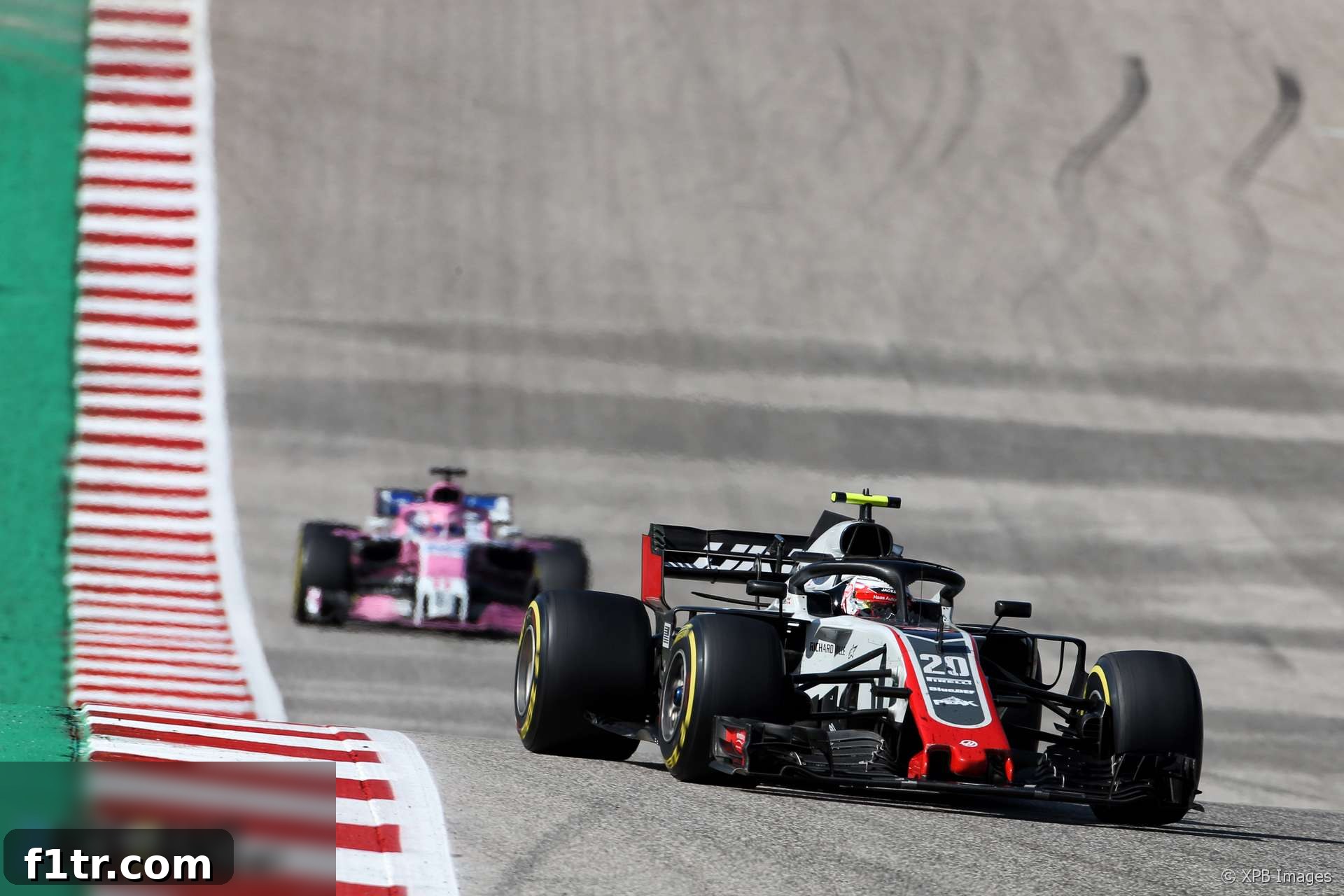
In a dramatic turn of events following the United States Grand Prix, Haas driver Kevin Magnussen was officially disqualified from the race results. The decision, delivered by the FIA stewards, stemmed from a critical fuel consumption infringement that saw the Danish driver exceed the maximum allowable limit during the Grand Prix. This ruling nullified his ninth-place finish and had immediate repercussions for the constructor and the drivers’ championship standings.
Advert | Become a Supporter & go ad-free
The investigation into Magnussen’s car revealed that the VF-18 had consumed more than the regulated 105kg of fuel over the course of the race. This critical limit is enforced by the FIA to ensure fair competition, promote fuel efficiency, and prevent teams from gaining an unfair performance advantage through excessive fuel burn. After a thorough hearing with the Haas team representatives, the stewards concluded that a breach had occurred. FIA Race Director Charlie Whiting specifically highlighted that the over-consumption was detected on the final lap, a detail that underscores the razor-thin margins and strict enforcement of Formula 1 technical regulations.
This disqualification wasn’t an isolated incident at the US Grand Prix. In a parallel investigation, Force India driver Esteban Ocon also faced the same fate, receiving a disqualification for a similar fuel infringement. While the specific details of Ocon’s breach were not immediately released alongside Magnussen’s, the double disqualification sent shockwaves through the paddock and significantly altered the final classification of the race. For both Haas and Force India, losing potential points at this late stage of the season was a considerable blow.
The immediate consequence of these disqualifications was a reshuffling of the points-paying positions. Sergio Perez, Ocon’s teammate at Force India, moved up to eighth place, gaining valuable points for his team. Brendon Hartley of Toro Rosso inherited ninth position, a welcome boost for the young driver and his constructor. Finally, Marcus Ericsson, driving for Sauber, was promoted to tenth, securing a crucial point for his team. These changes, while seemingly minor in isolation, can have significant implications for the constructors’ championship, where every point counts in the intense battle for prize money and prestige.
Haas F1 Team, like any competitor in Formula 1, retains the right to appeal the stewards’ decision. An appeal would involve presenting their case to the FIA’s International Court of Appeal, a process that can be lengthy and complex. Teams typically pursue appeals when they believe there has been a misinterpretation of the rules, an error in data collection, or a procedural irregularity. The outcome of such an appeal could potentially reinstate Magnussen’s points, though successful appeals for technical infringements are historically challenging. The team will undoubtedly be analyzing all available data and regulations to determine their best course of action.
This incident marks the second time in the 2018 F1 season that a Haas driver has been disqualified from a race result. Earlier in the year, Romain Grosjean was famously disqualified from the Italian Grand Prix after his car’s floor was found to violate technical regulations. That particular infringement concerned the legality of the floor’s radius, a detail considered critical for aerodynamic performance. Haas has already lodged an appeal against Grosjean’s Italian GP disqualification, with the hearing scheduled for November 1st. The recurrence of such issues for Haas raises questions about their internal compliance processes and highlights the immense pressure teams face to push the boundaries of performance while remaining strictly within the complex rulebook. Two disqualifications for technical breaches in a single season is an unusual and concerning pattern for any Formula 1 team, regardless of the severity of the specific infringements.
The FIA’s strict enforcement of technical regulations, particularly those concerning fuel consumption, underscores the fundamental principles of fair competition in Formula 1. The 105kg fuel limit per race was introduced as part of broader efforts to promote efficiency, reduce environmental impact, and prevent teams from simply engineering raw power without considering strategic fuel management. Teams must meticulously manage their fuel consumption throughout the Grand Prix, balancing performance with strict adherence to the regulations. This often involves complex algorithms and real-time adjustments during the race to ensure the car finishes within the limits. An infringement, even if minor, is treated with utmost seriousness as it can imply a performance advantage.
The implications for both Haas and Force India extend beyond just the loss of points. Such disqualifications can affect team morale, tarnish their reputation, and potentially influence future sponsorship deals. For Haas, in particular, the dual disqualifications for Grosjean and Magnussen in the same season present a challenging narrative. It puts the spotlight on their technical department and forces a rigorous review of their car design and operational procedures to prevent future breaches. In a sport where millions of dollars are at stake and reputations are built on precision and compliance, these incidents serve as stark reminders of the unforgiving nature of Formula 1 regulations. The racing world will now eagerly await the outcome of any potential appeals, as these decisions could further shape the final standings of the fiercely contested 2018 Formula 1 season.
Don’t miss anything new from RaceFans
Stay connected with the latest updates, news, and insights from the world of Formula 1 by following RaceFans on social media:
- Join RaceFans on Facebook for exclusive content and discussions
- Follow RaceFans on Twitter for real-time updates and breaking news
- Subscribe to get daily email updates directly from RaceFans, ensuring you never miss a moment
Advert | Become a RaceFans supporter andgo ad-freefor an uninterrupted browsing experience
Explore More: The 2018 F1 Season
Delve deeper into the memorable moments and critical developments of the 2018 Formula 1 season. From thrilling races to pivotal rule changes and team dynamics, revisit the stories that defined this exciting year in motorsports:
- F1 feared “death knell” for Drive to Survive after Ferrari and Mercedes snub
- McLaren staff told us we were “totally crazy” to take Honda engines in 2018 – Tost
- ‘It doesn’t matter if we start last’: How Red Bull’s junior team aided Honda’s leap forward
- Honda’s jet division helped F1 engineers solve power unit problem
- McLaren Racing losses rise after Honda split
Browse all 2018 F1 season articles for comprehensive coverage and analysis.