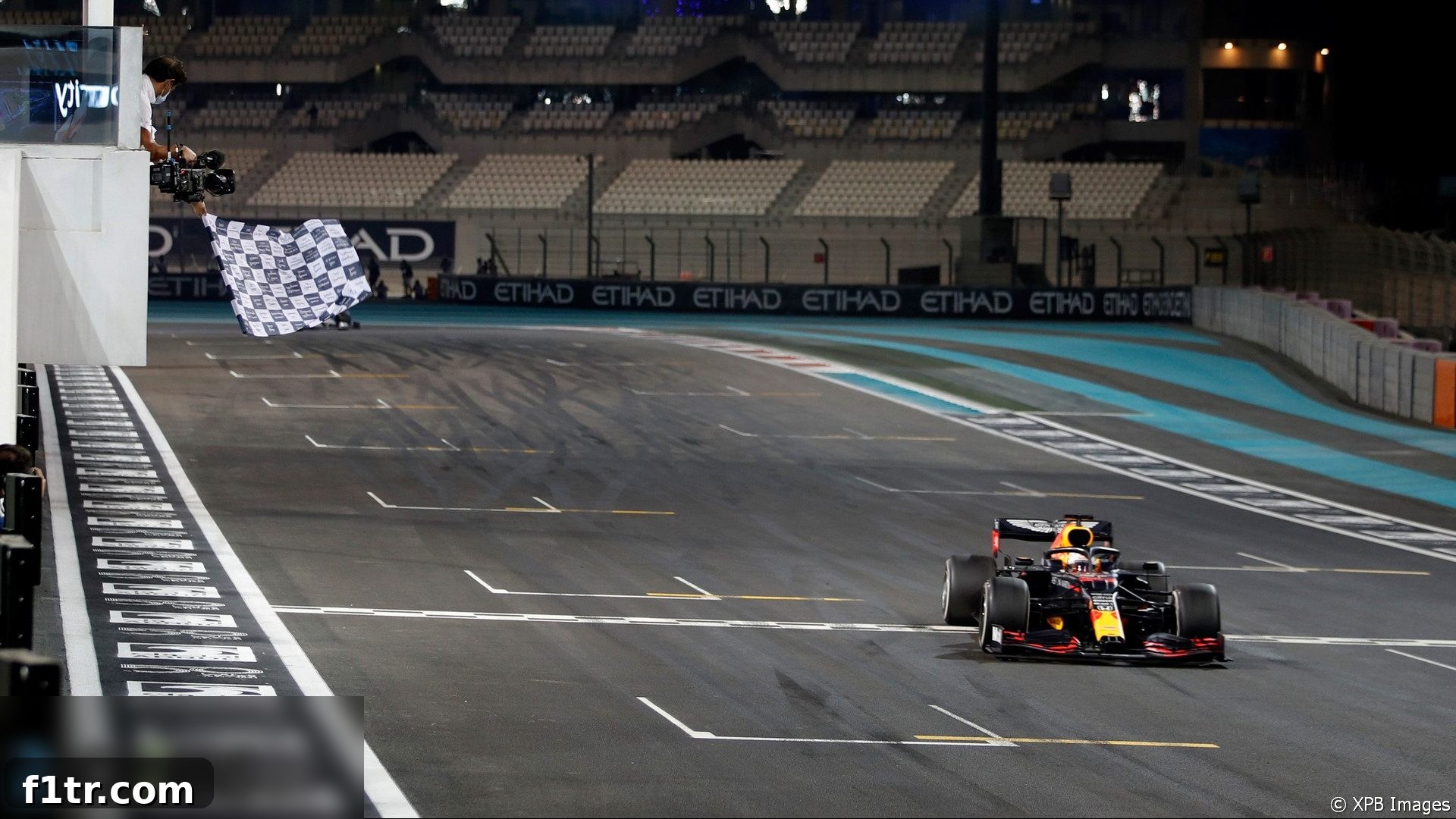
The exhilarating conclusion to a challenging Formula 1 season delivered unexpected twists and brilliant performances, solidifying the reputations of two rising stars. The 2020 Abu Dhabi Grand Prix saw Max Verstappen and Lando Norris emerge as RaceFans’ standout performers, showcasing their exceptional talent and strategic prowess on the Yas Marina circuit. This comprehensive review delves into their stellar drives, highlights those who struggled, and examines the dynamics across the grid in the season’s final showdown.
Stars of Yas Marina: Unforgettable Performances
The Yas Marina circuit, often criticized for its limited overtaking opportunities, nevertheless provided a compelling backdrop for drivers to demonstrate their skill, particularly those who managed to extract maximum performance from their machines. Max Verstappen delivered a flawless weekend, while Lando Norris cemented his status as a formidable midfield leader.
Max Verstappen: Dominance from Pole to Flag
Throughout the 2020 Formula 1 season, Red Bull Racing incrementally closed the performance gap to the dominant Mercedes-AMG Petronas team. In the climactic race of the year, with Mercedes facing uncharacteristic challenges, Max Verstappen seized the moment with absolute conviction. His qualifying lap was a masterpiece, where he snatched pole position by a mere two-hundredths of a second, an astonishing feat that set the tone for the entire weekend and signaled Red Bull’s clear intent to challenge for victory.
Verstappen’s pre-race strategy looked complex, as he faced the formidable task of fending off two Mercedes cars, typically masters of race management and strategic options. However, an early Safety Car intervention dramatically simplified the tactical landscape. This crucial moment effectively reset the playing field, bringing all competitors onto a similar tyre strategy and neutralizing Mercedes’ potential two-on-one advantage. Despite intermittent concerns over tyre vibrations, a challenge his engineers diligently monitored, Verstappen demonstrated remarkable composure and pace. He consistently extended his lead, demonstrating not only raw speed but also impeccable tyre management. He crossed the finish line with a commanding 15-second lead over Valtteri Bottas, a testament to his sheer dominance and the optimal performance Red Bull achieved on this particular weekend. This victory was a powerful statement, marking a high point for Verstappen and his team as they looked forward to future seasons.
Lando Norris: Best of the Rest, Again
While his McLaren teammate, Carlos Sainz, opted for a different tyre compound in Q2, Lando Norris executed a phenomenal qualifying session. He notably chose to push hard in Q3, delivering a superb lap that secured him an impressive fourth place on the starting grid. This achievement was particularly noteworthy as he managed to outpace Alexander Albon’s Red Bull, a car generally considered superior in raw performance. This strong showing underscored Norris’s consistent ability to maximize the potential of his McLaren MCL35.
In the race, Norris displayed a mature and pragmatic approach. Recognizing the inherent pace advantage of the Red Bull, he wisely chose not to engage in a futile battle to keep Albon behind, thus preserving his tyres for later stages of the race. This calculated decision prevented unnecessary tyre wear and ensured he could maintain a strong pace throughout his stints. He exhibited similar strategic patience following the Safety Car period, when Daniel Ricciardo momentarily appeared ahead of him due to pit stop timings. However, Norris calmly regained his rightful position once the Renault pitted, resuming his role as the leader of the midfield pack. His ability to consistently perform as the ‘best of the rest’ was a recurring theme throughout the 2020 season, significantly contributing to McLaren’s intense battle for third place in the Constructors’ Championship. His drive in Abu Dhabi was a perfect encapsulation of his growth as a driver, combining outright speed with intelligent race craft.
Strugglers: Unfulfilled Potential and Missed Opportunities
For some drivers and teams, the Abu Dhabi Grand Prix proved to be a weekend fraught with challenges, where strategic errors or technical difficulties conspired against their best intentions. The demanding nature of Formula 1 means that even slight missteps can lead to significant drops in performance and crucial championship points.
Lance Stroll: A Disappointing End to the Season
Racing Point entered the final race of the season embroiled in a fierce battle for third place in the Constructors’ Championship. While his teammate, Sergio Perez, suffered severe engine problems that effectively ended his race early, the team crucially needed Lance Stroll to step up and deliver a strong performance to secure those vital points. Unfortunately for Racing Point, Stroll’s race unravelled in a manner that deeply disappointed the team.
He restarted the race in tenth position after the early Safety Car, and with Ferrari drivers ahead needing to pit, there was a clear opportunity for him to gain valuable places. However, instead of advancing, Stroll lost ground. He was notably overtaken by the aggressive Pierre Gasly and, more critically, conceded a position to Esteban Ocon on the very final lap of the race. This late slip meant he finished in tenth place, a result that directly contributed to Racing Point losing out on the coveted third position in the constructors’ standings to McLaren. His performance in Abu Dhabi highlighted inconsistencies that had plagued parts of his season, ultimately costing his team significant rewards.
The Rest of the Grid: A Detailed Overview of Performance
Beyond the primary protagonists and those who faced significant setbacks, the Abu Dhabi Grand Prix offered a spectrum of performances across the grid. From the uncharacteristic struggles of a championship-winning team to the determined efforts of drivers fighting for their futures, each storyline contributed to the rich tapestry of the season’s finale.
Mercedes-AMG Petronas: An Uncharacteristic Weekend
The dominant force of the 2020 season, Mercedes, experienced an unusually subdued weekend in Abu Dhabi, prompting widespread speculation. The team offered several explanations for their departure from their typical commanding performance. A significant factor was their intensive focus during practice sessions on testing the 2021 specification tyres, which undoubtedly compromised their setup for the current race weekend. Furthermore, both drivers reported severe understeer, particularly evident in Yas Marina’s slower, more technical corners, making it challenging to extract optimal lap times. Adding to their woes, concerns over potential MGU-K failures necessitated running their powerful units “as conservative as possible,” a decision that inevitably reduced their raw pace and strategic flexibility.
After recovering from a recent bout of Covid-19, Lewis Hamilton was visibly not at his peak physical condition. Valtteri Bottas narrowly out-qualified him, securing a front-row start, yet both Mercedes drivers could only watch as Max Verstappen inexorably pulled away from them on Sunday. This raised questions about what a fully fit Hamilton – or indeed, the impressive George Russell, who had deputized so brilliantly in Sakhir – might have achieved in the W11 under different circumstances. The weekend served as a rare glimpse into the team’s vulnerability and provided valuable data for their engineers.
Sergio Perez: From Hero to Heartbreak
For Sakhir Grand Prix winner Sergio Perez, the final race of his Racing Point tenure was a cruel twist of fate, effectively a wasted weekend despite his best efforts. Due to multiple power unit component changes, he was condemned to start from the back of the grid, preventing him from setting any representative qualifying time. Demonstrating his exceptional race craft, Perez embarked on a spectacular recovery drive. He climbed from 20th position on lap one to an impressive 14th by lap eight, showcasing the pace and skill that had earned him his recent victory. However, his race was cut short by an unrelated power unit failure, forcing him to retire. This heartbreaking end was a bittersweet moment for a driver who had delivered one of the season’s most memorable performances just a week prior, and it underscored the technical fragility that can plague even the most promising drives.
Alexander Albon: A Strong Finish Under Pressure
With his Red Bull future hanging in the balance and the looming threat of Sergio Perez for his seat, Alexander Albon delivered one of his strongest performances of the year in Abu Dhabi. While Lando Norris narrowly pipped him to fourth on the grid in a stellar qualifying lap, Albon displayed superior race pace. He efficiently overtook Norris early in the race, establishing himself in a comfortable fourth position. His consistent speed throughout the Grand Prix allowed him to close the gap to Lewis Hamilton’s Mercedes, even coming within striking distance as the chequered flag fell. This solid and consistent drive was a vital demonstration of his capabilities under immense pressure, providing a significant boost to his hopes of retaining his coveted seat with Red Bull for the upcoming season, showcasing his growth and potential.
Carlos Sainz Jnr: A Reflective Farewell to McLaren
In his final race for McLaren before his high-profile move to Ferrari, Carlos Sainz Jnr faced a weekend of mixed emotions and minor frustrations. He wasn’t able to extract the maximum performance from his Q3 run, which left him slightly disappointed with his starting position. During the initial phase of the race, his chosen medium compound tyres didn’t deliver the expected early benefits, leading to a degree of strategic disadvantage. However, Sainz skillfully managed to back up his teammate, Lando Norris, securing a solid sixth place. He later found himself under investigation for driving too slowly in the pit lane, an accusation he vehemently denied. The stewards, after reviewing the telemetry, cleared him, concluding he had only eased off by a negligible 0.6 seconds. His post-race remark, “I don’t know why there’s even a discussion,” perfectly encapsulated his frustration with the minor controversies surrounding an otherwise commendable final drive for McLaren, a team he had helped elevate significantly.
Renault: Strategic Divergence and Late Passes
Neither Daniel Ricciardo nor Esteban Ocon managed to make the cut for Q3, which initially put them on the back foot. Compounding this, the early Safety Car period effectively nullified any potential starting tyre advantage they might have gained. Despite these setbacks, Renault demonstrated strong race craft and strategic flexibility. Ricciardo executed a remarkably long first stint, a strategic gamble that paid off handsomely as he climbed to an impressive seventh place. Ocon, showcasing persistence and opportunism, delivered a brilliant last-lap pass on Lance Stroll to snatch ninth position. Their efforts, separated by the AlphaTauri of Pierre Gasly, were crucial for the team, underscoring Renault’s consistent midfield presence and their ability to salvage points from challenging positions.
Pierre Gasly: Master of Overtaking on a Difficult Track
Pierre Gasly, known for his aggressive yet controlled driving style, proved once again his ability to make passes on tracks where others struggle. Yas Marina is notoriously considered an ‘overtaking-free zone’ by many drivers, making Gasly’s maneuvers all the more impressive. He explicitly stated that he had prepared specially for the unique challenges of the circuit, focusing on identifying and exploiting any potential opportunities for gaining positions. His diligent preparation paid off, as he executed some of the race’s few genuine overtakes, ultimately finishing between the two Renaults, in a strong eighth place. His performance highlighted not only his natural talent but also his meticulous approach to race strategy and execution.
Daniil Kvyat: Strong Qualifying, Tricky Race
Daniil Kvyat expressed immense satisfaction with his qualifying performance, describing it as one of his best laps to date. This strong showing put him in an excellent position on the grid for AlphaTauri. However, the race proved to be a different story. He struggled significantly during the early part of his first stint, losing ground and slipping back through the field. This difficult phase ultimately placed him on a trajectory to finish outside the points-scoring positions, a disappointing outcome after such a promising start to the weekend. The intricacies of tyre management and race pace clearly posed a greater challenge than anticipated.
Alfa Romeo and Williams: The Backmarkers’ Battle
In the Alfa Romeo camp, Kimi Raikkonen was out-qualified by his teammate Antonio Giovinazzi but quickly rectified this at the start, making a decisive move to pass him. The veteran Finn then maintained a significant pace advantage throughout the race, finishing almost half a minute ahead of Giovinazzi, who found himself stuck behind George Russell. Russell, returning to his Williams after his heroic Sakhir performance, found the pace of the FW43 severely limited in Abu Dhabi. His fastest race lap was notably slower than even that of Sergio Perez, who retired on lap nine, highlighting the stark difference in machinery. Russell finished in 15th, ahead of his teammate Nicholas Latifi.
Ferrari and Haas: Enduring Difficulties
Ahead of Russell were the two Ferraris, who, in a strategy echoing some of their engine customers, delayed their pit stops until after the Safety Car period. This tactical play aimed to maximize their track position and tire life, but ultimately the SF1000’s inherent lack of pace meant they could only manage to follow home one of their own engine customers. Behind them, Giovinazzi led Latifi. The two Haas drivers rounded out the field, enduring a particularly challenging race. As Kevin Magnussen candidly observed, they were “not really in the competition” due to significant tyre degradation in their second stints, forcing them into extra pit stops. Pietro Fittipaldi, in particular, was lapped twice, underscoring the team’s struggles and the difficult nature of their season-ending performance.
Over to You: Your Driver of the Weekend
The 2020 Abu Dhabi Grand Prix concluded a unique and unforgettable Formula 1 season. From the triumphant victory of Max Verstappen to the determined efforts across the grid, every driver contributed to the drama. Now it’s your turn to have your say.
Vote for the driver who impressed you most last weekend and discover whether other RaceFans share your perspective:
- Vote for your 2020 Abu Dhabi Grand Prix Driver of the Weekend
2020 Abu Dhabi Grand Prix Related Content
- Mercedes also had MGU-K concerns over Russell’s car
- Ferrari hail “outstanding professional” Vettel after his final drive for team
- 2020 Abu Dhabi Grand Prix Star Performers: A Review
- Driver line-up confirmed for Yas Marina test, two teams won’t attend
- Paddock Diary: Abu Dhabi Grand Prix
Browse all 2020 Abu Dhabi Grand Prix articles