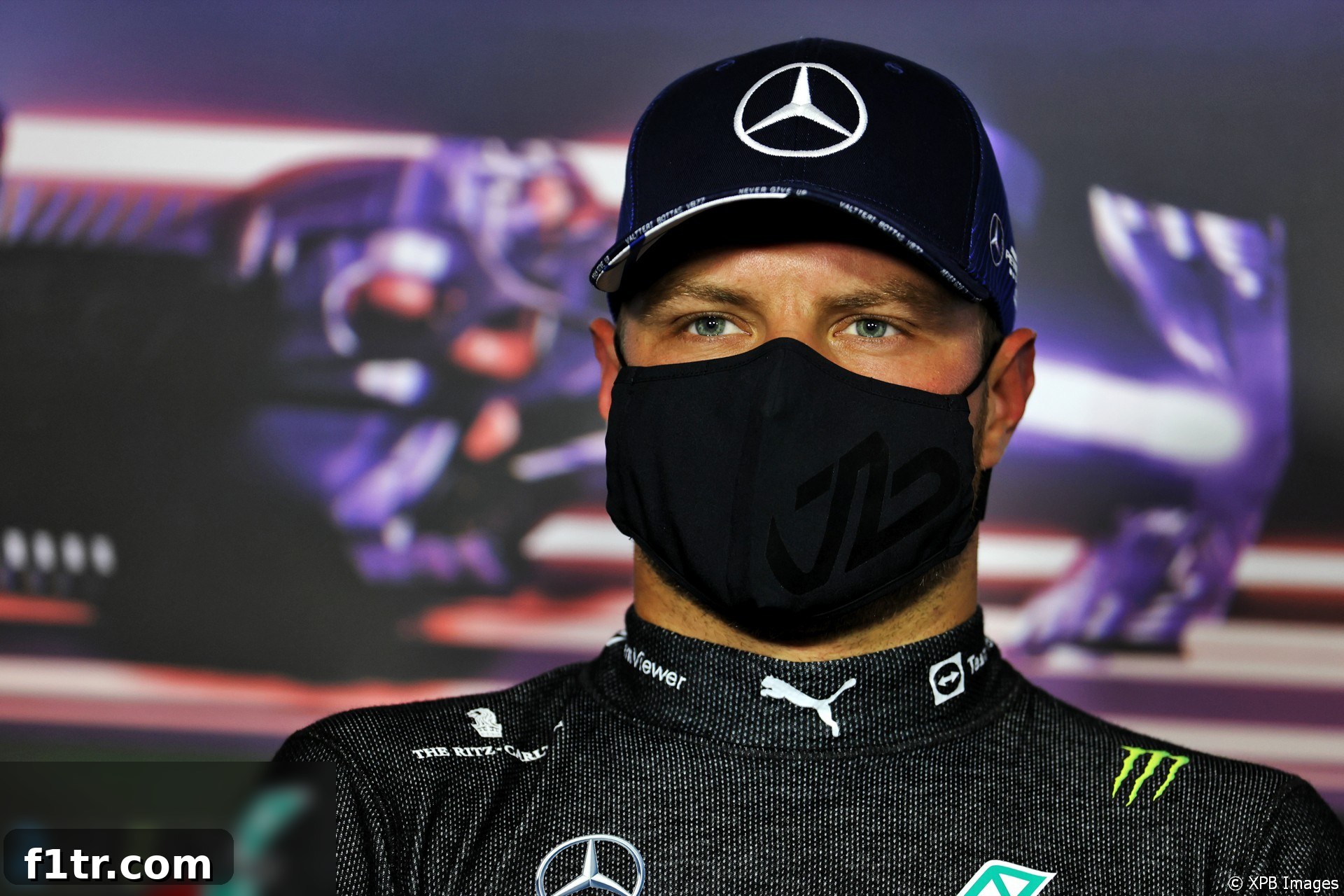
Valtteri Bottas Reacts to “Harsh” Austrian Grand Prix Grid Penalty After Pit Lane Spin
Mercedes driver Valtteri Bottas found himself at the center of a Formula 1 controversy, facing a three-place grid penalty for the Austrian Grand Prix. The penalty stemmed from an incident during the second practice session, where Bottas spun his W12 in the pit lane. In the aftermath, Bottas openly expressed his belief that the punishment was excessively severe, suggesting it was largely provoked by complaints from rival teams eager to gain a competitive edge.
The incident, which occurred as Bottas accelerated out of his pit box, saw the Finn lose control, causing his car to spin before he regained composure. While no collision or immediate danger to personnel materialized, the stewards deemed the situation “potentially dangerous,” leading to the contentious grid drop. Bottas, initially surprised by the ruling, highlighted the cut-throat nature of F1, where rivals are quick to capitalize on any perceived transgression.
The Pit Lane Incident: A Closer Look
During the crucial second practice session at the Red Bull Ring, teams are constantly pushing the boundaries, experimenting with various setups and procedures to shave off precious milliseconds. It was in this pursuit of marginal gains that Valtteri Bottas encountered trouble. As he departed his pit box, an experimental technique involving a second-gear launch led to an unexpected loss of traction. The Mercedes W12 spun, momentarily blocking the pit lane before Bottas managed to bring it under control without further incident.
The pit lane, a confined space bustling with team personnel, marshals, and other cars, is governed by stringent safety regulations. Any loss of control, regardless of its ultimate outcome, is typically viewed with extreme seriousness by race stewards. Their primary mandate is to ensure the safety of everyone present, and a spinning F1 car, even at lower speeds, poses a significant risk. Bottas himself acknowledged the inherent danger, admitting, “For sure it can be a dangerous situation if there’s many people in the pit lane.” However, his subsequent comments suggested a feeling of being unfairly targeted.
Bottas’s Defense and the Politics of F1
Valtteri Bottas’s immediate reaction was one of disbelief and frustration. “My personal view is it’s quite harsh,” he stated, adding, “I never imagined after that there would be a penalty.” This sentiment underscores the driver’s perspective that the incident, while an error, did not warrant such a punitive measure. He implied that the severity of the penalty was amplified by external pressure from competitors. “But of course, other teams, when they see the opportunity, they complain that it’s dangerous, et cetera, so that we would get penalised. That’s how it goes, everyone is always trying to screw you over in this sport.”
This candid admission sheds light on the intense, no-holds-barred environment of Formula 1. Teams are not only battling on track but also off it, through lobbying, data analysis, and strategic communication with race control and the stewards. Any perceived advantage or weakness of a rival is scrutinized, and complaints are a common tactic to influence decisions. Bottas’s comments suggest a belief that Mercedes’ rivals saw an opportunity to undermine his race weekend and seized it, pushing for a penalty that might otherwise have been a less severe reprimand.
The Technical Experiment: Second Gear Launch
The root cause of Bottas’s spin was a strategic decision by the Mercedes team to experiment with a different pit exit procedure. Bottas explained to the stewards that the team was attempting to improve their pit exit times by launching from the pit box in second gear, rather than the traditional first gear. This technique is sometimes employed to manage wheelspin more effectively or to achieve a smoother, more aggressive initial acceleration.
“We decided to try something different, launch with the second gear because sometimes with the high gear, you have a lot of revs and maybe you can manage the wheelspin or the initial part is not so aggressive,” Bottas elaborated. The theory behind this approach is that a higher gear ratio at launch might prevent the wheels from spinning excessively due to the immense torque of an F1 engine in first gear. However, this strategy can also present new challenges. “But then once I got the wheelspin, it really caught me out,” he confessed, highlighting the unpredictable nature of pushing performance limits.
Bottas also speculated about environmental factors potentially contributing to the incident. “I don’t know, perhaps the line on the pit lane was still slightly damp from the drizzle,” he mused. Even a minimal amount of moisture can drastically reduce grip for slick F1 tires. The combined effect of an experimental launch technique, potentially sub-optimal track conditions, and the sheer power of the W12 ultimately led to the spin, demonstrating the razor-thin margins at which Formula 1 teams operate.
Implications and Team Dynamics
The three-place grid penalty carried significant implications for Valtteri Bottas’s Austrian Grand Prix weekend. Starting further down the grid at a circuit where track position can be crucial, particularly in competitive midfield battles, makes it harder to contend for podiums or even high points finishes. For a driver under pressure and aiming to maximize every opportunity, such a penalty is a considerable setback, affecting not only his individual race outcome but also Mercedes’ overall strategy for the Constructors’ Championship.
Interestingly, Bottas’s teammate, Lewis Hamilton, confirmed that he had not attempted the same second-gear launch technique. This suggests that the experiment might have been specific to Bottas’s car, or perhaps a tactical choice made on his side of the garage, indicating varying approaches even within the same team. Such differences can sometimes lead to divergent outcomes and insights for the engineers, but in this instance, it contributed to a penalty for one driver while the other remained unaffected.
F1 Safety Regulations and Steward Decisions
The decision by the stewards to issue a grid penalty underscores the uncompromising stance of Formula 1 on safety, especially within the pit lane. F1 regulations are meticulously designed to minimize risk in what is inherently a high-risk sport. Incidents in the pit lane, even minor ones, are often met with strict penalties precisely because of the unpredictable variables: personnel density, other moving vehicles, and the highly combustible nature of fuel. The “potentially dangerous” classification by the stewards means that the risk, rather than the actual outcome, is the primary factor in their judgment.
This incident also sparks broader discussions about the balance between innovation and safety in Formula 1. Teams are perpetually seeking to innovate and gain fractional advantages in every aspect of racing, from aerodynamics to pit stop procedures. However, these innovations must always be weighed against the established safety protocols. The Bottas penalty serves as a stark reminder that even seemingly minor technical experiments can have significant consequences if they infringe upon the sport’s safety guidelines.
Looking Ahead: The Impact on the Season
While a three-place grid penalty might seem small in isolation, in the tightly contested world of Formula 1, every position counts. For Valtteri Bottas, who has often faced pressure regarding his performance, such an incident adds another layer of scrutiny. It highlights the fine line between pushing boundaries for performance and maintaining flawless execution under pressure. The competitive spirit of F1 means that rival teams will continue to monitor every move, ready to flag any potential breach, making the race for both points and perfection an ongoing challenge.
The Austrian Grand Prix penalty for Bottas will undoubtedly be a talking point and a learning experience for Mercedes. It will likely prompt a review of their pit exit procedures and potentially influence future experimental approaches. As the Formula 1 season progresses, every decision, every maneuver, and every interaction with the regulations contributes to the overarching narrative of the championship battle, keeping fans and competitors alike on the edge of their seats.
2021 Styrian Grand Prix
- Sainz praises Ferrari “teamwork” with Mercedes after unlapping himself from Hamilton
- W Series boss says it will not become a “billionaire girls’ club”
- Mercedes has more than just aerodynamic upgrades coming for 2021 car
- Alonso: F1 rule to ‘improve the show’ helps the big teams
- Is stamping out ‘burn-out’ celebrations a killjoy over-reaction?
Browse all 2021 Styrian Grand Prix articles