Kimi Raikkonen, the seasoned Finn known affectionately as ‘The Iceman’, holds a fascinating and somewhat controversial view regarding the evolution of the Monaco Grand Prix circuit. With decades of Formula 1 experience under his belt, Raikkonen suggests that the influence of raw driving ability in navigating the principality’s famed streets has diminished significantly compared to when he first competed there.
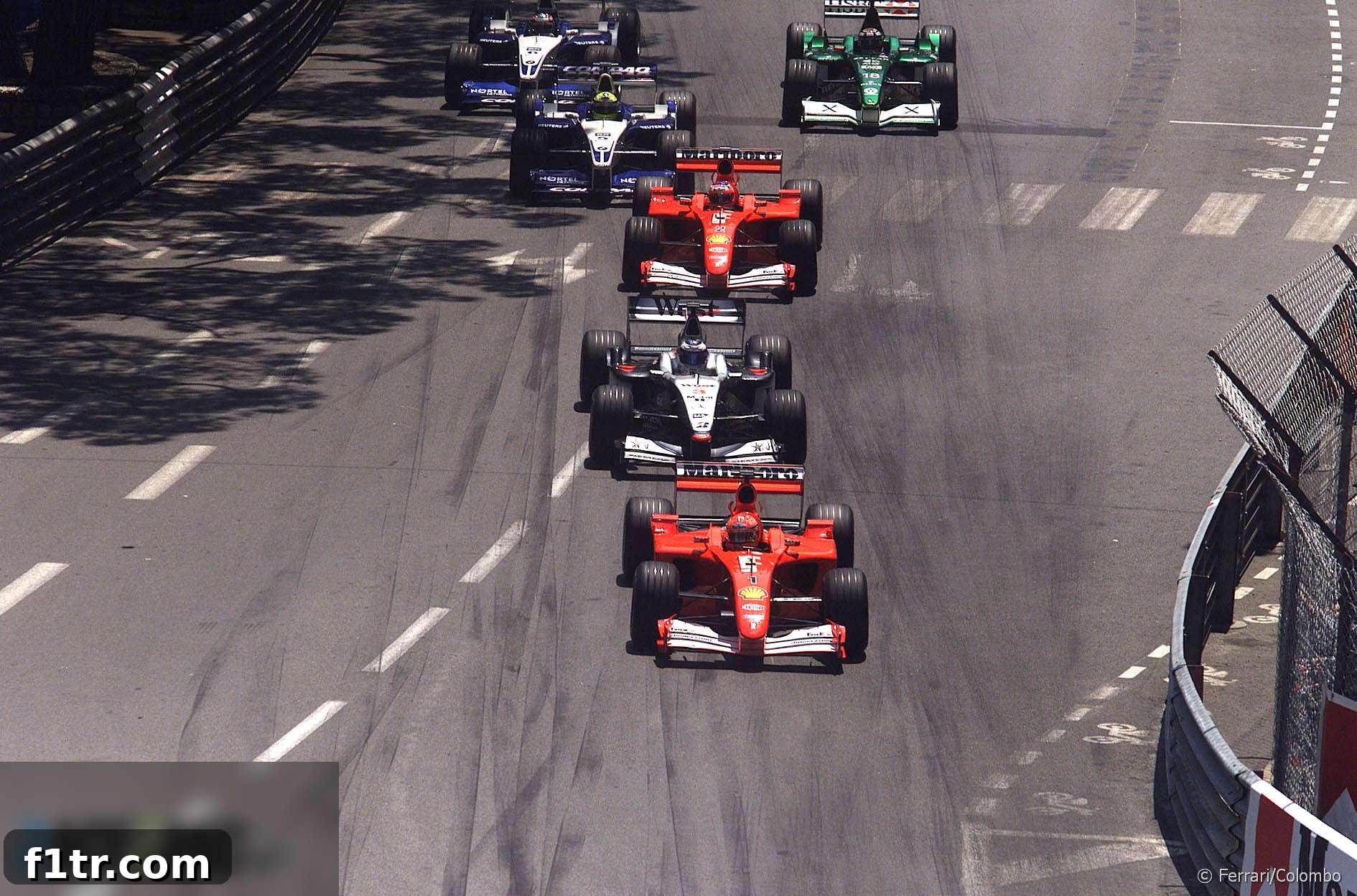
This perspective comes from a driver who first tackled the legendary Monte Carlo circuit with Sauber back in 2001. Since then, the narrow street track, synonymous with glamour and peril, has undergone numerous modifications. Barriers have been subtly repositioned, and certain sections of the circuit have been eased, altering the fundamental character of what was once considered the ultimate test of a racing driver’s courage and precision.
Monaco’s Transformation: From Ultimate Test to Modern Circuit
Raikkonen’s initial encounters with Monaco presented a far more unforgiving challenge. “It’s not the same Monaco that I drove the first time,” the Alfa Romeo driver candidly stated. He vividly recalled a time when the circuit demanded an even higher degree of nerve: “It was much more tricky. There was Armco inside Turn 1, the Swimming Pool was a lot tighter, the last part was a lot tighter. It has changed a lot from that.” These subtle yet significant alterations have progressively reshaped the circuit, impacting how drivers approach its legendary corners and unforgiving walls.
The changes Raikkonen highlights are not mere trivial adjustments. The presence of Armco barriers closer to the apex of corners like Sainte Dévote (Turn 1) meant there was absolutely zero margin for error. A slight miscalculation would inevitably lead to contact, often ending a race. Similarly, the “Swimming Pool” section, a sequence of high-speed chicanes, and the final sector leading up to Rascasse and Anthony Noghès, were historically tighter, offering less room for recovery and demanding absolute perfection at breathtaking speeds. Over the years, safety considerations and track modernization efforts have led to barriers being moved back, asphalt run-off areas being introduced where possible, and corner profiles being slightly softened. While these changes undeniably enhance safety, Raikkonen argues they also dilute some of the unique, raw challenge that once defined Monaco.
The “Traditional Race Track” Conundrum
As Raikkonen prepared for what would be his 300th Grand Prix weekend, his reflection on Monte Carlo’s evolution was profound. He now considers the iconic circuit to have become “more a traditional race track” over the years. This isn’t to say Monaco has lost its distinct identity entirely, but rather that its once unparalleled demand for sheer driver heroics has been somewhat moderated. While it remains a high-risk environment with Armco barriers lining its perimeter, the degree to which drivers can truly make a “bigger difference” with their individual skill has, in his estimation, waned.
In the past, Monaco was universally acclaimed as the circuit where a truly exceptional driver could transcend the limitations of their machinery, coaxing lap times out of a less competitive car that seemed almost miraculous. It was a place where raw talent, bravery, and an innate feel for the car could elevate performance beyond what simulations or data might suggest. Raikkonen’s assertion challenges this long-held romantic notion, suggesting that modern advancements in car design, track safety, and perhaps even driver preparation have subtly shifted the balance. The mystique of Monaco as a purely driver-centric track might be fading, replaced by a more pragmatic reality where car performance, setup, and engineering precision play an increasingly dominant role.
Driver Skill vs. Car Performance: An Enduring F1 Debate
The veteran driver’s insights reignite the perennial Formula 1 debate: how much is down to the driver, and how much to the car? Raikkonen’s experience suggests that at modern Monaco, the car’s role is paramount. “A good car goes well here, a bad car, it doesn’t matter who drives it, it’s not going to go suddenly fastest and that’s the fact. The car still plays a massive role.” This statement underscores a critical truth in contemporary F1. Modern Formula 1 cars are incredibly complex machines, highly sensitive to aerodynamic efficiency, mechanical grip, and power delivery. At a circuit like Monaco, where absolute precision is required, a car that is inherently difficult to drive, lacks stability, or struggles with mechanical grip will inevitably hinder even the most talented driver.
The intricate street layout of Monaco demands a car that provides immense confidence to the driver. The tight corners, elevation changes, and proximity of the barriers mean that drivers must be able to push their limits without second-guessing the car’s reactions. A nervous rear end, unpredictable braking, or insufficient front-end grip can quickly lead to a loss of control and an expensive encounter with a wall. Therefore, a meticulously balanced chassis, a responsive engine, and highly effective aerodynamics become indispensable tools. While a driver’s ability to extract the absolute maximum from their package remains crucial, the baseline performance and driveability of that package are arguably more critical than ever, even on a track that was once thought to minimize such differences.
Modern Monaco: Amplifying Car Differences
Raikkonen further elaborated on his point, suggesting that modern Monaco might even amplify the differences between cars rather than reducing them. “In many ways in a place like this it can be [an] even bigger [difference] because if things are not right here you cannot push. You can push, but you end up in a wall. You choose from those two but obviously it’s a balancing act.” This profound observation highlights the unforgiving nature of the circuit, even with its recent modifications. When a car is not perfectly tuned for the unique demands of Monaco – perhaps struggling with low-speed traction, ride height over bumps, or stability under braking – a driver’s ability to compensate is severely limited.
Unlike conventional circuits with wide run-off areas, where a driver can push slightly beyond the car’s optimal limit and recover, Monaco offers no such luxury. Every error is punished instantly and severely. Consequently, a driver in a less optimal car faces an impossible dilemma: either push harder, risking a catastrophic crash, or back off, sacrificing valuable lap time. This “balancing act” becomes incredibly delicate and often impossible if the fundamental characteristics of the car are not up to par. Thus, instead of allowing exceptional drivers to overcome car deficiencies, modern Monaco, with its higher speeds and less forgiving margins, effectively magnifies those very differences, making a well-sorted machine an even greater advantage.
The Enduring Legacy of Kimi Raikkonen’s Perspective
Kimi Raikkonen’s candid analysis provides a unique insight into the evolving world of Formula 1. As one of the most experienced drivers in the history of the sport, his perspective on how circuits and racing dynamics have changed over two decades is invaluable. His pragmatic, no-nonsense approach often cuts through the romanticism surrounding certain aspects of F1, offering a grounded view rooted in extensive on-track experience. His 300th Grand Prix weekend was a testament to his longevity and enduring passion for racing, making his observations on Monaco all the more significant.
While some purists might lament the idea that driver skill is less impactful at Monaco, Raikkonen’s comments reflect the ongoing technological advancement and safety improvements that are an inherent part of modern motorsport. The Monaco Grand Prix, despite these changes, continues to hold a revered place on the F1 calendar. It remains a spectacular challenge, demanding immense concentration and precision. However, Raikkonen’s perspective serves as a crucial reminder that the dynamic between human ingenuity and engineering excellence is ever-shifting, even on the most iconic stages in racing history.
More from the 2019 F1 Season
The 2019 Formula 1 season provided a backdrop for many significant moments and discussions, including Kimi Raikkonen’s reflections on Monaco. That year was a period of intense competition and memorable events, showcasing both triumphs and challenges for various teams and drivers. From emotional career lows to unexpected podium finishes and crucial technical developments, the season offered a rich tapestry of F1 action. Here are some related stories from that compelling year:
- Crying in the Melbourne car park at 2019 grand prix was my career low – Ocon
- McLaren Racing reports reduced £71 million loss in 2019
- Kvyat: Hockenheim podium last year was “my biggest achievement” so far
- How the FIA’s new encrypted fuel flow meter targets Ferrari’s suspected ‘aliasing’ trick
- “He smashed my office door”: 23 must-see moments from ‘Drive to Survive’ season two
Browse all 2019 F1 season articles