Ferrari’s Evolving Stance on F1 Team Orders: Equality, Ambition, and the Road Ahead
In the highly competitive world of Formula 1, team dynamics often prove as crucial as raw pace. For Scuderia Ferrari, the perennial powerhouse, managing the ambitions of two championship-calibre drivers is a constant, delicate balancing act. As the 2020 F1 season approached, the Italian team found itself navigating a complex policy shift regarding its two star drivers, Sebastian Vettel and Charles Leclerc. While initially signaling a move towards equal treatment, team principal Mattia Binotto later clarified that the prospect of team orders, under specific circumstances, remained firmly on the table. This nuanced approach highlights Ferrari’s commitment to securing optimal results, even if it means tempering individual driver aspirations for the collective good of the Prancing Horse.
The Initial Declaration of Equality: A New Chapter for Ferrari
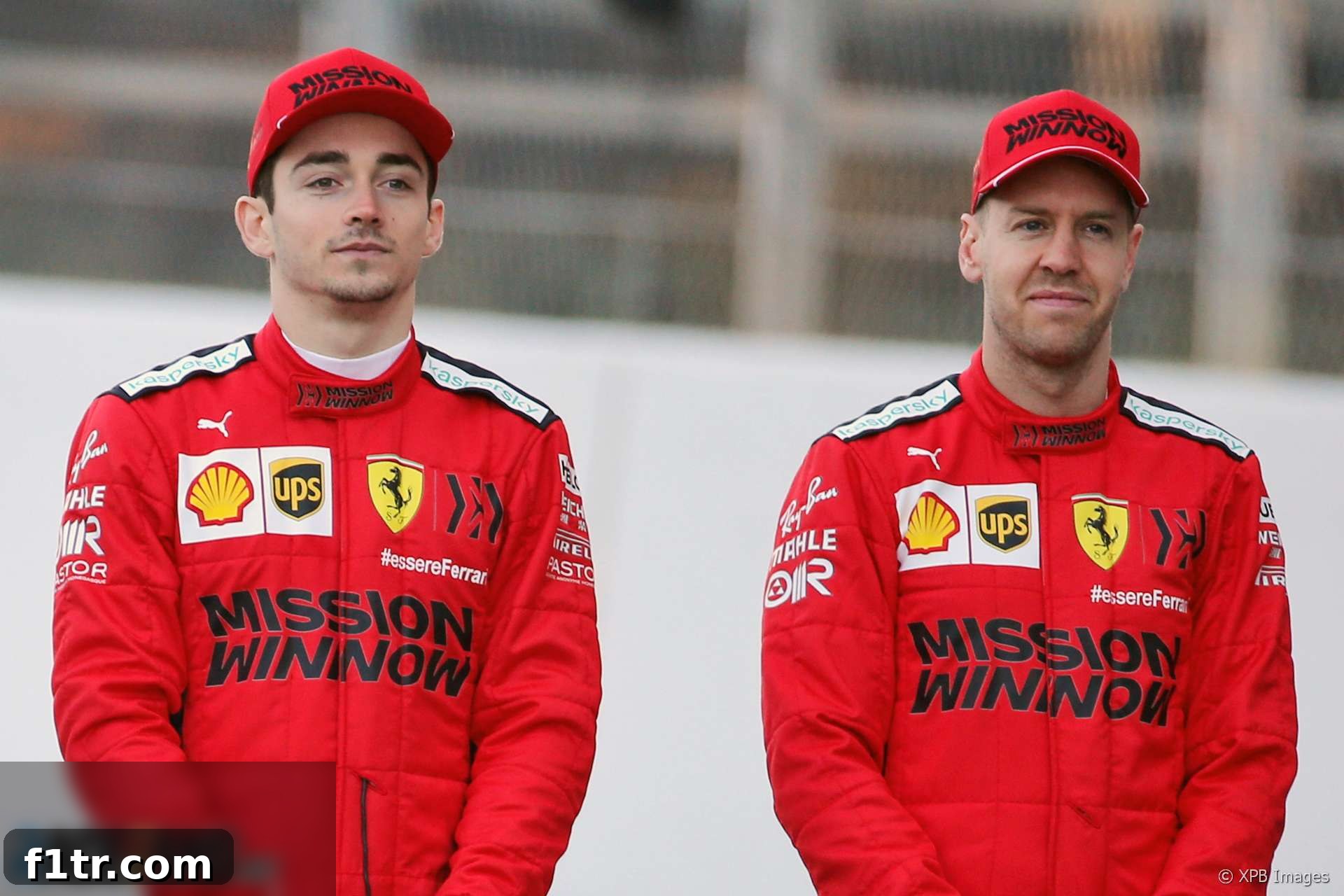
At the much-anticipated launch of Ferrari’s 2020 challenger, the SF1000, Mattia Binotto made a significant declaration that resonated across the F1 paddock. He affirmed that both Sebastian Vettel, a four-time world champion, and the prodigious Charles Leclerc would be afforded equal treatment from the outset of the season. This statement marked a notable evolution in Ferrari’s internal policy, especially considering the conventional hierarchy often observed in top teams, where an established senior driver might receive preferential status. Leclerc’s meteoric rise and exceptionally strong debut season in red clearly influenced this decision, signalling a recognition of his burgeoning talent and undeniable pace. His performance in 2019, which saw him outperform Vettel on several occasions, underscored his readiness to compete at the highest level without external constraints.
Leclerc, having secured multiple pole positions and race victories in his inaugural year with Ferrari, proved he was not just a future star but a present contender. Binotto himself acknowledged Leclerc’s capabilities, stating, “He did a fantastic, great season last year. He has [performed] on the same level at the end of Sebastian as well in terms of final results. I think he has proved that he can do it. So I think it’s right that they are on the same level to start the 2020 season.” This emphasis on merit-based equality aimed to foster a healthy, competitive environment, allowing both drivers to push each other and extract the maximum performance from the car and themselves.
The “Clear Situations” Clause: Preserving Team Priorities
However, the initial promise of pure equality was soon qualified. Just days after the car launch, Binotto provided a crucial addendum to Ferrari’s driver policy, reiterating his preparedness to employ team orders in “clear situations” if it served the best interests of the team. This clarification underscored an inherent tension within F1: the conflict between individual driver ambition and the overarching goal of securing constructors’ and drivers’ championships for the team. While promoting internal competition, Ferrari’s leadership remains steadfast in its belief that team success ultimately supersedes personal glory in critical moments.
Binotto’s explanation was unequivocal: “They know as well that the team has the first priority. So team orders may still be there. I’m not saying that they are free to race, that there will be no team orders. So there may be team orders to the benefit of the entire team. But it has to be a clear situation.” This caveat ensures that Ferrari retains strategic flexibility, particularly when championship points are at stake, or when a tactical advantage can be gained over rival teams. Such “clear situations” could encompass various scenarios, from a driver being on a superior strategy, to one driver having a significantly better chance of securing a higher championship position, or simply needing to protect a 1-2 finish from an approaching competitor.
Lessons Learned from the 2019 Season: The Brazil Incident
The delicate balance between promoting driver competition and enforcing team discipline was starkly illustrated by events in the preceding 2019 season. A notable low point occurred at the Brazilian Grand Prix, where a highly regrettable collision between Vettel and Leclerc forced both Ferrari cars out of the race. This incident, born from intense on-track rivalry, served as a potent reminder of the potential pitfalls of unmanaged driver competition and the critical need for clear internal protocols. The immediate aftermath saw extensive discussions within the team to address the underlying issues and prevent a recurrence.
Binotto expressed confidence that the lessons from Brazil and the entire 2019 season had been thoroughly absorbed by both drivers. “I think that last year has been very useful to both of them and myself to know each other, to understand how we should behave and what should be the rules in the team, what priority the team has first,” he reflected. This period of reflection and re-evaluation seemingly fostered a greater understanding and respect between Vettel and Leclerc. Binotto noted, “I think that the two drivers now know each other a lot more better and they are behaving well. I’m very happy with the level of discussion we’ve got, the level of contribution to the car, to the team and the way clearly they are discussing.” The improved communication and mutual understanding were seen as vital for the team’s cohesion and their collective pursuit of championship glory.
The Enduring Philosophy of Team Orders in Formula 1
The debate surrounding team orders is a perennial one in Formula 1, frequently sparking controversy among fans and pundits. However, from a team’s perspective, they are often viewed as a necessary evil, a strategic tool designed to maximize constructors’ points and secure driver championships. Historically, many successful F1 teams, including Ferrari in its dominant eras, have utilized team orders to great effect. While they can appear unfair to the driver asked to cede a position, the underlying rationale is always the greater good of the team’s championship aspirations.
For Ferrari, a team with an unparalleled legacy and the weight of an entire nation on its shoulders, the pressure to deliver championships is immense. This pressure naturally influences policy decisions. The “clear situations” clause acknowledges that while fostering a competitive spirit between two elite drivers is beneficial for performance, there are moments when raw individual ambition must yield to the team’s strategic imperatives. This approach attempts to strike a sophisticated balance: allowing drivers to race freely for the majority of the time, but reserving the right to intervene when specific race or championship scenarios demand it. It’s a pragmatic solution aimed at preventing internal rivalry from undermining the team’s overall objectives.
Navigating the Psychological Landscape: Drivers and Team Principals
For drivers like Sebastian Vettel and Charles Leclerc, navigating such a policy requires a profound understanding of their roles within the larger Ferrari machine. Vettel, a seasoned veteran with multiple titles, understands the complexities of team dynamics. Leclerc, still relatively new to the top tier but with an undeniable hunger for success, is learning the delicate balance required to excel in a team-first environment. Both drivers must continually balance their personal quest for victory with their professional obligation to the Scuderia. This psychological aspect is crucial, as any perceived unfairness or inconsistency in applying team orders can quickly erode morale and create internal friction.
Mattia Binotto’s role as team principal is equally challenging. He must not only make tough strategic calls but also manage the egos and expectations of two intensely competitive athletes. His ability to foster transparent communication and ensure that both drivers understand and accept the team’s ultimate priorities will be paramount to Ferrari’s success. The aim is to create an environment where competition is fierce but ultimately constructive, propelling the team forward rather than creating internal divisions. As Ferrari embarked on the 2020 season, the world of F1 watched closely to see how this carefully constructed policy would play out on track, and if it would be the key to unlocking the team’s championship potential.
Advert | Become a RaceFans supporter and go ad-free