In the high-stakes world of Formula 1, pre-season testing often serves as a tantalizing glimpse into the potential pecking order for the upcoming championship. This year, the Williams Racing team, traditionally seen as an underdog, turned heads by setting one of the fastest times during testing sessions. However, their lead driver, Alexander Albon, quickly moved to temper expectations, suggesting that the true battle for supremacy in the midfield would be a fierce contest primarily between Williams and Alpine.
Advert | Become a Supporter & go ad-free
Albon’s cautious assessment came after some highly optimistic interpretations of Williams’ performance circulated following the Bahrain test. While certain drivers, including Ferrari’s Carlos Sainz Jnr, logged impressive lap times, Albon highlighted the inherent variability and strategic differences that characterize pre-season running. The raw speed displayed by any team, including Williams, often comes with caveats related to fuel loads, engine modes, and specific testing programs that don’t always translate directly to race pace. Understanding this distinction is crucial to accurately gauge a team’s true competitive standing before the season officially begins.
Speaking to the official F1 channel, Albon elaborated on the team’s performance during the crucial testing period. “We had a good test,” he affirmed, acknowledging the overall positive feeling within the garage regarding the car’s fundamental characteristics. However, he was quick to contextualize the headline-grabbing lap times. “Obviously the results are as they are, but we know that’s testing. I’m sure we were running a little bit more ‘performant’ in terms of fuel loads and engine modes than maybe some other teams. The fight’s in the midfield for us.” This statement underscores a critical aspect of pre-season testing: teams often run varied strategies, employing different fuel levels, engine settings, and tire compounds to gather data rather than chase outright lap records. A low-fuel, high-engine mode run can produce a dazzling lap time that belies a car’s true competitive standing. Albon’s honesty provides a sober reminder that while the speed was encouraging, the team remains realistic about their immediate position within the competitive landscape of Formula 1. Their sights are firmly set on leading the chasing pack, not on challenging the established front-runners just yet, though continuous improvement is always the ultimate goal.
Williams’ journey over recent seasons has been one of significant transformation, moving from the back of the grid towards a more competitive position. The team famously endured a challenging start to the previous season, primarily due to their car being initially over the minimum weight limit – a substantial handicap in a sport where every gram counts. This season, however, marks a clear and concerted improvement on that front. Albon spoke positively about the new FW47 chassis, indicating a much-improved foundation for their campaign. “The car feels like it’s in a good place in terms of [being] on-weight, parts and everything else,” he stated, emphasizing the meticulous work undertaken by the engineering and design teams in Grove. “I think the team have done a fantastic job.” Achieving the minimum weight target is not merely about complying with regulations; it’s about unlocking performance, improving balance, and offering drivers a more responsive and agile machine. This crucial development suggests that Williams has addressed a fundamental weakness, allowing them to build a more competitive package from the ground up. This newfound efficiency and compliance with regulations are key indicators of the team’s progress and provide a solid platform for the drivers to extract maximum performance, translating into greater confidence and better results on track.
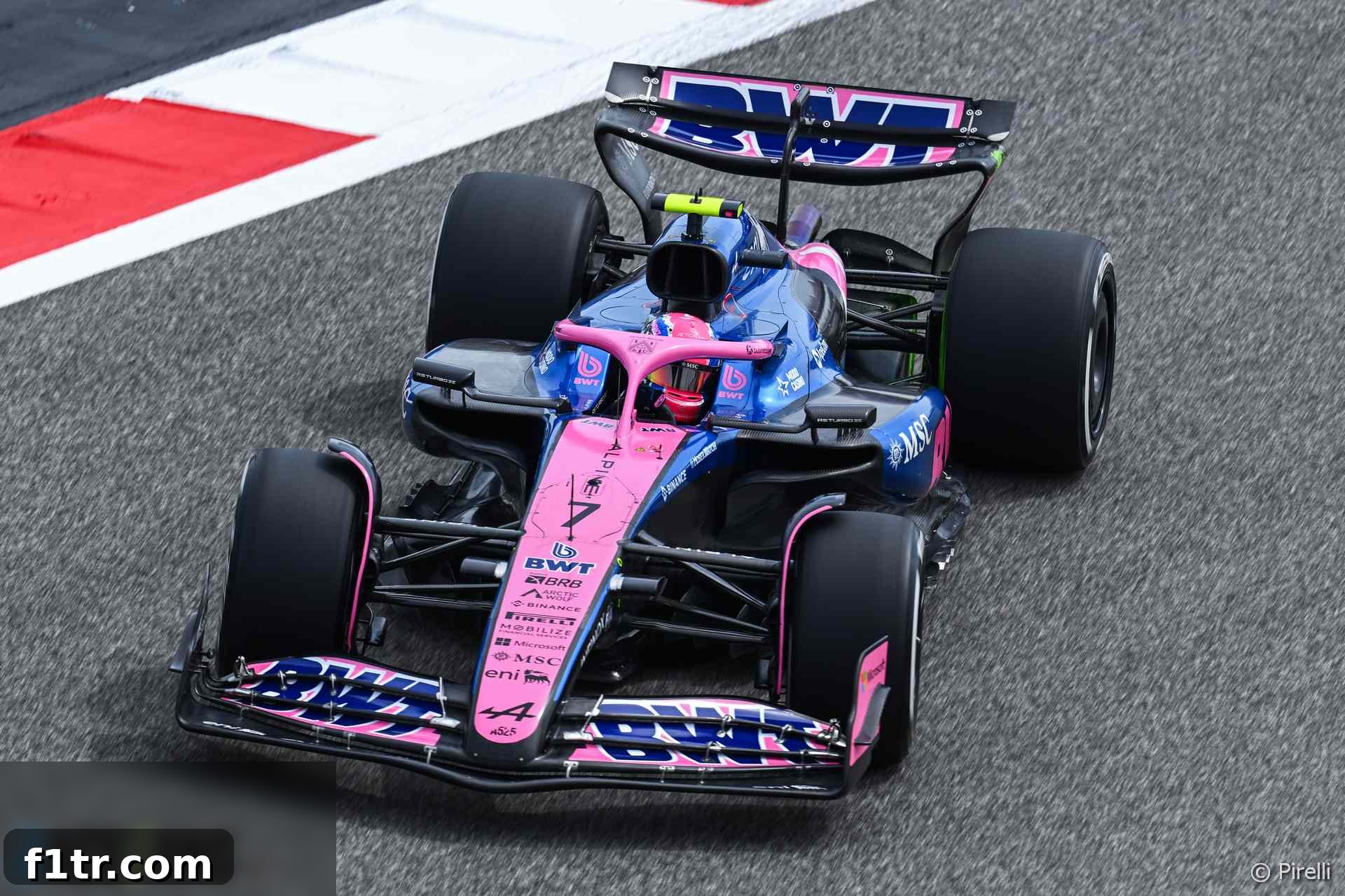
The ambitious target for Williams, as outlined by Albon, is to emerge as the strongest contender within the fiercely competitive midfield group. He acknowledged the established hierarchy at the very front of the grid, comprising the formidable McLaren, Ferrari, Red Bull, and Mercedes teams, as likely front-runners for race wins and championship contention. The real battle for Williams, therefore, lies directly behind these giants, striving to be ‘best of the rest’. “We have to be realistic, I think Alpine are looking very strong as well. Maybe a little bit stronger,” Albon admitted, pointing to the French outfit as a primary rival for midfield dominance. This frank recognition of Alpine’s strength sets the stage for what promises to be an enthralling season-long duel. Both teams possess capable drivers and have demonstrated flashes of strong performance in recent years. The fight between Williams and Alpine will likely define who earns the coveted ‘best of the rest’ title, a significant achievement for any team operating outside the top four. The strategic and developmental arms race between these two outfits, coupled with their on-track clashes, will be a compelling narrative to follow throughout the championship, providing intense and unpredictable racing action for fans.
The unpredictable nature of the midfield, however, is a recurring theme in Formula 1, and Albon anticipates this competitive picture will be anything but static. He expects the pecking order to “change from race to race,” highlighting how specific track characteristics can favor certain car designs, aerodynamic philosophies, or setups. “Some tracks will benefit us, some tracks will benefit them,” he explained. This dynamism adds an extra layer of excitement and strategic complexity to the season. A circuit with long straights and fast corners, for instance, might suit a car with lower drag and a strong power unit, while a twisty, high-downforce track could favour a different aerodynamic philosophy that prioritizes grip and cornering speed. This variability means that no single team can afford to rest on its laurels, and continuous development, meticulous data analysis, and adaptability will be paramount. Beyond Alpine, Albon also identified other strong contenders. “RB [Racing Bulls] look strong as well. Haas, you never know where they’re going to be. I’m obviously talking about the midfield battle here.” The mention of Racing Bulls and Haas further underscores the depth of talent and machinery vying for points in the middle of the pack. Each team brings its own strengths and weaknesses, contributing to a truly unpredictable contest that often delivers some of the most thrilling moments in Grand Prix racing, where strategic gambles and driver skill can make all the difference.
What makes this midfield battle particularly enthralling is the incredibly fine margins separating the teams. Albon’s assessment paints a vivid picture of this intensity: “Whatever it is, it’s very tight. I think between the spread, it’s a tenth [of a second] and a half between all of us, so it’s close.” A difference of a tenth and a half of a second per lap is an infinitesimally small gap in human terms, yet in Formula 1, it can mean the difference between making it into Q3 and being eliminated in Q1, or between scoring valuable points and finishing frustratingly outside the top ten. This exquisite closeness demands absolute precision from drivers, flawless strategy calls from the pit wall, and continuous performance upgrades from the factory. Every single detail, from driver setup preferences to tire management and pit stop efficiency, becomes magnified in importance, as even the slightest misstep can cost crucial positions. For the fans, this translates into nail-biting qualifying sessions where a fraction of a second can reshuffle the grid, and intense wheel-to-wheel racing on Sundays where overtakes are hard-fought and positions are fiercely defended. The prospect of such a tight competition promises a season filled with drama, unexpected results, and compelling storylines as teams battle not just each other, but also the relentless pursuit of incremental gains. The commitment to engineering excellence and relentless pursuit of performance by every team in this group ensures that the midfield will be a theatre of high-octane action, keeping fans on the edge of their seats from the opening race to the final flag.
Advert | Become a RaceFans supporter andgo ad-free
This meticulous approach to car development and the realistic outlook shared by Alexander Albon reflects a mature and focused Williams team. They understand that while pre-season pace is a positive indicator, the true test lies in race trim and consistent performance throughout the grueling Formula 1 calendar. Their goal is clear: to consistently challenge for points and establish themselves as the leading force in the midfield, a significant step forward from their struggles in recent memory. The battle against Alpine, Racing Bulls, and Haas will be a season-long marathon, not a sprint, and every point will be hard-earned through strategic acumen and relentless effort. As the lights go out for the first race, all eyes will not only be on the front of the grid but also on this incredibly tight and exciting midfield, where Williams aims to make its mark and demonstrate the fruits of their hard work and dedication.
Miss nothing from RaceFans
Get a daily email with all our latest stories – and nothing else. No marketing, no ads. Sign up here:
Go ad-free for just £1 per month>> Find out more and sign up
2025 Australian Grand Prix
- F1 rules change to prevent repeat of Verstappen-Bearman Australian GP confusion
- Contact with team mate may have led to Bortoleto’s Australian GP crash
- Hamilton dismisses ‘negativity’ over his radio calls. ‘Other drivers are almost abusive’
- Antonelli “got really scared” when he made “big save” on first lap of Australian GP
- Williams explain role played by car’s systems in Sainz’s race-ending crash
Browse all 2025 Australian Grand Prix articles