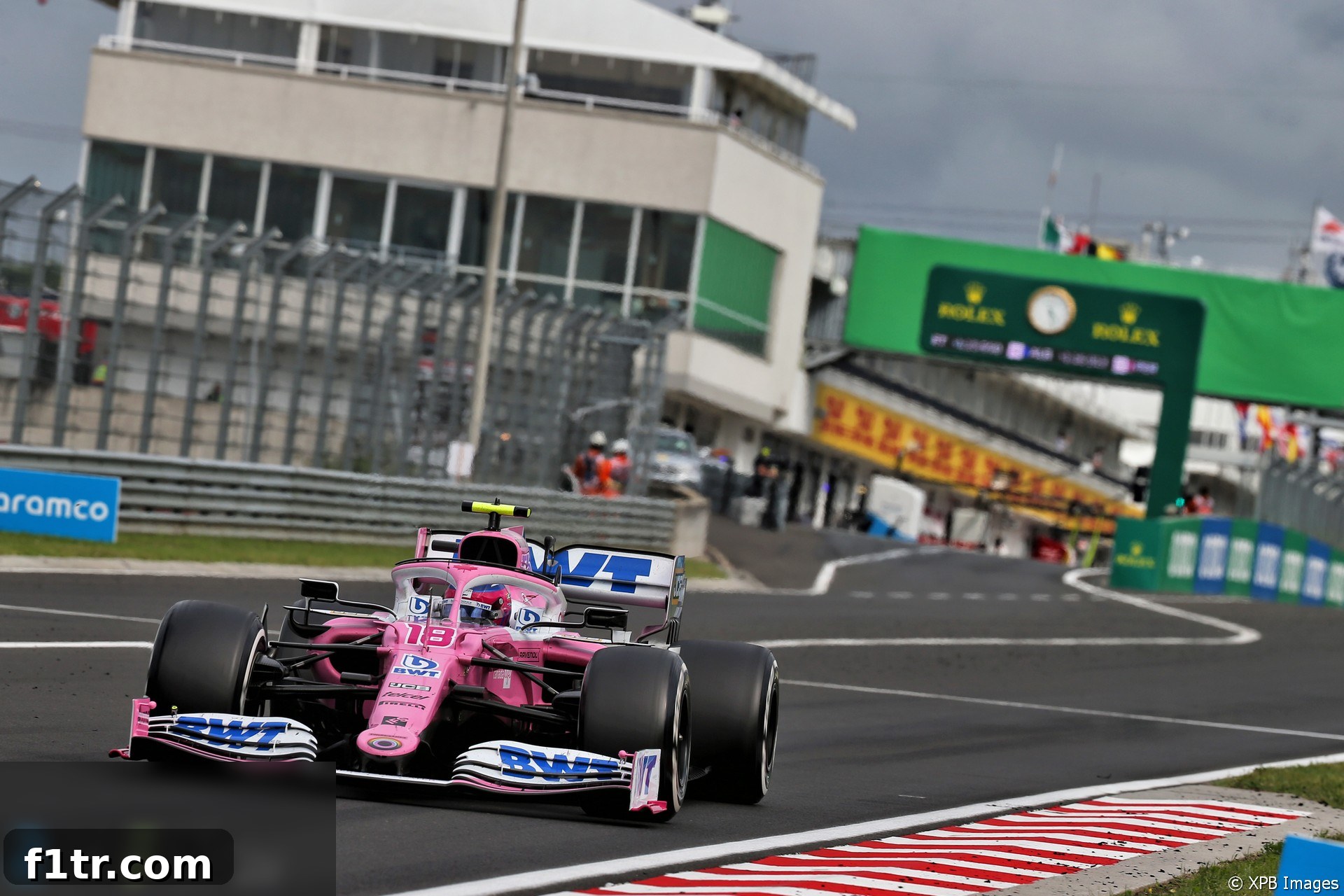
The 2020 Formula 1 season, already unique due to its unprecedented calendar adjustments, witnessed a significant off-track controversy erupt with Renault’s repeated protests against Racing Point’s RP20 car. The dispute centered on the legality of Racing Point’s brake ducts, components that became a pivotal point of contention between teams striving for competitive advantage within the sport’s evolving technical regulations. Following the Styrian Grand Prix, Renault lodged its initial complaint, alleging breaches of the FIA Formula One Sporting Regulations.
Advert | Become a Supporter & go ad-free
The core of the controversy stems from Racing Point’s bold design philosophy for their RP20 challenger, which earned it the moniker “Pink Mercedes.” Visually, the car bore a striking resemblance to Mercedes’ championship-winning W10 from the previous season, leading many rivals, including Renault, to question the extent of intellectual property transfer and whether Racing Point had merely copied a competitor’s design rather than developing their own in accordance with the rules. While the broader concept of ‘inspiration’ is not uncommon in F1, the specificity of certain components raised red flags.
Renault’s first protest, formally submitted after the Styrian Grand Prix, specifically targeted the legality of the front and rear brake ducts used on both Racing Point cars – Lance Stroll’s #18 and Sergio Perez’s #11. The French team cited alleged breaches of Articles 2.1 and 3.2, alongside Appendix 6 of the FIA Formula One Sporting Regulations. These articles are crucial as they govern the general principles of fair competition, originality of design, and, critically, the classification of “listed parts.” For the 2020 season, brake ducts were reclassified as ‘listed parts,’ meaning teams were required to design and produce them themselves, rather than purchasing them from another competitor.
Upon receiving the initial protest, the FIA stewards initiated a formal investigation. As part of this process, the FIA Technical Department representative was tasked with sealing and impounding the contentious brake ducts from both Racing Point cars. This critical step ensured that the components could be subjected to a thorough, independent analysis to determine whether their design and origin complied with the intricate and often stringent regulations. The findings of this detailed examination were to be compiled into a comprehensive report, which would then be presented to the stewards for their final adjudication.
Just one week later, at the Hungarian Grand Prix, Renault intensified their challenge by lodging an identical protest against Racing Point, targeting the exact same components and citing the same regulatory articles. This second protest underscored Renault’s unwavering commitment to pursuing the matter. Racing Point, acknowledging the continuity of the dispute, confirmed that the brake ducts used in Hungary were indeed the same ones utilized at the previous Styrian Grand Prix. This admission simplified the investigation process, as it negated the need for a second impoundment of parts, with both teams agreeing that the ongoing analysis from the first protest would sufficiently cover both instances.
The agreement between the parties and the stewards meant that the single, overarching investigation into the brake ducts would apply to both races. Consequently, Racing Point’s impressive results in the Hungarian Grand Prix – a strong fourth place for Lance Stroll and a solid seventh for Sergio Perez – remained provisional. This mirrored the status of their finishing positions from the Austrian Grand Prix (the season-opener, which was followed by the Styrian GP at the same track). The provisional nature of these results left a cloud of uncertainty hanging over Racing Point’s early-season performance and points tally, with potential penalties, ranging from fines to points deductions, looming depending on the outcome of the FIA’s technical assessment.
The heart of the regulatory debate lies in the interpretation and application of the “listed parts” rule. Before 2020, brake ducts were considered “non-listed” components, allowing teams to purchase them from other constructors. However, for the 2020 season, they were moved to the “listed parts” category, a strategic decision by the FIA to ensure that each constructor was truly responsible for the design and production of key performance-differentiating parts. Renault’s argument hinges on the premise that Racing Point’s brake ducts were not independently designed and manufactured but rather derived from intellectual property belonging to Mercedes, thereby violating the spirit and letter of this updated regulation. This move by the FIA was intended to prevent ‘customer car’ scenarios where smaller teams could simply rebrand designs from larger, more established constructors.
This escalating dispute carries significant ramifications not just for Racing Point’s 2020 campaign but also for the broader philosophy of Formula 1. The outcome will set a critical precedent for how intellectual property is protected and enforced, influencing future collaborations and design practices within the paddock. If Racing Point is found to have breached the regulations, it could open a Pandora’s box regarding what level of design influence or data sharing is permissible between teams, especially those with close technical partnerships. The integrity of the ‘constructor’ title in Formula 1, which implies that each team designs and builds its own car, is at stake, with calls for greater clarity on the rules governing component origins.
Advert | Become a RaceFans supporter andgo ad-free
Stewards’ ruling on Renault’s second protest against Racing Point
During the 2020 Styrian Grand Prix, the Stewards have received a protest from Renault DP World F1 Team (“Renault”) against BWT Racing Point F1 Team (“RP”) (together, the “Parties”) concerning an alleged breach of Articles 2.1 and 3.2 and Appendix 6 to FIA Formula One Sporting Regulations with regards to front and brake ducts used on cars 11 and 18 (the “Protest”).
In this context, the FIA Technical Department representative was asked to seal and impound the relevant parts of cars 11 and 18 in preparation for conducting an analysis of those pieces. The FIA Technical Department representative will provide a detailed report to the Stewards with the findings and will include in his report an assessment that matches those findings against the alleged infringements outlined in the Protest.
After, the race of the 2020 Hungarian Grand Prix, Renault lodged an identical protest against RP relating to the exact same matter.
In order to facilitate the analysis process, RP has admitted that the relevant parts targeted by these two protests and used during both, the race of the 2020 Styrian Grand Prix and the race of the 2020 Hungarian Grand Prix are the same.
Therefore, the Parties declare and agree that there is no need to proceed again with a sealing and an impounding of the relevant parts of cars 11 and 18 following the race of the 2020 Hungarian Grand Prix.
The Parties further declare and agree that the analysis to be performed by the FIA Technical Department representative and the report to be submitted to the Stewards as well as any evidences and discussions relating to the Protest shall also be valid to address the second protest lodged by Renault following the race of the 2020 Hungarian Grand Prix.
The stewards’ official ruling on the second protest reiterated the consolidated nature of the investigation, clearly stating that the analysis initiated after the Styrian Grand Prix would be sufficient to address both complaints. This streamlining of the process was mutually agreed upon by both Renault and Racing Point, aiming to avoid redundant procedures and expedite a resolution. The focus now squarely rests on the FIA Technical Department’s findings, which will be crucial in determining whether Racing Point’s design process for the brake ducts adhered to the newly tightened regulations regarding listed parts. The technical report is expected to delve into the genesis of the brake ducts, assessing whether they truly represent an independent design effort or if they incorporate intellectual property in a manner deemed illegal.
The potential outcomes of this investigation are varied and could significantly alter the pecking order in the constructors’ championship. If Racing Point is found guilty, penalties could range from substantial fines to a deduction of championship points, potentially impacting their position significantly. Conversely, if the FIA clears Racing Point, it would validate their design approach and potentially open new avenues for technical alliances, albeit under strict scrutiny. The wider F1 community is keenly watching, with teams holding differing views on what constitutes fair play and independent design. Some argue for strict interpretation of the rules to preserve the unique identity of each constructor, while others contend that the sharing of non-performance critical components should be more flexible to aid smaller teams.
Ultimately, the FIA’s final verdict on the legality of Racing Point’s brake ducts will be a landmark decision. It will not only determine the fate of Racing Point’s 2020 season points and reputation but also draw clearer lines for permissible design practices, intellectual property sharing, and the very definition of a ‘constructor’ in Formula 1 for years to come. The implications could extend beyond technical regulations, influencing commercial agreements and strategic partnerships between teams, as F1 continues to navigate the complex interplay between innovation, competition, and regulatory compliance. The anticipation for this ruling remains high, as it promises to shape the sporting and technical landscape of the sport.
Advert | Become a RaceFans supporter andgo ad-free
2020 F1 season
- Grosjean to make F1 test return tomorrow for first time since Bahrain horror crash
- Pictures: Wrecked chassis from Grosjean’s Bahrain fireball crash to go on display
- Bottas vs Rosberg: Hamilton’s Mercedes team mates compared after 78 races each
- F1 revenues fell by $877 million in Covid-struck 2020 season
- Hamilton and Mercedes finally announce new deal for 2021 season
Browse all 2020 F1 season articles