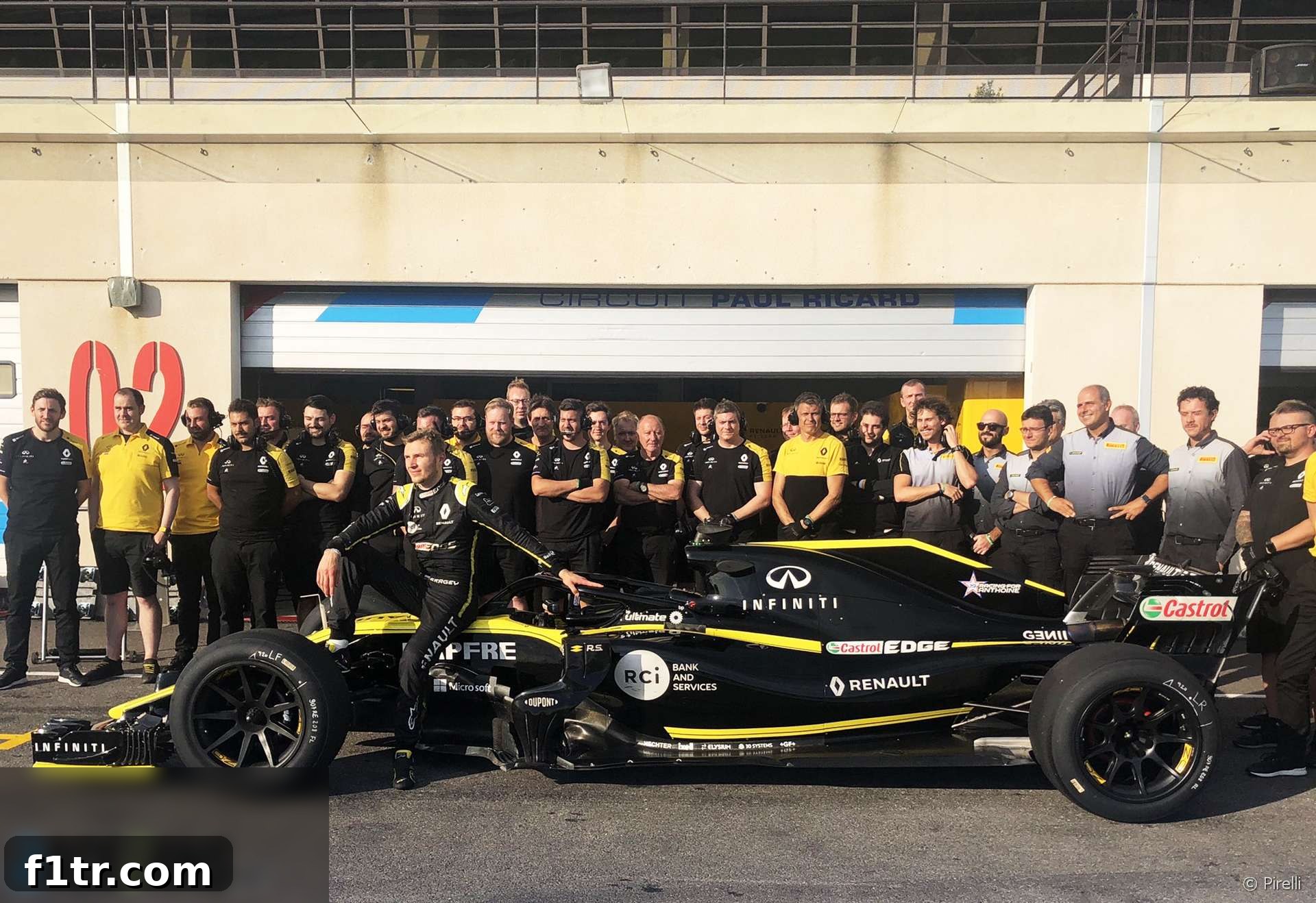
In a significant stride towards the future of Formula 1, Pirelli, the sport’s exclusive tyre supplier, has successfully completed its inaugural test of the new 18-inch prototype tyres destined for the 2021 season. This crucial two-day evaluation at the iconic Paul Ricard circuit marked the beginning of an extensive development program, signaling a transformative shift in Formula 1’s aesthetic and technical landscape. With over 200 laps meticulously covered, the initial data gathered provides a foundational understanding as the sport prepares for one of its most anticipated regulation changes in recent history.
The test, which saw Renault’s experienced test driver Sergey Sirotkin at the wheel of a modified mule car, demonstrated Pirelli’s commitment to a seamless transition to the larger tyre format. This move from the long-standing 13-inch wheels is more than just a size increase; it represents a fundamental rethinking of how F1 cars interact with the track, impacting everything from suspension geometry and aerodynamic flow to pit stop strategies and driver feedback. This initial foray into 18-inch tyre testing lays the groundwork for further refinements and iterative improvements throughout the remainder of this year and the entirety of the next, ensuring the tyres are perfectly optimized for the demands of elite motorsport.
Mario Isola, Pirelli’s Head of F1 and Car Racing, underscored the monumental nature of this change, stating that the new tyres are poised to “change the face of Formula 1.” This bold declaration highlights the profound impact expected from the shift. The move to 18-inch tyres aligns Formula 1 more closely with road car technology, enhancing relevance and creating a visually striking presence that resonates with modern automotive trends. Beyond aesthetics, the reduced sidewall height of the 18-inch tyres promises a stiffer structure, potentially leading to a more direct and precise steering feel for drivers and a reduced level of sidewall deflection, which could influence aerodynamic stability and overall car balance. This evolution presents an exciting challenge for teams, who will need to recalibrate their car designs and setups to harness the full potential of this new generation of rubber.
The Dawn of a New Era: 18-inch Tyres for 2021
The transition to 18-inch tyres in Formula 1 has been a topic of discussion for several years, driven by a desire to modernize the sport’s image and increase its relevance to road car technology. For decades, F1 cars have run on 13-inch wheels, a characteristic that, while iconic, felt increasingly anachronistic compared to the larger diameter wheels seen on high-performance road vehicles. The larger wheels with lower profile tyres are not merely an aesthetic upgrade; they carry significant performance implications. The stiffer sidewalls inherently offer a different kind of feedback to drivers, demanding adjustments in driving style and chassis setup. Furthermore, the change opens up new avenues for suspension design, as the tyre’s role in absorbing bumps and managing loads will be altered. Pirelli, as the sole supplier, bears the immense responsibility of developing a tyre that is not only robust and consistent but also promotes exciting racing and withstands the extreme forces generated by modern F1 machinery.
The initial test at Paul Ricard, therefore, served as an indispensable first step in this complex development journey. Sirotkin’s 213 laps provided Pirelli engineers with invaluable preliminary data, covering various aspects such as tyre wear, degradation, and temperature management under controlled conditions. This early data is critical for understanding the fundamental characteristics of the new tyre construction and compound, allowing Pirelli to define the most effective development trajectory. While the insights gained are foundational, Isola acknowledged the nascent stage of the program, noting that it is “hard to read too much into this test as these are still very early days.” Nevertheless, the successful completion of the planned program in favorable weather conditions ensured that all desired preliminary data was accumulated, providing a strong starting point for the exhaustive work ahead. The collaboration with Renault and Sergey Sirotkin was crucial, highlighting the essential partnership between Pirelli and the teams in shaping the future of F1 tyre technology.
Dual Development: Finalizing 2020’s 13-inch Tyres Alongside the Future
Adding another layer of complexity to Pirelli’s demanding schedule, the company simultaneously concluded its tyre development program for the 2020 F1 season. The upcoming 2020 championship will mark a poignant farewell to the familiar 13-inch tyre format, making its final appearance before the revolutionary switch to 18-inch wheels. This parallel development effort means Pirelli’s engineers are working on two distinct generations of tyres concurrently: refining the outgoing specification while innovating for the incoming one. For the 2020 specification, Mercedes test driver Esteban Ocon was enlisted to conduct extensive testing, completing an impressive 212 laps in a Mercedes car. This rigorous evaluation focused on assessing a range of prototype slick tyres designed to finalize the specifications for the 2020 season. The objective was to enhance overall performance, improve consistency, and ensure a robust product for what will be the ultimate season of the 13-inch era.
The 2020 tyres represent the culmination of years of data, feedback, and iterative design, aiming to provide teams with a reliable and competitive package for the final year under the current regulations. Once finalized, these 2020 specification tyres will undergo a crucial phase of team-wide assessment. All Formula 1 teams will have the opportunity to test the new rubber at the traditional post-season test held at the Yas Marina circuit in Abu Dhabi in December. This comprehensive test is vital for teams to gather their own data, understand the characteristics of the new tyres, and begin incorporating them into their car designs and strategies for the upcoming season. It’s a critical step that ensures fairness and provides an equal opportunity for every constructor to prepare for the final chapter of the 13-inch tyre saga, before the sport embarks on its bold new direction in 2021.
The Road Ahead: Milestones and Impact of the 18-inch Revolution
The introduction of 18-inch tyres in 2021 will represent one of the most significant technical shifts in Formula 1 in decades, affecting virtually every aspect of car design and racing. The reduced sidewall of the new tyres means that much of the cushioning and suspension effect previously provided by the tyre will need to be absorbed by the car’s actual suspension system. This necessitates substantial redesigns of suspension components, chassis stiffness, and aerodynamic profiles around the wheel wells. Teams will need to conduct extensive simulation work and real-world testing to understand and adapt to these changes, ensuring optimal performance and reliability from their new challengers. Drivers, too, will face a learning curve, adapting to different handling characteristics, braking points, and traction levels. The feedback from the car will be more direct, potentially rewarding a more precise and aggressive driving style, but also punishing errors more severely.
Pirelli’s development roadmap for the 18-inch tyres is extensive and carefully planned. Following this initial Paul Ricard outing, a series of further tests will be conducted throughout 2020, involving a wider range of teams and drivers to gather comprehensive feedback. These tests will take place at various circuits, exposing the prototypes to diverse track conditions, temperatures, and cornering loads. The iterative process of testing, data analysis, compound refinement, and construction adjustments will continue until the final specifications are locked in for the 2021 season. The goal is not just to produce a larger tyre, but to deliver a product that enhances the spectacle of Formula 1, provides a robust platform for competitive racing, and continues to push the boundaries of motorsport technology. This ambitious undertaking underscores Pirelli’s pivotal role in shaping the future of Formula 1, promising a season of exciting technical evolution and intense competition.