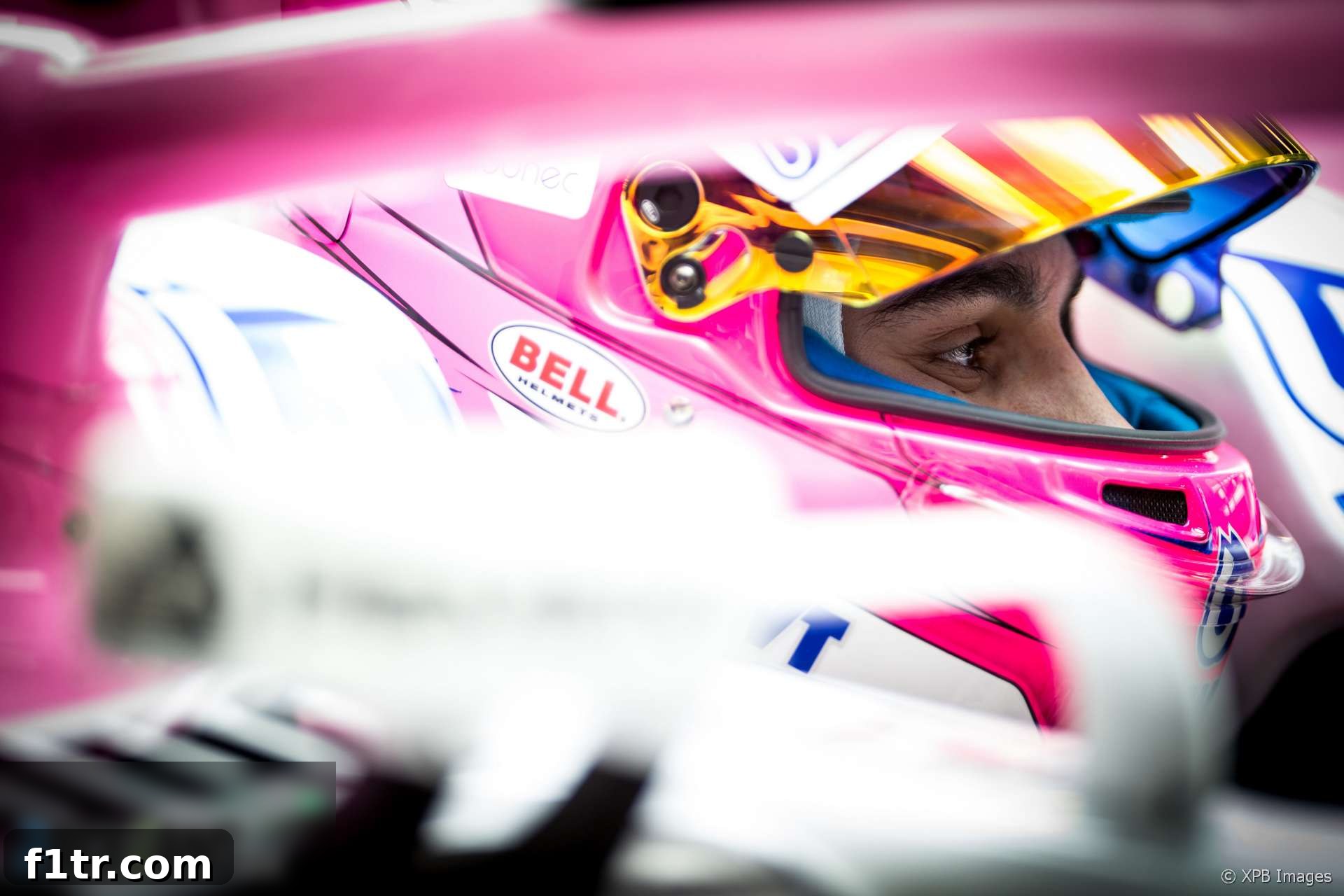
Force India’s Critical Upgrade: Unveiling the New Front Wing for Sergio Perez at the 2018 Bahrain Grand Prix
As the Formula 1 circus descended upon Sakhir for the 2018 Bahrain Grand Prix, all eyes were on the crucial early-season upgrades teams brought to address any shortcomings identified in the opening race. For Sahara Force India, a team consistently punching above its weight, the focus was squarely on an aerodynamic evolution: a brand-new front wing. However, a significant talking point emerged as it was revealed that only one example of this vital component was available, earmarked exclusively for Sergio Perez.
The highly anticipated VJM11, Force India’s challenger for the 2018 season, was still finding its feet, and this new front wing represented a beacon of hope for improved performance. Yet, the scarcity of the upgrade underscored the realities of Formula 1 development, particularly for independent teams operating with more constrained budgets than their manufacturer rivals. Esteban Ocon, Perez’s talented teammate, candidly confirmed the situation to the media, including RaceFans, at the Bahrain International Circuit. “We only have one” of the new wings for the VJM11, Ocon stated, clarifying that his team mate, Sergio Perez, would be the sole beneficiary of this initial iteration.
The Exclusive Upgrade: A Lone Front Wing for Perez
Perez Takes the Lead with the VJM11’s New Aero
The decision to allocate the single new front wing to Sergio Perez was not arbitrary, but rather a reflection of established team policy. Ocon elaborated on this during his media session, explaining, “Normal policy is it’s normally the driver on top in the championship.” While both Force India drivers had endured a challenging start to the season, failing to score points in the preceding Australian Grand Prix, the unwritten rule meant that Perez, having finished ahead in the previous season’s standings and with slightly more experience within the team, was the natural choice. “Even though we have no points [it] should be Sergio,” Ocon concluded, acknowledging the rationale behind the team’s strategic choice despite the equal footing both drivers found themselves on after a scoreless opening round.
Resource Management and the High Stakes of F1 Development
The scenario of a single new component highlights the intense logistical and financial pressures within Formula 1. Developing a new front wing, a complex aerodynamic device crafted from advanced composites, is a massive undertaking involving significant investment in research, design, simulation, and manufacturing. For a team like Force India, operating with a more modest budget compared to front-running outfits, producing multiple new components simultaneously can be a stretch. This often means that initial batches of upgrades are limited, necessitating careful allocation. Providing an upgrade to one driver first allows the team to gather crucial data in a competitive environment, validate its performance, and make any necessary adjustments before committing to full production for both cars. This methodical approach minimizes risk and maximizes the efficiency of valuable development resources.
Recap of Early Season Struggles: The Australian Grand Prix
A Disappointing Start Down Under
Force India’s start to the 2018 season in Melbourne was undeniably below expectations. Both VJM11s struggled for pace throughout the Australian Grand Prix weekend, culminating in a disappointing qualifying session where both Sergio Perez and Esteban Ocon were eliminated in Q2. The race itself offered little reprieve, with neither driver managing to break into the top 10 and secure championship points. This performance immediately signaled that the VJM11, despite showing potential in pre-season testing, was lacking the raw speed and aerodynamic efficiency needed to compete consistently with its mid-field rivals.
The Aerodynamic Conundrum: Identifying the Performance Gap
Following the Australian GP, Ocon’s assessment of the team’s main performance shortfall was unequivocal: it lay on the aerodynamic side. A front wing in Formula 1 is far more than just a decorative element; it is arguably the most critical aerodynamic component on the car. Its intricate design dictates how air flows over, under, and around the car, generating a significant portion of the total downforce and crucially managing the wake generated by the front tires. Any deficiency in the front wing’s design or interaction with the rest of the car’s aero package can cascade into issues throughout the vehicle, impacting overall balance, grip, and tire management. Therefore, a new front wing for the Bahrain Grand Prix represented a targeted effort to address the VJM11’s foundational aerodynamic weaknesses.
Unpacking Aerodynamic Performance in F1
The Relentless Quest for Downforce
In modern Formula 1, downforce is king. It’s the invisible force that presses the car into the track, allowing it to take corners at incredible speeds. The more downforce a car can generate, the faster it can carry speed through corners, and consequently, the quicker its lap times. Ocon acknowledged this fundamental truth, stating, “I think to be honest it’s not just downforce, it’s a lot of things. But mainly it’s the downforce which brings performance in F1.” This statement perfectly encapsulates the complexity and priority of aerodynamics. A front wing specifically manipulates airflow to create downforce directly and, perhaps more importantly, conditions the air to flow effectively over the rest of the car’s aerodynamic surfaces, such as the floor, diffuser, and rear wing. A more efficient front wing means better front-end grip, improved turn-in, and greater confidence for the driver to push harder through corners.
Beyond Just Downforce: The Holistic View of Car Performance
While downforce is paramount, Ocon’s comment about “a lot of things” is a crucial insight into the multifaceted nature of F1 car performance. Beyond aerodynamics, a car’s speed is also determined by mechanical grip (from suspension, tires, and chassis setup), power unit performance and integration, braking efficiency, and even the car’s weight distribution. A perfect aerodynamic package can be undermined by poor mechanical balance, excessive tire degradation, or an underperforming engine. Force India, as a customer engine team, had less control over their power unit, making optimization of the chassis and aerodynamics even more critical. The team’s engineers would have been working tirelessly to find the optimal balance between these various elements, ensuring that any gains from a new front wing weren’t offset by deficiencies elsewhere.
VJM11 vs. VJM10: A Step Forward, Yet Lagging
Intriguingly, Ocon also offered a comparative perspective on the new car: “But compared to last year this car is still faster than last year, it’s an improvement from the other car.” This statement might seem contradictory given the team’s early struggles. However, it highlights the relentless pace of development in Formula 1. Every year, new regulations or continued refinement means that even a “slow” car in a current season is often demonstrably faster than its predecessor. The challenge lies in relative performance. While the VJM11 might have been quicker than the VJM10 in absolute terms, other teams had made even greater strides, widening the competitive gap. Force India’s objective wasn’t just to build a faster car, but a car that was faster *than its rivals*, a benchmark they were clearly missing at the start of 2018.
Driver Feedback: The Path to Improvement
United in Pursuit of Balance
The synergy between teammates, particularly in providing consistent feedback to engineers, is invaluable for car development. Despite their distinct driving styles, Ocon confirmed that he and Perez were largely “on the same page” regarding the car’s handling characteristics. “At the end we are chasing the same balance, we want a neutral car,” he explained. This unity in feedback is a tremendous asset. It allows engineers to focus their development efforts in a clear, unambiguous direction, rather than having to reconcile conflicting reports from their drivers. This shared vision for the car’s setup can significantly accelerate the improvement process.
The “Neutral Car” Ideal: A Driver’s Dream
The concept of a “neutral car” is the holy grail for any Formula 1 driver. A neutral car is one that exhibits neither excessive understeer (where the front wheels lose grip and the car wants to go straight) nor oversteer (where the rear wheels lose grip and the car wants to spin). Instead, it responds precisely to steering inputs, allowing the driver to confidently push the limits of grip without unpredictable behavior. Achieving this balance requires meticulous setup work, with the front wing playing a pivotal role in fine-tuning the car’s front-end response. When both drivers are seeking this same fundamental characteristic, it indicates a core engineering challenge that, once addressed, can benefit both sides of the garage.
Synergy in the Cockpit: Maximizing Development Efficiency
The fact that Sergio Perez and Esteban Ocon, two highly competitive drivers, could deliver similar feedback, despite their inherent differences in how they tackle corners or manage tires, underscored their professionalism and understanding of aerodynamic principles. Perez, with his wealth of experience, and Ocon, a rising star with an analytical approach, provided a robust data set for the Force India engineers. This collective insight meant that the team could confidently pursue solutions, knowing that any improvements made would genuinely enhance the car’s performance for both drivers. “The good thing is that we are both on the same page and we can bring the team to the same conclusion,” Ocon reiterated, highlighting the strength of their combined input in guiding the VJM11’s evolution.
Implications for Force India’s 2018 Season
The High Stakes of Early Upgrades
The introduction of this single front wing at the Bahrain Grand Prix carried significant weight. For Force India, a team perennially battling for supremacy in the highly competitive mid-field, every incremental gain was crucial. A successful outing for the new front wing on Perez’s car could validate the team’s development direction, provide a much-needed morale boost, and potentially translate into a better competitive showing. Conversely, if the upgrade failed to deliver the expected performance, it would necessitate a re-evaluation of their aerodynamic philosophy and potentially set back their development schedule.
A Season of Relentless Development
The 2018 Formula 1 season was always going to be a marathon, not a sprint, especially for teams like Force India. Continuous aerodynamic development is not just desirable but absolutely essential to remain competitive. Rivals are constantly bringing their own upgrades, and standing still means falling behind. The new front wing for Bahrain was merely the first step in what promised to be a season-long battle of aerodynamic evolution. Success in this arms race would determine Force India’s final standing in the Constructors’ Championship.
Financial Pressures and Team Survival
Beyond the technical aspects, the story of Force India in 2018 was also one of financial challenges. The team faced significant budgetary constraints throughout the season, which eventually led to a change of ownership. This financial backdrop made every development decision, every manufactured part, and every resource allocation even more critical. The choice to produce only one front wing initially was a direct consequence of these pressures, highlighting the incredible efficiency and ingenuity required by the team’s engineering staff to extract maximum performance from limited resources.
In conclusion, Force India’s decision to bring a solitary new front wing to the 2018 Bahrain Grand Prix, entrusting it to Sergio Perez, underscored the intricate blend of engineering prowess, strategic resource management, and team dynamics prevalent in Formula 1. While the VJM11 had shown early-season struggles, particularly in aerodynamics, the unified feedback from Perez and Ocon, coupled with targeted upgrades, provided a clear path forward. The success of this upgrade in Bahrain would be a crucial indicator of Force India’s potential to climb the grid and secure valuable points in what was set to be a challenging yet ultimately defining season for the team.
Go ad-free for just £1 per month>> Find out more and sign up
2018 F1 season: Related Articles and Further Reading
- F1 feared “death knell” for Drive to Survive after Ferrari and Mercedes snub
- McLaren staff told us we were “totally crazy” to take Honda engines in 2018 – Tost
- ‘It doesn’t matter if we start last’: How Red Bull’s junior team aided Honda’s leap forward
- Honda’s jet division helped F1 engineers solve power unit problem
- McLaren Racing losses rise after Honda split
Browse all 2018 F1 season articles