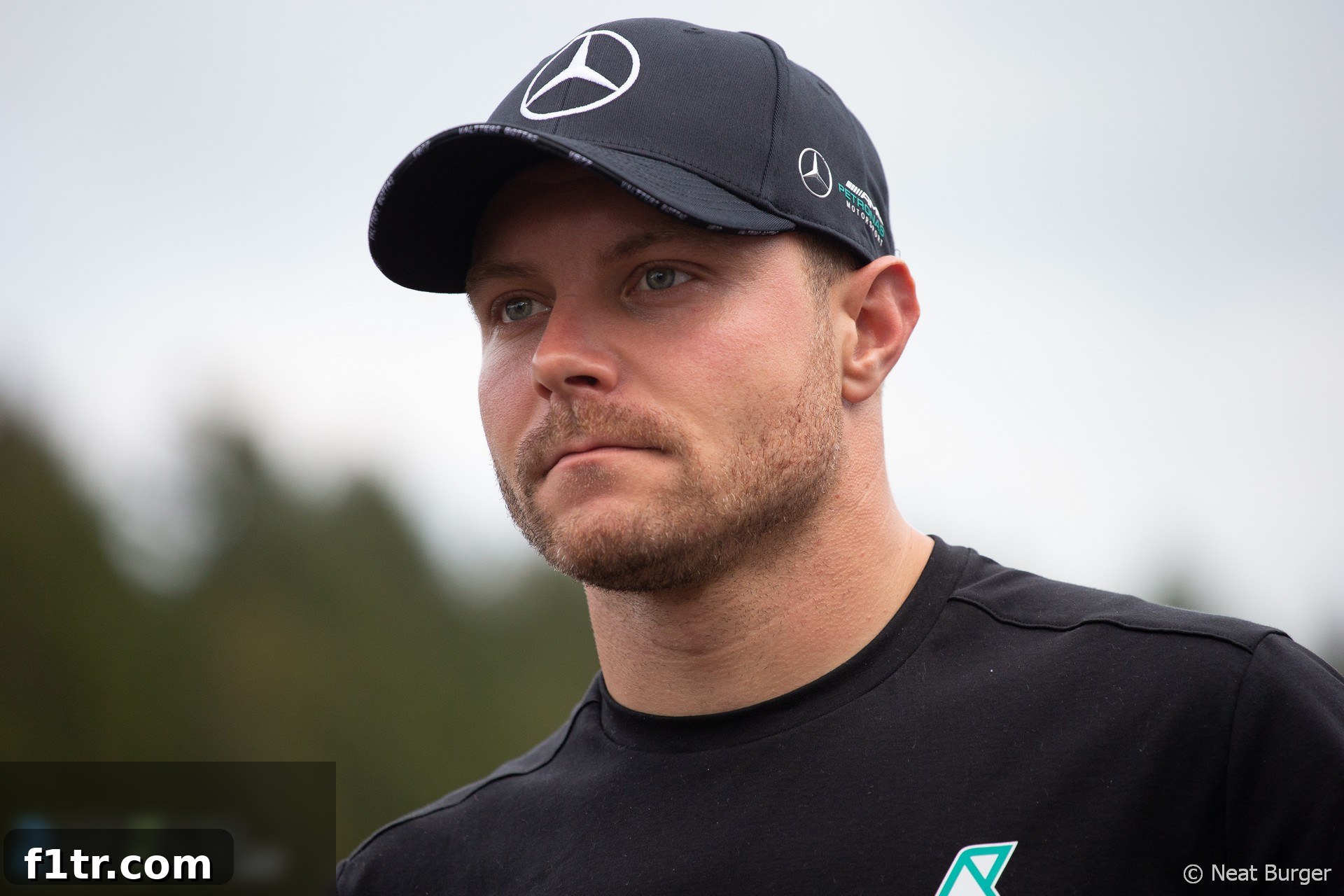
Valtteri Bottas Embraces Grid Penalty After Championship Verdict
Valtteri Bottas, the seasoned Finnish driver for Mercedes-AMG Petronas F1 Team, recently expressed a surprising sense of calm regarding an impending power unit penalty. Speaking ahead of the Brazilian Grand Prix, Bottas acknowledged that the blow of starting from the back of the grid would have been significantly more difficult to bear had he still been in contention for the coveted Formula 1 World Championship title. This pragmatic outlook reflects a driver who has come to terms with his season’s outcome and is now focused solely on maximizing performance in the remaining races.
The penalty stems from a power unit failure during the preceding race, the United States Grand Prix. At the Circuit of the Americas, Bottas’s car suffered a critical power unit problem, specifically a loss of oil, which ultimately led to his retirement from the race. This incident necessitated the replacement of several key engine components, pushing him over the maximum allocated number for the season and triggering an automatic grid drop for the upcoming event.
The Cost of Reliability: A New Power Unit for Interlagos
For the Brazilian Grand Prix weekend at the iconic Autódromo José Carlos Pace in Interlagos, Bottas’s Mercedes W10 is being fitted with a completely new power unit. This comprehensive upgrade includes a fresh internal combustion engine, a new turbocharger, and a new MGU-H (Motor Generator Unit – Heat). These components are critical for the car’s performance, and while getting the latest specification unit offers potential performance benefits, the penalty for exceeding the allowed quota is severe: a mandatory start from the very back of the grid.
“Obviously, I’m taking a new power unit of the latest spec,” Bottas confirmed to the media. “So that means I’m going to be starting from the back of the grid. Knowing that, we need to really focus on the race performance, race pace, whatever we do with the car. Also, for sure, thinking ahead about the strategy, if there’s anything we can do to aid my comeback from the back. But I look forward to it.” His words convey a readiness to tackle the challenge head-on, transforming a setback into a strategic opportunity.
Championship Settled: A Timely Respite from Title Pressure
The timing of this penalty, though unfortunate, aligns with a significant development in the 2019 season. Just two races prior, at the United States Grand Prix, his teammate Lewis Hamilton clinched his sixth Formula 1 World Championship title. This decisive moment meant that the intense pressure of a championship fight had lifted from Bottas’s shoulders, allowing him to approach the subsequent races with a different mindset.
“[It’s a] good thing everything was already settled in the championship before Brazil,” Bottas reflected. “Because obviously, if I would have still been in the title fight, that failure and the start for this weekend would have been even more painful. So everything’s settled, I’ll take it, it is what it is. And I know the approach for Sunday and need to make most out of it. I’m sure we can still do something good from that place.” This sentiment underscores the immense mental toll that a championship battle takes, and the relief of not having this particular challenge compounded by title aspirations.
In a season where Bottas started strongly, winning the opening race in Australia and demonstrating significant progress, the championship eventually slipped away as Hamilton maintained an exceptional level of consistency and performance. By the time the US Grand Prix concluded, the gap was insurmountable, solidifying Hamilton’s place as champion and freeing Bottas to pursue individual race victories without the added weight of title implications.
Navigating Interlagos from the Rear: Strategy and Overtaking
Starting at the back of the grid at Interlagos presents a unique strategic puzzle for the Mercedes team and Valtteri Bottas. The Autódromo José Carlos Pace is known for its undulating nature, tight corners, and a long main straight that offers prime overtaking opportunities into Turn 1. However, making significant progress through the field requires a combination of raw pace, astute strategy, and skillful driving.
Bottas and his engineers will spend considerable time dissecting potential race scenarios. Considerations will include tire strategy – whether to opt for a longer first stint on harder compounds or an aggressive charge on softer tires – and how to capitalize on any safety car periods or adverse weather conditions, which Interlagos is famous for providing. The goal will be not just to gain positions, but to do so efficiently, preserving tire life and minimizing exposure to risks in the congested midfield.
The inherent pace advantage of the Mercedes W10, which has been a dominant force throughout the 2019 season, will undoubtedly be a crucial factor. Bottas will rely on the car’s strong aerodynamic package and the newly installed, latest-spec power unit to scythe through traffic. His experience in high-pressure situations and his ability to manage tires will be paramount in transforming a last-place start into a respectable finish, potentially even a podium, which would be a monumental achievement under these circumstances.
The Mental Game: A Driver’s Resilience
For any Formula 1 driver, a grid penalty is a significant blow to their weekend aspirations. It demands a recalibration of goals and a renewed focus on execution. For Bottas, however, the acceptance of the situation appears to be a source of strength. Rather than dwelling on the unfairness of the mechanical failure, he is channeling his energy into the task at hand: extracting every ounce of performance from his car and himself.
This resilience is a testament to Bottas’s character and his commitment to the Mercedes team. Despite the disappointment of not winning the championship, he remains a vital part of the team’s ongoing success and development. His performance in the remaining races will contribute to Mercedes’ constructors’ championship points and provide valuable data for the development of their future cars. A strong drive from the back in Brazil would not only be a personal triumph but also a powerful statement about the capabilities of the team and driver combination.
The challenge from the rear of the grid is often described as one of the most exciting aspects of Formula 1 for fans, and it offers Bottas a unique stage to demonstrate his race craft and determination. The opportunity to showcase his overtaking prowess and strategic acumen, unburdened by championship pressure, could lead to one of his most memorable performances of the season. His declaration of looking forward to the challenge is not just a platitude; it reflects a genuine desire to turn adversity into opportunity.
Looking Beyond Interlagos: Finishing the Season Strong
The Brazilian Grand Prix is the penultimate race of the 2019 Formula 1 season. Following Interlagos, the circus moves to Abu Dhabi for the grand finale. For Valtteri Bottas, these final races are crucial for maintaining momentum and ending the season on a high note. While the drivers’ championship is settled, there’s still pride at stake, and the desire to secure as many points as possible for the team, even with the constructors’ title already in Mercedes’ hands.
His performance in Brazil, and subsequently in Abu Dhabi, will also be important in setting the tone for the upcoming 2020 season. Demonstrating strong form, fighting spirit, and adaptability, even when facing significant hurdles like a grid penalty, reinforces his position within the team and showcases his enduring talent to the wider F1 world. Ultimately, Bottas’s measured and determined approach to the Brazilian Grand Prix penalty highlights a professional athlete accepting the cards he’s been dealt and focusing entirely on making the absolute best of an imperfect situation.
His confidence in the team’s ability to devise an effective strategy, combined with his own commitment to aggressive and calculated driving, paints a picture of a driver ready to defy expectations. The F1 community will be keenly watching to see just how far Valtteri Bottas can climb through the field from the back of the grid in Brazil, proving once again that in motorsport, resilience and strategic thinking can often overcome initial disadvantages.
Related 2019 F1 Season Articles
- Crying in the Melbourne car park at 2019 grand prix was my career low – Ocon
- McLaren Racing reports reduced £71 million loss in 2019
- Kvyat: Hockenheim podium last year was “my biggest achievement” so far
- How the FIA’s new encrypted fuel flow meter targets Ferrari’s suspected ‘aliasing’ trick
- “He smashed my office door”: 23 must-see moments from ‘Drive to Survive’ season two