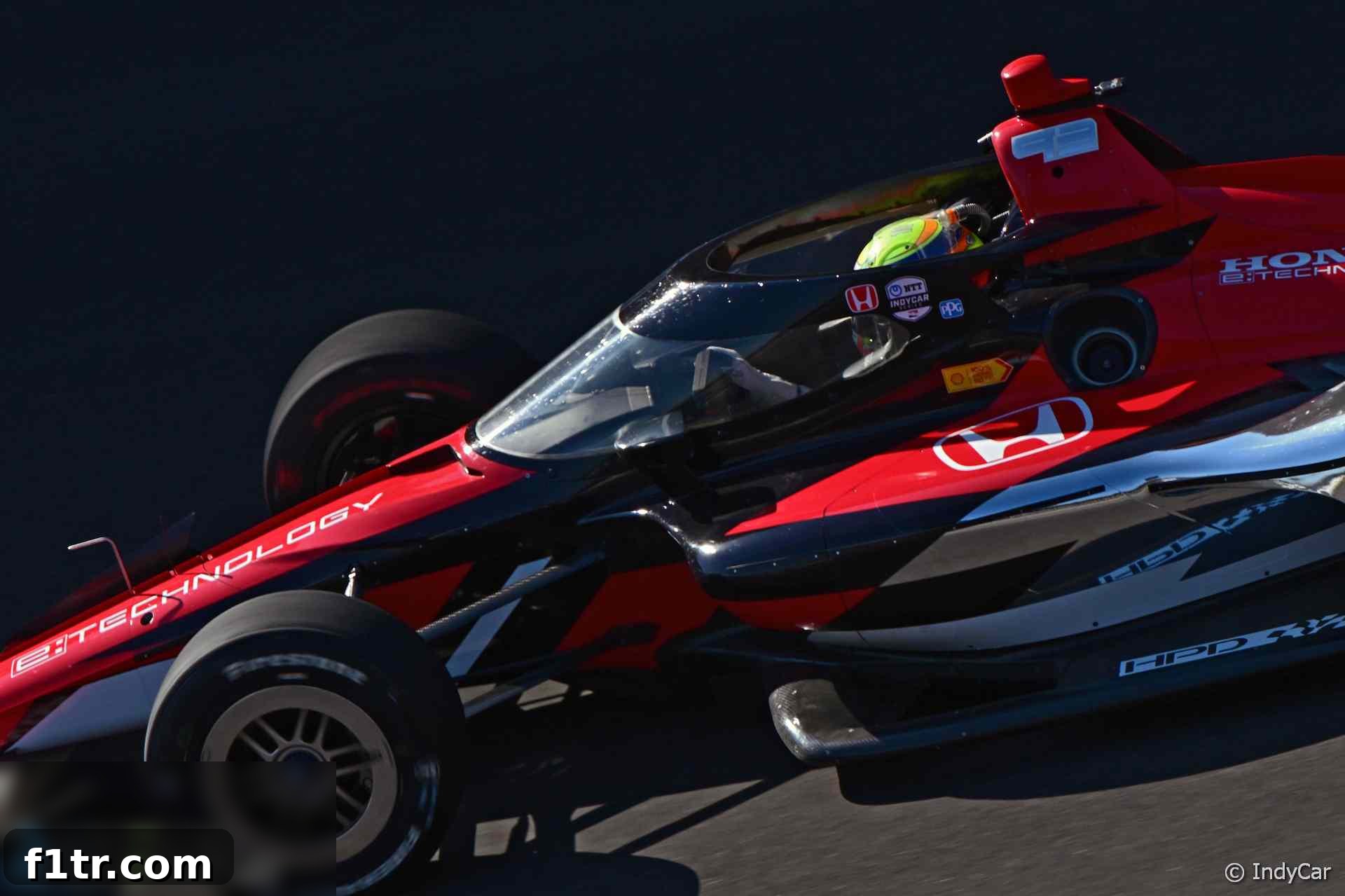
IndyCar’s much-anticipated introduction of its cutting-edge hybrid power units is finally set to revolutionize the NTT IndyCar Series. This landmark technological leap will make its official debut at the ninth round of the 2024 championship, hosted at the iconic Mid-Ohio Sports Car Course. Fans and competitors alike are buzzing with excitement for this pivotal moment, which promises to redefine racing dynamics and strategic play in North American open-wheel motorsport.
The journey to this hybrid era has been a winding one, marked by several postponements as the series meticulously worked to ensure the system’s flawless integration and reliability. Originally envisioned for a 2022 launch alongside a completely new engine formula, the hybrid project faced initial delays when the engine formula plans were shelved. Its introduction was then pushed to the start of the current season. However, in December of last year, IndyCar announced a further deferral, opting to bring the hybrid technology online at an unspecified date later in 2024, specifically after the prestigious Indianapolis 500, to allow for extensive testing and refinement.
The Dawn of a New Era: Mid-Ohio as the Launchpad
After careful deliberation and rigorous development, the championship has now officially designated the July round at Mid-Ohio as the inaugural race for the hybrid-powered field. This event, the ninth of 17 points-paying races on the 2024 calendar, will mark a significant turning point for the series. “The IndyCar-specific hybrid power unit will bring a new and exciting element to the NTT IndyCar Series with additional energy and overtake options,” stated Jay Frye, the series president. “We cannot wait to see the start of this new era at Mid-Ohio, a venue that perfectly blends technical challenges with high-speed sections, making it an ideal proving ground for this advanced technology.”
This strategic choice underscores IndyCar’s commitment to innovation and delivering an enhanced racing spectacle. The Mid-Ohio Sports Car Course, known for its demanding layout with elevation changes and a mix of slow and fast corners, will provide an immediate and comprehensive test for the new power units. Drivers will need to quickly adapt their racing lines, energy management strategies, and throttle control to master the additional power and features offered by the hybrid system.
Unleashing Unprecedented Power and Strategic Depth
The core of the new hybrid system is its ability to provide drivers with an additional 120 horsepower, boosting the total available power to well over 800bhp. This substantial increase is not merely about raw speed; it introduces a new dimension of strategic depth to races. Drivers will be able to deploy this extra energy at opportune moments, creating more dramatic overtaking opportunities and tighter battles throughout the field. Imagine a scenario where a driver conserves energy for a critical moment, then unleashes a surge of power to make a decisive move into a corner or down a straight. This “push-to-pass” like capability, powered by kinetic and thermal energy recovery, will undoubtedly intensify the on-track action.
The hybrid unit incorporates a Motor Generator Unit (MGU) and an Energy Storage System (ESS), working in harmony with the existing 2.2-liter twin-turbocharged V6 engines supplied by Chevrolet and Honda. The MGU is strategically integrated with the clutch shaft, allowing it to efficiently generate energy under braking and deceleration, which is then stored in the ESS. IndyCar has wisely designed the system to be adaptable, setting different limits on the amount of stored energy that can be deployed based on the specific length and layout of each track. This ensures that the hybrid element remains impactful and strategically relevant across diverse circuits, from high-speed ovals to technical road courses and bustling street circuits.
Beyond Raw Power: Enhanced Safety and Race Flow
One of the most significant and practical benefits of the new hybrid system extends beyond performance: it greatly enhances safety and race flow by allowing drivers to restart their own engines. Currently, if a driver stalls their engine after an incident or spin, they often require assistance from safety crews to restart, leading to caution periods and disrupted race rhythm. With the hybrid system, drivers will gain the ability to fire up their engines independently, drastically reducing the need for external intervention. This innovative feature is expected to decrease the frequency and duration of caution flags, allowing for more continuous green-flag racing and minimizing the impact of minor incidents on the overall race strategy.
This self-start capability empowers drivers, giving them more control and potentially allowing them to continue racing or rejoin the field more quickly after a non-damaging spin. For teams, it means less concern about losing laps under caution due to a simple engine stall. For fans, it translates directly into a more fluid and exciting race experience, with fewer interruptions and more uninterrupted competition. This thoughtful integration of technology demonstrates IndyCar’s commitment to both thrilling motorsport and operational efficiency.
Extensive Testing: Paving the Way for Performance and Reliability
The decision to delay the hybrid introduction was not taken lightly, but it allowed for an unparalleled testing regimen to ensure the system’s robustness and performance. Teams have collectively covered an astonishing more than 37,000 kilometers of testing with the hybrid units. This comprehensive development program has spanned seven different permanent venues, exposing the system to a wide array of track conditions, temperatures, and demands. This extensive data collection and refinement process has been crucial in ironing out any potential issues and optimizing the hybrid unit for competitive racing.
The dedication to thorough preparation continues right up to the debut. A further critical test involving the entire field is scheduled to take place at the historic Milwaukee Mile oval on June 11th. This full-field test will provide invaluable insights into how the hybrid units perform in a competitive environment with multiple cars on track, offering a final opportunity for teams and drivers to fine-tune their strategies and for IndyCar to confirm the system’s readiness for race conditions. Such meticulous preparation is a testament to the series’ commitment to a seamless and successful hybrid launch.
The Hybrid Era: A Significant Portion of the Season
IndyCar’s decision to launch the hybrid power units at Mid-Ohio means that more than half of this year’s 17 points-paying races will be contested with this groundbreaking technology. Following its debut at Mid-Ohio, the hybrid systems will be a staple feature across a diverse range of tracks, showcasing their versatility and impact on different racing disciplines. The schedule includes a thrilling lineup of events where fans can witness hybrid action firsthand:
- Two races on the Iowa oval, known for its intense short-oval battles.
- The challenging street circuit of Toronto, where precise energy management will be key.
- The high-speed Gateway oval, promising breathtaking overtakes.
- The technical Portland road circuit, demanding both power and finesse.
- Another two races at the iconic Milwaukee Mile oval, providing a further spectacle.
- The grand finale on the Nashville street circuit, where the championship could be decided with hybrid power.
This extensive integration into the latter half of the season ensures that the hybrid technology will play a crucial role in the championship battle, adding an unpredictable and exciting layer to every race. Drivers and teams will need to master hybrid deployment not just for individual race wins, but also for consistent points scoring throughout the crucial final races.
Impact on Racing and the Future of IndyCar
The introduction of hybrid power units represents a significant leap forward for the NTT IndyCar Series, solidifying its position at the forefront of motorsport innovation. For drivers, it means an added layer of complexity and skill, demanding sophisticated energy management and quick decision-making under pressure. They will become more integral to the car’s overall performance, akin to a sophisticated gaming experience where strategic power boosts can be deployed. For teams, it presents new engineering challenges and opportunities for innovation, optimizing hybrid deployment strategies and car setup for maximum efficiency and speed.
For fans, the promise is clear: more dynamic racing, reduced caution periods, and the thrilling spectacle of drivers strategically deploying extra power for overtakes. It aligns IndyCar with the global trend towards sustainable motorsport, showcasing advanced technology while maintaining the series’ legendary speed and competitiveness. This move is not merely an upgrade; it’s a strategic evolution that positions IndyCar for a vibrant and exciting future, attracting new audiences and reinforcing its status as one of the world’s premier racing championships.
As the countdown to Mid-Ohio begins, the anticipation is palpable. The hybrid era is set to usher in a new chapter of IndyCar history, promising an unforgettable season filled with innovation, strategic battles, and breathtaking racing action. Get ready for a monumental shift that will redefine speed, strategy, and spectacle in the NTT IndyCar Series.
IndyCar Insights
Stay informed with the latest news and features from the NTT IndyCar Series:
- IndyCar driver McLaughlin cleared of injury after crashing through barrier at Barber
- Schumacher says his IndyCar feels like ‘an F2 car, just with better tyres’
- IndyCar “way faster than Formula 1” in some corners, says Grosjean
- FIA to award more F1 superlicence points to IndyCar drivers from 2026
- Schumacher to race full-time in IndyCar with RLL in 2026
Browse all IndyCar articles