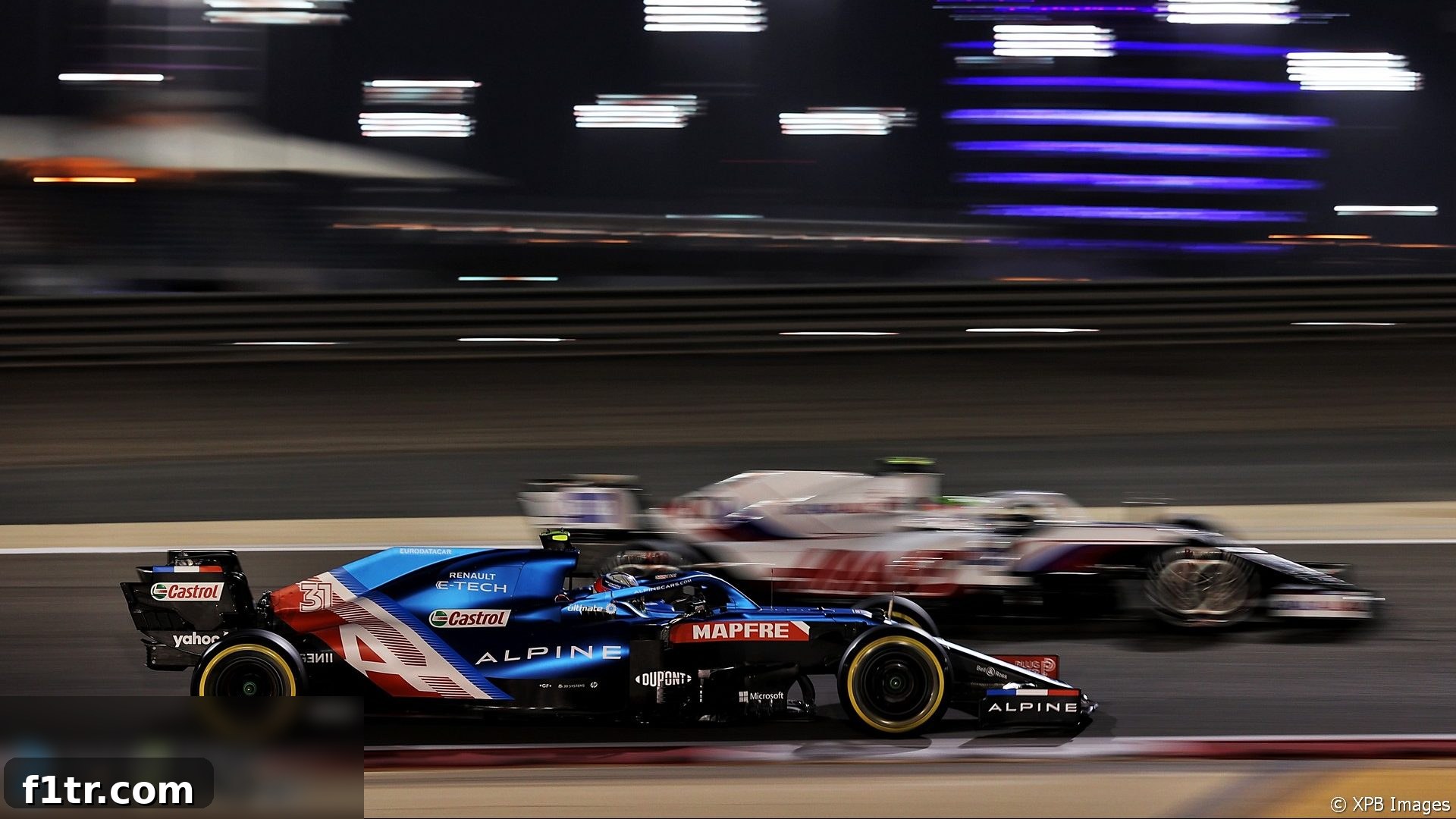
The Bahrain Grand Prix weekend often serves as an early barometer for the Formula 1 season, not just for car performance but also for the application and interpretation of the sport’s regulations. One area that frequently ignites debate and requires careful management is track limits. At the recent Bahrain Grand Prix, particular attention was drawn to Turn 4, where an unusual dual-standard approach to track limits was implemented, creating distinct rules for practice and qualifying sessions compared to the main race. This nuanced policy, designed to balance competitive integrity with the flow of racing, sparked considerable discussion among teams, drivers, and fans alike.
Initially, prior to the commencement of the race weekend, drivers were informed that the right-hand hairpin of Turn 4 would not be strictly monitored for track limits. This meant competitors were permitted to utilize the painted run-off area situated beyond the exit kerb without fear of their lap times being deleted. The reasoning behind such a seemingly lenient stance often revolves around promoting faster, more aggressive driving lines and potentially reducing the frequency of contentious penalties for marginal infringements. Such an approach aims to keep the focus on wheel-to-wheel racing rather than microscopic analysis of every car’s trajectory relative to the white lines.
However, this initial directive underwent a significant revision. Formula 1 Race Director Michael Masi, a central figure in the sport’s regulatory framework, issued updated guidance to all participants ahead of the second free practice session. This revision introduced a critical distinction for Turn 4, setting forth different instructions specifically for practice and qualifying sessions versus the main Grand Prix race. Masi’s intervention highlighted the FIA’s proactive role in refining regulations as circumstances unfold, adapting to observed driving patterns and ensuring the integrity of competition across different phases of a race weekend. This decision underscored the dynamic nature of F1 regulations, which are often subject to adjustments based on real-time assessments and feedback from track activity.
Understanding the Dual Track Limits Policy at Turn 4
The revised regulations for Turn 4 established a clear dichotomy. For all practice sessions, which explicitly include the crucial ‘qualifying practice’ sessions where drivers push for absolute pace, the rules were unequivocally stringent. The official guidance stated: “A lap time achieved during any practice session by leaving the track and cutting behind the red and white kerb on the exit of Turn 4, will result in that lap time being invalidated by the stewards.” This strict interpretation was vital for maintaining fair competition during the sessions that determine grid positions. Allowing drivers to gain an advantage by extending their track limits in practice or qualifying would undermine the very essence of competitive lap time setting. The red and white kerb, a visible and unambiguous marker, was designated as the definitive boundary, ensuring that any perceived benefit gained by running wide would be nullified immediately.
The rationale behind this strict approach for practice and qualifying is multifaceted. In these sessions, drivers are pushing their vehicles to the absolute limit, seeking every millisecond of advantage. Without stringent enforcement, the natural tendency would be to exploit any available run-off to carry more speed through the corner, potentially creating an unfair advantage. Such laxity could lead to inconsistent lap times and make it difficult for stewards to judge genuine gains. By clearly defining the boundary with the red and white kerb and enforcing immediate lap time deletion, the FIA aimed to ensure that all competitors adhere to the same precise track parameters when setting their fastest laps, thus preserving the integrity of the sporting contest and the accuracy of the qualifying grid.
Conversely, the approach adopted for the actual race was markedly different and more lenient. For the Grand Prix itself, drivers were advised that “the track limits at the exit of Turn 4 will not be monitored with regard to setting a lap time, as the defining limits are the artificial grass and the gravel trap in that location.” This distinction is crucial. While lap times would still be monitored for overall consistency and competitive racing, the specific boundary for corner exit at Turn 4 would effectively be extended beyond the red and white kerb. The presence of the artificial grass and, more significantly, the gravel trap, acts as a natural deterrent. Unlike a paved run-off, artificial grass offers reduced grip, and the gravel trap actively penalizes a driver by slowing their car and potentially causing damage, thereby removing any incentive to deliberately exceed the track limits for a performance gain.
The Rationale Behind Race Day Lenience and Article 27.3
This more permissive stance during the race is often employed at circuits where track design naturally discourages drivers from gaining an unfair advantage by running wide. The philosophy here shifts from penalizing marginal gains to trusting the inherent characteristics of the circuit to enforce discipline. If a driver ventures too far onto the artificial grass, they risk losing time and grip. If they push even further into the gravel, they face a far more significant penalty, potentially losing multiple positions or even retiring from the race. This self-policing mechanism, integrated into the circuit’s design, allows for harder racing without constant intervention from race control for minor infringements that do not ultimately confer a lasting advantage.
Despite this specific leniency at Turn 4 for lap time monitoring during the race, Race Director Masi also reminded drivers of the broader implications of Article 27.3 of the Sporting Regulations. This fundamental rule states: “drivers must make every reasonable effort to use the track at all times and may not leave the track without a justifiable reason.” It further clarifies that “The white lines bordering the asphalt define the track edge.” This overarching regulation ensures that even if a specific corner has a more relaxed track limits policy, drivers cannot simply drive off-track at will or gain a consistent advantage by doing so. The “justifiable reason” clause typically covers scenarios such as avoiding an accident, being forced off by another competitor, or rejoining safely after an error. It prevents intentional corner-cutting or driving off the circuit to maintain a lead or pass a competitor, thereby preserving the integrity of on-track racing. Therefore, while minor excursions at Turn 4 in the race might not result in a deleted lap time, a blatant abuse of the run-off for a clear and sustained advantage could still fall under the purview of Article 27.3 and incur a penalty.
Immediate Impact and Broader Implications
The immediate impact of the revised rules was evident during the second free practice session. A total of nine lap times were invalidated due to track limits infringements at Turn 4. Notably, five of these deleted lap times were recorded by Valtteri Bottas, then driving for Mercedes. This statistic highlighted the challenging nature of adapting to the new, stricter guidelines for practice and qualifying. Drivers, accustomed to pushing boundaries and exploring every inch of asphalt, had to quickly recalibrate their approach to Turn 4. Bottas’s multiple infringements suggested that even experienced drivers found it difficult to consistently stay within the newly defined confines while attempting to extract maximum performance from their car. This immediate consequence served as a stark reminder to all teams and drivers of the importance of adhering to the precise regulations, especially during the critical qualifying sessions that would follow.
The situation at Turn 4 in Bahrain encapsulates the ongoing challenge faced by Formula 1 in managing track limits. On one hand, there is a desire to promote exciting, hard-fought racing, allowing drivers to push their cars to the absolute edge. On the other, there is a crucial need to ensure fairness and prevent drivers from gaining an unfair advantage by exceeding the defined boundaries of the track. The white lines, while seemingly simple, become points of intense scrutiny, and any ambiguity or inconsistency in their enforcement can lead to controversy.
The dual-standard approach at Bahrain’s Turn 4 reflects a strategic attempt to balance these competing interests. By enforcing strict limits in practice and qualifying, the FIA ensures that the grid is set on merit, with all drivers adhering to the same precise parameters for a “valid” lap. This prevents the distortion of true performance and maintains the integrity of the time-trial format. For the race, however, the emphasis shifts slightly. With natural deterrents like gravel, the focus moves towards allowing more freedom for wheel-to-wheel combat, minimizing the need for constant stewarding intervention over minor, non-advantageous excursions. This allows the race to flow more naturally, reducing the likelihood of race-altering penalties for marginal errors that don’t fundamentally impact the competitive balance.
Such nuanced applications of track limit rules are a recurring theme in modern Formula 1. Circuits are continuously evaluated, and regulations are adapted to specific corners and their characteristics. This adaptive approach, while sometimes appearing complex, is a testament to the sport’s commitment to finding the optimal balance between thrilling competition, driver safety, and sporting integrity. The Bahrain Grand Prix’s Turn 4 provided a prime example of how race control actively shapes the competitive landscape, session by session, to deliver the best possible spectacle while upholding the fundamental principles of fair play.
Looking ahead, the experience at Bahrain’s Turn 4 serves as a valuable case study for future Grand Prix events. It highlights the importance of clear communication from race control, driver adaptability, and the ongoing dialogue between the FIA, teams, and drivers to ensure that track limit regulations are consistently understood and applied. As Formula 1 continues to evolve, so too will the methods of managing these crucial boundaries, always with the aim of maximizing both excitement and fairness on the global stage.