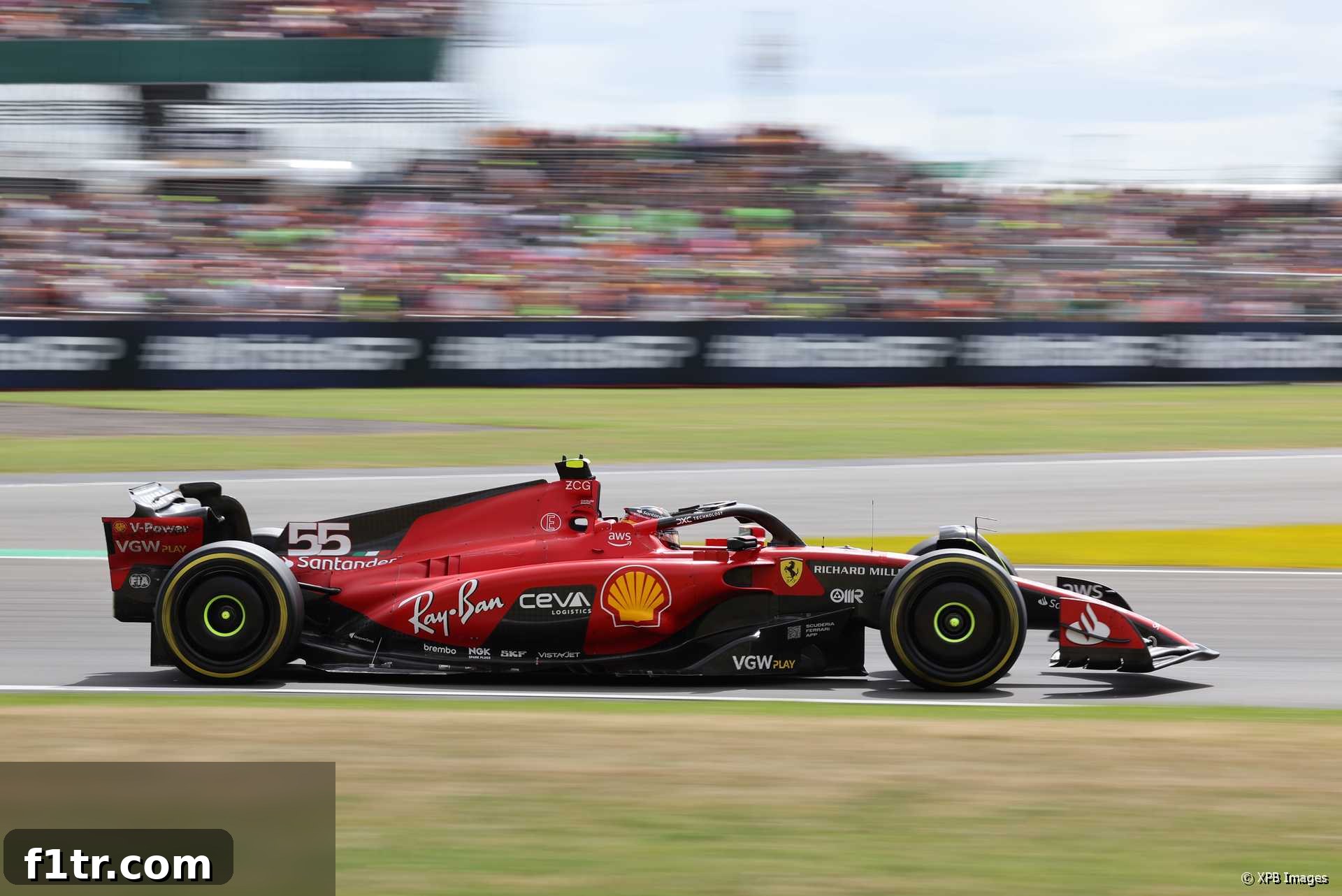
Unlocking the SF-23’s Potential: Vasseur Puts Setup First for Ferrari’s F1 Pace
In the high-stakes world of Formula 1, every team constantly seeks an edge, often through relentless car development and a steady stream of upgrades. However, Ferrari Team Principal Frederic Vasseur presents a nuanced perspective on the Maranello squad’s current strategy. Vasseur asserts that the key to extracting more performance from the Ferrari SF-23 lies primarily in making astute setup decisions and optimizing the existing package, rather than solely chasing new components. This approach signals a strategic shift, focusing on meticulous fine-tuning and weekend-to-weekend mastery of their current machinery to climb the fiercely competitive grid.
After a challenging initial phase of the 2023 Formula 1 season, Ferrari finds itself in a pivotal position. Despite having secured two podium finishes, the team currently occupies fourth place in the Constructors’ Standings after ten races. A closer look at their performance reveals a pattern of inconsistency: while capable of flashes of brilliance, they have failed to finish within the top five in four separate Grands Prix. This fluctuating form underscores Vasseur’s belief that the raw potential of the SF-23 is not yet fully realized, and that a more systematic approach to race weekend preparation could yield substantial dividends.
The Philosophy Behind Setup Optimization: More Than Just Upgrades
Vasseur’s comments following the British Grand Prix shed significant light on his operational philosophy. He suggests that the impact of ongoing development, while important, eventually reaches a point of diminishing returns. “I’m not sure that it’s development, It’s also set-up during the weekend,” Vasseur explained. “Because the development at one stage you will have a kind of asymptote with the upgrade that you will make one or two tenths with set-up and [with] the preparation of the weekend you can do more than this.”
This statement highlights a crucial insight in modern Formula 1: while aerodynamic and mechanical upgrades are essential for long-term competitiveness, the immediate gains often come from expertly tailoring the car to specific track conditions and maximizing its inherent capabilities. In an era governed by budget caps and limited testing, the efficiency of extracting performance from the existing hardware becomes paramount. Vasseur understands that a team cannot endlessly introduce new parts, emphasizing, “You can’t bring every single week upgrades on the car. We will have parts soon but again if I have a look on the [most recent race] weekend, I think we could have done a much better usage of the car that we have.”
His focus is squarely on execution and ensuring that the team — from engineers to strategists and drivers — collectively extracts the absolute maximum from the SF-23 on any given Grand Prix weekend. This holistic view implies a deeper scrutiny of data, simulator work, and a more adaptive approach to practice sessions, aiming to find that perfect balance and setup window that allows Charles Leclerc and Carlos Sainz to push the car to its absolute limit.
SF-23’s Performance Trajectory and Lingering Challenges
Despite the calls for better optimization, Ferrari has not been idle on the development front, introducing several significant changes to the SF-23 since the season commenced. These upgrades have aimed to address various aspects of the car’s performance, but Vasseur’s assessment suggests that their full potential hasn’t always been unlocked consistently. The challenge for Ferrari often lies in taming the car’s inherent characteristics, which at times have proven difficult for its drivers.
Addressing the ‘Knife-Edge’ Handling
A significant shortcoming of the SF-23, consistently highlighted by both Charles Leclerc and Carlos Sainz Jnr, has been its “knife-edge” handling and overall instability. This characteristic refers to a car that is highly sensitive to setup changes and driving inputs, often leading to unpredictable behavior at the limit. Such a trait can severely undermine driver confidence, making it difficult to extract consistent pace, especially during long race stints or in changing track conditions. Vasseur acknowledges this, stating, “Clearly we improved our biggest weakness of the beginning of the season, the instability, inconsistency.” This suggests that the team has made strides in making the car more predictable, a vital step towards unlocking its full potential.
However, the problem is not entirely eradicated and can be severely exacerbated by specific race situations. Vasseur admits that the SF-23 appears to struggle more than some competitors when caught in a “DRS train” – a scenario where multiple cars are running closely together, all benefiting from Drag Reduction System (DRS) and often operating in turbulent air. “It looks like we struggle a lot, perhaps a bit more than some others, when we are into the [DRS] train,” he observed. This indicates a potential sensitivity to aero wash or specific cooling limitations when running in dirty air, a factor that could compromise both defensive and offensive maneuvers in a race.
The Canadian Grand Prix: A Glimpse of True Pace
Vasseur points to the Canadian Grand Prix as a prime example of the SF-23’s inherent pace, despite a less-than-ideal final result. “I think the best pace that we had so far was Montreal,” he recalled. “We fucked up the quali in Canada, but the pace overall was very strong and we came back from P10, P11 to fight with P2, P3 and that was Hamilton and Alonso. It means that the pure pace, the real pace, the best one was in Montreal. But it’s true that we scored also good points on the sprint [weekends].”
This race serves as a compelling case study for Vasseur’s argument. A compromised qualifying session due to suboptimal setup or execution on Saturday directly impacted their starting position, forcing a recovery drive. Yet, the raw speed displayed during the race, allowing them to battle with front-runners like Lewis Hamilton and Fernando Alonso, strongly suggested that the car itself possessed championship-contending pace under the right conditions. This further solidifies the team principal’s conviction that unlocking the car’s potential is predominantly a matter of consistent optimization rather than revolutionary upgrades.
The Hungaroring Challenge: A Critical Test for Ferrari
Looking ahead, the upcoming Hungarian Grand Prix at the Hungaroring circuit presents a crucial test for Ferrari and Vasseur’s strategy. Vasseur believes the Hungaroring, with its tight and twisty nature, “is probably fitting a bit more with what we are doing and where we are performing.” This optimism stems from the circuit’s characteristics, which typically reward strong aerodynamic downforce and precise handling – areas where the SF-23 has shown flashes of strength. Unlike high-speed tracks, the Hungaroring places less emphasis on outright top-end speed and more on mechanical grip and cornering prowess.
However, Vasseur’s optimism is tempered by a steadfast commitment to his core philosophy. He stressed that his overriding “concern is to do a better usage of the package that we have” to ensure Ferrari performs to the absolute best of their abilities. The Hungaroring’s notorious difficulty for overtaking means that qualifying position and an optimal race setup become even more critical than at most other circuits. A strong Saturday performance is paramount, as recovering from a poor grid slot is exceptionally challenging.
“It’s not just a matter of the package fitting with the track. The set-up that you are doing, the preparation of the weekend, the Friday that you are doing are key. And it will be probably even more in Budapest because it’s so difficult to overtake that it will be crucial,” Vasseur emphasized. This underscores the importance of the practice sessions, where engineers and drivers must work collaboratively to fine-tune the car for both qualifying speed and race-long consistency. Every adjustment, every data point analyzed, will contribute to establishing a robust foundation for the weekend.
Ultimately, Vasseur’s message is clear: the path to consistent top-tier performance for the Ferrari SF-23 in the current Formula 1 season is not paved solely with new parts. Instead, it lies in the meticulous art of extracting every last tenth from the existing package through superior setup, preparation, and execution. “Honestly, again, it’s more a matter of extracting the best of the package that we have today than to change completely the development of the car or the concept of the car,” he concluded. This strategic focus aims to transform Ferrari’s potential into palpable results, race after race.
Related Ferrari and F1 Insights
Explore more articles related to Ferrari’s journey and the wider world of Formula 1:
- Was F1’s Alternative Tyre Allocation test successful? Drivers and teams have their say
- How far can McLaren climb with car rivals now say is the second-fastest in F1?
- Why Ricciardo says McLaren’s car “speaks Lando’s language” – but Norris disagrees
- Mercedes reveal cooling error behind loss of pace in Hungarian GP
- Perez answered critics in Hungary but needs to qualify better – Horner
Browse all 2023 Hungarian Grand Prix articles