The Inherent Dangers of Speed: F1 Drivers Reflect on Motorsport Safety After Tragic Loss
The world of Formula 1, a pinnacle of speed and technological innovation, was recently reminded of its inherent dangers with the tragic passing of Formula 2 driver Anthoine Hubert. In the wake of this devastating incident, F1 drivers have candidly discussed the delicate balance between the sport’s relentless pursuit of safety and the irreducible risks that come with racing at extraordinary speeds. While significant strides have been made to enhance safety across all levels of motorsport, the harrowing events at Spa-Francorchamps underscored a profound truth: certain elements of danger will always remain. This introspection from the grid highlights a critical ongoing dialogue within the sport, where drivers, the governing body (FIA), and teams continuously strive to push the boundaries of safety without compromising the essence of high-performance racing.
FIA’s Unwavering Commitment to Safety: An Ongoing Evolution
Following any serious incident, the Fédération Internationale de l’Automobile (FIA) immediately initiates a thorough investigation. This protocol ensures that every aspect of the accident is meticulously examined to identify potential areas for improvement. Valtteri Bottas, a prominent figure in Formula 1, expressed his full confidence in the FIA’s dedication to this process. “I know they are working a lot on safety in all the areas for sure with the tracks,” said the Mercedes driver. “Every detail is being looked at even more carefully. They are working hard for it.”
The FIA’s commitment to safety is not a new phenomenon but a continuous journey spanning decades. From the perilous days of the 1960s and 70s, where fatalities were regrettably common, Formula 1 has transformed into a sport with an exemplary safety record. Landmark innovations such as the introduction of the carbon-fiber survival cell, the Head and Neck Support (HANS) device, sophisticated crash structures, and vastly improved circuit designs with extensive run-off areas have drastically reduced the risk to drivers. Medical facilities at circuits have also seen revolutionary upgrades, with rapid intervention teams capable of reaching an incident scene in mere seconds. Each regulation change, from stronger chassis requirements to advanced barrier technology, is a testament to the FIA’s proactive approach, often driven by the lessons learned from past accidents. The ongoing investigation into Hubert’s crash exemplifies this dedication, as the FIA seeks to uncover any modifications that could further enhance driver protection and survival rates in the future.
The Paradox of Speed: Acknowledging Inherent Risk
Despite these monumental advancements, a fundamental truth persists: speed is inherently dangerous. Valtteri Bottas articulated this paradox powerfully. “The thing is in this sport there is an element that will always create dangerous situations and that’s the speed,” he explained. “When cars go more than 300kph there’s certain things you can do to minimise the damage and some things you really can’t.” At such velocities, the kinetic energy involved in a collision is immense, generating G-forces that push the limits of human endurance and material resilience. While engineering marvels can absorb and dissipate much of this energy, there remains a critical threshold beyond which current technology struggles to provide complete protection. The challenge lies in finding the ultimate balance between maintaining the spectacle and thrill of extreme speed, which is central to Formula 1’s appeal, and mitigating its potentially catastrophic consequences.
Bottas concluded by reiterating the drivers’ trust in the governing body: “But I know for sure the FIA is pushing hard on that. We all drivers respect it a lot and we know we are in the safest hands that is possible at this time and for sure there’s still improvements to be done and found as these things shouldn’t happen.” This statement encapsulates the collective sentiment among drivers – a recognition of the risks coupled with an unwavering belief in the ongoing efforts to minimize them.
The Human Element: Doubts, Emotions, and Resilience
The emotional toll of a tragedy within the racing community can be profound, deeply affecting those who share the same passion and risks. Daniel Ricciardo openly admitted to experiencing significant doubts about racing in the aftermath of Hubert’s crash. “For sure Saturday night I was also questioning morally what was correct, if we should race and if that is actually the right thing to do,” he revealed.
Ricciardo’s internal struggle went beyond theoretical questions; it touched upon his personal readiness to compete. “Also I just went through scenarios that if I did get in the car and feel like it wasn’t right or feel a form of fear than I said it’s probably not worth doing the race with that kind of state of mind. I went through a lot of ‘what ifs’,” he elaborated. This honest reflection offers a rare glimpse into the psychological pressures and moral dilemmas faced by elite athletes in high-risk sports. The decision to race, for Ricciardo, hinged on differentiating between fear and sadness.
Upon entering the car on Sunday, Ricciardo initially felt uneasy: “When I went into the car on Sunday it didn’t feel that nice in terms of I wasn’t sure if I still wanted to be out there racing.” However, as he completed his reconnaissance laps and navigated challenging sections like Eau Rouge, his perspective shifted. “But then once we actually got going and I did my laps to the grid and went through Eau Rouge and all that, it all actually felt OK. I established it was a sadness, not a fear. If it was a fear, I wouldn’t be racing.” This powerful distinction highlights the mental fortitude required of F1 drivers, who must process immense grief while maintaining the laser focus necessary for competition. Ricciardo’s poignant remark, “We’re not in a magic bubble,” serves as a sobering reminder that even with the most advanced safety measures, vulnerability remains an inescapable part of the sport.
Kevin Magnussen echoed similar sentiments regarding the emotional impact. The Haas driver admitted to being deeply affected by the tragedy, stating, “It was very emotional. You’re thinking things that normally you don’t think right before a race.” The presence of Hubert’s family and the visual reminders of his short but impactful career amplified the somber atmosphere in the paddock. “When you see Anthoine’s family there with his helmet and all that, terrible. It’s not at all what you want to be thinking. Just terrible, I hope I never have to experience it again,” Magnussen conveyed, capturing the collective grief and the profound wish that such an event never repeats.
A Community United in Remembrance and Resilience
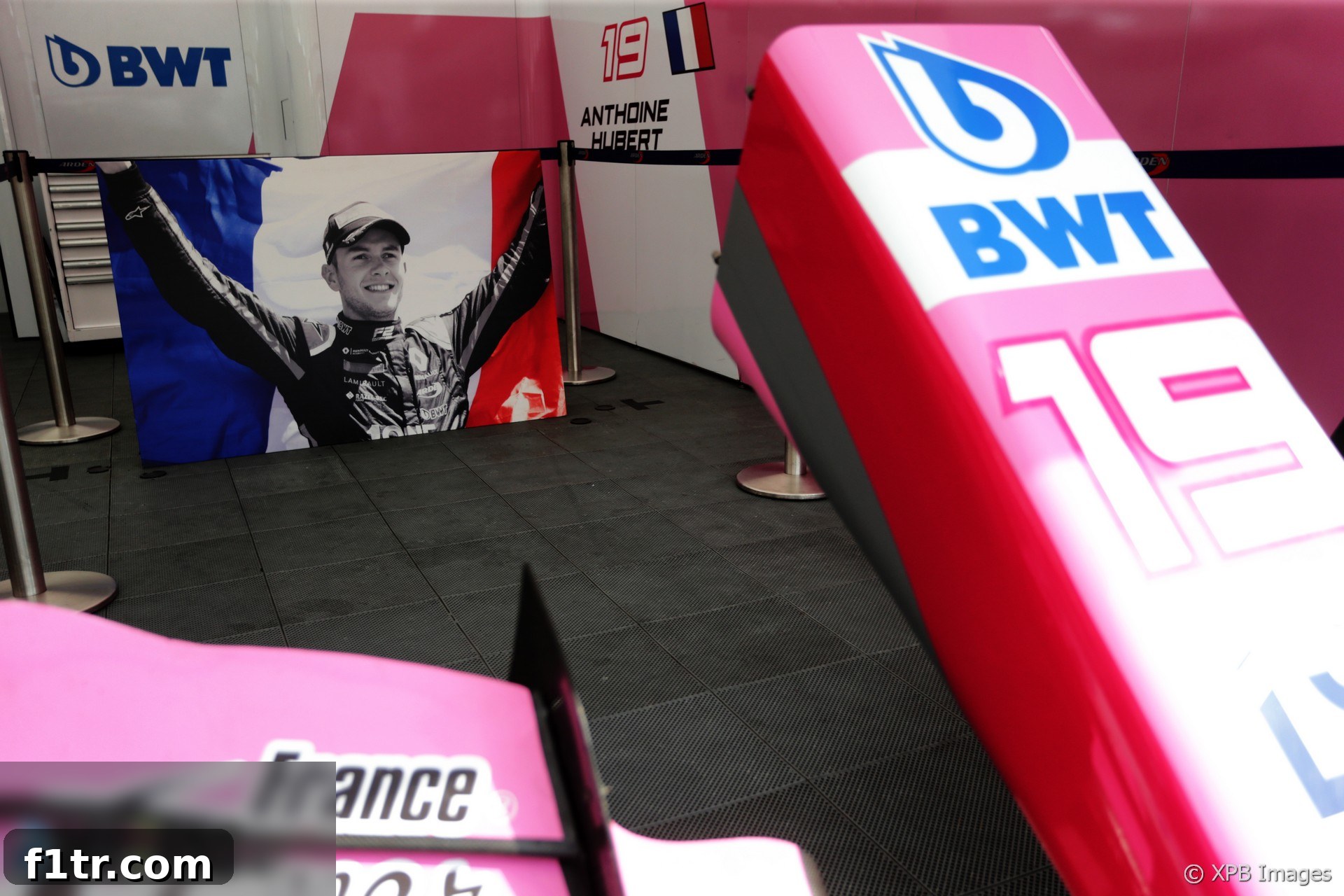
The motorsport community, while fiercely competitive, often displays a remarkable sense of solidarity in times of tragedy. Tributes to Anthoine Hubert quickly emerged, both on and off the track. His Arden team, for instance, respectfully set out his Formula 2 garage as a poignant tribute at Monza, serving as a powerful visual reminder of a talent lost too soon. These acts of remembrance are vital, not only for honoring the individual but also for reinforcing the community’s shared humanity and collective commitment to learning and improving.
The discussions surrounding safety following such incidents are crucial. They foster an environment of continuous improvement, where every crash, regardless of its outcome, is seen as an opportunity to make the sport safer. The drivers’ candid reflections serve as a powerful testament to their courage, not just in facing the immense speeds but also in confronting the emotional realities of their profession. Their trust in the FIA, combined with their honest acknowledgment of inherent risks, underscores a mature and responsible approach to a sport that continues to captivate millions.
The Future of F1 Safety: A Never-Ending Horizon
Looking ahead, the commitment to safety in Formula 1 and its feeder series remains paramount. Technological advancements in materials science, data analysis, and simulation continue to offer new avenues for enhancing driver protection and track design. From the ongoing development of cockpit protection systems beyond the Halo to smarter barrier technologies and advanced medical response protocols, the pursuit of safety is a dynamic and evolving process. The ultimate goal is to minimize, as much as humanly and technologically possible, the chances of severe injury, ensuring that future generations of racing enthusiasts can enjoy the spectacle of speed with greater peace of mind. While the “magic bubble” may remain an elusive dream, the relentless innovation and shared dedication of the entire motorsport community ensure that every lesson learned becomes a stepping stone towards a safer future, honoring those who have sacrificed everything for the sport they loved.
2019 F1 season
- Crying in the Melbourne car park at 2019 grand prix was my career low – Ocon
- McLaren Racing reports reduced £71 million loss in 2019
- Kvyat: Hockenheim podium last year was “my biggest achievement” so far
- How the FIA’s new encrypted fuel flow meter targets Ferrari’s suspected ‘aliasing’ trick
- “He smashed my office door”: 23 must-see moments from ‘Drive to Survive’ season two
Browse all 2019 F1 season articles