Audi’s Formula 1 Future Secured: Qatar Investment Authority Acquires Significant Stake
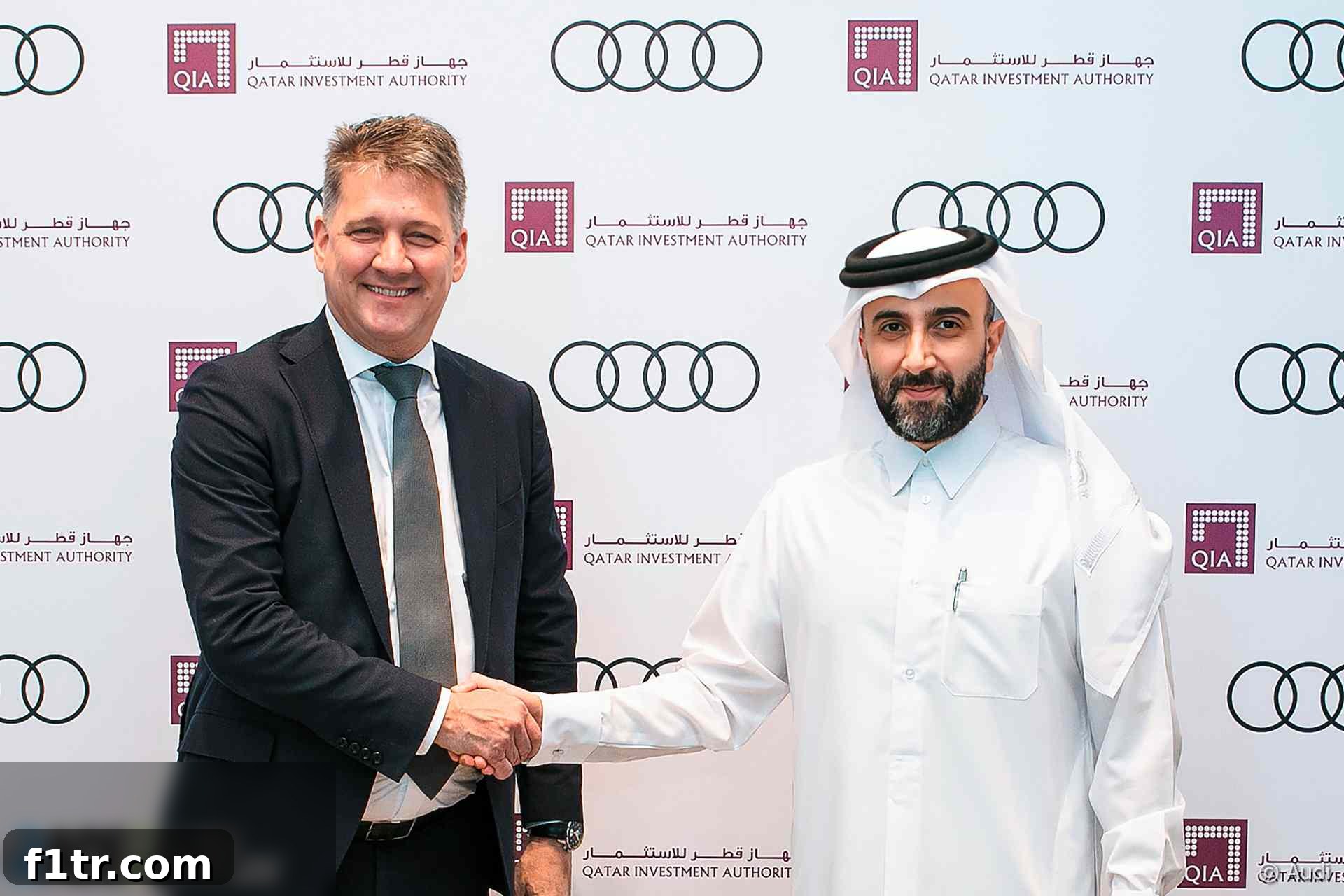
Audi, the renowned German automotive manufacturer, has taken a pivotal step in solidifying its ambitious entry into Formula 1 in 2026. The company recently announced the sale of a significant stake in its nascent F1 team to the Qatar Investment Authority (QIA), Qatar’s influential sovereign wealth fund. This strategic partnership was unveiled on the opening day of track action at the Qatar Grand Prix, signaling a robust commitment to Audi’s motorsport endeavors.
This landmark investment underscores the growing global appeal of Formula 1 and the immense potential recognized by major international investors. For Audi, it represents not only a crucial financial injection but also a powerful endorsement from a prominent global entity, further validating its long-term vision for top-tier motorsport.
Strategic Alliance: Qatar Investment Authority Joins the Audi F1 Project
The Qatar Investment Authority, one of the world’s leading sovereign wealth funds, has officially stepped in as a “long-term investor and partner” in Audi’s Formula 1 project. This partnership is far from a casual alignment; it is a meticulously planned collaboration designed to provide substantial financial backing and strategic support as Audi prepares to make its grand debut on the F1 grid in 2026.
The announcement carries significant weight, especially considering QIA’s existing relationship with Audi’s parent company, the Volkswagen Group, in which it already holds a stake. This pre-existing connection likely facilitated the current investment, built on a foundation of mutual trust and a shared understanding of long-term value creation. For QIA, investing in a high-profile global sport like Formula 1 aligns with its strategy of diversifying its portfolio and gaining exposure to dynamic, high-growth sectors, while also elevating Qatar’s profile on the international stage.
Gernot Doellner, CEO of Audi, expressed profound confidence in the new partnership. “The investment by QIA reflects the trust and confidence the Audi F1 project has already garnered, underscoring the unwavering commitment of Audi to the initiative,” Doellner stated. He emphasized the tangible benefits of this collaboration, adding, “This additional capital will accelerate the team’s growth and is yet another milestone on our long-term strategy. QIA’s involvement further energises the dedicated efforts at both the Hinwil and Neuburg facilities as they work towards the entry of Audi in 2026.”
Mohammed Al-Sowaidi, CEO of QIA, echoed this sentiment, highlighting the fund’s belief in Audi’s strategic direction. “We believe in Audi’s vision and direction when entering Formula 1, and our investment will support the realisation of this goal,” Al-Sowaidi affirmed. This mutual belief signals a strong and cohesive front as Audi gears up for one of the most significant challenges in global motorsport.
Navigating Financial Headwinds: The Volkswagen Group’s Context
Audi’s commitment to Formula 1 comes at a complex time for its parent company, the Volkswagen Group. The German automotive giant has experienced a financially challenging year, prompting difficult decisions regarding its operational footprint. Just last month, the Volkswagen Group announced plans to close three of its factories in Germany, scale back operations at other plants, and implement tens of thousands of staff redundancies. These measures reflect a broader strategic restructuring aimed at enhancing efficiency and profitability amidst evolving market conditions and increased competition.
In this economic climate, securing substantial external investment for a high-cost, long-term project like Formula 1 becomes even more critical. QIA’s backing provides a vital cushion, insulating the F1 program from potential internal financial pressures and ensuring that development can proceed without undue hindrance. This strategic injection of capital allows Audi to maintain its focus on innovation and performance, essential ingredients for success in the pinnacle of motorsport, even as the wider group undergoes significant transformation. The investment essentially de-risks a portion of Audi’s F1 venture, allowing it to pursue its sporting ambitions with greater financial stability.
For Audi, its Formula 1 entry is more than just a sporting endeavor; it is a powerful global marketing platform, a testbed for advanced technologies, and a statement of intent regarding its future direction in electrification and sustainable mobility. Despite the challenging economic backdrop for the Volkswagen Group, the decision to press ahead with the F1 project, now fortified by QIA’s support, highlights the strategic importance placed on this venture as a catalyst for brand prestige and technological advancement.
Building a Championship Contender: The Team Overhaul
The commitment to Formula 1 demands not only financial resources but also a formidable technical and operational structure. Recognizing this, Audi’s F1 project has undergone a comprehensive overhaul since the beginning of the year, bringing in seasoned talent to lead its charge. These strategic personnel appointments are instrumental in laying the groundwork for a competitive entry into the sport.
A significant coup for the team was the arrival of Mattia Binotto as Chief Technical and Operating Officer. Binotto brings a wealth of experience from his tenure as Team Principal at Ferrari, where he played a crucial role in engine development and strategy. His deep understanding of F1’s intricate technical regulations, combined with his leadership capabilities, will be invaluable in shaping Audi’s technical direction and ensuring operational excellence.
Further bolstering the leadership team, Audi has also secured the services of Jonathan Wheatley as Team Principal, with his arrival anticipated next year. Wheatley is widely regarded as one of the most respected figures in the F1 paddock, having played an integral role in Red Bull Racing’s multiple championship successes as their long-standing Sporting Director. His expertise in race operations, team management, and strategic execution will be crucial in fostering a winning culture and guiding the team through the demanding F1 calendar.
The “dedicated efforts” mentioned by CEO Gernot Doellner are visibly concentrated at two key facilities. The Hinwil base in Switzerland, currently home to Sauber, will serve as the operational hub for the chassis development and race team. Concurrently, Audi’s state-of-the-art facility in Neuburg an der Donau, Germany, is meticulously developing the bespoke power unit for the 2026 regulations. The synergy between these two sites, bolstered by the new leadership, is designed to create a cohesive and highly efficient development ecosystem, aiming to hit the ground running when the new regulations come into effect.
The Road to 2026: Sauber’s Transitional Role and New Talent
The journey to becoming a full-fledged Audi factory team in Formula 1 involves a transitional phase, with Sauber playing a pivotal role. The team, currently operating as Stake F1 Team Kick Sauber, will compete under the Sauber name for the final time in 2025 before fully rebranding as Audi in 2026. This period is crucial for integration, testing, and fine-tuning all aspects of the operation.
For the 2025 season, the team has already confirmed an exciting new driver lineup, signaling a clear intent for the future. Veteran driver Nico Hulkenberg will make the move from Haas, bringing a wealth of experience, consistency, and a strong work ethic. Hulkenberg’s ability to extract performance from various machinery and provide valuable feedback will be essential during the development phase of Audi’s powertrain and chassis.
Joining Hulkenberg is the highly anticipated newcomer, Gabriel Bortoleto. The young Brazilian driver, fresh off his championship victory in Formula 2, represents the future talent pipeline for the Audi program. His raw speed, adaptability, and hunger for success will add a dynamic element to the team. This blend of seasoned experience and promising youth reflects a balanced approach, allowing the team to benefit from immediate feedback while also nurturing talent for long-term aspirations. The 2025 season will thus serve as a critical proving ground for both drivers and the team’s evolving structure, preparing them for the significant leap into the Audi era in 2026.
Impact on Formula 1 and the Future Landscape
Audi’s entry, significantly backed by the Qatar Investment Authority, is a monumental development for Formula 1 as a whole. The sport has witnessed a surge in popularity and global reach in recent years, attracting unprecedented interest from major automotive manufacturers, technology companies, and financial investors alike. The addition of a powerhouse brand like Audi, with substantial financial and strategic support, further elevates F1’s prestige and competitive landscape.
The 2026 regulations, emphasizing sustainable fuels and increased electrical power, are a major draw for manufacturers like Audi, aligning with their corporate strategies for future mobility. The involvement of QIA also highlights a broader trend of sovereign wealth funds recognizing the immense value and global exposure offered by elite sports. These funds seek not only financial returns but also strategic influence and brand enhancement on the world stage.
Audi’s commitment, bolstered by QIA’s investment, sends a strong message about the long-term health and attractiveness of Formula 1. It promises an even more competitive grid, pushing the boundaries of engineering and performance, and ultimately delivering more thrilling racing for fans worldwide. As the countdown to 2026 continues, the Audi F1 project, now firmly backed by Qatar, stands as a testament to ambition, strategic foresight, and the enduring allure of motorsport’s pinnacle.