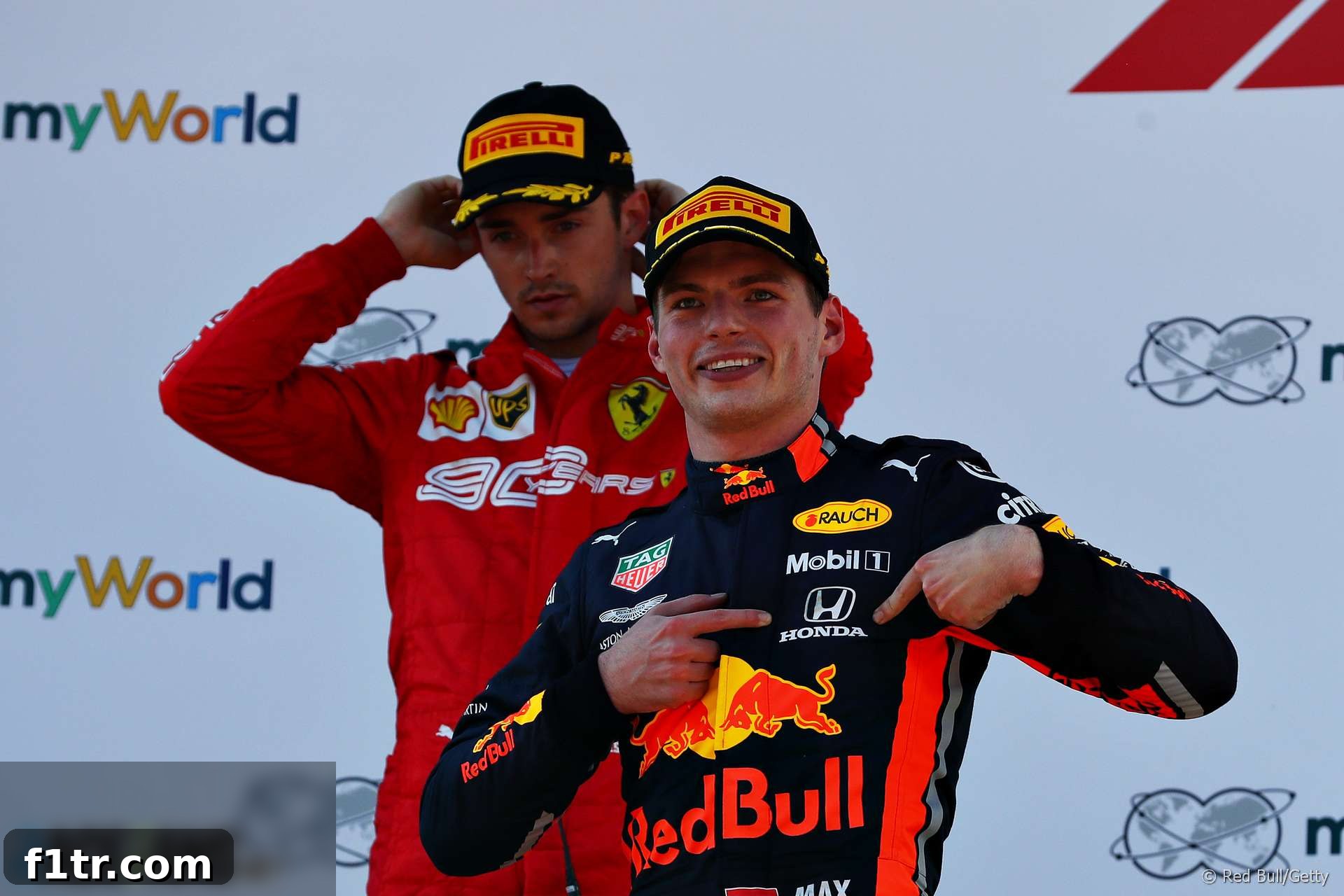
Red Bull Celebrates Landmark Honda Victory: A Testament to Dedication and Progress in F1
Red Bull Racing Team Principal Christian Horner has lauded power unit supplier Honda’s “real dedication and determination” following their triumphant return to the top step of the Formula 1 podium. This momentous victory, secured at the Austrian Grand Prix, marked the Japanese manufacturer’s first win since re-entering the sport four years prior, signaling a significant turning point in their challenging journey back to F1 glory and validating Red Bull’s strategic partnership.
Advert | Become a Supporter & go ad-free
Christian Horner Commends Honda’s Resurgence and Unwavering Commitment
Speaking after the partnership secured its inaugural victory in just their ninth race together, Horner was notably effusive in his praise for Honda’s rapid progress. “Honda have done a fantastic job,” he stated, emphasizing the remarkable journey of the power unit supplier. The win, masterfully delivered by Max Verstappen’s stellar performance at the Red Bull Ring, was not merely a triumph for Red Bull’s chassis but critically, a resounding endorsement of the relentless development and perseverance of Honda’s engine program.
Horner reflected on Honda’s demanding path back to F1 competitiveness, a journey fraught with challenges. “Obviously when they came back into the sport they had a very tough time in the years they were with McLaren. They then moved to Toro Rosso last year and they had some time to get their house in order and start to progress.” This period, initially characterized by significant reliability issues and a discernible performance deficit, served as a crucible for Honda, testing their resolve and pushing their engineering teams to innovate under immense pressure.
The decision for Red Bull to switch from their long-standing engine supplier Renault to Honda was a calculated and bold risk, announced a year prior to the partnership’s debut. “We saw that progression and we saw the potential they have which was why we changed supplier this time last year [and] announced that we were moving to Honda,” Horner explained. This strategic shift was underpinned by a profound belief in Honda’s long-term vision, their unwavering financial commitment, and their burgeoning capacity to deliver a championship-contending power unit. Red Bull sought an integrated partnership, and Honda’s renewed dedication promised exactly that.
“And really ever since then all we’ve seen is a real dedicated and determination,” Horner continued, underscoring the relentless effort from the entire Honda team, from their Sakura research and development base to the trackside engineers. This profound dedication culminated in the Austrian Grand Prix triumph, a moment of immense significance for both organizations. “And that’s why today having won that race [Toyoharu] Tanabe-san went to collect the trophy for the constructor today. After all the effort they’ve put it was great to see Japan represented up there today and Honda picking up the constructors’ trophy.” The symbolic gesture of Toyoharu Tanabe, Honda’s F1 Technical Director, collecting the constructors’ trophy served as a powerful visual representation of collective effort, redemption, and the bright future prospects for the Red Bull-Honda alliance.
Honda’s Tumultuous F1 Return: A Detailed Chronicle from McLaren to Red Bull Triumph
The Challenging McLaren Years: Re-entry into a Hybrid Era
Honda’s highly anticipated return to Formula 1 in 2015 as the exclusive power unit supplier for McLaren was met with a mixture of nostalgia and high expectations, rekindling memories of their dominant partnership in the late 1980s and early 1990s. However, the reality of the V6 turbo-hybrid era proved far more demanding than anticipated. Honda struggled immensely with the intricate new regulations, particularly in achieving a compact engine design – a concept they termed ‘size zero’ – that could simultaneously deliver competitive power and reliable performance. The initial seasons were plagued by chronic reliability issues, frequent grid penalties, and a significant performance deficit compared to rival manufacturers. This difficult period led to public frustrations from seasoned drivers like Fernando Alonso and the McLaren team leadership, casting a shadow over Honda’s F1 aspirations. Nevertheless, these trying times were instrumental for Honda, as they provided invaluable, albeit harsh, lessons in modern F1 engine development and galvanized a deep-seated determination for improvement within their engineering ranks.
The Toro Rosso Stepping Stone: Rebuilding Confidence and Refining Performance
Following three arduous seasons with McLaren, Honda transitioned to a new strategic partnership with Red Bull’s junior outfit, Scuderia Toro Rosso, for the 2018 season. This move proved to be a pivotal turning point in Honda’s F1 narrative. The collaboration with Toro Rosso offered Honda a less high-pressure environment to intensively test and refine their power unit. It provided the necessary freedom to iterate designs, experiment with new concepts, and address fundamental issues without the intense media scrutiny and championship aspirations that accompanied the McLaren partnership. While the 2018 season with Toro Rosso did not yield victories, it showcased tangible signs of progress. Reliability saw significant improvements, and the power unit began to demonstrate flashes of competitive pace, particularly in specific race conditions. This period was crucial for “getting their house in order,” as Christian Horner aptly observed. It not only rebuilt confidence within Honda’s engineering teams but also systematically validated their development trajectory, laying the essential groundwork for their eventual partnership with the senior Red Bull Racing team.
The Red Bull Partnership: A Strategic Gamble That Delivered
The announcement in mid-2018 that Red Bull Racing would sever ties with long-time supplier Renault and switch to Honda power units for the 2019 season sent ripples of anticipation and speculation throughout the Formula 1 paddock. It was undeniably a bold and calculated gamble by Red Bull, who sought an exclusive, fully integrated technical partnership that would afford them greater influence and synergy in engine development – a luxury they felt was increasingly lacking with Renault. Red Bull’s unwavering confidence in Honda, bolstered by the clear and consistent signs of progress observed with Toro Rosso, proved to be remarkably well-founded. The synergy between Red Bull’s renowned agile chassis design philosophy and Honda’s rapidly improving, high-performance power unit quickly became evident. The landmark victory at the Austrian Grand Prix, achieved so early in their collaborative journey, not only unequivocally validated Red Bull’s strategic decision but also ignited a tangible hope for a formidable championship challenge in the seasons ahead, signaling a new era of competitiveness for the team.
The Profound Impact of the Austrian Grand Prix Victory: A Catalyst for Future Success
Honda executives attended Red Bull’s home race for discussions with the team about the future of their crucial partnership, making the victory even more poignant and impactful for corporate decision-makers. “It was great for the vice-president here to see Honda’s first victory in the hybrid era. It was a great performance and one they enjoyed very much,” Christian Horner recounted. This high-level corporate presence at such a pivotal moment underscored the immense importance Honda places on its Formula 1 program and highlighted the direct, positive influence that such a triumphant success can have on securing long-term strategic and financial commitments from the parent company.
This momentous win, which effectively broke a protracted drought stretching back to Rubens Barrichello’s victory for the Honda F1 team in the 2006 Hungarian Grand Prix, carries multiple profound implications across the spectrum of Formula 1:
For Honda: Redemption and Renewed Long-Term Commitment
For Honda, the Austrian Grand Prix victory transcends mere race success; it represents nothing short of redemption. It triumphantly silences years of persistent criticism, unequivocally vindicates countless hours of arduous development, and definitively re-establishes their credibility as a top-tier power unit supplier at the pinnacle of global motorsport. The win provides an invaluable and immeasurable morale boost to the hundreds of dedicated engineers and support staff who have tirelessly worked behind the scenes, often facing adversity. More significantly, it furnishes compelling, irrefutable evidence to Honda’s corporate board regarding the tangible return on investment in Formula 1. In an era where automotive manufacturers rigorously weigh the relevance of F1 participation to their mainstream road car businesses, a victory of this magnitude sends a powerful, unmistakable message about technological prowess, brand prestige, and the pursuit of excellence.
For Red Bull Racing: Validation of Strategy and Heightened Championship Ambitions
For Red Bull Racing, the Austrian victory serves as the ultimate validation of their bold and strategic gamble to partner with Honda. It unequivocally proves that switching to the Japanese power unit was the correct and forward-thinking move, and, crucially, that the Honda power unit is definitively capable of winning races against the sport’s established giants. This early and significant success profoundly fuels Red Bull’s enduring ambition to challenge for world championships, a coveted goal that had proved elusive since the advent of the V6 turbo-hybrid era. A strong, highly dedicated, and seamlessly integrated power unit partner is an absolutely essential component for any team aspiring to championship contention, and the early signs with Honda are exceedingly promising, fostering a powerful platform for sustained success.
For Formula 1 as a Whole: Enhanced Competition and Manufacturer Appeal
The emphatic return of Honda to the winner’s circle is an overwhelmingly positive development for Formula 1 as a global sport. It injects a crucial element of increased competition by adding another genuinely competitive power unit supplier to the mix, thereby intensifying the battle at the very front of the grid and rendering the sport more unpredictable, thrilling, and ultimately engaging for millions of fans worldwide. Increased competition among the leading manufacturers is absolutely vital for the overall health, dynamism, and long-term appeal of F1, demonstrating unequivocally that with sufficient effort, unwavering investment, and a clear vision, any power unit manufacturer can ascend to the top. This significant success could potentially serve as a powerful incentive, encouraging other major automotive giants to consider entering or re-entering the sport, drawn by the undeniable prospect of similar triumphs and the global brand exposure that comes with them.
Future Prospects: Stability, Convergence, and Continued Ascent
Advert | Become a RaceFans supporter andgo ad-free
Christian Horner firmly believes that the landmark victory at the Red Bull Ring will significantly encourage Honda to continue and deepen its participation in Formula 1 for the foreseeable future. “I think the fact that the engines [are] converging, there are stable regulations, days like today are only going to help,” he astutely observed. The relative stability in the technical regulations governing power units provides a more predictable and conducive development environment, allowing manufacturers to meticulously optimize their designs and extract maximum performance over time, rather than being forced into constant, costly adaptation to radical regulatory shifts. This ongoing convergence implies that the performance disparities between the various power unit suppliers are progressively narrowing, thereby creating a more level playing field where the inherent brilliance of chassis design, strategic acumen, and raw driver talent can truly shine through and make the decisive difference.
The Austrian triumph represents far more than just a single race win; it stands as a powerful, unambiguous statement of intent from both Red Bull and Honda. It unequivocally signals that Honda, fortified by the dynamic partnership with Red Bull Racing, has now firmly established itself as a formidable and serious force in modern Formula 1. With continued unwavering dedication, the strategic advantage of stable regulations, and the invaluable momentum gained from this landmark victory, the partnership is exceptionally well-positioned to relentlessly challenge for a multitude of further race wins and, ultimately, to contend for championship titles, thereby solidifying Honda’s enduring and successful legacy in the challenging hybrid era of F1.
2019 F1 season
- Crying in the Melbourne car park at 2019 grand prix was my career low – Ocon
- McLaren Racing reports reduced £71 million loss in 2019
- Kvyat: Hockenheim podium last year was “my biggest achievement” so far
- How the FIA’s new encrypted fuel flow meter targets Ferrari’s suspected ‘aliasing’ trick
- “He smashed my office door”: 23 must-see moments from ‘Drive to Survive’ season two
Browse all 2019 F1 season aricles