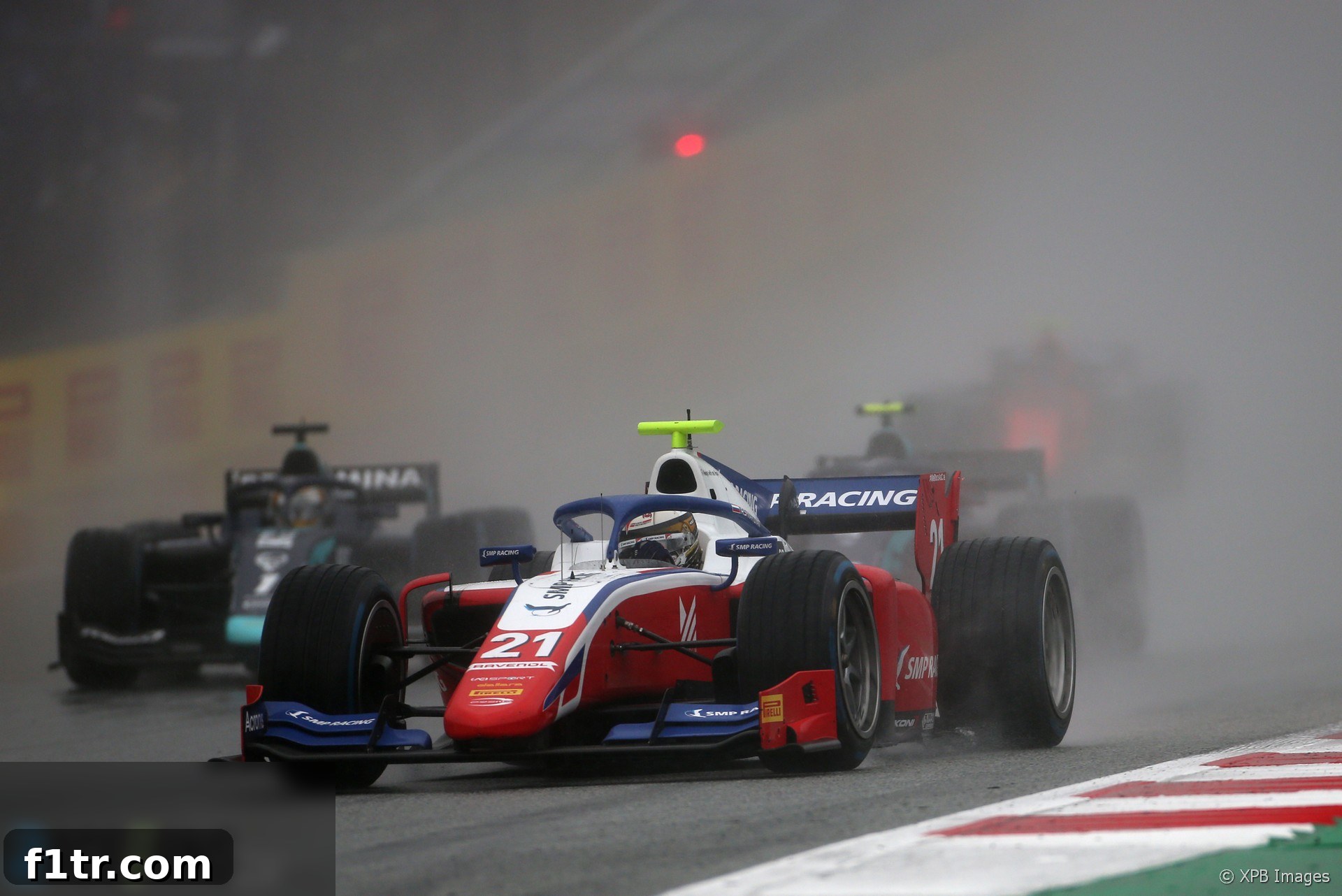
Robert Shwartzman Claims Dramatic Formula 2 Feature Race Victory Amidst Red Bull Ring Chaos
In a race that tested the resolve and skill of every driver, reigning Formula 3 champion Robert Shwartzman masterfully navigated a heavily disrupted feature race at the iconic Red Bull Ring to secure his inaugural Formula 2 feature win. The event, plagued by relentless rain and challenging visibility, unfolded into a thrilling spectacle of strategic gambles, driver heroics, and unexpected turns, ultimately crowning Shwartzman as a formidable force in the competitive F2 championship.
Pole-sitter Yuki Tsunoda, after leading for the vast majority of the race, saw his victory hopes dashed by an apparent radio malfunction, leading to a late and ultimately costly pit stop that dropped him out of contention. Guanyu Zhou, still reeling from a technical problem that denied him victory just a week prior at the same venue, demonstrated incredible resilience to hold onto a well-deserved final podium place, highlighting the high stakes and unpredictable nature of Formula 2 racing.
Pre-Race Drama: A Battle Against the Elements
The drama commenced even before the race officially began. Artem Markelov, in an unfortunate turn of events, unexpectedly parked his HWA machine in the gravel during the initial formation laps, reducing the starting grid to 21 cars. As the remaining field attempted to depart behind the Safety Car under continuous, heavy rain, the treacherous conditions immediately became evident. Guanyu Zhou vividly conveyed the severity over his radio, expressing profound doubts about the race even starting, stating he struggled immensely to keep his car in a straight line on the waterlogged track.
His concerns were swiftly validated. On the fourth pre-race formation lap, the worsening weather conditions left race officials with no choice but to red-flag the session. Cars were directed back into the pit lane around 17:45 local time, as drivers had repeatedly reported a complete lack of visibility. Callum Ilott, among others, articulated the extreme danger, reporting he simply “couldn’t see the car ahead of him,” painting a stark picture of the perilous conditions.
During the ensuing hiatus, uncertainty loomed over the Red Bull Ring. Ilott, seeking clarity amidst the delay, inquired, “When do you think they’re going to say it’s not going to change?” His Virtuosi engineer, acknowledging the fading daylight in Spielberg, cautiously predicted a potential cancellation. However, against the odds and despite the relentless rain causing kerbs to visibly overflow with water, a Safety Car start was eventually called for 18:35, much to the anticipation and apprehension of fans and teams alike.
The Delayed Start: Safety Car Leads the Way
With the race distance prudently reduced to 36 laps to account for the formation laps already completed, the cars finally rolled out under the Safety Car. The tension was palpable as drivers grappled with the challenging conditions. On the fourth lap of this rescheduled race, the crucial message arrived: the Safety Car was coming in. Yuki Tsunoda, from pole position, managed a clean if not spectacularly quick getaway from the rolling start. Cold tyres and, undoubtedly, equally cold and focused drivers by this point, struggled to generate heat and grip as they launched into competitive racing.
Early Race Dynamics: Leaders Emerge, Challengers Struggle
Tsunoda, showcasing his raw pace and early confidence, along with Guanyu Zhou, quickly managed to pull away from the chasing pack, establishing a significant four-and-a-half-second lead over the first two racing laps alone. Their early dominance was a testament to their ability to adapt to the formidable conditions. Meanwhile, further down the field, Callum Ilott and Jack Aitken found themselves tangled in an incident, causing them to lose valuable positions and fall back. The chaotic nature of the wet race was already beginning to take its toll.
The struggles with visibility continued to plague many drivers. Dan Ticktum, battling fiercely in 17th position, offered a raw and unfiltered account of the extremely poor visibility on lap seven. His radio communication painted a vivid picture: “I cannot see a [expletive] thing. Not a thing. Nothing.” Such reports underscored the heroic efforts required simply to remain on track, let alone compete for positions, in the challenging Austrian weather.
In stark contrast to the struggles of some, Christian Lundgaard appeared remarkably untroubled by the dire conditions. The Renault junior driver commenced a spectacular charge up the field, climbing from eighth to an impressive fifth position after only a few laps of racing. Lundgaard was one of the few drivers in the field who consistently gained ground within the pack, showcasing exceptional car control and race craft in the treacherous wet, rather than merely maintaining position or slipping backward from the leading duo of Tsunoda and Zhou.
Mid-Race Mayhem: Brake Fires and Drying Tracks
As the race progressed, new challenges emerged. By lap 18, Felipe Drugovich, last week’s sprint race winner, was experiencing severe issues with his front brakes. They were glowing an alarming neon orange and visibly spraying carbon dust, forcing his MP Motorsport team to instruct him to pit immediately. Despite visible flames emerging from his brakes during the frantic pit stop, Drugovich remarkably returned to the track. It quickly became apparent that he was far from the only car grappling with cooling problems, a testament to the high demands of the Red Bull Ring circuit, even in wet conditions, and the extreme stress placed on the machinery.
Coinciding with the equipment challenges, the track itself was finally beginning to dry out. The tell-tale rooster-tails of spray, which had been so prominent, started to diminish from the back of the cars, signaling a change in grip levels. With no intermediate tyre available in Formula 2, drivers were faced with a critical strategic dilemma: they were forced to manage increasingly worn and “dog-eared” full wet tyres, hoping to extend their stints. The gamble was whether, from lap 21 onwards, they could delay their mandatory pit stop long enough to switch directly to dry tyres for the final laps, a high-risk, high-reward strategy that could make or break their race.
Pit Stop Fiasco and Shwartzman’s Ascent
The strategic battle intensified as the track continued to evolve. Yuki Tsunoda, still leading, remained out on his wet tyres until lap 24, attempting to maximize his track position. However, his decision was complicated by an unfortunate communication breakdown. While he was out on track, the recently pitted Guanyu Zhou was setting a blistering pace, consistently recording new fastest laps and rapidly eroding Tsunoda’s lead. Tsunoda was repeatedly told to come into the pits, but he frustratingly seemed not to hear the summons. It wasn’t until he was shown a physical pit board explicitly ordering him in that he finally responded.
This communication delay was compounded by a poor pit stop, further costing Tsunoda crucial seconds. He emerged from the pit lane well behind the new leader, Guanyu Zhou, finding himself in fourth position and immediately embroiled in a fierce battle with Roy Nissany. This sequence of events proved catastrophic for Tsunoda’s victory aspirations. Meanwhile, capitalising on the unfolding drama, Robert Shwartzman executed a brilliant move, overtaking Zhou, who now looked comparatively helpless for traction on his older wet tyres on the rapidly drying track. Shwartzman seized the lead with a calculated and decisive manoeuvre, showcasing his championship pedigree.
The Tense Climax: Shwartzman Holds On
As the final laps approached, the race reached a fever pitch. On lap 28, Ilott and Tsunoda engaged in a thrilling scrap for third position. The Red Bull junior, Tsunoda, with his fresher rubber, ultimately managed to pass the Ferrari Driver Academy member, Ilott, demonstrating the potent advantage of new tyres on the evolving circuit. However, a significant three-and-a-half-second gap separated Tsunoda from the leading Shwartzman with only seven laps remaining, posing a substantial barrier to regaining the lead he had held for so much of the race.
Despite the considerable odds, Tsunoda refused to yield. On lap 30, he executed a roaring, audacious move down the inside of Turn 1 to overtake Zhou, setting his sights squarely on Shwartzman’s now three-second lead. Lapping approximately a second per lap faster than the leader, Tsunoda must have keenly realized that despite the drying track mercilessly chewing through most drivers’ wet tyres, the earlier error with his pit stop had paradoxically given him a crucial tyre advantage in the closing stages. He pushed relentlessly, shrinking the gap with every passing corner, making for a truly nail-biting finish.
In the end, Robert Shwartzman demonstrated immense composure and defensive skill. Despite a thrilling back-and-forth battle with the charging Tsunoda, he managed to hold on, crossing the finish line to claim a well-deserved victory. Further back, a similarly intense battle for third position unfolded between Guanyu Zhou and Mick Schumacher, showcasing the fierce competition throughout the field.
Post-Race Fallout and Championship Implications
What seemed for a considerable period to be an impossible outcome – an entire hour of uncertainty suggesting the race wouldn’t even run – culminated in the completion of all 36 laps, meaning full championship points were awarded. This pivotal victory propelled Robert Shwartzman into a commanding lead in the championship standings, marking a significant milestone in his Formula 2 career. Mick Schumacher secured a strong fourth place, finishing ahead of Callum Ilott, Christian Lundgaard, and Marcus Armstrong, all of whom showcased impressive performances in the challenging conditions.
Dan Ticktum, demonstrating incredible tenacity and strategic driving, eventually rose to an impressive eighth place after starting from 15th on the grid. This outstanding recovery not only earned him valuable points but also secured him pole position for the following day’s reverse-grid sprint race, a testament to his fighting spirit. Despite the highly challenging conditions, remarkably, Giuliano Alesi and Guilherme Samaia were the only drivers to join the non-starting Artem Markelov in retirement, highlighting the exceptional resilience and skill of the Formula 2 field.
Formula 2 News & Updates
Explore more in-depth coverage and analyses of the FIA Formula 2 Championship.
- Browse all Formula 2 articles
- Robert Shwartzman Driver Profile
- Yuki Tsunoda Driver Profile
- Guanyu Zhou Driver Profile
- Red Bull Ring Circuit Guide
- Latest Race Reports