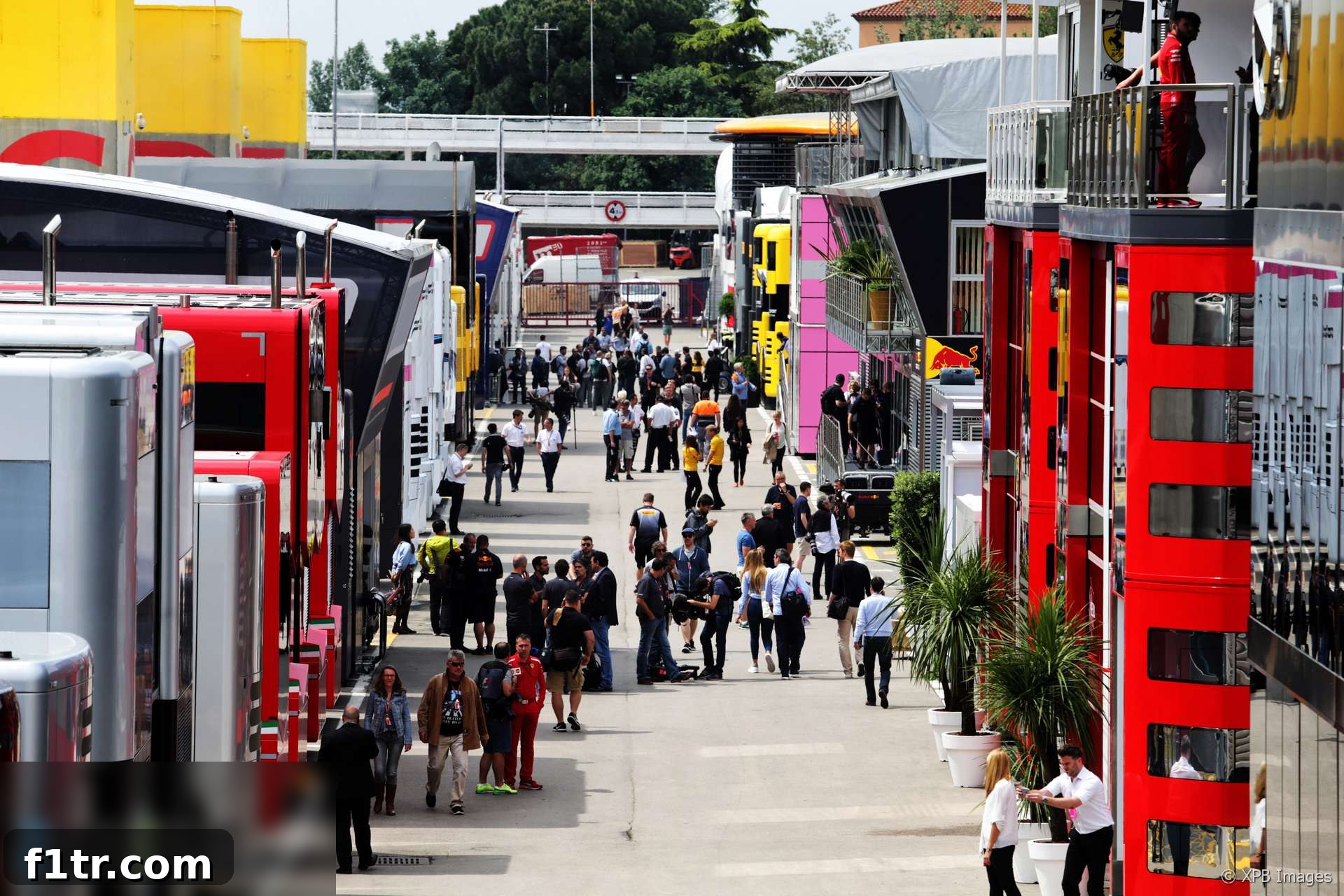
The global landscape of sports, including the pinnacle of motorsport, Formula 1, faced an unprecedented challenge in 2020 with the onset of the COVID-19 pandemic. To safeguard the health of all participants and the wider community, the sport was compelled to explore radical solutions, chief among them the implementation of races held behind closed doors. This meant a stark departure from traditional Grand Prix weekends, with strict protocols put in place to prevent team members from mixing with rivals’ staff, transforming the bustling paddock into a highly controlled, bio-secure environment.
Navigating the Storm: F1’s Initial Response to the Pandemic
The initial impact of the coronavirus pandemic on the 2020 Formula 1 season was immediate and severe. What was anticipated to be an exciting start to a new championship year quickly turned into a series of postponements and outright cancellations. The season’s scheduled opener in Melbourne, Australia, serves as a poignant reminder of the rapidly evolving crisis. Just hours before Friday practice was due to commence, the event was abruptly called off after a team member from McLaren tested positive for the virus. This pivotal moment underscored the gravity of the situation and forced F1, the FIA, and all ten teams to re-evaluate their strategies entirely.
Faced with an escalating health crisis that led to the deferral or cancellation of the opening nine races, the sport embarked on an intensive investigation into viable measures for holding races. The objective was clear: minimise the risk of exacerbating the pandemic while salvaging a significant portion of the championship. The concept of conducting races with minimal staff at otherwise empty circuits quickly emerged as a leading option, providing a blueprint for a safe return to competition.
Rigorous Protocols: The Foundation of a Bio-Secure Bubble
To turn the vision of racing safely into a reality, Formula 1 outlined a comprehensive set of stringent protocols designed to create a “bio-secure bubble” around each Grand Prix event. Central to these measures was the imperative for all personnel to undergo rigorous testing for the Covid-19 coronavirus prior to their arrival at the circuit. This initial screening was merely the first layer of defense, supplemented by regular, often daily, testing throughout the race weekend for anyone within the paddock perimeter.
Beyond testing, teams were mandated to drastically limit the number of staff in attendance at each event. This meant a lean operational crew, with non-essential personnel required to stay home. This reduction in numbers directly supported another critical measure: the physical segregation of teams. The traditional, open-door camaraderie of the paddock was temporarily suspended. Teams were required to operate within their own designated zones, maintaining social distancing practices not only from rival teams but also within their own ranks wherever feasible.
This segregation extended to every aspect of the race weekend. Dedicated access routes, separate garage areas, staggered timings for movement, and even isolated dining facilities were all part of the intricate plan. The goal was to minimise cross-contamination potential, effectively creating individual ‘team bubbles’ that operated independently, drastically reducing the chances of a single positive case triggering widespread disruption across multiple teams.
Circuit Suitability: Key to Operational Success
The selection of circuits capable of hosting races under these extraordinary conditions was paramount. The sport quickly identified venues with specific characteristics that would facilitate the new safety protocols. The Red Bull Ring in Austria and Silverstone in the United Kingdom emerged as prime candidates, eventually hosting multiple races to kickstart and sustain the revised season calendar.
What made these circuits particularly suitable? Their spacious, modern paddocks were a significant advantage. Unlike some older, more constricted venues, these facilities offered ample room for teams to set up their operations while observing strict social distancing. The generous layouts allowed for the necessary spatial separation between team hospitality units, technical areas, and even media zones, making the implementation of segregated zones much more manageable.
Furthermore, both circuits had the logistical capability to host back-to-back events, a strategy crucial for compressing a meaningful championship into a shorter timeframe. This involved extensive planning for sequential race weekends, ensuring that once teams were in a bio-secure environment, they could remain there for an extended period, reducing travel risks. The adaptability of these venues, combined with robust local infrastructure, proved indispensable in allowing Formula 1 to stage a credible season under the most challenging circumstances.
The Driver’s Dilemma: Racing Without the Roar of the Crowd
For the drivers, the prospect of racing behind closed doors presented a unique psychological challenge. While universally eager to return to the cockpit, the absence of fans was a widely acknowledged void. Ferrari driver Charles Leclerc eloquently captured this sentiment, backing the idea of holding races without spectators but acknowledging the profound difference it would make.
“It will definitely not feel like a normal race because during a race weekend you can really feel the support of the fans, you can see them, you can hear them,” Leclerc stated. “So it is different, [they] cheer you up whenever you have bad times and it will cheer you up even more when you have good times because they are happy for you. So it is going to be very different.”
This sentiment resonated throughout the paddock. The roar of the crowd, the vibrant atmosphere, and the direct interaction with supporters are integral parts of the Grand Prix experience for drivers. Fans provide an undeniable surge of energy, a visible and audible form of encouragement that can often spur on greater performance. Racing in silence, with only the sounds of the engines and the limited chatter of team radio, fundamentally altered the sensory experience of competition.
However, Leclerc’s pragmatism also highlighted the collective mindset: “But I definitely think it’s better than nothing. So if we can start like this in a safe way for everyone, then I think it’s a good way to start the season as it will entertain the people first that are home. And obviously it will also help us to get back into the car, which is what we are all missing the most. But the priority should be to do it in safety.” This balance between the desire to race and the paramount importance of safety defined the entire revised season. Drivers and teams understood that while the experience was compromised, delivering the sport to a global audience watching from home was a vital morale booster and a testament to resilience.
Economic Imperatives and the Future of F1 Events
Beyond the immediate health concerns and sporting integrity, the decision to proceed with a revised 2020 Formula 1 season had significant economic underpinnings. The sport, its teams, and its extensive network of suppliers and partners faced immense financial pressure due to the initial cancellations. Fulfilling television broadcast contracts and generating revenue streams from sponsorship were crucial to preventing widespread financial collapse within the F1 ecosystem. Races behind closed doors, while lacking spectator income, provided a vital platform for these commercial obligations to be met, albeit in a modified form.
The measures implemented in 2020 also offered invaluable lessons for the future of large-scale sporting events. The success of Formula 1 in creating a functional, bio-secure environment demonstrated that with meticulous planning, stringent adherence to health protocols, and significant operational flexibility, major international competitions could continue even amidst global health crises. This experience has undoubtedly shaped the approach to event planning and risk management in motorsport and beyond, setting new benchmarks for safety and adaptability.
Ultimately, the 2020 Formula 1 season stands as a remarkable testament to innovation and perseverance. The decision to impose restrictions, segregate teams, and race behind closed doors was not taken lightly, but it was a necessary and ultimately successful strategy. It allowed the sport to navigate an unprecedented global challenge, prioritising the health of its participants while delivering a thrilling championship to millions of fans worldwide who eagerly awaited the return of their beloved sport, even if it was from a distance.