The Belgian Grand Prix at Spa-Francorchamps, a circuit revered for its history and challenge, was forever marked by the tragic events of Saturday. This diary entry from the heart of the paddock by @DieterRencken offers an intimate glimpse into a weekend where motorsport’s relentless pursuit of speed collided with profound sorrow.
Navigating a Sombre Sunday at Spa-Francorchamps
The hallowed grounds of Spa-Francorchamps, typically buzzing with unbridled excitement, held a palpable sense of solemnity on this particular Sunday. The motorsport community, still reeling from the devastating events of the previous day, gathered not just for a race, but for a collective moment of remembrance and resilience. As the sun prepared to rise over the undulating Ardennes forests, a unique blend of anticipation and reflection permeated the air.
7:00 AM: A Quiet Departure and a Forecasted Calm
The dawn of race day arrived, bringing with it the familiar routines, yet imbued with an unusual quiet. My bags were packed, ready for check-out from Chez Luc, with plans to head home immediately after my commitments at the track concluded. The drive to the circuit was unusually light, the roads mirroring the overcast skies that hinted at lingering traces of early morning rain. However, the weather forecast promised a change, predicting dry conditions and a comfortable 25°C by 11 AM – a rarity for Spa, known for its microclimates that often defy predictions. Remarkably, the forecast proved accurate, a small mercy on a day that needed every bit of predictability it could get amidst the swirling emotions.
8:30 AM: Paddock Life, Hospitality, and Unspoken Stories
My morning ritual led me, once again, to the welcoming confines of the Ferrari hospitality suite for breakfast. This wasn’t merely about sustenance; it was a sanctuary. The fruit was impeccably fresh, the pastries warm and soft from the oven, and the staff greeted us with genuine warmth, a testament to their unwavering professionalism even in challenging times. Ferrari, alongside Philip Morris, consistently extends this dedicated media hospitality, a stark contrast to other teams who, understandably, prioritize their own personnel first. These early hours in the paddock are invaluable, offering a chance to connect with colleagues and uncover the deeper narratives, the ‘stories behind the stories,’ that often elude the official briefings. In these moments, the collective grief and shared purpose of the motorsport family became more evident, an unspoken bond forming among those who witnessed the unfolding tragedy.
11:00 AM: The F3 Race – A Chilling Echo and a Call for Scrutiny
The Formula 3 race, rescheduled to fill the vacant F2 slot, commenced under a heavy cloud of apprehension. As the field thundered down the hill and into the iconic Eau Rouge, a collective breath was held. The track, still cool and damp in sections, pushed the cars to the very edge of adhesion, a terrifying reminder of the fine line between triumph and disaster. A few laps in, the air was pierced by gasps, quickly followed by an eerie silence. Simo Laaksonen’s car had ploughed into and, alarmingly, *under* the barriers, disappearing beneath rows of belted tires. The Safety Car was immediately deployed, and the Finn was swiftly transported to the medical centre. The news of his fitness – a massive relief – spread quickly through the paddock, a fragile moment of gratitude amidst the weekend’s shocking events. However, this incident immediately raised critical questions: Why did the car ‘submarine’ beneath the barrier? Did this compromise the barrier’s effectiveness in protecting the driver? This wasn’t just a race incident; it was a potent reminder of the inherent dangers of motorsport, amplifying the existing calls for a thorough investigation by the FIA into barrier design and safety protocols, particularly in junior categories where young talents are honing their craft at immense speeds. The incident underscored the urgent need to continuously evolve safety standards to prevent future tragedies, turning a moment of relief into a broader dialogue about driver protection.
12:15 PM: Lunch – Camaraderie and Strategic Conversations
Lunch at Pirelli offered a welcome respite and an opportunity for deeper engagement with three respected colleagues. After a delightful buffet starter, we indulged in tagliata of black Angus beef served on a bed of creamy mash with fresh greens, concluding with a refreshing ice cream. These informal get-togethers are more than just a meal; they are crucial platforms for exchanging insights, theories, and observations away from the intense scrutiny and prying ears of the media centre. In this relaxed environment, the pressures of deadlines and breaking news momentarily recede, allowing for genuine dialogue and shared perspectives. The superb cuisine certainly enhances the experience, but the true value lies in the unique opportunity for candid conversation, serving a dual purpose of nourishment for both body and mind. It’s in these moments that the human element of journalism truly shines, fostering collaboration and understanding among peers.
2:30 PM: The Grid – A Tapestry of Emotion and Spectacle
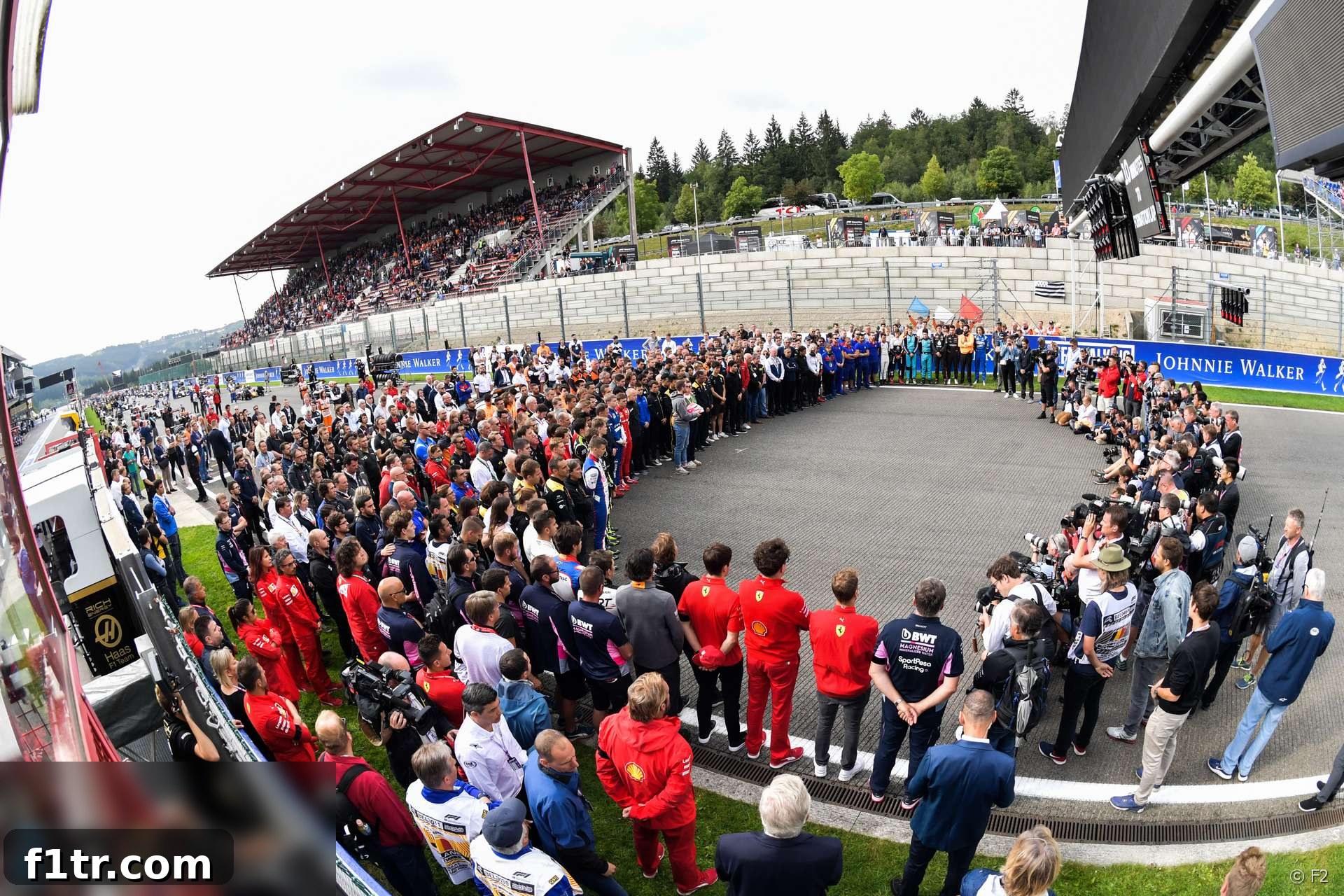
My journey to the grid brought me face-to-face with what I consider the world’s greatest circuit, Spa-Francorchamps, bathed in a unique and poignant atmosphere. The vista was a vibrant, yet deeply moving, spectacle, resembling an Irish or Indian flag: vast seas of orange-clad fans, reflecting the fervent support for local hero Max Verstappen, contrasted against the cloudy skies and the verdant green of the surrounding Ardennes forests. The race build-up was an intensely emotional affair. A minute of silence was impeccably observed for Anthoine Hubert, a poignant tribute that resonated deeply throughout the circuit. Every car proudly bore ’19 Racing for Anthoine’ messages, a unified symbol of remembrance and solidarity. In these trying moments, Formula 1’s unwavering professionalism truly came to the fore. Despite the evident lack of enthusiasm for the task ahead, be it among the drivers – all of whom regarded their fallen colleague as ‘one of us,’ even if he hadn’t yet reached F1 level – or among the dedicated team personnel, everyone composed themselves. The weight of grief was palpable, yet the spirit of motorsport, a blend of duty and passion, ensured that heads were bowed, jobs were done, and the race, against all emotional odds, proceeded.
3:15 PM: Verstappen’s Early Exit – A Collective Sigh of Relief and Pragmatism
The race began, and shortly thereafter, a collective gasp rippled through the stands as Max Verstappen, the local hero, dramatically crashed into the Eau Rouge barriers. While the immediate concern was for his safety, the news that he was unharmed brought a wave of relief. My next thought, perhaps a pragmatic one born of experience, was that this incident would likely ease my journey home. It’s an unfortunate truth of race weekends that the departure of a local favourite often thins out the crowds, meaning fewer orange-clad fans would linger, potentially reducing traffic. This fleeting thought, juxtaposed with the earlier solemnity, highlighted the complex mix of emotions and practicalities that define a Grand Prix weekend, especially one steeped in tragedy. The incident, while minor in comparison to the previous day’s events, served as another stark reminder of the ever-present dangers in this exhilarating sport.
5:00 PM: A Poignant Victory and Heartfelt Tributes
While perhaps not the most scintillating Belgian Grand Prix in terms of on-track battles until its closing laps, the race delivered an undeniably fitting and emotionally charged maiden victory for Charles Leclerc. Leclerc, a close friend of Anthoine Hubert, dedicated his triumph to his fallen comrade, a gesture that resonated deeply throughout the motorsport world. He, along with Pierre Gasly, another promising talent from France’s rich seam of young drivers, bore poignant ‘RIP Tonio’ messages on their cars, turning their machines into moving tributes. The connection between these young drivers, their shared dreams, and the harsh realities of their profession was laid bare. Indeed, Gasly and Anthoine had once shared lodgings, forging a bond that transcended mere rivalry. During his post-race interview, Pierre Gasly spoke movingly about the profound loss of his friend, his voice heavy with emotion, the rawness of his grief evident in every word. His candidness offered a rare glimpse into the personal toll that such tragedies take on those within the close-knit racing community, transforming a sporting event into a powerful display of human resilience and collective mourning.
- Gasly: “I told Charles ‘Please win this race for Anthoine’”
6:30 PM: Michael Masi’s Sternest Test and Commitment to Investigation
Race director Michael Masi delivered his post-race debrief, a somber occasion that undoubtedly marked the toughest weekend he had faced since stepping into Charlie Whiting’s formidable shoes in March. His composure under immense pressure was commendable. During the briefing, he officially confirmed that an investigation into Anthoine Hubert’s fatal crash was already underway. He reiterated that little more could be officially said on the subject until the investigation had run its full course, a necessary protocol that underlined the seriousness and thoroughness with which the FIA approaches safety. This moment served as a stark reminder of the constant pursuit of safety within motorsport, an ongoing commitment that is tragically underscored by such devastating events. The community braced itself for the findings, hoping they would lead to concrete improvements and prevent future occurrences.
7:30 PM: The Road Home – A Surprising Reprieve and Lingering Reflections
As I headed for my car, a sense of dread for the journey home loomed large. Last year, the 140-kilometre drive had taken an arduous four hours, three-quarters of which were spent in frustrating traffic jams. Yet, to my surprise and immense relief, the roads were semi-clear, allowing for a far smoother passage. I was greeted by my eager beagles within two hours, a testament to an unexpectedly efficient departure. This swift exit prompted speculation: Had the Belgian authorities implemented a new, more effective traffic flow system? Or had the departure of the disappointed Verstappen hordes, following their hero’s early retirement, significantly reduced the post-race exodus? Perhaps it was a combination of both. After a weekend so profoundly marked by tragedy and emotional intensity, the simple pleasure of returning home quickly and safely was immense. There would be little time to rest, however, as the next challenge, the Italian Grand Prix at Monza, loomed large on the horizon, calling the motorsport world to its next high-speed pilgrimage.
The 2019 Belgian Grand Prix will forever be etched in memory not just for its racing, but for the stark reminder it offered of motorsport’s inherent risks and its deep-seated camaraderie. It was a weekend of profound sorrow, tempered by resilience, unity, and a collective commitment to honouring those who pay the ultimate price.
2019 Belgian Grand Prix Coverage and Aftermath
- Norris says he thought of Hubert during Belgian GP: A personal reflection from a fellow young driver on the lasting impact of the tragedy.
- 2019 Belgian Grand Prix Star Performers: Analyzing the standout performances amidst the emotional backdrop.
- “For Tonio”: Dominant Leclerc scores maiden win: A detailed report on Charles Leclerc’s emotionally charged victory, dedicated to Anthoine Hubert.
- Leclerc is only the sixth new F1 race winner in last 10 years: Highlighting the statistical significance of Leclerc’s breakthrough win in modern Formula 1.
- Hamilton: Crowd reaction to practice crash prompted safety comments: Lewis Hamilton’s observations on spectator reactions and their implications for safety awareness.
Browse all 2019 Belgian Grand Prix articles