The Miami Grand Prix: Navigating Gridlock and Glamour in Formula 1’s New World
The exhilarating world of Formula 1 often pits the fastest drivers against each other on some of the globe’s most iconic circuits. However, even before their engines roar to life on the track, the real-world challenges of a bustling city can sometimes present an unexpected hurdle. This was precisely the case at the Miami Grand Prix, where drivers found themselves battling an all-too-familiar foe: traffic. The concerns weren’t about rival overtakes but rather the mundane gridlock on the roads leading to the state-of-the-art Miami International Autodrome. This unique blend of logistical frustrations and undeniable allure encapsulates the modern F1 experience in rapidly expanding markets, particularly in the United States.
Advert | Become a Supporter & go ad-free
The Road to the Autodrome: Miami’s Persistent Traffic Troubles
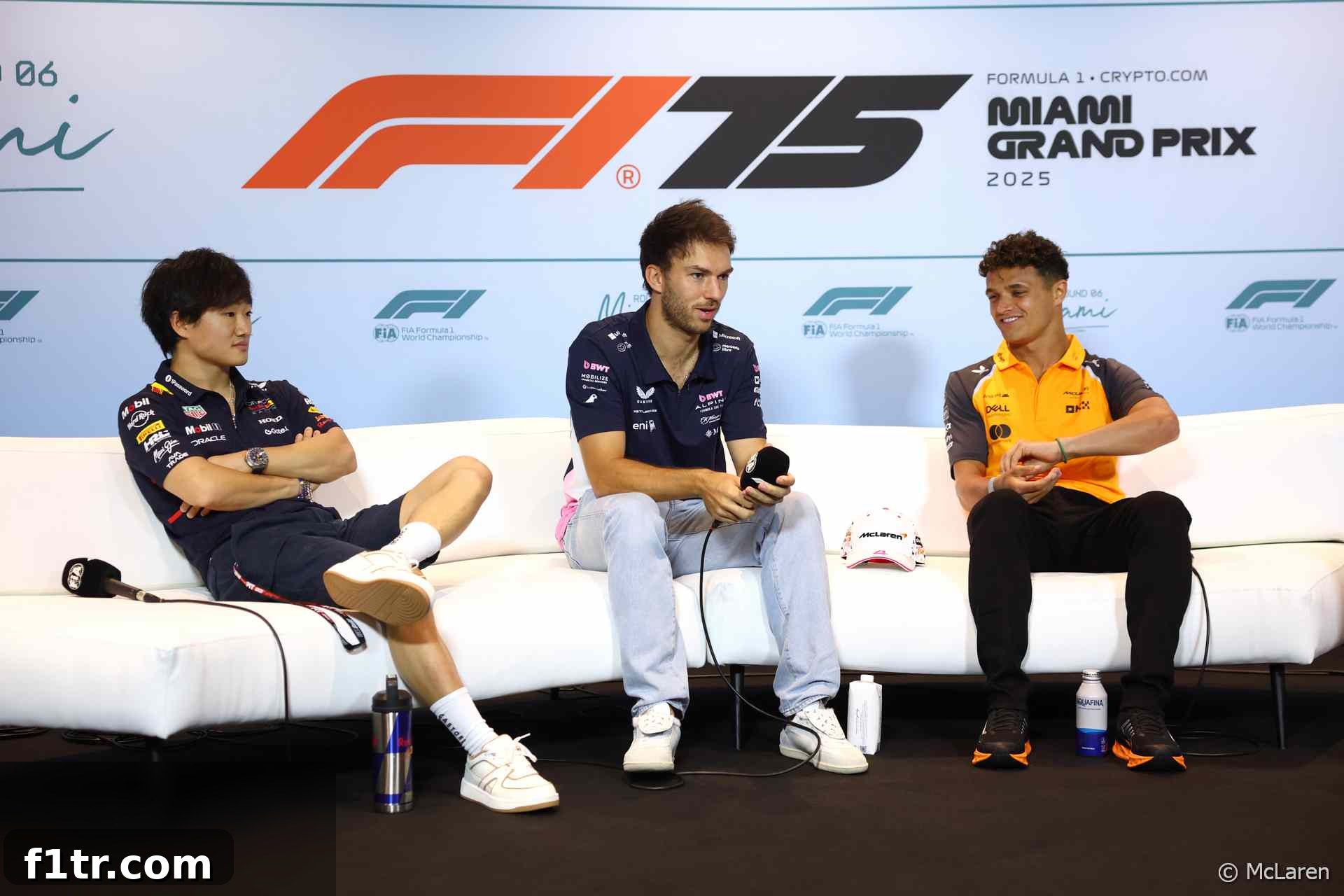
In a sport synonymous with speed and efficiency, the notion of Formula 1 drivers being held up by everyday traffic seems almost ironic. Yet, at the Miami Grand Prix, it became a significant talking point among the paddock. Red Bull’s Yuki Tsunoda openly acknowledged the issue during an FIA press conference, stating, “Traffic is a bit of a topic.” The conversation quickly shifted to the coveted police escorts that often assist drivers in navigating congested routes to circuits. Pierre Gasly humorously pointed out Tsunoda’s advantage, to which the Japanese driver replied, “Luckily, this year – until last year it was a bit different!” This subtle hint suggested a change in the provision of such services, a detail that other drivers would soon elaborate on.
The Vanishing Escorts: A Budgetary Conundrum
Nico Hulkenberg, a seasoned veteran of the sport, echoed the sentiments, revealing his own struggles with circuit access. “Traffic is definitely a topic here,” he affirmed. Hulkenberg further clarified the situation regarding police escorts, expressing disappointment: “Unfortunately this year, apparently the grand prix cut the police escort budget. So that’s going to be a bit of a… it would be nice to have that back for next year, please.” This revelation highlighted a practical challenge for drivers, who rely on punctual arrivals for crucial pre-session briefings, engineering meetings, and media commitments. The absence of escorts not only adds stress but also underscores the logistical complexities of hosting a major international event in a dense urban environment.
The issue of traffic isn’t exclusive to Miami within the F1 calendar. The Mexican Grand Prix has long been notorious for its congested routes, posing similar challenges for teams and personnel. However, McLaren driver Lando Norris believes Miami’s situation might even surpass that of Mexico City. “The traffic’s terrible,” Norris lamented. “Is it worse than Mexico? It might be, because in Mexico there’s kind of no roads. Here I’ve never seen so many roads, yet there’s still so much traffic. That’s the only thing I would probably change.” Norris’s observation points to a deeper urban planning challenge – an abundance of roads doesn’t automatically translate to smooth traffic flow, especially when coupled with the massive influx of visitors and event-specific road closures.
Advert | Become a RaceFans supporter andgo ad-free
Beyond the Asphalt: The Irresistible Miami Vibe
Despite the frustrations with traffic and logistics, the overall sentiment among drivers towards the Miami Grand Prix itself remained overwhelmingly positive. The city’s vibrant energy, unique culture, and enthusiastic reception created an experience that many found incredibly enjoyable, overshadowing the commute woes for some. It’s a testament to Miami’s appeal that, even with practical difficulties, it manages to captivate the F1 community.
The Allure of the Sunshine State: A Driver’s Perspective
Lando Norris, fresh from his maiden F1 victory, was among those who found Miami a particularly appealing destination. “Miami is a great place,” he enthused. “It’s a lot of fun for me personally. I have a lot of friends who are here so I came out on Sunday and spent a few days here. But it’s not only a good event, it’s busy.” This encapsulates a key aspect of the modern F1 calendar: races are not just about the competition; they are global spectacles embedded within unique cultural contexts. For drivers, it’s an opportunity to experience different cities, engage with diverse fan bases, and sometimes, even connect with personal networks.
Pierre Gasly shared Norris’s enthusiasm, highlighting the distinctive atmosphere of the city. “I love everything about it,” Gasly declared. “Miami is a cool city. It’s always got great energy in town and I love the fact that it’s one of those races with the time difference, you kind of get to come slightly earlier. So you get to spend some time – Tuesday, Wednesday gets quite busy – but I still find myself having a night out and going to some nice restaurants.” This speaks to the lifestyle aspect that F1 drivers often embrace, particularly at destinations that offer a vibrant social scene. The time difference, often a challenge for jet-lagged athletes, here becomes an advantage, allowing for a more relaxed acclimatization and exploration of the city before the intense race weekend begins.
Gasly further elaborated on the distinctive character of the Miami event. “You kind of feel the vibe of Miami, which is quite different to what we’re used to back in Europe. It’s one of these very, very cool places.” This cultural differentiation is precisely what F1 aims for with its global expansion, offering diverse experiences that contrast with the more traditional European circuits. The blend of American showmanship, Latin influences, and a general sense of celebration creates a unique backdrop for Grand Prix racing, appealing to a broad audience beyond the traditional motorsport enthusiast.
Celebrating Success: The Miami Party Scene
The celebratory atmosphere of Miami also left a significant impression, particularly on the drivers who dream of success there. Gasly humorously expressed a touch of envy for Lando Norris’s recent triumph. “I kind of envy Lando for getting his first race win here, because I’m sure Sunday night was definitely a cool one and one he’s going to remember,” Gasly remarked. “It’s one of those races [where] you want the Sunday to go well so you get a good reason to party on Sunday night.” This sentiment perfectly captures the spirit of the Miami Grand Prix – it’s an event where victory is not just a sporting achievement but an excuse for a memorable celebration in one of the world’s most glamorous cities. The prospect of a triumphant Sunday night party serves as an added motivator, blending the high-stakes competition with the city’s famed nightlife.
F1’s American Dream: Balancing Spectacle and Practicality
The Miami Grand Prix is a crucial part of Formula 1’s ambitious expansion into the lucrative American market. Along with Austin and Las Vegas, it forms a trio of US races designed to capture the attention of a new generation of fans. These venues, often chosen for their glitz and glamor, inherently come with challenges in integrating a major sporting event into existing urban infrastructure. The traffic issues highlighted by drivers are not merely minor inconveniences but symptoms of a larger logistical puzzle that event organizers and local authorities must solve to ensure the long-term success and sustainability of these races.
The balance between creating a spectacular show and ensuring practical operations for all involved—drivers, teams, media, and most importantly, fans—is delicate. While the “Miami vibe” is a powerful draw, persistent logistical problems can detract from the overall experience. The absence of police escorts for drivers, for instance, might seem like a small detail, but it speaks volumes about the level of support and seamless operation expected at a premier global event. Improving these aspects will be key to solidifying Miami’s place as a beloved fixture on the F1 calendar.
The Future of the Miami Grand Prix
Ultimately, the Miami Grand Prix presents a fascinating dichotomy: a race weekend plagued by real-world logistical headaches on the one hand, and an incredibly popular, vibrant, and celebrated event on the other. Drivers, while vocal about their traffic woes, are equally effusive about the city’s charm and the unique energy it brings to Formula 1. This feedback provides valuable insights for organizers, emphasizing the need for continuous improvement in areas like transport infrastructure and support services, even as the event’s spectacle and atmosphere continue to draw praise.
As Formula 1 continues its global journey, particularly into new and exciting markets, the lessons learned from Miami will be invaluable. The challenge is to maintain the raw, vibrant energy that makes these events so popular while meticulously addressing the practicalities that ensure a smooth, efficient, and enjoyable experience for everyone involved, from the world’s fastest drivers to the passionate fans flocking to witness the spectacle.
Miss nothing from RaceFans
Get a daily email with all our latest stories – and nothing else. No marketing, no ads. Sign up here:
Advert | Become a RaceFans supporter andgo ad-free
Related Articles: 2025 Miami Grand Prix
- Nothing for Ferrari to learn from Miami team orders episode – Vasseur
- Hamilton proud of Ferrari as ‘we’re taking a beating from media and people’s comments’
- McLaren legality never in doubt says Piastri as FIA’s post-race check clears car
- Albon did not disobey team orders in Miami says Vowles after Sainz’s complaint
- McLaren score their most emphatic win since Hamilton’s 2008 Silverstone triumph
Browse all 2025 Miami Grand Prix articles