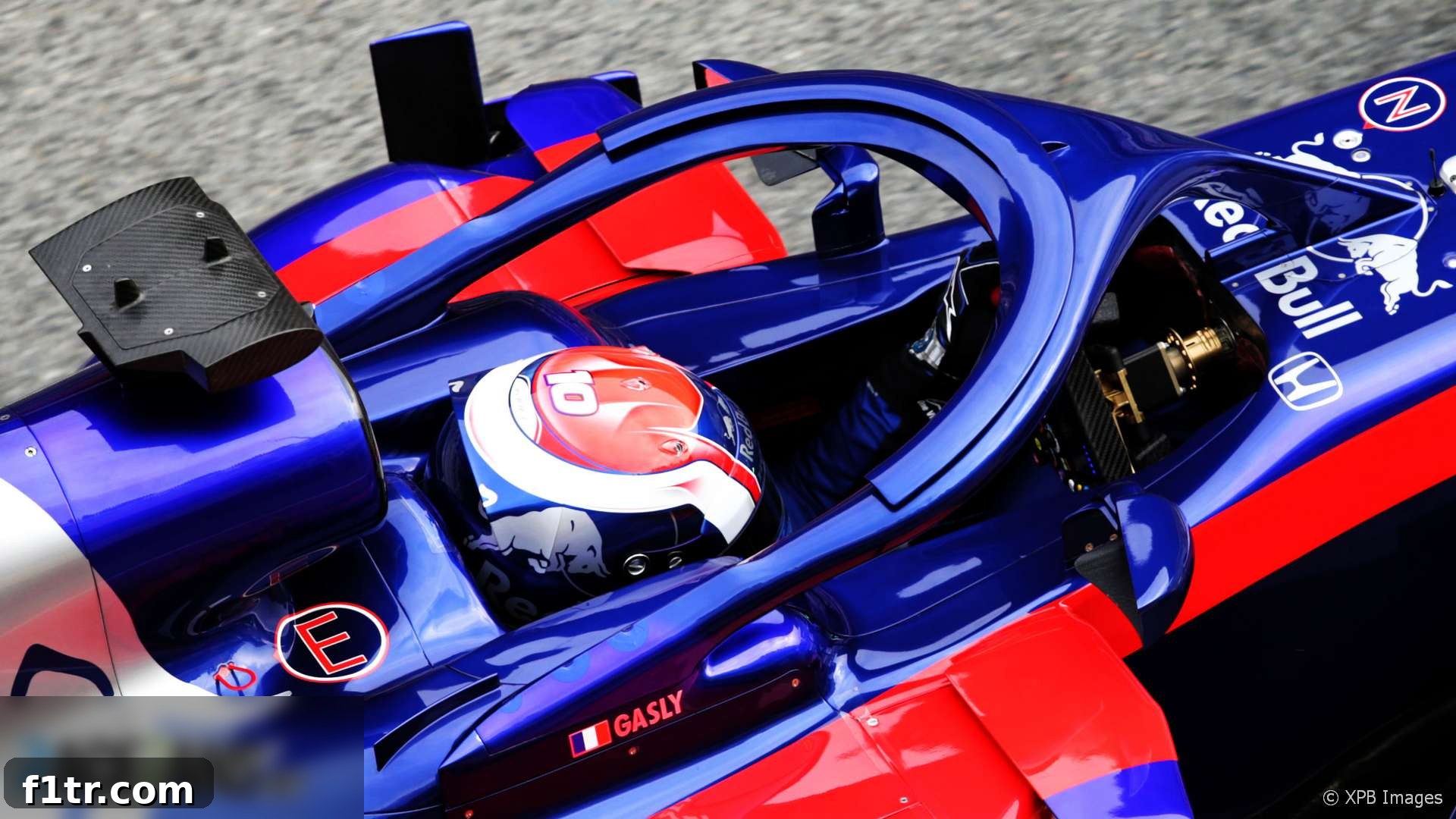
The 2018 Formula 1 season marked a significant turning point in motorsport safety, primarily due to the mandatory introduction of the Halo safety device. Designed to protect drivers’ heads from flying debris and impacts, the Halo quickly became one of the most debated innovations in the sport’s recent history. While its safety benefits were undeniable according to rigorous testing by the FIA, its aesthetic impact and practical implications for drivers sparked considerable discussion. Among the first to voice his candid thoughts was then-Toro Rosso driver Pierre Gasly, whose early experiences with the newly integrated Halo, particularly its aerodynamic winglets, provided a unique and physical perspective on adapting to this revolutionary component. His comments during the pre-season testing highlighted not just the visual changes but the immediate, tangible challenges faced by those tasked with piloting these highly sophisticated machines.
The FIA’s decision to implement the Halo was not taken lightly. It followed years of extensive research and development, spurred by tragic incidents such as Jules Bianchi’s fatal accident in 2014 and Felipe Massa’s near-fatal injury from a spring in 2009. These events underscored the critical vulnerability of a driver’s head in an open-cockpit environment. The Halo, a robust titanium structure weighing around 7 kilograms, was designed to withstand immense forces, capable of deflecting objects ranging from large debris to other vehicles. Despite its clear safety mandate, it initially faced widespread criticism. Many fans and purists argued that it compromised the traditional aesthetics of Formula 1 cars, obscuring the driver and disrupting the sleek lines synonymous with grand prix racing. Drivers themselves were initially split, with some expressing concerns about visibility or the radical change to the car’s appearance, while others acknowledged its potential life-saving capabilities. The 2018 pre-season tests were therefore crucial for drivers and teams to understand and adapt to this new, unavoidable element of Formula 1 car design.
Pierre Gasly’s initial feedback from the testing track offered a vivid illustration of the practical difficulties presented by the Halo’s integration, specifically its accompanying winglets. “I don’t like it, it’s just a big mess to get in the car and get out,” he plainly stated, adding a touch of humor and frustration by revealing, “My suit is already broken.” This wasn’t just a minor inconvenience; it was a testament to the incredibly tight confines of an F1 cockpit, where every millimeter matters. Gasly explained further, “It’s only the first day and I have many holes on the back. You have to be a lot backward to slide in the car, it’s quite weird. Now with all the winglets you have on the Halo you cannot really pull to get out, you can’t really touch it.” The addition of these small winglets, intended to optimize airflow over and around the Halo, inadvertently created sharp edges and additional obstacles, making the already intricate process of squeezing into and out of the car even more precarious. For a driver who must be physically integrated with their machine, these initial struggles pointed to a deeper acclimatization period required beyond just driving itself.
Despite the physical struggles outside the cockpit, Gasly quickly clarified that the Halo’s impact was minimal once he was strapped in and focused on driving. “To drive with it, it doesn’t make a big difference,” he affirmed, addressing a primary concern many had about potential visibility issues. “In terms of visibility it’s the same.” This insight was crucial, as initial apprehension had focused on whether the central pillar of the Halo would obstruct the driver’s view of the track, particularly through corners or when aiming for apexes. Gasly’s experience, shared by many of his colleagues, suggested that the human brain’s remarkable ability to ‘filter out’ or adapt to minor obstructions quickly came into play. “Of course you see something on top of you which is a bit weird. But when you start to drive you are so focused, you just pay attention to your driving, you don’t really see it.” This remarkable adaptability underscores the mental fortitude and intense concentration required of Formula 1 drivers, who can effectively tune out minor visual distractions to focus solely on the high-speed demands of racing. The initial “weird conditions” quickly became part of the background once the engine roared.
However, the challenges weren’t solely confined to routine entry and exit. Gasly also raised a more serious potential consequence: the impact on emergency escape procedures. Getting out of the car in a hurry is “quite a big challenge,” he admitted, suggesting it “could take longer, that’s for sure.” In the high-stakes world of Formula 1, every second counts, especially in the aftermath of a severe accident where a quick escape from a potentially dangerous situation (e.g., fire, damaged car, fuel leak) can be life-saving. The FIA mandates strict egress times for drivers, typically requiring them to exit the cockpit within a few crucial seconds. The Halo, with its obstructive design and the added winglets Gasly described, could potentially impede a driver’s swift exit, complicating a scenario where rapid evacuation is paramount. While Gasly expressed his personal confidence – “it doesn’t worry me because I don’t think about any bad things” – his pragmatic assessment acknowledged, “For sure I think it will be longer to get out, that’s what we have for this year.” This aspect remained a key area of focus for teams and the FIA to ensure safety protocols were continuously optimized and that the Halo, while protecting from external impacts, did not inadvertently hinder internal escape. Drivers undergo extensive training for such scenarios, adapting their escape techniques to account for new car elements.
Gasly’s simple yet profound statement, “I just prefer the old cars, that’s it,” encapsulated the sentiment of many long-time Formula 1 fans and even some drivers regarding the Halo’s visual impact. The sport had always prided itself on its sleek, open-cockpit designs, symbolizing speed, freedom, and the purity of single-seater racing. The Halo, an undeniably robust but visually dominant structure, fundamentally altered this iconic image. While teams made efforts to integrate it as seamlessly as possible, often painting it in team colors or incorporating minor aerodynamic elements like those Gasly mentioned, its presence remained a stark reminder of the sport’s evolving priorities. The debate between aesthetics and safety is not new to Formula 1, with innovations like the full-face helmet or HANS device previously prompting similar discussions. However, the Halo brought this discussion to the forefront like never before, becoming the most visible symbol of this safety-first paradigm shift. Ultimately, the FIA’s unwavering commitment to driver protection signaled a clear mandate: safety would take precedence over traditional design principles, ushering in a new era for the sport’s visual identity, a trade-off that, while lamented by some, was deemed necessary for the drivers’ well-being.
Despite his initial criticisms and aesthetic preferences, Gasly also displayed a pragmatic acceptance of the new reality. “I don’t know if we’ll have it for the next couple of years but we’ll have to get used to it,” he concluded. This reflects a broader truth about Formula 1: it is a sport of constant innovation, regulation changes, and adaptation. From the introduction of seatbelts and full-face helmets to HANS devices, stronger chassis, and improved barriers, every major safety improvement has required drivers, teams, and fans to adjust. The Halo, though perhaps the most visually jarring, is another significant step in this continuous evolution. Drivers are renowned for their exceptional ability to quickly adapt to new machinery and track conditions, and the Halo was no exception. As the 2018 season progressed, drivers became more accustomed to its presence, both physically and visually, proving once again that the human element in motorsport is remarkably resilient and adaptable to even the most significant technological shifts. The initial “big mess” and “weird conditions” eventually became the new normal, solidifying the Halo’s place as a fundamental and non-negotiable component in modern Formula 1 safety, ensuring that driver protection remains at the forefront of the sport’s design philosophy.
Go ad-free for just £1 per month>> Find out more and sign up
2018 F1 season
- F1 feared “death knell” for Drive to Survive after Ferrari and Mercedes snub
- McLaren staff told us we were “totally crazy” to take Honda engines in 2018 – Tost
- ‘It doesn’t matter if we start last’: How Red Bull’s junior team aided Honda’s leap forward
- Honda’s jet division helped F1 engineers solve power unit problem
- McLaren Racing losses rise after Honda split
Browse all 2018 F1 season articles