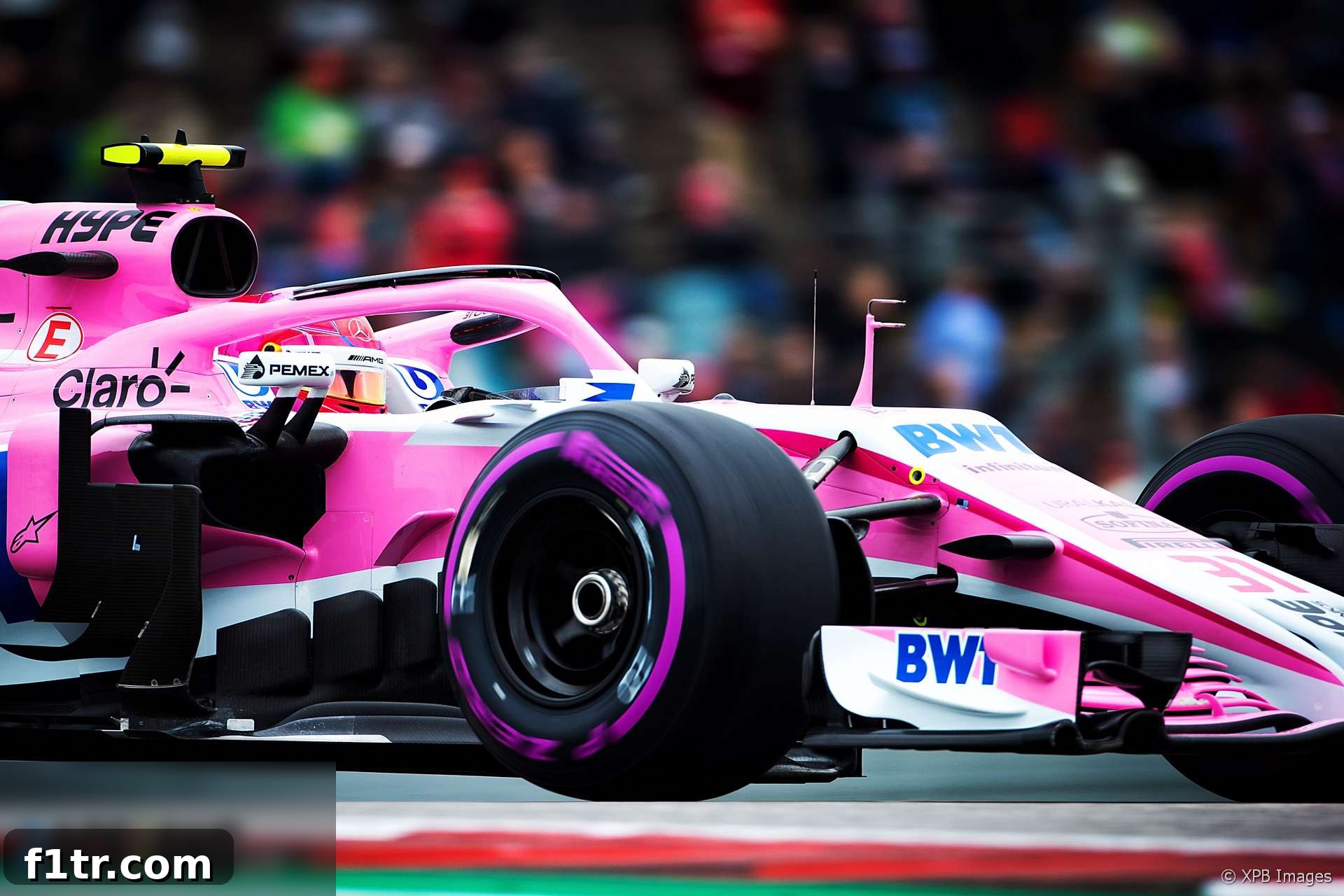
A pivotal moment at the 2018 United States Grand Prix saw Esteban Ocon disqualified from the official race results. The Force India driver, who had initially secured a commendable eighth place, faced this severe penalty due to a clear breach of Formula 1’s stringent technical regulations regarding fuel flow. This decision by the race stewards sent ripples through the competitive midfield, directly influencing the points standings for several drivers and their respective teams.
Advert | Become a Supporter & go ad-free
The stewards’ verdict was the culmination of a meticulous review process, involving an exhaustive analysis of telemetry data gathered directly from Ocon’s VJM11 car. This technical data, combined with thorough discussions held with representatives from the Sahara Force India team and Ocon himself, definitively established that his car’s fuel mass flow had exceeded the permitted limit of 100 kg/hr. This critical infringement occurred during the opening lap of the race, a phase where drivers push their machines to the absolute limit to gain early positions. While seemingly a minor technicality, exceeding this limit represents a significant violation designed to ensure fair play and maintain a controlled performance environment across all competing teams.
Understanding the Fuel Flow Infringement and FIA Regulations
FIA race director Charlie Whiting, a highly respected figure in Formula 1 officiating at the time, offered crucial elaboration on the incident. He confirmed that Ocon’s car operated above the mandated fuel flow threshold “for the majority of the first lap.” This detail is particularly important as it indicates a sustained period of non-compliance, rather than a transient spike, implying a potential performance advantage during a crucial stage of the race. The FIA Formula 1 Technical Regulations are explicit on this matter, with Article 5.1.4 stating unequivocally that “The fuel mass flow may not exceed 100 kg/hr.” This rule serves multiple vital purposes: regulating engine power and efficiency, preventing teams from exploiting excessive fuel delivery for an unfair horsepower boost, and aligning Formula 1 with broader automotive industry trends towards efficiency.
The monitoring of fuel flow is a highly sophisticated aspect of modern Formula 1. Each power unit is equipped with advanced, FIA-approved sensors that continuously measure the precise rate at which fuel is being consumed by the engine. Any deviation from the prescribed limit is instantly flagged, triggering an automatic investigation by the technical delegates. In Ocon’s particular case, the telemetry data presented undeniable evidence, leading to the stewards’ decision to impose a disqualification. This penalty not only stripped Ocon of his valuable championship points but also altered the official classification of the United States Grand Prix, underscoring the FIA’s unwavering commitment to upholding the technical integrity of the sport. Even the slightest breach of these regulations can lead to severe consequences, demonstrating the high standards of compliance expected from every team and driver.
Impact on the Race Standings and Midfield Battle
Ocon’s disqualification had an immediate and far-reaching impact on the United States Grand Prix’s official results. His original eighth-place finish, which would have added four crucial points to Force India’s constructor’s championship tally, was entirely nullified. This void created a chain reaction, leading to promotions for several drivers locked in the intense midfield battle:
- Kevin Magnussen, behind the wheel of his Haas, was provisionally elevated to eighth position, inheriting the points Ocon had forfeited. However, this promotion was accompanied by its own element of uncertainty, as Magnussen himself was under investigation for a similar fuel flow infringement. This lingering doubt left fans and teams alike awaiting further clarification regarding the final occupant of the eighth spot.
- Sergio Perez, Ocon’s teammate at Force India, moved up to ninth place. While Perez individually gained a position, the team ultimately suffered a net loss of points from Ocon’s disqualification, illustrating the collective ramifications of technical breaches for a constructor.
- Brendon Hartley, driving for Toro Rosso, inherited the single, but incredibly valuable, final point for 10th place. For smaller teams like Toro Rosso, every point is fiercely contested and crucial for their standing in the constructors’ championship. Hartley’s promotion was a direct consequence of the rigorous regulatory enforcement and served as a reminder of the domino effect that F1 disqualifications can trigger.
The revised standings painted a distinctly different picture of the United States Grand Prix’s midfield dynamic, reinforcing the principle that a race’s outcome is never truly final until all technical checks have been completed and every steward’s decision has been rendered. For Force India, this particular outcome was undoubtedly a difficult one to accept, losing points that the team had tirelessly worked for throughout a challenging season.
The Right to Appeal: Force India’s Options
In the aftermath of the stewards’ decision, Force India, like any team facing such a significant penalty, was afforded the right to appeal the ruling. The appeal process in Formula 1 is a structured and often intricate legal procedure, providing teams with an opportunity to present new evidence, challenge the interpretation of regulations, or argue against the severity of a penalty. If Force India opted to pursue an appeal, they would be required to formally notify the FIA of their intention within a tightly defined timeframe, typically within one hour of the stewards’ original verdict being issued. This formal notification would then initiate a hearing before the International Court of Appeal (ICA), an independent judicial body tasked with overseeing such disputes.
During the ICA hearing, both the appealing team and the FIA stewards would present their respective arguments, supported by any relevant evidence or expert testimony. The ICA would then deliberate and ultimately render a decision, which could range from upholding the original disqualification, partially overturning it (perhaps by imposing a lesser penalty), or completely overturning the decision, thereby reinstating Ocon’s original eighth-place finish. Appeals are not uncommon in the highly competitive world of Formula 1, particularly when significant championship points or broader implications are at stake. However, successfully overturning a disqualification rooted in clear telemetry data and corroborated by the race director often proves to be a formidable challenge. Teams typically pursue appeals when they firmly believe there was an error in the measurement process, a misinterpretation of the rules, or if they possess compelling new evidence to explain any anomaly. The decision to appeal would have been a weighty one for Force India, balancing the considerable costs and resources involved against the realistic likelihood of success and the strategic value of the lost points.
Advert | Become a RaceFans supporter andgo ad-free
The Broader Context of Fuel Flow Regulations in Formula 1
The 100 kg/hr fuel flow limit has been a foundational element of Formula 1’s technical regulations since the introduction of the V6 turbo-hybrid power units at the start of the 2014 season. These regulations were initially implemented with a series of crucial objectives in mind:
- Promoting Efficiency: By strictly limiting the rate of fuel flow, the FIA aimed to incentivize engine manufacturers to develop significantly more fuel-efficient power units. This move not only aligned Formula 1 with global automotive industry trends towards sustainability but also showcased the sport’s relevance in pioneering advanced energy technologies.
- Cost Control: Tighter technical specifications, including precise fuel limits, contribute significantly to controlling the ever-escalating costs associated with engine development. By narrowing the scope for extreme and incredibly expensive innovations solely focused on maximizing raw power, the regulations encourage more restrained and strategic design efforts.
- Ensuring a Level Playing Field: This rule is paramount in preventing teams from simply injecting more fuel into their engines to gain an unfair advantage in raw power. It ensures that all competitors operate within closely defined performance parameters, thereby fostering innovation in other critical areas such as aerodynamics, chassis design, and the complex Energy Recovery Systems (ERS).
- Adding Strategic Depth: The strict fuel flow limit transforms fuel management over an entire race distance into a critical strategic component for both drivers and race engineers. It introduces an additional layer of complexity and skill, demanding sophisticated real-time decision-making to optimize performance without exceeding limits.
The enforcement of these regulations requires highly advanced technology and meticulous oversight. The FIA employs highly trained technical delegates and deploys state-of-the-art sensors to guarantee complete compliance. While infringements like Ocon’s are not daily occurrences, they serve as powerful reminders of the extreme precision and strict adherence to rules demanded at the pinnacle of motorsport. Such incidents vividly reinforce the understanding that Formula 1 is not merely about raw speed; it is equally about achieving engineering excellence and operating flawlessly within a meticulously defined regulatory framework.
2018 F1 season: A Glimpse Back at a Tumultuous Year
The 2018 Formula 1 season was undeniably a compelling and often dramatic year, characterized by fierce competition throughout the grid, particularly within the midfield. Force India, the team for which Esteban Ocon raced, navigated an exceptionally tumultuous period during this season. The team famously entered administration mid-season before being successfully rescued and subsequently rebranded as Racing Point Force India. Despite these significant off-track challenges, the team frequently managed to perform above expectations. Incidents such as Ocon’s disqualification starkly highlight the razor-thin margins and the unforgiving nature of the sport’s technical regulations, where every single kilogram of fuel and every microsecond of performance is subjected to intense scrutiny. Ultimately, the 2018 season culminated in Lewis Hamilton securing his fifth World Championship title, but the relentless drama in the midfield, including this particular fuel flow controversy, added immense intrigue and talking points throughout the entire calendar year.
- F1 feared “death knell” for Drive to Survive after Ferrari and Mercedes snub
- McLaren staff told us we were “totally crazy” to take Honda engines in 2018 – Tost
- ‘It doesn’t matter if we start last’: How Red Bull’s junior team aided Honda’s leap forward
- Honda’s jet division helped F1 engineers solve power unit problem
- McLaren Racing losses rise after Honda split
Browse all 2018 F1 season articles