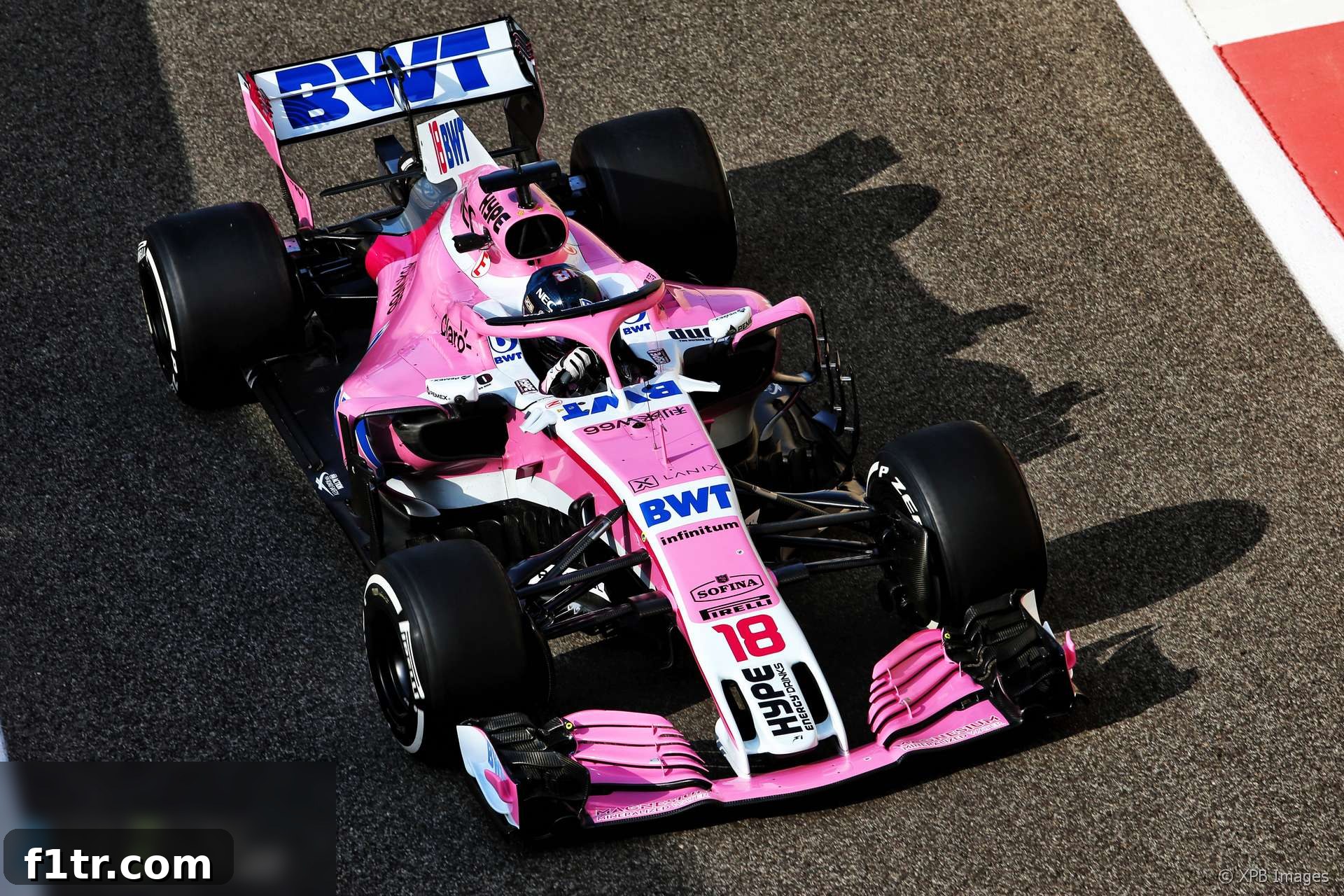
Lance Stroll Impresses Racing Point, Matching Ocon’s Simulator Pace for 2019 F1 Season
In a significant announcement that set the stage for the 2019 Formula 1 season, Racing Point team principal Otmar Szafnauer revealed that new recruit Lance Stroll rapidly achieved a performance level in their simulator comparable to that of his highly-regarded predecessor, Esteban Ocon. This early demonstration of pace and adaptability offered an intriguing glimpse into Stroll’s potential with his new team, which was formerly known as Force India before its acquisition by a consortium led by Stroll’s father, Lawrence.
A New Era for Racing Point and Stroll
The transition saw the 20-year-old Canadian driver replace Esteban Ocon, a move that generated considerable discussion within the F1 community. Stroll’s arrival at the team was anticipated months before the official announcement, following his father Lawrence Stroll’s successful acquisition of the financially troubled Force India outfit in August. This strategic takeover not only secured the future of the team but also paved the way for Lance to join the newly rebranded Racing Point for the upcoming season.
Stroll’s integration into the team began with a seat fitting shortly after the asset purchase, a common procedure for any new driver. His participation in the post-season test at Yas Marina provided his first real-world experience behind the wheel of the team’s car, officially confirming his position for the 2019 campaign. It was during this crucial period that Stroll made a strong impression, validating the team’s confidence in his abilities.
Simulator Prowess and On-Track Validation
Speaking in an interview for the official F1 website, Otmar Szafnauer elaborated on Stroll’s initial impressions and performance. “Lance absolutely loved his time in the car,” Szafnauer stated. “He said the car could do the things that he wants the car to do, which is good.” This immediate comfort with the car’s characteristics is a vital component for any driver seeking to extract maximum performance, hinting at a natural synergy between Stroll and the Racing Point machinery.
Perhaps even more significant was Stroll’s performance in the team’s advanced simulator. “And we were duly impressed with Lance. We were already impressed with him when he ran in the simulator, he was on the pace very quickly, up to Esteban’s level in the simulator,” Szafnauer continued. This swift acclimatization and ability to match Ocon’s benchmark – a driver renowned for his natural speed and technical feedback – spoke volumes about Stroll’s raw talent and capacity to adapt. Simulators are increasingly crucial tools in modern Formula 1, allowing drivers to familiarize themselves with car dynamics, track layouts, and setup changes long before they hit the tarmac. For Stroll to achieve parity with Ocon, a Mercedes-backed talent who had spent significantly more time developing the car, was a powerful endorsement.
The true test, however, lay in translating this virtual performance to the real track. Szafnauer confirmed that Stroll passed this test with flying colors: “We were just hoping that the pace he showed in the simulator would translate onto the track and it did. He was very quick on track too.” This seamless transition from the simulator environment to the actual race car underscored Stroll’s competence and readiness to tackle the challenges of a new team and a demanding season.
Developing Stroll’s Race Craft: Tyre Management and Qualifying
With Stroll firmly integrated into the team, Racing Point has already identified key areas for development to maximize his potential. Formula 1 is a sport where marginal gains can make a significant difference, and optimizing driver performance across all facets is paramount. Szafnauer highlighted two crucial aspects:
Mastering Tyre Management
“We’ve got some good potential there in Lance and we’ll work with him to hopefully teach him some things we know about how to drive the tyre and how to preserve it, make it go quick and last over the stint,” Szafnauer explained. Tyre management is arguably one of the most critical skills in modern F1. Drivers must perfectly balance pushing the car to its limit with extending the life of fragile Pirelli tyres, often through complex temperature management and subtle driving techniques. This involves understanding how different compounds react, when to push for a fast lap, and when to conserve to prevent degradation. The team’s vast experience, honed over years as Force India, offers a valuable resource to help Stroll refine this intricate aspect of race craft, potentially unlocking significant performance benefits over a race distance.
Enhancing Qualifying Performance
“We’ll do that with him, help him qualify better too,” Szafnauer added. Qualifying position is often predictive of race outcome, especially on tracks where overtaking is challenging. A strong qualifying performance not only puts a driver in a better starting position but also reduces their exposure to first-lap incidents and allows for more strategic flexibility. Improving qualifying means finessing a driver’s ability to extract the absolute maximum from a car over a single lap on fresh tyres and low fuel, a skill that requires immense precision, bravery, and technical understanding. Racing Point’s engineers and strategists will undoubtedly work closely with Stroll on setup optimization, track analysis, and driving technique to ensure he can consistently deliver competitive one-lap pace.
Capitalizing on Existing Strengths
Beyond areas for improvement, Stroll also brings a set of undeniable strengths to the team. “But he brings some great skills. He’s quick, he usually does a great job at the start, over the first lap he usually makes up places so we’re looking forward to work with him,” Szafnauer praised. Stroll’s reputation for making up positions off the line and during the chaotic opening lap of a Grand Prix is a valuable asset. Good starts can compensate for a less-than-ideal qualifying, and the ability to navigate traffic and gain places early is crucial for scoring points, particularly for a midfield team. These inherent talents provide a solid foundation upon which Racing Point can build and further develop Stroll as a complete F1 driver.
The Shadow of Talent vs. Finance: The Ocon Conundrum
Stroll’s arrival, while financially stabilizing for the team, inevitably led to the departure of Esteban Ocon. Ocon’s exit, particularly given his strong performances and reputation as one of F1’s most promising young talents, fueled widespread complaints about the increasing influence of wealth and sponsorship over pure merit in driver selection. Many saw Ocon as a victim of circumstances, a highly-rated driver without a seat, replaced by a driver whose position was intrinsically linked to his family’s financial backing.
Szafnauer, acknowledging Ocon’s stature, referred to him as a “champion of the future.” This sentiment highlighted the team’s respect for Ocon’s abilities despite the need to make a difficult decision. Szafnauer suggested that Ocon’s connection to Mercedes, which manages his career, had unfortunately limited his options for the 2019 season. In the intricate world of Formula 1, affiliations with major engine manufacturers can be a double-edged sword. While it provides opportunities and support, it can also restrict a driver’s ability to move to competitor teams, particularly when grid slots are scarce.
“Esteban’s young enough, Esteban had opportunities this year but they weren’t forthcoming I think due to his management structure. It’s just how Formula 1 is,” Szafnauer candidly observed. This statement reflects a common reality in F1, where talent alone is often not enough. The financial demands of the sport, coupled with complex team-driver relationships and sponsor obligations, frequently dictate who gets a seat. Despite these challenges, Szafnauer expressed optimism for Ocon’s future: “However I think in time those guys with the talent will come to the forefront, their talent will rise.” It’s a testament to the belief that genuine talent, eventually, finds its way back to the pinnacle of motorsport.
Looking Ahead: Racing Point and Stroll in 2019
The 2019 season represented a fresh start for the team under its new Racing Point banner, imbued with renewed financial stability and a clear vision for the future. With Lance Stroll joining Sergio Perez, the team aimed to build on its consistent midfield performances. The dynamic between an established, experienced driver like Perez and a young, developing talent like Stroll would be key to their success.
Stroll’s immediate ability to match Ocon’s simulator performance provided a tangible metric for his potential. It suggested that he wasn’t merely a ‘pay driver’ but possessed genuine speed and an aptitude for the complex demands of Formula 1. The team’s commitment to developing his race craft, particularly in areas like tyre management and qualifying, indicated a long-term investment in his growth. While the 2019 season would present its own set of challenges, the early signs from the simulator and track tests pointed towards a promising trajectory for Lance Stroll and the revitalized Racing Point team.
2019 F1 Season Insights
- Crying in the Melbourne car park at 2019 grand prix was my career low – Ocon
- McLaren Racing reports reduced £71 million loss in 2019
- Kvyat: Hockenheim podium last year was “my biggest achievement” so far
- How the FIA’s new encrypted fuel flow meter targets Ferrari’s suspected ‘aliasing’ trick
- “He smashed my office door”: 23 must-see moments from ‘Drive to Survive’ season two
Browse all 2019 F1 season articles