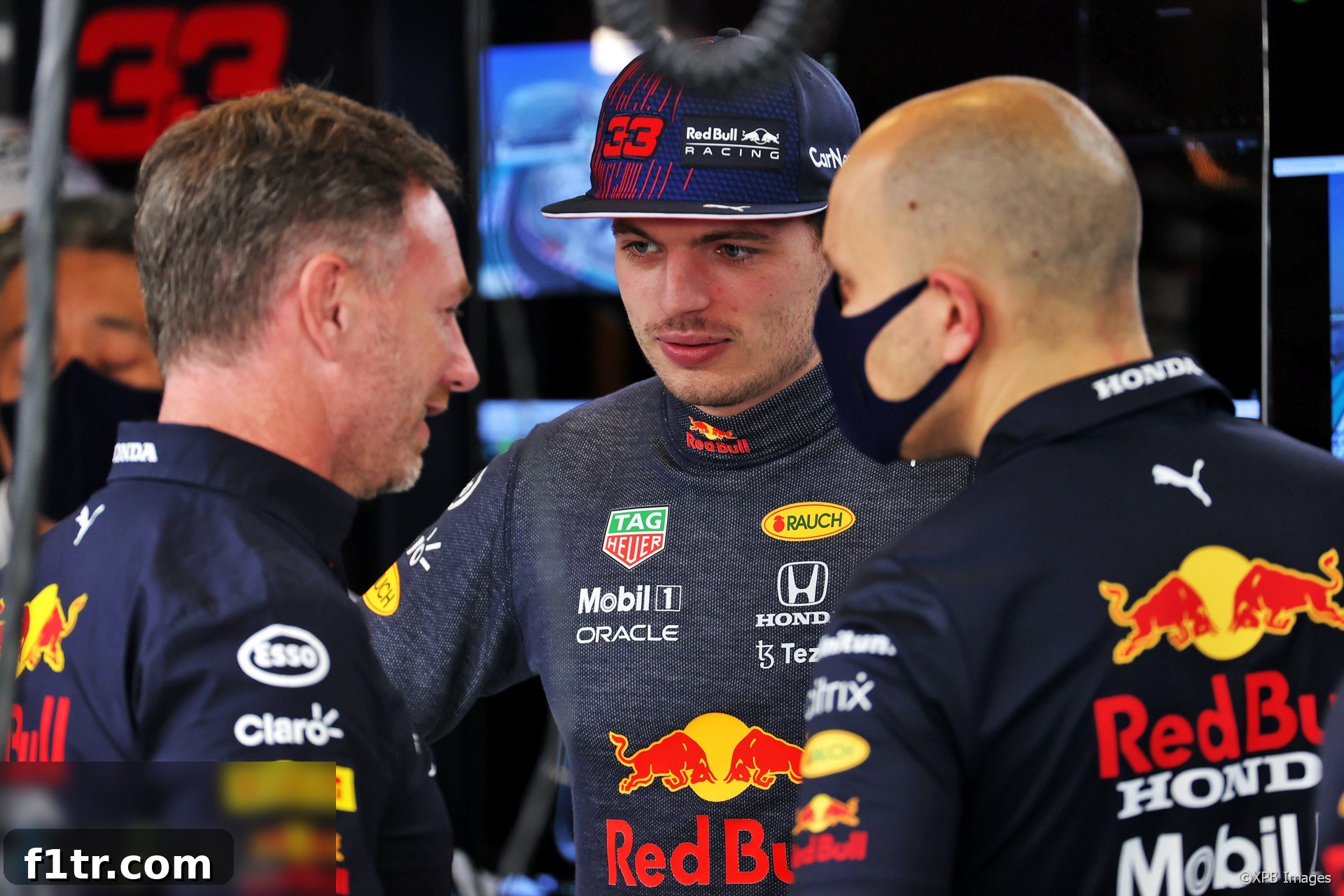
Max Verstappen, the determined Red Bull Racing driver, openly acknowledged a significant challenge after Friday’s practice sessions for the crucial 2021 Abu Dhabi Grand Prix. He admitted his team needs to uncover substantial lap time, having concluded the day a noticeable six-tenths of a second slower than the quickest Mercedes. This admission sets a tense backdrop for the season’s ultimate championship decider, where every millisecond will count in the epic battle against Lewis Hamilton.
Advert | Become a Supporter & go ad-free
In contrast, Lewis Hamilton of Mercedes-AMG Petronas set a blistering pace around the recently remodelled Yas Marina Circuit. The reigning champion showcased his formidable form by clocking the fastest time of the day, an impressive 1’23.691, during the second practice session. His dominant performance immediately provided a surge of confidence for the Mercedes camp, while simultaneously putting pressure on Red Bull to meticulously analyze their data and bridge the performance gap ahead of Saturday’s critical qualifying session.
Verstappen’s candid assessment highlighted the complexities of the initial day in Abu Dhabi, stating that Red Bull was “still learning and understanding a few things.” This honest reflection underscores the inherent challenges of adapting a high-performance Formula 1 car to a modified track layout, all while operating under the immense pressure of a championship-deciding weekend. The alterations to the Yas Marina Circuit, which were primarily designed to enhance racing and create more overtaking opportunities, appeared to have initially played into the strengths of the Mercedes package, particularly in the circuit’s quicker sections.
Regarding their performance, Verstappen elaborated, “Clearly the short run didn’t go to plan, lacking a bit of pace.” This deficiency in outright speed during qualifying simulation runs on fresh soft tyres is a significant concern for Red Bull. At a circuit like Yas Marina, where track position often dictates race outcome, a strong qualifying performance is paramount. However, the Dutch prodigy offered a glimmer of hope concerning their race simulations. “But I think the long runs were a bit more competitive so that’s also important,” he added. The stark contrast between their short-run and long-run performance will be a focal point of Red Bull’s strategic discussions, as consistent race pace is often the ultimate determinant of victory over a full Grand Prix distance.
The Ultimate F1 Championship Decider: Stakes and Scrutiny at Yas Marina
The 2021 Formula 1 season has been nothing short of extraordinary, characterized by an unrelenting, wheel-to-wheel rivalry between Max Verstappen and Lewis Hamilton. This captivating battle has engrossed motorsport enthusiasts globally, culminating in an unprecedented winner-takes-all scenario at the Abu Dhabi Grand Prix. With both drivers entering the final race tied on points, the stage is set for an epic and historic climax to the season. Hamilton aims to clinch a record-breaking eighth Drivers’ Championship by out-scoring Verstappen by just one point, while Verstappen seeks his maiden world title, aspiring to end Hamilton’s era of dominance.
The pressure is immense, not only on the two gladiators behind the wheel but also on their respective teams. Every minute adjustment to the car’s setup, every critical strategic decision made from the pit wall, and every fraction of a second during pit stops will be under intense scrutiny. The initial practice sessions are vital for gathering comprehensive data on tire wear, fuel consumption, and the overall balance of the car. While the early indications suggest Mercedes has started strong, Formula 1 is a sport renowned for its unpredictability, where fortunes can shift dramatically throughout a race weekend.
Mercedes’ Commanding Start and Hamilton’s Confidence Surge
Although the two championship contenders were briefly separated by the impressive Alpine of Esteban Ocon in Friday’s timing sheets, Lewis Hamilton exuded confidence that the true performance gaps among the front-runners would naturally converge as the weekend progressed. This convergence is a common phenomenon in Formula 1, as teams fine-tune their setups and drivers extract maximum performance from their machines. “It’s still a bit unknown in terms of pace but I’m sure it’s going to be super-close like it has been in the previous races,” stated the seasoned Mercedes driver, reflecting on the razor-thin margins that have defined this electrifying season.
Hamilton provided an encouraging report on his car’s handling, remarking that it “doesn’t feel too bad” so far. He elaborated on the continuous improvements made throughout the day: “It started off good then got a bit worse in P1, started off better in the second session with some changes we made.” This systematic process of refining car settings, guided by driver feedback and telemetry data, is standard practice in F1. However, its effectiveness is amplified exponentially in a scenario of such high stakes, highlighting Mercedes’ exceptional engineering and adaptive capabilities.
The seven-time world champion further emphasized the ongoing nature of their development efforts. “But now we’re just going to crank through the data and try and figure out how we can improve. The target is always moving,” he explained. This sentiment perfectly encapsulates the relentless pursuit of perfection inherent in Formula 1, where even minuscule gains can translate into monumental differences on the track. Both Mercedes and Red Bull engineers will be working tirelessly into the late hours, simulating countless scenarios and meticulously analyzing every data point to unlock additional speed for both qualifying and the pivotal race.
Red Bull’s Intensive Search for Pace at the Transformed Yas Marina
Red Bull’s initial six-tenths deficit is a considerable margin in the fiercely competitive world of Formula 1. While the Yas Marina Circuit has not historically been known for large performance discrepancies between top teams, the recent track modifications may have introduced new variables that currently favor Mercedes. The alterations, which include the removal of the chicane at turns five and six, the reprofiling of the hairpin at turn seven, and a widened, faster section around the hotel complex, were designed to increase average speeds and reduce the number of slow corners. These changes could potentially play into the hands of cars that demonstrate superior high-speed stability and aerodynamic efficiency, areas where Mercedes has traditionally held an advantage.
For Red Bull, the quest to find that elusive lap time will involve an exhaustive review of their aerodynamic package, suspension settings, and power unit mapping. Verstappen’s comments about “learning and understanding” suggest they might be struggling to bring the Pirelli tires into their optimal operating window, or perhaps the car’s balance is not yet perfectly calibrated for the revised layout. The team’s cadre of engineers will be working through the night, comparing real-time data with their advanced simulations and historical performance benchmarks. Their objective is to pinpoint micro-optimizations that, when combined, can shave precious tenths of a second off their lap times. The paramount importance of qualifying cannot be overstated, as a strong grid position at Yas Marina is frequently a decisive factor for securing victory.
Anticipation Builds: The Road Ahead to Qualifying and Race Day
Hamilton’s positive demeanor and Mercedes’ robust performance in Friday practice were further underscored by his personal readiness. “I feel great in my body and I think we made some positive steps set-up-wise,” he shared, emphasizing the critical physical and mental preparedness required for such a high-stakes race. His palpable confidence in the team’s progress hints at a promising direction for their setup work, which is indispensable for delivering a strong performance in both qualifying and the Grand Prix itself. “We’ll try and perfect it tonight and come back hard tomorrow,” he concluded, setting an determined tone for the intensive preparations that lie ahead.
The weekend’s schedule culminates in Saturday’s crucial qualifying session, where the starting grid for the Abu Dhabi Grand Prix will be meticulously determined. Given the incredibly tight nature of this championship battle, securing pole position would not only provide a significant psychological boost but also confer a crucial strategic advantage. Starting from the front allows the leading driver to dictate the race pace, minimize the risk of being caught in midfield incidents, and manage their tire strategy more effectively. Both teams will be pushing their cutting-edge machines and their world-class drivers to their absolute limits in relentless pursuit of that pivotal grid slot.
As the sun begins its descent over the iconic Yas Marina Circuit for the final time this season, the entire world watches with bated breath. Will Red Bull successfully unlock the pace required to challenge Mercedes’ early dominance? Can Max Verstappen overcome the initial deficit to etch his name into history with his maiden world title? Or will Lewis Hamilton’s unparalleled experience and Mercedes’ formidable recent momentum propel them to another historic championship victory? The answers to these questions will unfold in what promises to be one of the most enthralling and memorable conclusions to a Formula 1 season ever witnessed. The sheer intensity, the compelling rivalry, and the monumental stakes involved make this an absolutely unmissable event for motorsport fans globally.
2021 Abu Dhabi Grand Prix
- Masi ‘basically gifted the championship’ to Verstappen says 2021 FIA steward Sullivan
- Norris called out F1 over its farcical 2021 finale. Will it get it right this time?
- Why Mercedes put ‘a reminder of joy and pain’ on display in their factory lobby
- Hamilton would be an eight-time champion if Whiting was still alive – Steiner
- Verdict on error in GT race suggests Mercedes would have lost 2021 Abu Dhabi GP appeal
Browse all 2021 Abu Dhabi Grand Prix articles